Market data
Sustainability In Industry
Explore sustainability in industry statistics and market research reports with sourced data and trend analysis.
Latest update:
 James Okoro

Statistics · 2026
Uk Waste Industry Statistics
Statistics · 2026
Sustainability In The Medical Device Industry Statistics
Autoclaving can take 25 kWh per cubic meter—see how sterilization drives energy use and what this means for greener device design.

Statistics · 2026
Sustainability In The Fintech Industry Statistics
Top firms train 90% of employees on green fintech—see what drives adoption and outcomes in 2023.

Statistics · 2026
Christmas Waste Statistics
UK households discard about 4.2 million tonnes of Christmas food—equivalent to 74 million roast dinners. Here’s where it comes from and what it means.
Statistics · 2026
Sustainability In The Mining Industry Statistics
Mining’s value-chain emissions are about 7.5 GtCO2e a year—scope 3 drives 90% of the total. See the data behind decarbonization efforts.

Statistics · 2026
Sustainability In The Advertising Industry Statistics
62% of people distrust green ads over greenwashing—but brands with sustainability claims can deliver 20% higher ROI. Here’s the evidence.
Statistics · 2026
School Food Waste Statistics
42% of school food waste comes from oversized portions that exceed USDA guidelines by 20–30%—here’s what to fix.
Statistics · 2026
Sustainability In The Cpg Industry Statistics
Supply-chain carbon is the problem: Scope 3 makes up 90% of CPG emissions—how brands cut impact and what to watch in 2023.

Statistics · 2026
Sustainability In The Heavy Industry Statistics
66% of cement emissions come from calcination—see how to target the process and cut heavy-industry CO2.

Statistics · 2026
Sustainability In The Customer Service Industry Statistics
62% of consumers expect companies to deliver sustainable customer experiences—make yours paperless and low-impact to earn loyalty.

Statistics · 2026
Plastic Straw Statistics
Since 2018, 150 countries have already moved to ban or tax plastic straws, and real-world results range from California’s 70% drop in restaurant straw distribution to Australia’s 90% elimination of plastic straw sales. Yet global production still topped 390 billion units per year, only 9% get recycled worldwide, and one discarded straw can fragment into 100,000 microplastic particles, turning a “small” habit into ocean-scale pollution.

Statistics · 2026
Sustainability In The Wholesale Industry Statistics
Wholesale can’t claim it is “downstream” when buildings, transport and industry already account for 44% of global emissions and EU packaging rules target 65% recycling by 2025, forcing buyers to rethink procurement, logistics and measurement. See how fast regulation and reporting are converging with practical tools and costs, from road freight driving about 70% of freight CO2 emissions to ESG data systems that are reshaping procurement decisions for 54% of supply chain leaders.
Statistics · 2026
Green Technology Statistics
Solar is already powering 6.0% of global electricity and battery storage hit 21.9 GW in 2023, yet electricity generation still accounts for 37% of global energy related CO2, making power-system greening the make-or-break lever. Follow the thread from wind capacity climbing to about 1,400 GW and EV charging expanding by 2.1 million public points to the investment scale, with clean energy putting $1.8 trillion to work in 2023.

Statistics · 2026
Sustainability In The Garment Industry Statistics
Fast fashion has surged to about 80 billion apparel items a year, even as EU rules tighten from 2025 on separate textile collection and sustainability requirements for priority product groups. This page connects the policy deadlines and chemical pressure from REACH to what brands actually disclose, where only 18% publish audited social compliance results, and pairs it with the hard footprint reality that most apparel impacts hit during use and end of life.

Statistics · 2026
Sustainability In The Construction Industry Statistics
Buildings drive 38% of global operational CO2, yet embodied impacts can push total building emissions much higher, with 11–39% of lifecycle carbon often tied to what gets built, not just how it is powered. This page connects material circularity and decarbonization, from steel and cement levers to EU nearly zero energy rules and 2024 onward reporting requirements, and backs it with adoption signals like BIM, insulation, and green concrete markets.

Statistics · 2026
Sustainability In The Information Technology Industry Statistics
Device and data center energy pressures are now quantified sharply, from 1.6% of global electricity demand tied to ICT equipment in 2022 to 41% of operators reporting they are pushing data center energy efficiency to cut operational carbon. At the same time, the smartphone supply chain scale is impossible to ignore with 37 billion units made globally in 2020, while 88% of organizations already use IT asset management to improve reuse and recycling and turn efficiency gains into measurable reductions.

Statistics · 2026
Sustainability In The Sports Industry Statistics
Broadcasts, data centers, and venue power are pulling more electricity into sport, with IEA projections suggesting data center demand could double by 2026 without further efficiency gains. This page connects that energy pressure to packaging and waste realities, EU and UK rules that tighten compliance, and the scale of markets for recycled textiles, sustainable buildings, and sustainability linked finance that could change how clubs and leagues operate.

Statistics · 2026
Sustainability In The Publishing Industry Statistics
Sustainability expectations are moving faster than most publishing workflows, with 84% of Gartner respondents reporting that regulators and customers will increasingly require sustainability reporting. From paper recycling and FSC-linked carbon cuts to lifecycle assessment and energy efficiency, the page maps how credible claims, packaging rules, and low carbon operations are reshaping publishing costs, purchasing habits, and reporting demands.
Statistics · 2026
Waste Hauling Industry Statistics
With projected employment growth of 12.5% for refuse and recyclable material collectors from 2022 to 2032 alongside a 2025 forward look at industry pay and revenue, this page connects staffing realities to where budgets and costs really land. You will also see why route choices can multiply hauling costs 2.1x when transfer distance and tipping fees are ignored, and how that same operational discipline can cut contamination by 19% and emissions by 24% when planning is optimized.
Statistics · 2026
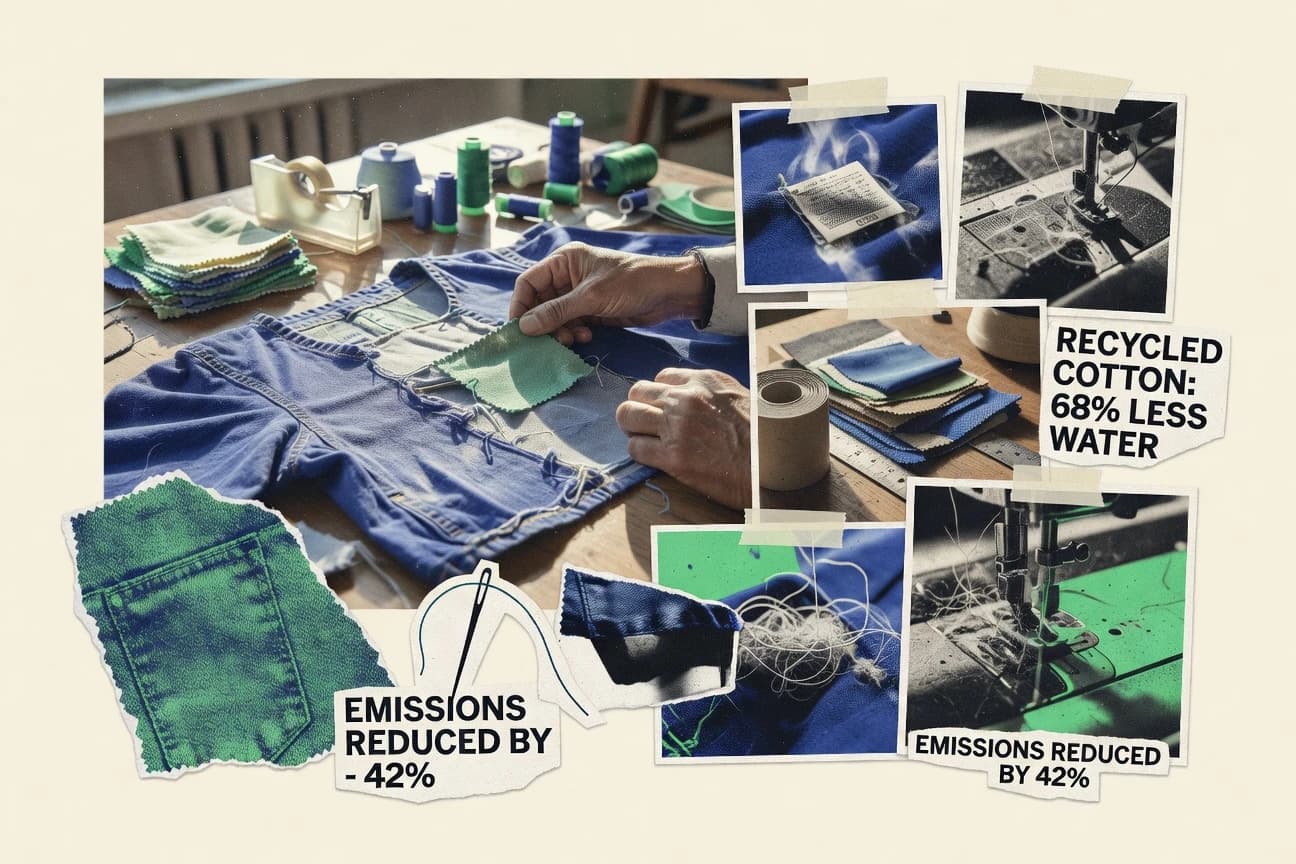
Sustainability In The Apparel Industry Statistics
With 57% of shoppers preferring brands with sustainability commitments and EU packaging rules tightening from January 2025 and extended producer responsibility starting in 2026, the numbers make the business case unmistakable, from a 30% CO2e per garment reduction through circular strategies to 280 kg of CO2e per person per year tied to textile consumption in Denmark. You will also find what it really costs in water and waste, such as 2,700 liters for one cotton T shirt, alongside the market pressure behind solutions like chemical recycling and sustainable packaging.