
Market data
AI In Industry
Explore verified ai in industry statistics and market research reports with sourced data and trend analysis.
Latest update:
 Marcus Engström

AI In The Junk Removal Industry Statistics
From chatbot AI taking 78% of junk removal inquiries to freeing teams by 41 hours every week, the stats reveal exactly how automation is reshaping speed, satisfaction, and margins, not just “customer service.” You will also see why 94% accurate photo quotes, 35% faster responses from sentiment review, and 320% ROI in 18 months are pushing AI adoption to 45% growth and 5.2 billion dollars in the wider waste and junk management market by 2028.

AI Customer Support Industry Statistics
The AI customer support market is now big enough to move budgets and business outcomes, with the global AI customer service software market reaching $21.47B in 2024 alongside automation gains like faster handling and higher first contact resolution. You will also see the practical rollout reality behind the hype, including how 40% of customer service organizations already run AI chatbots in production and how quality and cost improvements are tied to knowledge base and monitoring practices.

AI In The Plastic Surgery Industry Statistics
In 2024, AI tools cut consultation times by 22 minutes and helped 72% of leading US practices add facial asymmetry detection, yet privacy worries still stop 28% of surgeons from adopting them. You will see why the most convincing gains are coming with compliance and bias constraints, including only 3 of 14 FDA approved imaging tools meeting full bias mitigation standards in 2023.

AI In The Higher Education Industry Statistics
With AI governance still missing at 55% of institutions and 68% of privacy breaches in higher education tied to AI tools, the upside is clear but the risk is immediate. The page maps how AI adoption is accelerating from weekly faculty use and transformative research views to major concerns over cheating detection accuracy and rising grading bias, alongside a market projected to reach $20.25 billion by 2027.

Artificial Intelligence Industry Statistics
AI adoption jumped from 55% in 2022 to 72% of companies using it in at least one function in 2023, while 65% of organizations already use generative AI in business by early 2024. You will see how fast investment and impact are moving, from generative AI funding up to $25.2 billion in 2023 to the scale of model building and job market disruption.
AI In The Exhibition Industry Statistics
With AI reshaping events fast, exhibitors are doubling down on matchmaking and lead retrieval tools while event professionals report measurable cost and conversion wins from automation and personalization. This page pulls together the latest market momentum and adoption signals, from a 10.5% projected CAGR for event technology to 39% of event marketers planning AI for content creation, so you can spot what is changing in 2025 and what it means for your next show.
AI In The Candy Industry Statistics
Global confectionery is forecast to grow at a 2.7% CAGR from 2024 to 2029 while the US adds 3.5% from 2024 to 2030, but the bigger shakeup is operational where predictive maintenance can cut unplanned downtime by 20 to 30%, energy use by 10 to 20%, and false alarms by 40%. This page connects those performance wins to demand and risk realities, including 30% better traceability and a 33% drop in product recalls after digitizing quality, so candy leaders can see where AI actually changes outcomes, not just dashboards.

AI In The Screen Printing Industry Statistics
In 2024 trials, AI tools cut screen design time by 60% for 85% of users while boosting throughput 45% per shift, and firms also reported a 19% profit lift from predictive pricing. See how accuracy holds under pressure too, with 99.7% defect detection and 99.2% ink mix consistency that helped AI adopters recover ROI in 4.2 months and reduce scrap by 78%.

AI Australian Wine Industry Statistics
In 2022 Australians drank 427 million litres at home and off premise, with consumption holding steady at 18.5 litres per person while exports delivered A$2.32 billion in value and China remained the biggest buyer at 160 million litres. From a A$5.4 billion GDP contribution and 163,000 full time equivalent jobs to big shifts in red and white volumes, plus sustainability gains like 85% of vineyards certified, this page pins the economic, market, and vineyard reality side by side.

AI In The Event Marketing Industry Statistics
With the global event technology market projected to hit $20.5 billion by 2028 and generative AI already estimated at $21.2 billion in 2023, AI is moving from experiment to budgeted advantage for attendee personalization, event-day support, and faster production. Still, 25% of event marketers say their biggest obstacle is data and measurement, so this page pairs the biggest productivity and revenue uplifts with the practical tensions that determine what actually scales.

AI Sales Intelligence Industry Statistics
By 2024, enterprise adoption of AI sales intelligence jumped from 45% in 2022 to 68% and 82% of sales leaders say they will ramp usage over the next 12 months, even as pipeline velocity climbs 25% and win rates rise 28%. See why the market is projected to surge from $2.47 billion in 2023 to $15.8 billion by 2030 with the biggest share in North America at 42% and generative AI built into 73% of platforms.

AI In The Online Advertising Industry Statistics
By 2024, 42% of advertisers are pinning their biggest AI ad deployment headache on data privacy rules while only 15% of campaigns report generative copy hallucinations that still created 12% brand risk in 2023 audits. See how fast adoption is accelerating, from AI creative usage jumping from 45% in 2021 to 68% in 2023 and AI programmatic taking 82% of US digital display spend in 2023, alongside the skill gaps that slowed 31% of agency projects.
AI In The Defence Industry Statistics
As of 2024, lethal autonomy is being constrained in UN talks while key forces are already operationalizing AI at speed, including 68% of top defense contractors integrating AI through supply chains and 55% of RAF ISR missions using Project LEO. You will see where the momentum meets friction, from GDPR driven EU delays and bias audits to $1.2 billion in UK AI funding through 2025 and the global defense AI market forecast jumping from $9.2 billion in 2023 to $38.8 billion by 2030.
AI In The Beverage Industry Statistics
AI is already a top investment priority for 21% of organizations in 2024, while the global AI solutions market for beverages is projected to keep accelerating with a 30%+ CAGR through 2030. See how that momentum shows up across manufacturing, supply chain, and quality inspection numbers, plus what energy use, governance, and human oversight mean for real implementation costs and outcomes in beverage operations.

AI Immigration Industry Statistics
By 2024, EU border agencies are deploying AI facial recognition in immigration checks while 78% of surveyed immigrants still report privacy concerns, and the same audits flag a 32% false positive rate. Get a 2025 focused view of how fast the industry is scaling, from U.S. firms reaching 67% AI adoption by 2023 to the global AI in immigration market climbing toward $3.2 billion by 2030 with expanding savings, jobs, and compliance pressure.

AI In The Networking Industry Statistics
With 68% of global enterprises planning to invest in AI networking by 2025 and venture funding for AI networking startups topping $1.8 billion in Q1 to Q3 2024, the momentum is real even as skills gaps (65%) and privacy delays (42%) threaten rollout speed. See how AI can cut downtime by 60% and MTTR by 80% while markets surge toward $45.6 billion by 2028.

AI Agent Industry Statistics
AI market momentum is exploding from $267.2 billion in 2024 to an expected $1.8 trillion by 2030, while AI agents remain comparatively tiny at $15.1 billion in 2024 heading to $84.2 billion by 2031. Pair that with adoption signals like 27% of organizations running AI agents in production and 30% faster customer service responses, then connect it to the governance reality shaped by the EU AI Act and NIST’s AI Risk Management Framework so you can gauge what is possible versus what is already safe to deploy.

AI In The Human Industry Statistics
By 2026, 40% of customer service organizations plan to rely on AI copilots, even as AI governance is racing from $5.1B to $18.9B by 2028, and generative AI is projected to soar to $1,300.0B by 2032. This page connects the hiring surge, cost and innovation upside, and the mounting risk and compliance pressure shaping how organizations will use AI for real work.
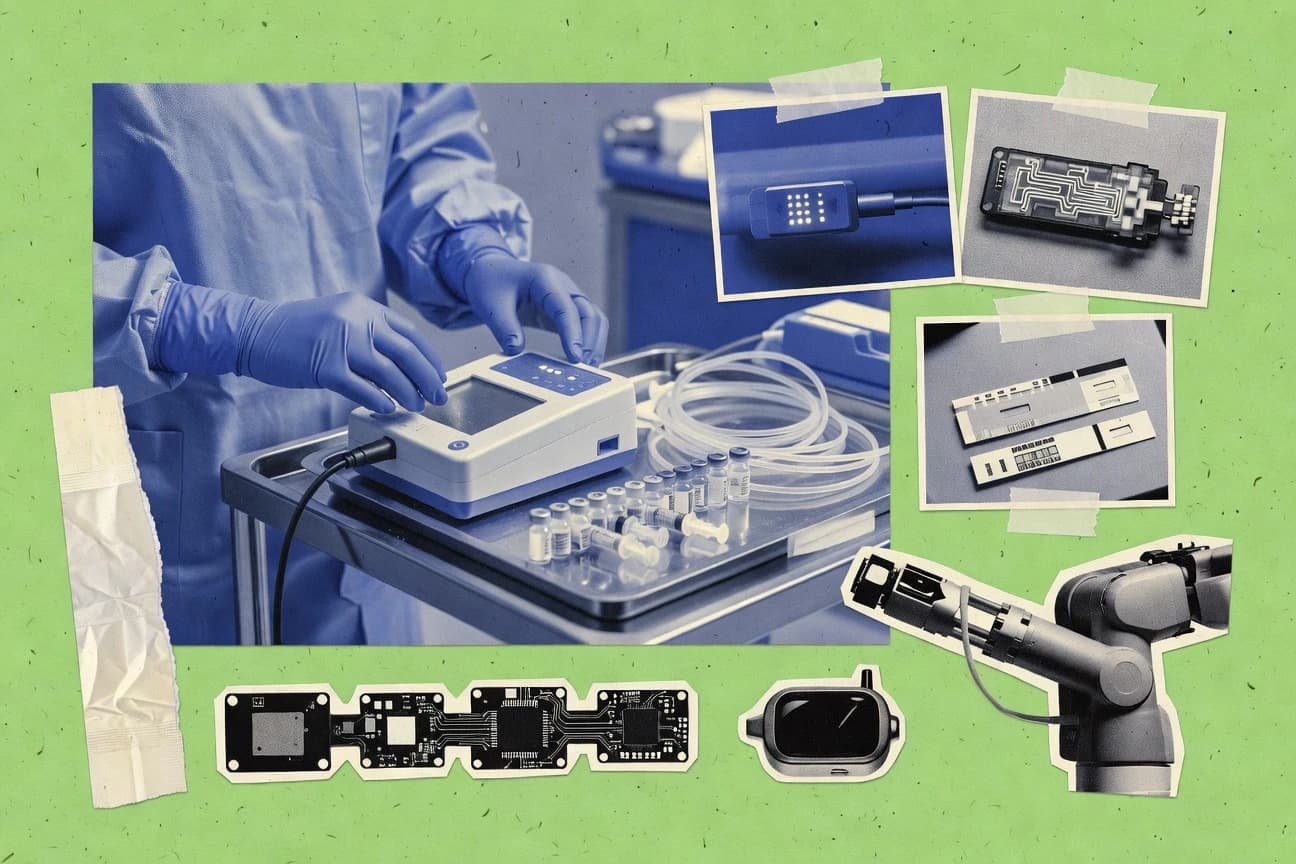
AI In The Medical Device Industry Statistics
With 87% of medical device companies reporting increased AI adoption in 2023 and the FDA clearing 692 AI or ML-enabled devices as of September 2023, this page puts real regulatory and clinical momentum side by side with adoption gaps, including only 62% of hospitals integrating AI medical devices by end of 2023. It also contrasts standout performance from cleared and trialed tools, like 92% sensitivity and 95% specificity for stroke detection, against the scale of investment and growth, including $15.3 billion invested in 2023 and a projected AI medical devices market surge to $18.7 billion by 2030.

AI In The Testing Industry Statistics
By 2024, 67% of QA professionals already rely on AI tools daily, and teams report 5x faster test execution and a 65% cut in manual testing labor costs, turning CI/CD from a bottleneck into a launchpad. See how this shifts outcomes across the stack, from 92% defect detection accuracy and 5% false positives to a market that has grown from USD 1.2 billion in 2022 to a projected USD 4.8 billion by 2030.