
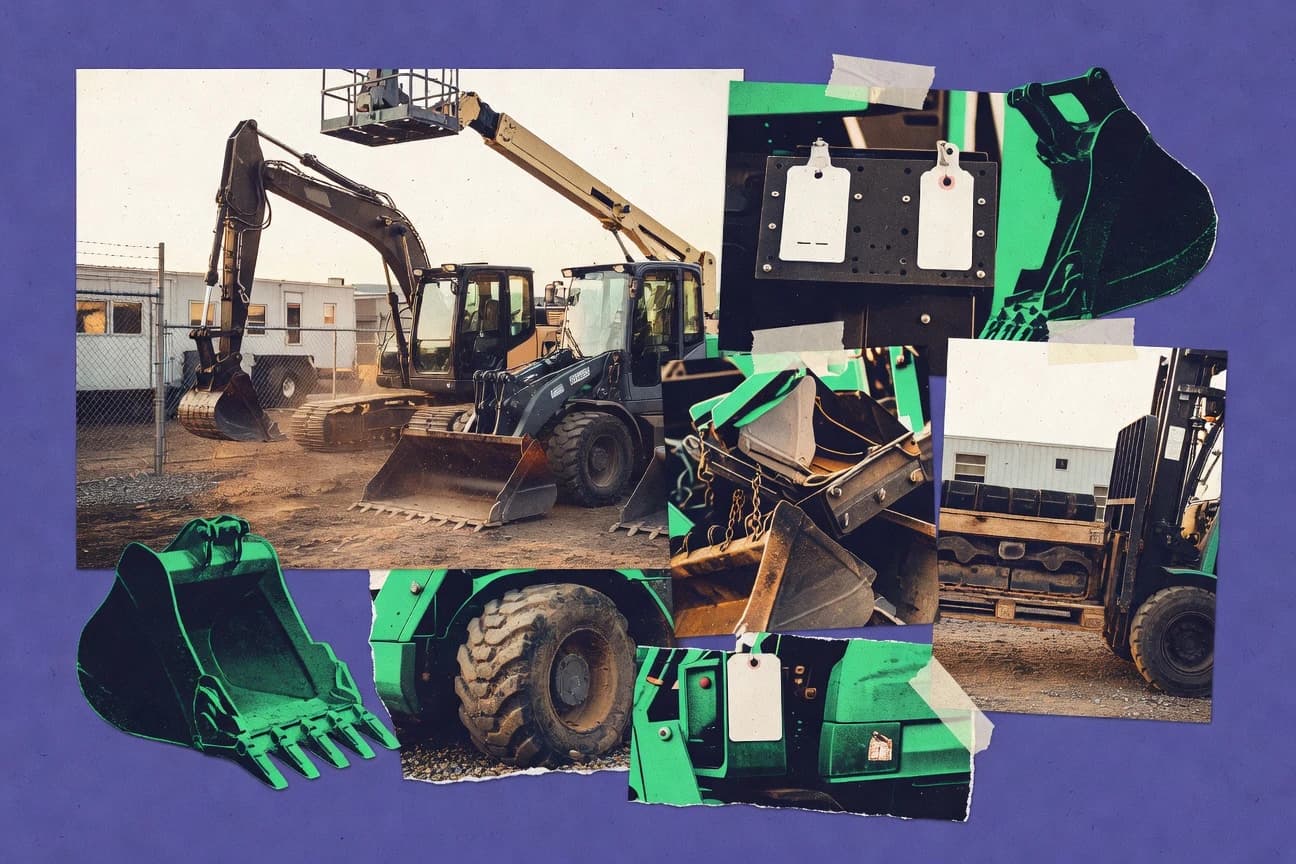

Construction equipment rental supports a broad U.S. and European customer base, giving contractors quick access to machinery for short- and medium-term projects. Demand is tied to sustained construction spending and operating pressures like rising labor and fuel costs. As you move through this page, you’ll connect market size and regional dynamics to common performance measures—uptime, downtime, and inventory turns—along with trends such as telematics and digital jobsite tools.
Key Takeaways
- US$ 48.2 billion global construction equipment rental market size in 2022, providing a baseline for the industry’s scale
- The United States construction equipment rental market is forecast to reach about $82.5 billion by 2028, indicating expected growth trajectory
- 12.5% average annual growth (CAGR) in the U.S. equipment rental and leasing market forecast for 2024-2029 indicates ongoing structural demand for rented machinery services
- Market research estimates that Europe has the second-largest share of the construction equipment rental market after Asia Pacific, indicating regional importance
- Remote monitoring and telematics adoption is a key trend in construction equipment rental, with industry reports citing increasing deployments to improve uptime and predictive maintenance outcomes
- Construction equipment rental operators report that downtime reduction is a primary operational KPI, typically measured in lost hours and days per month to track maintenance and availability improvements
- In the U.S., construction equipment rental is included under NAICS 5324, and industry revenue can be used with Census/IBIS data to estimate operating margin and pricing under cost constraints (use NAICS 5324 revenue for benchmarking)
- BLS reported that the Producer Price Index for machinery and equipment increased year-over-year by roughly 1% to 6% across 2024 periods (PPI data), affecting replacement part and equipment procurement costs
- BLS reported that construction labor costs continued to rise in recent years, increasing incentives for outsourcing equipment via rental rather than full in-house fleet ownership (cost pressure quantified in BLS data)
- In 2023, U.S. construction had thousands of nonfatal injuries and illnesses, providing a scale for the safety training and equipment readiness effort required by rental providers
- Downtime is typically measured as equipment out-of-service hours; rental operators track these hours to manage maintenance cycles and maximize revenue days
- In 2024, equipment downtime impacts are measured using calendar time vs. revenue-producing time; rental performance management uses uptime/downtime percent-of-time metrics
- Terex rental customers use digital platforms and connected telematics to improve utilization; vendor platform pages describe connected equipment capability as a standard offering
- 83% of construction firms reported adopting at least one digital tool such as cloud management, BIM, or connected jobsite systems (2023), supporting increased operational data capture that rental providers can monetize
- 2.6% average annual increase in operating costs for construction equipment rental operations (service-industry cost benchmark, 2022-2023) reflects inflationary pressure that influences rental pricing
With demand and technology driving growth, U.S. construction equipment rental is set to expand rapidly through 2028.
Related reading
01 · Category
Performance Metrics11 stats
01
In 2023, U.S. construction had thousands of nonfatal injuries and illnesses, providing a scale for the safety training and equipment readiness effort required by rental providers
02
Downtime is typically measured as equipment out-of-service hours; rental operators track these hours to manage maintenance cycles and maximize revenue days
03
In 2024, equipment downtime impacts are measured using calendar time vs. revenue-producing time; rental performance management uses uptime/downtime percent-of-time metrics
04
Inventory turns in rental businesses are calculated as cost of rented assets divided by average inventory; industry finance guidance uses this ratio to gauge how quickly assets generate rental revenue
05
Accounts receivable days are tracked to manage cash flow; finance benchmarks use days sales outstanding (DSO) to control collections affecting working capital in rental fleets
06
Working capital cycle measurement (inventory + receivables - payables) is used in rental operations to quantify cash tied up in fleet and parts
07
Return on invested capital (ROIC) is used by equipment leasing and rental firms to assess how effectively capital in fleets generates operating profit
08
10%-20% reduction in maintenance costs is commonly achieved by predictive maintenance programs (reviewed across multiple deployments), supporting the economics of telematics in rental fleet operations
09
30% reduction in time-to-diagnose faults is reported in asset condition monitoring studies (2020), which affects faster repair turnaround for rental fleets
10
1%-3% improvement in overall equipment effectiveness (OEE) is a typical outcome range for condition-based maintenance implementations (industry/academic synthesis, 2019-2021)
11
0.5%-1.5% energy-cost reduction per year is reported from operational efficiency programs using real-time monitoring (energy management study, 2018-2021)
Interpretation
Performance Metrics Interpretation
Across the Performance Metrics for construction equipment rental, operators increasingly focus on tightening day-to-day efficiency by tracking downtime in out of service hours and using financial measures like inventory turns and DSO, which together reflect an industry trend toward reducing both safety-related risk exposure and revenue lost to nonproductive fleet time.
02 · Category
Cost Analysis10 stats
01
In the U.S., construction equipment rental is included under NAICS 5324, and industry revenue can be used with Census/IBIS data to estimate operating margin and pricing under cost constraints (use NAICS 5324 revenue for benchmarking)
02
BLS reported that the Producer Price Index for machinery and equipment increased year-over-year by roughly 1% to 6% across 2024 periods (PPI data), affecting replacement part and equipment procurement costs
03
BLS reported that construction labor costs continued to rise in recent years, increasing incentives for outsourcing equipment via rental rather than full in-house fleet ownership (cost pressure quantified in BLS data)
04
The U.S. rental and leasing services industry (NAICS 532) generated total revenue exceeding $1.0 trillion in 2022, illustrating the broader business renting context for construction equipment rentals
05
In 2023, the Federal Reserve’s target range for the federal funds rate was 5.25% to 5.50% for much of the year, raising fleet financing costs and affecting rental economics
06
Electricity retail prices in the U.S. averaged about 15 cents per kWh in 2023 (EIA), a cost driver for electrified equipment and battery charging economics
07
In 2024, U.S. inflation (CPI-U) was about 3.4% year-over-year (BLS), influencing labor, parts, and repair costs for rental fleets
08
In 2024, U.S. average hourly earnings for construction rose, increasing labor costs that are partially passed into rental pricing (BLS data for AHE construction)
09
Skilled trade shortages can raise labor costs: the U.S. Bureau of Labor Statistics projected employment for construction trades at varying growth rates through 2032, impacting wage pressure and rental pricing dynamics
10
Roughly 20% of annual maintenance cost is attributed to unplanned downtime in many industrial maintenance benchmarks (maintenance operations benchmark cited in CMMS industry research)
Interpretation
Cost Analysis Interpretation
Cost pressures for construction equipment rental have been rising alongside broader input costs, with machinery and equipment producer prices up roughly 1% to 6% year over year in 2024 and electricity averaging about 15 cents per kWh in 2023, pushing more customers to weigh rental economics against higher financing and operating costs.
03 · Category
Industry Trends7 stats
01
Market research estimates that Europe has the second-largest share of the construction equipment rental market after Asia Pacific, indicating regional importance
02
Remote monitoring and telematics adoption is a key trend in construction equipment rental, with industry reports citing increasing deployments to improve uptime and predictive maintenance outcomes
03
Construction equipment rental operators report that downtime reduction is a primary operational KPI, typically measured in lost hours and days per month to track maintenance and availability improvements
04
In 2024, U.S. construction spending (total) exceeded $2.0 trillion, signaling sustained end-market demand that drives rental activity
05
Global construction sector output growth was forecast at about 4% in 2024 by major industry forecasts, supporting increased activity and rental needs
06
Reinforced concrete remained a leading material basis for construction workloads globally, affecting demand for specialized rental equipment such as pumps and breakers
07
In 2024, the U.S. Bureau of Labor Statistics reported unemployment at about 4.3%, supporting steady construction labor availability and associated equipment rental utilization
Interpretation
Industry Trends Interpretation
With U.S. construction spending topping $2.0 trillion in 2024 and global construction output growth forecast at about 4%, the Industry Trends outlook is that construction equipment rental demand is staying strong and is increasingly shaped by tech adoption like remote monitoring and by operators’ focus on reducing downtime in lost hours.
More related reading
04 · Category
Market Size8 stats
01
US$ 48.2 billion global construction equipment rental market size in 2022, providing a baseline for the industry’s scale
02
The United States construction equipment rental market is forecast to reach about $82.5 billion by 2028, indicating expected growth trajectory
03
12.5% average annual growth (CAGR) in the U.S. equipment rental and leasing market forecast for 2024-2029 indicates ongoing structural demand for rented machinery services
04
4.3 million total active construction establishments in the United States (2022) represents the demand base for construction equipment rental customers
05
$82.5 billion is the forecast U.S. construction equipment rental market size in 2028
06
$48.2 billion is the global construction equipment rental market size in 2022
07
$48.2 billion global construction equipment rental market size in 2022, measuring starting market value for global baseline
08
$82.5 billion U.S. construction equipment rental market forecast in 2028, measuring expected U.S. market value
Interpretation
Market Size Interpretation
In 2022 the global construction equipment rental market was valued at US$48.2 billion, and with the United States forecast to reach about $82.5 billion by 2028 alongside a 12.5% CAGR from 2024 to 2029, the market size data shows sustained and accelerating demand for rental services.
report visual · Comparison
Construction equipment rental market size: Global vs. U.S.
In construction equipment rental market size, the U.S. is forecast to lead by 2028—rising to $82.5B versus the $48.2B global baseline in 2022, showing a clear scale advantage for t
$82.5 billion is the forecast U.S. construction equipment rental market size in 2028$82.5 billion
$48.2 billion is the global construction equipment rental market size in 2022
$48.2 billion
$48.2 billion global construction equipment rental market size in 2022, measuring starting market value for global basel
$48.2 billion
source-verifiedtransparencymarketresearch.com · alliedmarketresearch.com2028
05 · Category
Cost Drivers4 stats
01
2.6% average annual increase in operating costs for construction equipment rental operations (service-industry cost benchmark, 2022-2023) reflects inflationary pressure that influences rental pricing
02
18.4% of U.S. businesses’ total spending is attributed to labor (2023 management accounting benchmark), highlighting wage pressure relevance for rental providers
03
A 10% increase in diesel fuel prices increases construction equipment operating costs by roughly 3%-5% (transport/equipment operating cost models, 2019-2021 synthesis)
04
5-10% reduction in fleet profitability can occur when utilization falls by one-quarter (rental/lease financial sensitivity analysis in industry research, 2020-2022)
Interpretation
Cost Drivers Interpretation
Cost drivers are putting real pressure on construction equipment rental margins because operating costs are rising 2.6% annually, labor accounts for 18.4% of total business spending, and a 10% diesel price jump can lift operating costs by about 3% to 5%, with profitability also slipping as utilization falls.
06 · Category
Industry Overview3 stats
01
Terex rental customers use digital platforms and connected telematics to improve utilization; vendor platform pages describe connected equipment capability as a standard offering
02
83% of construction firms reported adopting at least one digital tool such as cloud management, BIM, or connected jobsite systems (2023), supporting increased operational data capture that rental providers can monetize
03
3.7 nonfatal injury and illness cases per 100 full-time workers in construction in 2022 provides a safety risk baseline for equipment readiness and training requirements
Interpretation
Industry Overview Interpretation
In the Construction Equipment Rental Industry, the push toward connected, data-driven operations is clear, with 83% of construction firms adopting at least one digital tool in 2023 and Terex customers using digital platforms and telematics to boost utilization, while safety context remains crucial given the 3.7 nonfatal injury and illness cases per 100 full-time workers in 2022.
Reference
Cite This Report
This report is designed to be cited. We maintain stable URLs and versioned verification dates. Copy the format appropriate for your publication below.
APA
David Sutherland. (2026, February 13). Construction Equipment Rental Industry Statistics. Gitnux. https://gitnux.org/construction-equipment-rental-industry-statistics
MLA
David Sutherland. "Construction Equipment Rental Industry Statistics." Gitnux, 13 Feb 2026, https://gitnux.org/construction-equipment-rental-industry-statistics.
Chicago
David Sutherland. 2026. "Construction Equipment Rental Industry Statistics." Gitnux. https://gitnux.org/construction-equipment-rental-industry-statistics.
Sources & references
41 datasets cited across this report · attribution is report-level
+18 additional datasets cited (not shown individually)