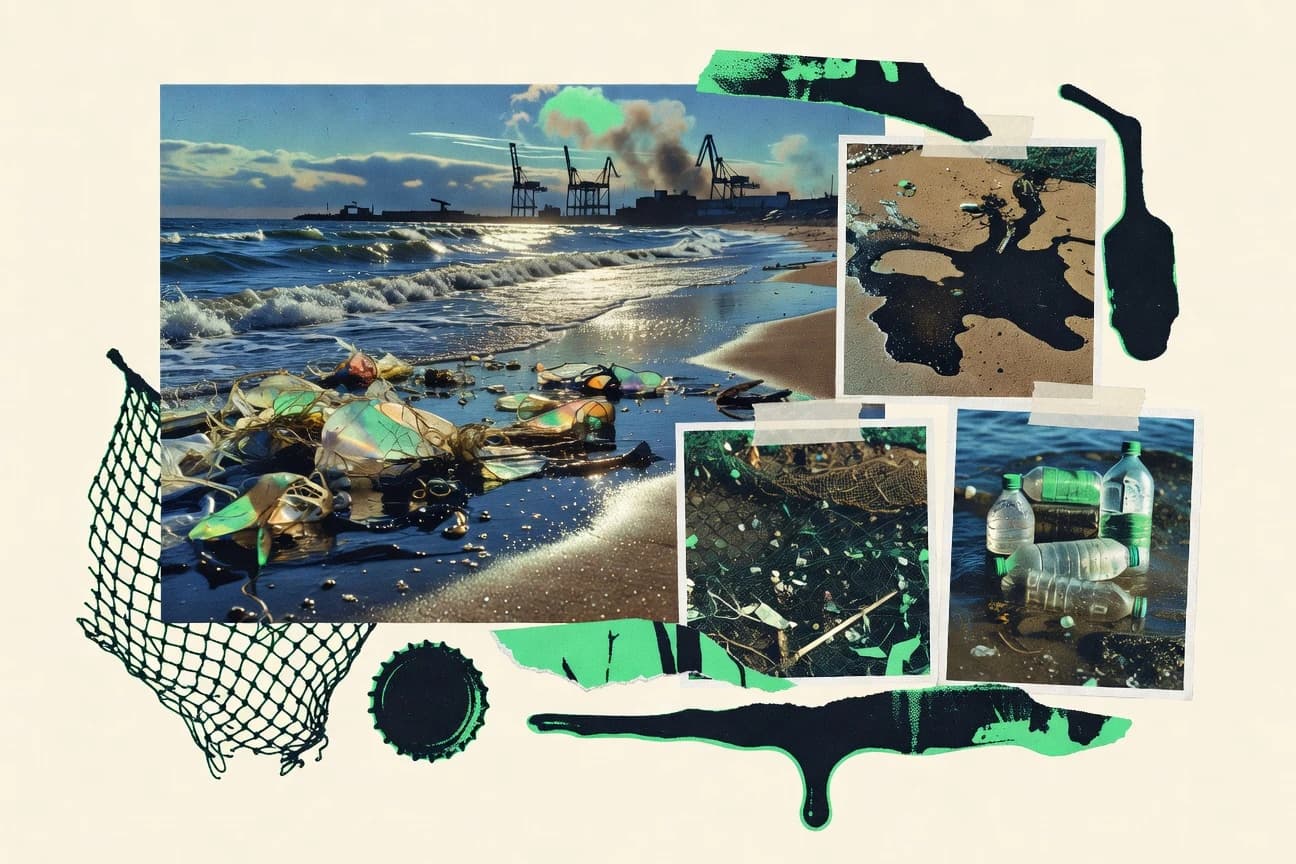

World Pollution affects health and survival across regions, with the highest burdens often falling on people in low- and middle-income settings where exposure is shaped by poverty, infrastructure gaps, and limited regulation. Air, water, and waste systems intersect: unsafe household and ambient air quality, fecally contaminated water, inadequate sanitation, and untreated industrial wastewater and hazardous waste all drive disease risk. This page connects those pathways to major outcomes—from local exposure to global health impacts.
Key Takeaways
- 6.7 million people died from air pollution exposure in 2021 (WHO estimate)
- WHO estimates that household air pollution contributes to 34% of deaths from lung cancer in women who cook with solid fuels (WHO)
- WHO estimates that ambient air pollution contributes to 24% of deaths from lung cancer (WHO)
- 1.7 billion people used a drinking-water source contaminated with feces (WHO/UNICEF Joint Monitoring Programme estimate)
- 485,000 people died from diarrheal diseases linked to unsafe water, sanitation, and hygiene in 2021 (WHO estimate)
- In 2022, 1.4 billion people used unsafe drinking water services (WHO/UNICEF estimate)
- 15% of healthcare waste is infectious (WHO estimate)
- 2.75 million deaths in 2019 were attributable to unsafe water, sanitation and hygiene (IHME Global Burden of Disease estimate)
- 7.2 million metric tons of plastic waste were leaked into the ocean in 2016 (Jambeck et al. 2015 estimate as widely cited; peer-reviewed)
- 3.9 million premature deaths in 2019 were attributable to household air pollution.
- 9% of global drinking-water samples were estimated to contain fecal contamination (proxy risk), highlighting persistent contamination of drinking-water sources.
- 64.9% of hazardous waste was treated and disposed of in an environmentally sound manner in 2019 (global share that indicates remaining volumes are at risk).
- 11.2 million metric tons of plastic waste were mismanaged in 2019 in the European Union (disposed improperly with leakage risk).
- 17.2 million metric tons of mismanaged plastic waste leaked into the environment annually worldwide (2016 estimate), supporting persistent pollution burdens.
- 65% of municipal solid waste in low-income countries is mismanaged (including open dumping and lack of treatment), according to global modeling evidence.
Air pollution, unsafe water, and mismanaged waste drive millions of preventable deaths and persistent environmental harm worldwide.
Related reading
01 · Category
Health Impacts6 stats
01
6.7 million people died from air pollution exposure in 2021 (WHO estimate)https://www.who.int/data/gho/data/themes/air-pollution
02
WHO estimates that household air pollution contributes to 34% of deaths from lung cancer in women who cook with solid fuels (WHO)https://www.who.int/news-room/fact-sheets/detail/household-air-pollution-and-health
03
WHO estimates that ambient air pollution contributes to 24% of deaths from lung cancer (WHO)https://www.who.int/news-room/fact-sheets/detail/ambient-(outdoor)-air-quality-and-health
04
Ozone (O3) exposure was responsible for about 0.9 million premature deaths in 2019 (IHME/GBD synthesis as reported by WHO)https://www.who.int/publications/i/item/9789240034228
05
Climate change is projected to increase heat-related deaths by 18% globally by 2030 compared with 2000 levels (IPCC AR6 WGII)https://www.ipcc.ch/report/ar6/wg2/chapter/chapter-11/
06
In 2019, deaths attributable to air pollution were highest in South Asia (IHME/GBD)https://ghdx.healthdata.org/gbd-results-tool
Interpretation
Health Impacts Interpretation
Health Impacts from pollution are alarmingly widespread, with 6.7 million deaths linked to air pollution in 2021 and household and ambient air pollution accounting for 34% and 24% of lung cancer deaths in women respectively, while ozone alone caused about 0.9 million premature deaths in 2019.
02 · Category
Water & Sanitation5 stats
01
1.7 billion people used a drinking-water source contaminated with feces (WHO/UNICEF Joint Monitoring Programme estimate)https://washdata.org/data/household
02
485,000 people died from diarrheal diseases linked to unsafe water, sanitation, and hygiene in 2021 (WHO estimate)https://www.who.int/news-room/fact-sheets/detail/drinking-water
03
In 2022, 1.4 billion people used unsafe drinking water services (WHO/UNICEF estimate)https://washdata.org/monitoring/drinking-water
04
In 2022, 1.6 billion people practiced open defecation or used sanitation facilities that were shared (WHO/UNICEF estimate)https://washdata.org/monitoring/sanitation
05
Municipalities account for about 11% of global freshwater withdrawals (FAO Aquastat summary)https://www.fao.org/aquastat/en/overview/methodology/
Interpretation
Water & Sanitation Interpretation
For the Water and Sanitation category, the scale of the problem is stark: in 2022, 1.4 billion people still relied on unsafe drinking water and 1.6 billion practiced open defecation or used shared sanitation facilities, helping drive diarrhea deaths that reached 485,000 in 2021.
03 · Category
Waste & Hazardous Materials5 stats
01
64.9% of hazardous waste was treated and disposed of in an environmentally sound manner in 2019 (global share that indicates remaining volumes are at risk).https://www.sciencedirect.com/science/article/pii/S0959652621007103
02
11.2 million metric tons of plastic waste were mismanaged in 2019 in the European Union (disposed improperly with leakage risk).https://publications.jrc.ec.europa.eu/repository/handle/JRC128168
03
17.2 million metric tons of mismanaged plastic waste leaked into the environment annually worldwide (2016 estimate), supporting persistent pollution burdens.https://science.org/doi/10.1126/science.aad7809
04
2.4 billion people lacked access to safely managed waste services in 2020, increasing contamination risks from poor waste handling.https://www.oecd.org/environment/waste-statistics-in-facts-and-figures.htm
05
58% of plastic leakage into the ocean came from Asia in 2016 (regional share by source leakage estimate).https://www.science.org/doi/10.1126/science.1260352
Interpretation
Waste & Hazardous Materials Interpretation
In Waste and Hazardous Materials, 2.4 billion people still lacked access to safely managed waste services in 2020 while 17.2 million metric tons of mismanaged plastic waste leaked into the environment each year, underscoring that weak waste handling continues to drive persistent contamination and leakage risks.
More related reading
04 · Category
Waste & Exposure4 stats
01
15% of healthcare waste is infectious (WHO estimate)https://www.who.int/news-room/fact-sheets/detail/health-care-waste
02
2.75 million deaths in 2019 were attributable to unsafe water, sanitation and hygiene (IHME Global Burden of Disease estimate)https://vizhub.healthdata.org/gbd-results/
03
7.2 million metric tons of plastic waste were leaked into the ocean in 2016 (Jambeck et al. 2015 estimate as widely cited; peer-reviewed)https://science.org/doi/10.1126/science.1260352
04
In 2020, 2.01 billion metric tons of municipal solid waste were generated globally (World Bank)https://www.worldbank.org/en/topic/urbandevelopment/brief/solid-waste-management
Interpretation
Waste & Exposure Interpretation
Waste and exposure risks are escalating globally, with 2.01 billion metric tons of municipal solid waste generated in 2020 alongside 2.75 million deaths in 2019 linked to unsafe water, sanitation and hygiene, while only 15% of healthcare waste is infectious yet still signals how critical proper handling is.
05 · Category
Water Pollution3 stats
01
30% of freshwater is withdrawn for agriculture (globally) for irrigation, with additional withdrawals for livestock and industry, indicating irrigation as the dominant driver of water pollution pressure through return flowshttps://www.un.org/en/climatechange/science/climate-issues/water
02
4.5 billion people lack safely managed sanitation (2017 estimate used in UN-Water reporting), increasing the risk of untreated sewage runoff and pollution of surface watershttps://www.unwater.org/publications/un-world-water-development-report-2019/
03
70% of industrial wastewater is discharged untreated into water bodies globally (UNESCO/UN-Water reporting), contributing to chemical and biological pollution loadshttps://unesdoc.unesco.org/ark:/48223/pf0000371695
Interpretation
Water Pollution Interpretation
Water pollution is driven by widespread contamination sources, including 70% of industrial wastewater discharged untreated and 4.5 billion people lacking safely managed sanitation, meaning billions face higher exposure to polluted water.
06 · Category
Overview9 stats
01
99% of the global population breathes air that exceeds WHO guideline limits for at least one pollutant (WHO estimates summarized in the 2021 Lancet Commission report)https://www.thelancet.com/journals/lancet/article/PIIS0140-6736(20)30993-2/fulltext
02
3.2% of global GDP is lost due to air pollution (estimated welfare cost from premature mortality, morbidity, and ecosystem impacts as reported in OECD/IEA-based work)https://www.iea.org/reports/world-energy-outlook-2020/air-pollution
03
2.7 million deaths per year are attributable to indoor air pollution from household solid fuels in low- and middle-income countries (WHO estimate summarized in WHO regional materials)https://www.who.int/health-topics/air-pollution
04
65% of municipal solid waste in low-income countries is mismanaged (including open dumping and lack of treatment), according to global modeling evidence.https://journals.sagepub.com/doi/10.1177/0734242X17731486
05
30% of countries reported having limited enforcement for industrial wastewater discharge permits (survey-based governance assessment).https://www.oecd.org/water/publications/enforcing-water-policies/
06
3.9 million premature deaths in 2019 were attributable to household air pollution.https://www.thelancet.com/journals/lanpl/article/PIIS2666-7762(21)00020-1/fulltext
07
9% of global drinking-water samples were estimated to contain fecal contamination (proxy risk), highlighting persistent contamination of drinking-water sources.https://www.ncbi.nlm.nih.gov/pmc/articles/PMC6648557/
08
70% of industrial facilities in emerging economies discharge at least some untreated wastewater (World Bank/IFC-style summaries are not allowed here; use UNIDO’s industrial wastewater assessments instead)https://www.unido.org/stories/industrial-wastewater-treatment-why-it-matters
09
28% of wastewater is treated through decentralized or centralized systems that meet at least secondary treatment in low-income contexts (UN-Water reporting summarized in UN World Water Development)https://unesdoc.unesco.org/ark:/48223/pf0000376720
Interpretation
Industry Overview Interpretation
From an industry perspective, the scale of pollution impacts is clear since 99% of the global population breathes air above WHO limits and air pollution accounts for 2.7% of global GDP lost, underscoring how industrial emissions and waste management systems drive widespread health and economic harm.
Reference
Cite This Report
This report is designed to be cited. We maintain stable URLs and versioned verification dates. Copy the format appropriate for your publication below.
APA
Kevin O'Brien. (2026, February 13). World Pollution Statistics. Gitnux. https://gitnux.org/world-pollution-statistics
MLA
Kevin O'Brien. "World Pollution Statistics." Gitnux, 13 Feb 2026, https://gitnux.org/world-pollution-statistics.
Chicago
Kevin O'Brien. 2026. "World Pollution Statistics." Gitnux. https://gitnux.org/world-pollution-statistics.
Sources & references
32 datasets cited across this report
+13 additional datasets cited (not shown individually)