
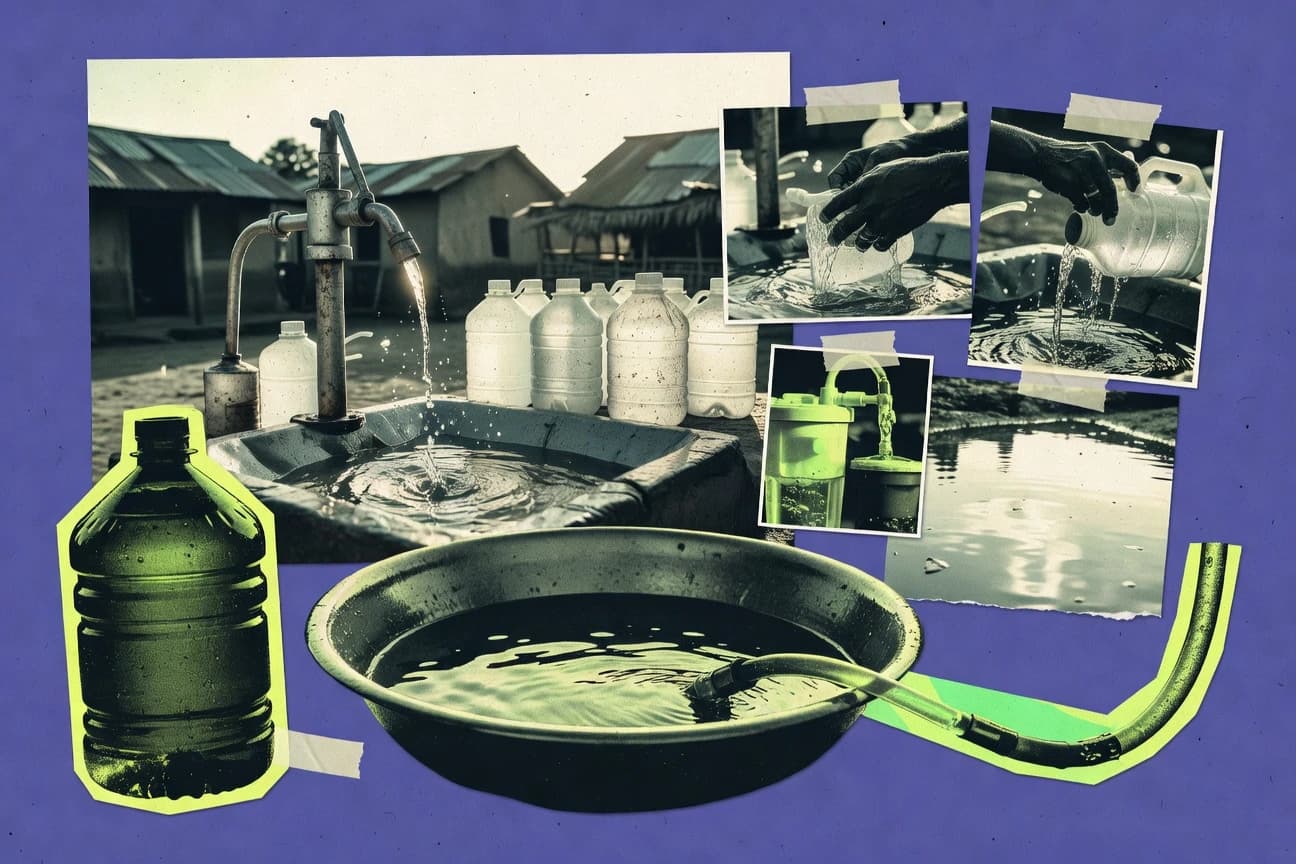

Even with decades of progress, 1.8 billion people were still affected by unsafe water and inadequate sanitation conditions in 2019, and unsafe WASH remains tied to millions of illnesses every year. The statistics also show a sharp split between access and safety, where it is possible to have water present yet still face microbial contamination, cholera, and typhoid risks. Let’s connect these figures across health outcomes, school and household time burdens, and the investment gap needed to reach clean water for everyone.
Key Takeaways
- In 2022, 3% of people in Europe and Northern America lacked at least basic drinking water services (WHO/UNICEF JMP).
- 432,000 deaths in 2019 were attributable to unsafe water, sanitation, and hygiene among children under age 5 (IHME GBD).
- 840,000 deaths from diarrhea in 2016 were attributable to unsafe WASH (WHO/UNICEF).
- Unsafe drinking water is associated with cholera and typhoid; WHO reports 30,000-60,000 cholera deaths annually (WHO).
- $3.3 billion annual losses from inadequate WASH in South Asia (World Bank).
- $26.0 billion economic cost of diarrhea in low- and middle-income countries in 2013 is estimated (Lancet/Elsevier).
- $8.0 billion estimated cost of water and sanitation in Africa (World Bank).
- 75% of drinking water samples tested by the World Health Organization’s guidance materials are expected to meet microbial quality targets when properly managed, highlighting that failures are usually due to system breakdowns rather than source absence.
- In 2019, 1.7 billion people were affected by unsafe water and inadequate sanitation conditions globally (IHME-associated burden population affected).
- In 2017, 20% of wastewater generated in OECD countries was treated at secondary level or better only after additional constraints, indicating treatment gaps for certain pollutants (OECD analysis).
- A 2020 World Bank study estimated the global economic welfare losses from inadequate WASH to be approximately $90 billion per year.
- The World Bank estimates that each additional dollar invested in WASH can generate multiple dollars in benefits, with benefit-cost ratios often reported around 3:1 to 5:1 depending on country context.
- A 2017 systematic review found that providing water quality interventions reduced diarrhea by about 25% compared with control groups.
- A Cochrane review reported that household water treatment interventions can reduce diarrheal disease by about 39% on average.
- A 2013 meta-analysis found that improved sanitation reduces diarrhea by about 32% compared with unimproved sanitation.
Millions of lives, learning, and economic growth are still held back by unsafe water and inadequate sanitation.
Related reading
01 · Category
Access Levels1 stats
01
In 2022, 3% of people in Europe and Northern America lacked at least basic drinking water services (WHO/UNICEF JMP).
Interpretation
Access Levels Interpretation
In the Access Levels category, the data show that in 2022 only 3% of people in Europe and Northern America lacked at least basic drinking water services, indicating broad coverage with a small remaining gap.
02 · Category
Health Burden11 stats
01
432,000 deaths in 2019 were attributable to unsafe water, sanitation, and hygiene among children under age 5 (IHME GBD).
02
840,000 deaths from diarrhea in 2016 were attributable to unsafe WASH (WHO/UNICEF).
03
Unsafe drinking water is associated with cholera and typhoid; WHO reports 30,000-60,000 cholera deaths annually (WHO).
04
WHO estimates typhoid results in 11-21 million cases and 128,000-161,000 deaths annually (WHO).
05
UNICEF reports 1 in 3 people lack safe drinking water globally (UNICEF).
06
5.3% of global DALYs are attributable to unsafe water, sanitation, and hygiene (IHME GBD).
07
4.0% of global deaths in 2016 were attributable to unsafe WASH (GBD 2016/IHME).
08
1 in 10 school-age children globally lack basic drinking water at school (UNESCO/WHO).
09
6.0% of global DALYs were due to diarrheal diseases (WHO/Global Health Estimates).
10
Unsafe WASH contributes to stunting; WHO/World Bank reports WASH as a factor in child undernutrition (WHO/World Bank).
11
1.4 million deaths annually in children under 5 are attributed to diarrheal diseases (UNICEF/WHO via GBD).
Interpretation
Health Burden Interpretation
In the health burden of global clean water access, unsafe water, sanitation, and hygiene are linked to about 432,000 child deaths in 2019 and 5.3% of global DALYs, showing that the harm extends beyond a few episodes into a persistent large-scale cause of preventable illness.
03 · Category
Economic Impacts12 stats
01
$3.3 billion annual losses from inadequate WASH in South Asia (World Bank).
02
$26.0 billion economic cost of diarrhea in low- and middle-income countries in 2013 is estimated (Lancet/Elsevier).
03
$8.0 billion estimated cost of water and sanitation in Africa (World Bank).
04
$200 billion/year is the investment need for WASH to reach SDGs (UNICEF/WHO).
05
$3.7 trillion global annual GDP impact of better water management by 2030 (OECD).
06
$140 billion annual global water-related investment needs by 2030 (OECD).
07
$2.0 billion annual benefits from improved WASH programs in Bangladesh (World Bank).
08
Water and sanitation services can save time; time savings estimate 30 minutes per trip where water is closer (World Bank).
09
2.5 hours/day is time spent collecting water in some settings without improved sources (UNICEF/WASH).
10
$0.3-$0.9 trillion/year is potential value at stake from improved water efficiency globally (OECD).
11
$0.2 trillion/year is global cost of unsafe water and sanitation for low- and middle-income countries (World Bank).
12
$4.0 billion/year global cost of water-borne diseases (WHO/UN).
Interpretation
Economic Impacts Interpretation
Economic losses and investment gaps show how clean water is a major development driver, with diarrhea alone estimated to cost low and middle income countries $26.0 billion in 2013 while reaching the SDGs requires $200 billion per year in WASH investment.
04 · Category
Risk Exposure2 stats
01
75% of drinking water samples tested by the World Health Organization’s guidance materials are expected to meet microbial quality targets when properly managed, highlighting that failures are usually due to system breakdowns rather than source absence.
02
In 2019, 1.7 billion people were affected by unsafe water and inadequate sanitation conditions globally (IHME-associated burden population affected).
Interpretation
Risk Exposure Interpretation
From a risk exposure perspective, even though 75% of tested drinking water samples are expected to meet microbial targets when properly managed, an estimated 1.7 billion people in 2019 were still affected by unsafe water and inadequate sanitation, showing that the biggest threat often comes from failures in the system rather than a lack of water sources.
05 · Category
Infrastructure Access1 stats
01
In 2017, 20% of wastewater generated in OECD countries was treated at secondary level or better only after additional constraints, indicating treatment gaps for certain pollutants (OECD analysis).
Interpretation
Infrastructure Access Interpretation
In 2017, only 20% of wastewater generated in OECD countries was treated at secondary level or better even with additional constraints, underscoring major infrastructure gaps in wastewater treatment capacity.
06 · Category
Cost Analysis2 stats
01
A 2020 World Bank study estimated the global economic welfare losses from inadequate WASH to be approximately $90 billion per year.
02
The World Bank estimates that each additional dollar invested in WASH can generate multiple dollars in benefits, with benefit-cost ratios often reported around 3:1 to 5:1 depending on country context.
Interpretation
Cost Analysis Interpretation
From a cost analysis perspective, inadequate WASH is costing the world about $90 billion in welfare losses every year, yet investing in WASH delivers benefits that typically outweigh costs with benefit cost ratios around 3 to 5 to 1.
More related reading
07 · Category
Health Outcomes7 stats
01
A 2017 systematic review found that providing water quality interventions reduced diarrhea by about 25% compared with control groups.
02
A Cochrane review reported that household water treatment interventions can reduce diarrheal disease by about 39% on average.
03
A 2013 meta-analysis found that improved sanitation reduces diarrhea by about 32% compared with unimproved sanitation.
04
Handwashing with soap can reduce diarrheal illness by about 30% based on randomized evaluations synthesized in a health evidence review.
05
A 2015 meta-analysis found that water treatment interventions can reduce intestinal helminth infections by approximately 39%.
06
Households without basic drinking water service had higher odds of diarrheal disease in a multi-country pooled analysis (pooled odds ratio reported in the study)
07
A Cochrane review reported that water treatment (including chlorination) reduces diarrheal illness episodes by about 13% (relative reduction)
Interpretation
Health Outcomes Interpretation
Overall, the health outcomes evidence shows that clean water and related practices can substantially cut diarrheal disease, with measured reductions ranging from about 13% to 39% depending on the intervention, underscoring how improving water quality and treatment directly improves health.
08 · Category
Policy & Investment1 stats
01
Global WASH-related interventions are estimated to avert millions of diarrheal episodes annually; WHO’s evidence summaries report an average reduction of diarrheal episodes of around 20–30% for key WASH approaches.
Interpretation
Policy & Investment Interpretation
For the Policy and Investment category, investing in WASH approaches is projected to cut diarrheal episodes by about 20 to 30 percent, meaning interventions can prevent millions of cases each year based on WHO evidence summaries.
09 · Category
Service Coverage1 stats
01
1.8 billion people globally used a drinking water source contaminated by feces in 2017–2020 (interquartile range depends on estimate)
Interpretation
Service Coverage Interpretation
Under service coverage, 1.8 billion people worldwide used drinking water contaminated by feces during 2017 to 2020, underscoring that unsafe water access remains widespread even within recent coverage estimates.
10 · Category
Water Infrastructure1 stats
01
Between 2000 and 2017, the share of wastewater from OECD countries treated at secondary level or better increased from about 68% to about 80% (OECD)
Interpretation
Water Infrastructure Interpretation
From 2000 to 2017, OECD countries expanded water infrastructure performance by raising the share of wastewater treated at secondary level or better from about 68% to about 80%, signaling steady improvements in wastewater treatment capacity.
11 · Category
Economic Impact6 stats
01
The global total economic cost of unsafe WASH (including water-borne disease, time, and other impacts) was estimated at about $260 billion per year in 2015 dollars in a recent meta-analysis of previous estimates (Lancet Planetary Health synthesis)
02
Improved water, sanitation, and hygiene (WASH) interventions have been estimated to produce economic returns with benefit-cost ratios commonly in the range of about 2:1 to 5:1 in low- and middle-income countries (World Bank WASH economic evidence review)
03
In a 2012 analysis, investing in WASH was associated with a median internal rate of return of about 10% across studies (CDC/peer-reviewed evidence synthesis)
04
Households in low-income settings often spend a substantial share of income on coping with water insecurity; in a study, average coping costs were about 3.0% of household income for water-related expenditures
05
Water insecurity is associated with measurable productivity losses; a global review found that water collection time accounted for about 5–10% of working time for affected populations
06
A study of WASH-related health costs found medical costs related to diarrheal diseases were about 1.4% of total health spending in the analyzed setting
Interpretation
Economic Impact Interpretation
From an economic impact perspective, unsafe WASH is costing about $260 billion every year, while investments in improved WASH commonly yield returns in the roughly 2:1 to 5:1 benefit to cost range and even show a median internal rate of return near 10%, suggesting the financial case for expanding clean water and sanitation is both large and consistently positive.
12 · Category
Financing & Policy4 stats
01
In 2023, global WASH-related finance mobilized by development finance institutions was about $X (reported in 2023 sector tracking)
02
OECD development finance for water supply and sanitation increased from about $6.5 billion in 2016 to about $9.0 billion in 2022 (OECD DAC statistics as compiled in an open dataset)
03
A policy evaluation found that community-managed water systems sustained functionality at about 80–90% over 2–3 years in multiple case studies (systematic review)
04
A 2018 systematic review reported that improving water access through household connections increased time savings by about 30 minutes per trip on average across included studies
Interpretation
Financing & Policy Interpretation
Financing and policy efforts are clearly scaling up, with OECD development finance for water supply and sanitation rising from about $6.5 billion in 2016 to about $9.0 billion in 2022, while evidence from policy-oriented interventions shows community-managed systems maintain 80 to 90 percent functionality over 2 to 3 years and household connections deliver roughly 30 minutes of time savings per trip.
Reference
Cite This Report
This report is designed to be cited. We maintain stable URLs and versioned verification dates. Copy the format appropriate for your publication below.
APA
Diana Reeves. (2026, February 13). Global Access To Clean Water Statistics. Gitnux. https://gitnux.org/global-access-to-clean-water-statistics
MLA
Diana Reeves. "Global Access To Clean Water Statistics." Gitnux, 13 Feb 2026, https://gitnux.org/global-access-to-clean-water-statistics.
Chicago
Diana Reeves. 2026. "Global Access To Clean Water Statistics." Gitnux. https://gitnux.org/global-access-to-clean-water-statistics.
Sources & references
49 datasets cited across this report · attribution is report-level
+27 additional datasets cited (not shown individually)