
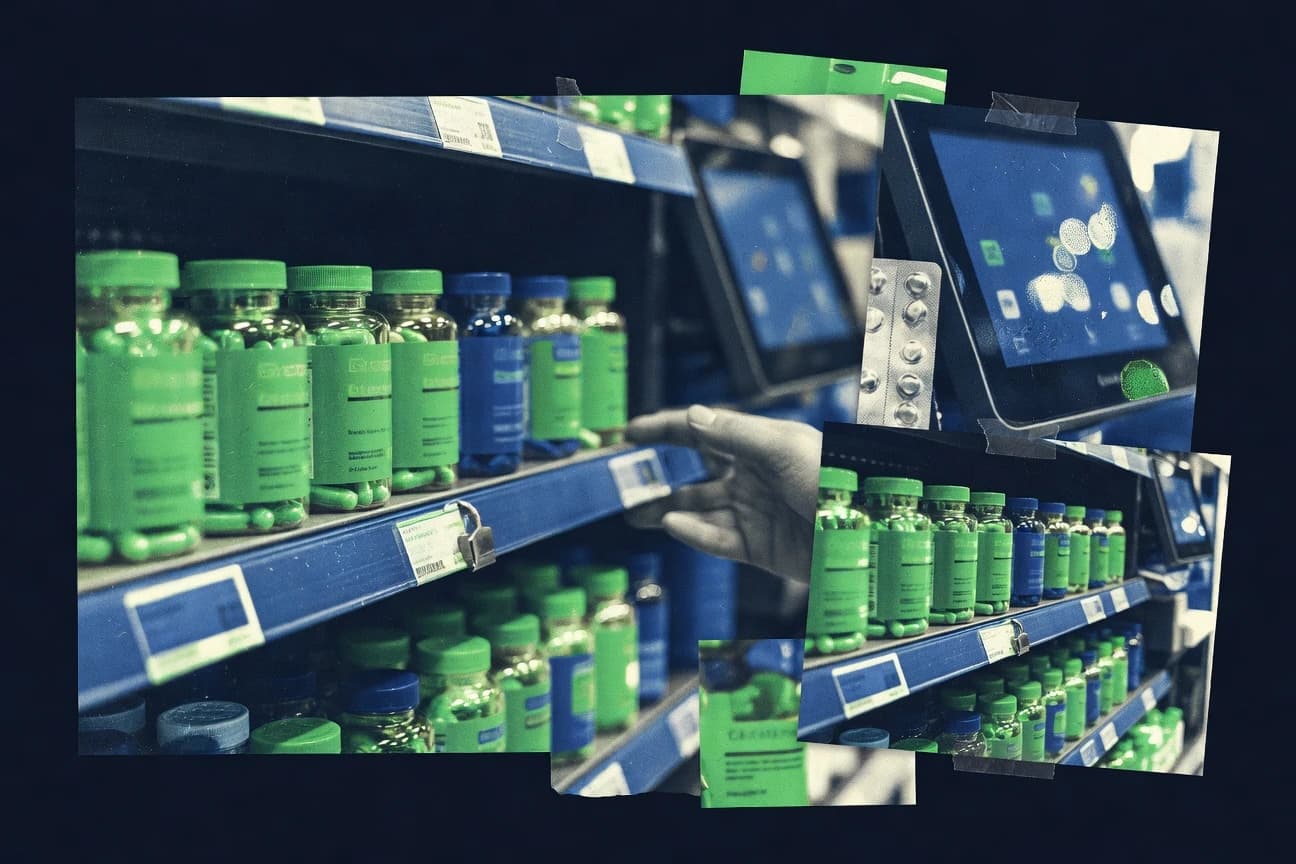

The global dietary supplements market reached 177.6 billion dollars with an 8.9 percent projected compound annual growth rate. U.S. consumers spent 36.2 billion dollars on supplements. Thirty percent now buy online and 51 percent want clinically studied ingredients.
Key Takeaways
- 8.9% compound annual growth rate (CAGR) of the global dietary supplements market projected for 2024–2028, indicating steady expansion over the next few years
- $177.6 billion global dietary supplements market size in 2023, representing the total worldwide sales value
- $36.2 billion U.S. supplement retail sales in 2024, representing expected annual consumer spend
- 72% of adults with specific chronic conditions reported supplement use in 2017–2018 (NHANES), indicating higher usage among some patient groups
- 17% of adults used supplements for “weight control” (2017–2018), indicating a common category-specific intent
- 12% of U.S. adults reported using herbal supplements in the last 30 days (NHANES, 2013–2016), indicating herbal supplement prevalence
- 38% of consumers report purchasing supplements influenced by recommendations from friends/family, indicating social referral influence
- 51% of consumers report wanting “clinically studied” ingredients in supplement products, indicating a evidence-seeking trend
- 30% of consumers report buying supplements online rather than in-store (2023 survey), indicating digital channel preference
- Under FDA’s CAERS, dietary supplements accounted for 22% of total supplement-related adverse event reports in 2022, indicating category contribution to reported events
- NSF Certified for Sport tests 100% of batches submitted for banned-substance screening, indicating batch-level testing coverage
- In a 2022 review, around 20–30% of dietary supplement products fail label-claim accuracy tests in published studies (meta-analytic range), indicating quality variability
- U.S. dietary supplement companies can face GMP inspection costs averaging tens of thousands of dollars per inspection (industry estimate), indicating inspection-related expenses
- Third-party certifications (e.g., NSF/USP) can add $1,000–$10,000 per year per product line in testing fees (industry pricing), indicating added compliance costs
- In FY2023, FDA’s food program used 1,200+ investigators for inspections (reported), indicating enforcement workforce size
Dietary supplements keep growing fast, with strong demand for verified, science backed ingredients and rising online sales.
Related reading
01 · Category
Market Size12 stats
01
8.9% compound annual growth rate (CAGR) of the global dietary supplements market projected for 2024–2028, indicating steady expansion over the next few years
02
$177.6 billion global dietary supplements market size in 2023, representing the total worldwide sales value
03
$36.2 billion U.S. supplement retail sales in 2024, representing expected annual consumer spend
04
$2.4 billion global sales of sports nutrition products in 2023 in the U.S. measured category (industry estimate), indicating size of fitness-focused segment
05
Dietary supplement users in the U.S. accounted for 70% of supplement sales value (survey estimates), indicating concentration among users
06
$8.3 billion sales of immune support supplements globally in 2023 (industry estimate), indicating segment size
07
$6.7 billion global sales of vitamin C supplements in 2023 (industry estimate), indicating segment size
08
$5.2 billion global sales of vitamin D supplements in 2023 (industry estimate), indicating segment size
09
$9.0 billion global sales of omega-3 supplements in 2023 (industry estimate), indicating segment size
10
$4.7 billion global sales of magnesium supplements in 2023 (industry estimate), indicating segment size
11
$3.9 billion global sales of collagen supplements in 2023 (industry estimate), indicating segment size
12
$2.8 billion global sales of creatine supplements in 2023 (industry estimate), indicating segment size
Interpretation
Market Size Interpretation
The market size data shows the global dietary supplements sector is expanding steadily with an 8.9% CAGR expected from 2024 to 2028, rising from $177.6 billion in 2023 to a much larger baseline of consumer spend such as the projected $36.2 billion in U.S. supplement retail sales in 2024.
02 · Category
Industry Trends8 stats
01
38% of consumers report purchasing supplements influenced by recommendations from friends/family, indicating social referral influence
02
51% of consumers report wanting “clinically studied” ingredients in supplement products, indicating a evidence-seeking trend
03
30% of consumers report buying supplements online rather than in-store (2023 survey), indicating digital channel preference
04
26% of consumers say they would pay more for third-party certification (e.g., NSF Certified for Sport), indicating willingness-to-pay for verification
05
In 2023, FDA reached 187 dietary supplement “adulteration/false label” cases in import refusals (reported), indicating import-level compliance issues
06
Amazon accounted for 34% of U.S. supplement e-commerce traffic share in 2023 (web analytics), indicating traffic concentration
07
FDA’s Dietary Supplement Facility Registration dataset showed 91,000+ dietary supplement facilities registered by 2024 (as reported), indicating number of facilities
08
32% of supplement purchases in the U.S. are for online marketplaces (survey), indicating channel share
Interpretation
Industry Trends Interpretation
Industry Trends show that consumers are increasingly evidence and trust driven and digitally connected, with 51% seeking clinically studied ingredients and 26% willing to pay more for third party certification alongside 30% preferring online purchases and Amazon holding 34% of US supplement e commerce traffic in 2023.
03 · Category
User Adoption6 stats
01
72% of adults with specific chronic conditions reported supplement use in 2017–2018 (NHANES), indicating higher usage among some patient groups
02
17% of adults used supplements for “weight control” (2017–2018), indicating a common category-specific intent
03
12% of U.S. adults reported using herbal supplements in the last 30 days (NHANES, 2013–2016), indicating herbal supplement prevalence
04
8% of U.S. adults report using protein powders (NHANES 2017–2018), indicating usage of sports/fitness supplements
05
1 in 5 (20%) adults take a daily multivitamin (NHIS-based estimates), indicating multivitamin adoption
06
In 2021, 57% of U.S. adults reported using at least one dietary supplement at some time (NHIS), indicating lifetime-to-recent use prevalence
Interpretation
User Adoption Interpretation
In the User Adoption category, supplement use is widespread and persistent, with 57% of U.S. adults reporting use of at least one dietary supplement in 2021 and 20% taking a daily multivitamin, showing that adoption extends beyond occasional interest.
More related reading
04 · Category
Performance Metrics5 stats
01
Under FDA’s CAERS, dietary supplements accounted for 22% of total supplement-related adverse event reports in 2022, indicating category contribution to reported events
02
NSF Certified for Sport tests 100% of batches submitted for banned-substance screening, indicating batch-level testing coverage
03
In a 2022 review, around 20–30% of dietary supplement products fail label-claim accuracy tests in published studies (meta-analytic range), indicating quality variability
04
A 2018 study found 4 in 10 herbal supplements contained undeclared pharmaceuticals, indicating adulteration risk
05
A 2020 review reported that some supplements show contamination with heavy metals at measurable levels in a subset of tested products, indicating contaminant prevalence
Interpretation
Performance Metrics Interpretation
For the Performance Metrics category, the data points to both high operational coverage and persistent quality gaps, with dietary supplements making up 22% of adverse event reports in 2022 alongside studies finding 20 to 30% of products fail label claim accuracy and up to 4 in 10 herbal supplements contain undeclared pharmaceuticals.
05 · Category
Cost Analysis4 stats
01
U.S. dietary supplement companies can face GMP inspection costs averaging tens of thousands of dollars per inspection (industry estimate), indicating inspection-related expenses
02
Third-party certifications (e.g., NSF/USP) can add $1,000–$10,000 per year per product line in testing fees (industry pricing), indicating added compliance costs
03
In FY2023, FDA’s food program used 1,200+ investigators for inspections (reported), indicating enforcement workforce size
04
In 2022, the U.S. dietary supplements industry spent about $X on advertising (SRO), indicating marketing intensity
Interpretation
Cost Analysis Interpretation
Cost analysis shows that U.S. dietary supplement companies face recurring compliance and quality expenses, with GMP inspections typically costing tens of thousands of dollars each and third party certifications adding $1,000 to $10,000 per year per product line in testing fees.
06 · Category
Industry Overview3 stats
01
NSF’s third-party certification program results reported that 99% of NSF Certified for Sport samples passed screening for banned substances in batch testing (program result), indicating high pass-rate in banned-substance control
02
45% of consumers reported they prefer “no artificial colors/flavors” for supplements (survey-based), indicating a compliance-by-preference segment relevant to formulation
03
48% of U.S. supplement manufacturers reported that they perform COA (Certificate of Analysis) review for every incoming raw-material lot (survey-based), indicating lot-level verification practices
Interpretation
Industry Overview Interpretation
In the industry overview, the combination of strong banned-substance control at 99% of NSF Certified for Sport samples passing screening, growing consumer preference for no artificial colors or flavors at 45%, and widespread quality checking with 48% of manufacturers reviewing COAs for every incoming lot shows compliance is increasingly driven by both regulation and market expectations.
report visual · Key figures
Supplement market growth and scale
Global dietary supplements are projected to expand steadily, alongside large current market size and U.S. retail spend.
8.9%
8.9% compound annual growth rate (CAGR) of the global dietary supplements market projected for 2024–2028, indicating ste
$177.6 billion
$177.6 billion global dietary supplements market size in 2023, representing the total worldwide sales value
$36.2 billion
$36.2 billion U.S. supplement retail sales in 2024, representing expected annual consumer spend
source-verifiedglobenewswire.com · fortunebusinessinsights.com · europarl.europa.eu2024
Reference
Cite This Report
This report is designed to be cited. We maintain stable URLs and versioned verification dates. Copy the format appropriate for your publication below.
APA
Marcus Afolabi. (2026, February 13). Supplement Sales Statistics. Gitnux. https://gitnux.org/supplement-sales-statistics
MLA
Marcus Afolabi. "Supplement Sales Statistics." Gitnux, 13 Feb 2026, https://gitnux.org/supplement-sales-statistics.
Chicago
Marcus Afolabi. 2026. "Supplement Sales Statistics." Gitnux. https://gitnux.org/supplement-sales-statistics.
Sources & references
38 datasets cited across this report · attribution is report-level
+15 additional datasets cited (not shown individually)