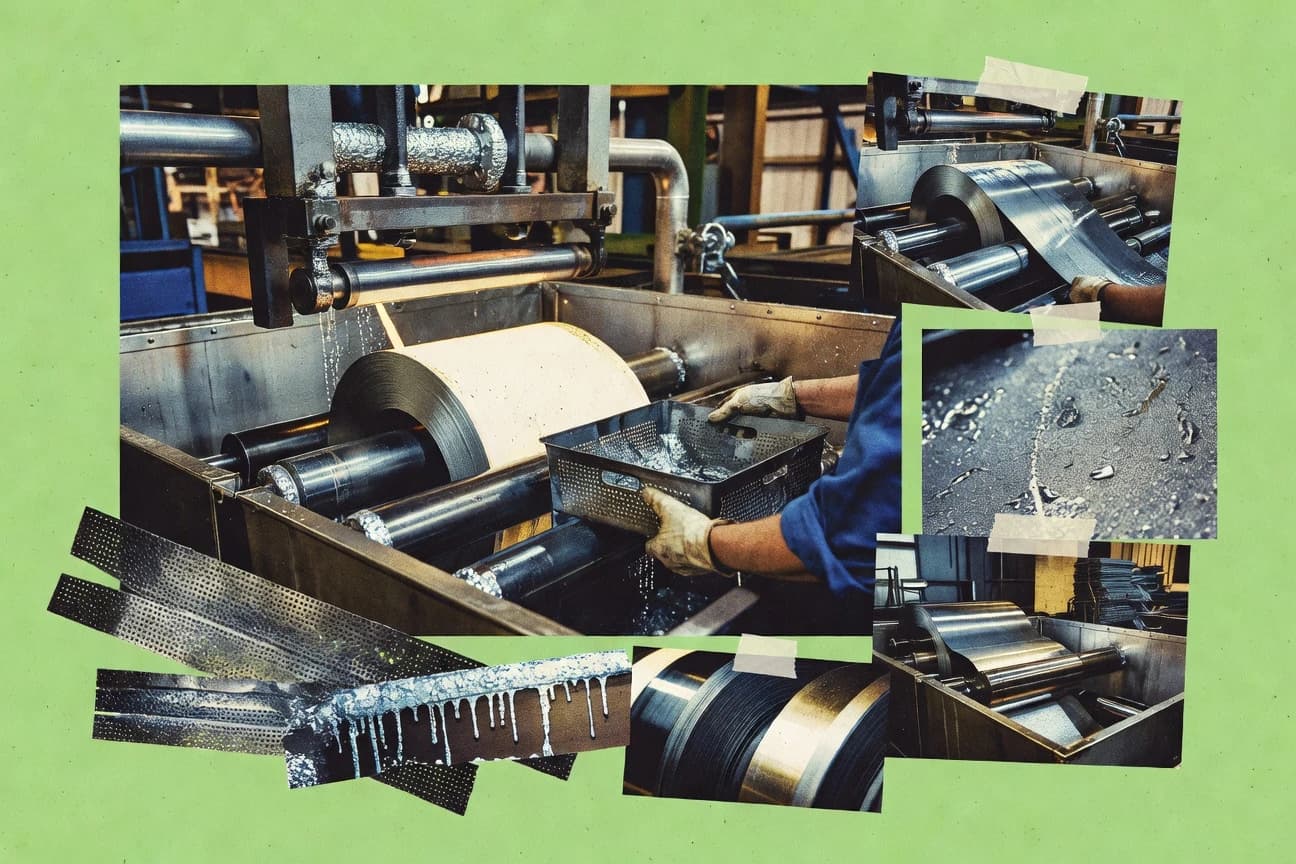

Galvanizing industry activity connects steel makers, fabricators, and end users—from construction and industrial HVAC to grid infrastructure. Demand is shaped by new-build requirements and ongoing asset maintenance, with policy and investment programs (notably in the EU and US) influencing procurement. On this page, explore coating and QA fundamentals, plus environmental and compliance realities like wastewater treatment and zinc recovery.
Key Takeaways
- The global hot-dip galvanizing market is segmented by end-use, with construction accounting for the largest share (~30%–40% in industry segmentation), aligning with major corrosion-protection demand from infrastructure
- Industrial gas and HVAC application segments for galvanized products represent a substantial share of end-use demand (commonly mid-to-high teens percentage share in market segmentation), driven by corrosion durability needs
- Energy sector demand for galvanized steel structures (transmission towers, poles) is described as a growth driver due to grid modernization programs, with market analyses attributing a mid-single-digit percentage contribution and growth
- $7.1 billion global market size for corrosion protection coatings (including zinc-rich coatings used alongside galvanizing) in 2023, supporting demand for zinc-based protective systems
- 2023 U.S. galvanized steel consumption of about 5.3 million metric tonnes (commonly cited in downstream steel consumption analyses as a base for galvanizing demand)
- $8.0 billion estimated value of the global corrosion protection market attributable to zinc and zinc-based products in 2022, underpinning galvanizing value chains
- Typical waste-water treatment for galvanizing includes pH adjustment and heavy-metal removal; plants commonly achieve ≥95% removal of zinc from treated effluent using precipitation/filtration technologies
- The EU Commission’s BAT conclusions for metal-based coating processes include specific emission level ranges for zinc and particulate matter from relevant surface treatment installations
- World Steel Association reports recycling rates for steel at around 90% in many markets due to circularity; high recyclability supports lower upstream impact for steel used in galvanizing
- Environmental compliance cost: EU IED compliance for surface treatment installations requires CAPEX/OPEX for BAT; the directive mandates that permit conditions reflect BAT conclusions for those sectors
- Recycling of zinc-bearing wastes reduces raw zinc input cost; industry guidance shows dross can be processed for zinc recovery, lowering net zinc purchase requirements
- CO2e from electricity and process heating: life-cycle inventory studies quantify kg CO2e per functional unit for zinc coating production routes, enabling cost/climate accounting in LCA studies
- Salt spray test performance is measurable: ASTM B117 specifies test conditions (hours, temperature, chamber settings) used to quantify corrosion resistance of zinc coatings
- Coating thickness is commonly measured via magnetic induction; industry QA processes quantify thickness in micrometers (µm) across specified areas to assure compliance with minimum/maximum ranges
- In a study of corrosion protection on steel, zinc (galvanizing) coatings reduce corrosion rates substantially; experimentally, coated specimens experienced corrosion current densities that were orders of magnitude lower than uncoated steel under similar conditions.
Construction drives the biggest share of galvanizing demand, backed by grid upgrades and stricter corrosion protection standards.
Related reading
01 · Category
Industry Trends8 stats
01
The global hot-dip galvanizing market is segmented by end-use, with construction accounting for the largest share (~30%–40% in industry segmentation), aligning with major corrosion-protection demand from infrastructurehttps://www.imarcgroup.com/hot-dip-galvanizing-market
02
Industrial gas and HVAC application segments for galvanized products represent a substantial share of end-use demand (commonly mid-to-high teens percentage share in market segmentation), driven by corrosion durability needshttps://www.precedenceresearch.com/hot-dip-galvanizing-market
03
Energy sector demand for galvanized steel structures (transmission towers, poles) is described as a growth driver due to grid modernization programs, with market analyses attributing a mid-single-digit percentage contribution and growthhttps://www.fortunebusinessinsights.com/galvanized-steel-market-102822
04
The EU Green Deal and infrastructure spending plans influence galvanizing demand; the European Commission’s investment framework targets at least €50 billion for climate-related investments (enabling infrastructure build-out where galvanized steel is used)https://commission.europa.eu/strategy-and-policy/priorities-2019-2024/european-green-deal_en
05
U.S. IIJA (Infrastructure Investment and Jobs Act) provides $1.2 trillion for infrastructure over 5 years (driving construction and infrastructure activity that increases galvanizing workloads)https://www.congress.gov/bill/117th-congress/house-bill/3684
06
The IEA’s Net Zero by 2050 report projects that clean energy investment rises sharply; the report includes $ trillions annual investment growth that supports grid, wind, and solar structures using galvanized steelhttps://www.iea.org/reports/net-zero-by-2050
07
The World Steel Association reports that steel recycling is widely practiced in many markets; in 2022, the global recycling rate of steel-containing scrap was about 36% of apparent steel use (reported as scrap-to-steel), supporting closed-loop zinc-bearing waste strategies.https://worldsteel.org/publications/resource-and-waste-statistics/
08
The ISSF reports that steel produced from scrap is a major source of supply globally; in 2022, the share of secondary steel production in the global mix was about 36%, affecting downstream economics for coating services like galvanizing.https://www.worldsteel.org/publications/steel-statistics/
Interpretation
Industry Trends Interpretation
From an industry trends perspective, galvanizing demand is being pulled by major infrastructure and clean energy buildouts, with construction taking the largest share around 30% to 40% and policy momentum like the EU Green Deal and the U.S. IIJA’s $1.2 trillion over 5 years accelerating the grid and energy-related projects that need galvanized steel.
02 · Category
Market Size7 stats
01
$7.1 billion global market size for corrosion protection coatings (including zinc-rich coatings used alongside galvanizing) in 2023, supporting demand for zinc-based protective systemshttps://www.fortunebusinessinsights.com/corrosion-protection-coatings-market-107740
02
2023 U.S. galvanized steel consumption of about 5.3 million metric tonnes (commonly cited in downstream steel consumption analyses as a base for galvanizing demand)https://www.worldsteel.org/steel-topics/statistics/galvanized-steel.html
03
$8.0 billion estimated value of the global corrosion protection market attributable to zinc and zinc-based products in 2022, underpinning galvanizing value chainshttps://www.thebusinessresearchcompany.com/report/corrosion-protection-products-market
04
4.6 million tonnes of steel shipments in India in 2022 that contribute to downstream fabrication and protective coating demand including galvanizinghttps://www.worldsteel.org/steel-topics/statistics/steel-figures.html
05
5.1% projected annual growth in global demand for zinc-coated steel products through 2030, linked to infrastructure and construction requirementshttps://www.imarcgroup.com/galvanized-steel-market
06
$2.4 billion market size for structural steel galvanizing (services and related outputs) in 2022, with growth expected through 2030https://www.marketwatch.com/press-release/global-structural-steel-galvanizing-market-growth-forecasts-and-industry-share-2024-2029-2023-12-14
07
In 2023, the U.S. produced 284,000 tonnes of zinc (mine output plus secondary production as reported), providing part of the domestic supply chain for zinc coatings and galvanizing.https://www.usgs.gov/centers/national-minerals-information-center/zinc-statistics-and-information
Interpretation
Market Size Interpretation
The market size data suggests galvanizing-related demand is expanding steadily, with the broader corrosion protection coatings market reaching about $7.1 billion globally in 2023 and zinc-coated steel projected to grow about 5.1% annually through 2030 alongside sizable regional volumes like 5.3 million metric tonnes of galvanized steel in the United States in 2023.
03 · Category
Sustainability Impact4 stats
01
Typical waste-water treatment for galvanizing includes pH adjustment and heavy-metal removal; plants commonly achieve ≥95% removal of zinc from treated effluent using precipitation/filtration technologieshttps://nepis.epa.gov/Exe/ZyNET.exe/P1002Y3O.TXT?ZyActionD=ZyDocument&Client=EPA&DefaultField=&User=&Password=&DTN=2000001&DocType=&Q=&Time=&EndTime=&Display=&DefSearch=
02
The EU Commission’s BAT conclusions for metal-based coating processes include specific emission level ranges for zinc and particulate matter from relevant surface treatment installationshttps://eur-lex.europa.eu/legal-content/EN/TXT/?uri=CELEX:32018D1147
03
World Steel Association reports recycling rates for steel at around 90% in many markets due to circularity; high recyclability supports lower upstream impact for steel used in galvanizinghttps://worldsteel.org/steel-issues/steel-recycling/
04
The global lead/zinc recycling rate is consistently reported in industry studies at roughly 50%–60% for zinc over recent years, with galvanizing waste streams contributing to secondary zinc supplyhttps://www.icsr.org/wp-content/uploads/2021/08/International-Lead-and-Zinc-Study-Group-ILZSG-Zinc-Market-Review-2021.pdf
Interpretation
Sustainability Impact Interpretation
Across the sustainability impact evidence, galvanizing stands out for strong environmental controls with at least 95% zinc removal in wastewater treatment, while the wider circularity story is reinforced by steel recycling around 90% and zinc recycling holding roughly steady at 50% to 60%, helping drive lower long-term material and pollution burdens.
More related reading
04 · Category
Cost Analysis16 stats
01
Environmental compliance cost: EU IED compliance for surface treatment installations requires CAPEX/OPEX for BAT; the directive mandates that permit conditions reflect BAT conclusions for those sectorshttps://eur-lex.europa.eu/eli/dir/2010/75/oj
02
Recycling of zinc-bearing wastes reduces raw zinc input cost; industry guidance shows dross can be processed for zinc recovery, lowering net zinc purchase requirementshttps://www.oecd.org/chemicalsafety/risk-management/zinc-recovery-from-galvanizing-dross.pdf
03
CO2e from electricity and process heating: life-cycle inventory studies quantify kg CO2e per functional unit for zinc coating production routes, enabling cost/climate accounting in LCA studieshttps://www.sciencedirect.com/science/article/pii/S0959652614010432
04
Waste treatment cost drivers: NPDES and pretreatment require zinc removal and sludge handling; EPA effluent guideline coverage for metal finishing establishes compliance obligations that translate to per-facility operating costshttps://www.epa.gov/eg/metal-finishing-effluent-guidelines
05
Zinc coating cost per area can be estimated from minimum coating mass requirements; ASTM A123 provides minimum coating weights that translate into zinc consumption costshttps://www.astm.org/a123a123m.html
06
Galvanizing line yields: coating thickness directly relates to zinc consumption per square meter; plants control bath levels to achieve target g/m², which directly affects raw material costhttps://www.iso.org/standard/6810.html
07
Zinc price exposure: zinc (LME) price volatility materially affects galvanizing input costs; for example, LME zinc prices moved between ~$2,500and ~$3,500 per metric ton during 2023 depending on month, impacting bath-cost calculationshttps://www.lme.com/metals/non-ferrous/zinc
08
Energy cost impact: natural gas and electricity prices are major cost components in galvanizing; U.S. EIA reports monthly industrial electricity prices (cents/kWh) that track year-to-year cost changes for coating operationshttps://www.eia.gov/electricity/monthly/epm_table_grapher.php?t=epmt_1_05
09
Labor cost share: manufacturing cost accounting commonly finds labor as a substantial share of total cost for metal finishing plants; U.S. BLS reports wages for metal workers enabling cost modelinghttps://www.bls.gov/oes/current/oes514000.htm
10
Throughput impact on unit costs: line uptime is a key performance lever; U.S. manufacturing capacity utilization averages reported by the Federal Reserve allow estimating how utilization changes affect unit costhttps://fred.stlouisfed.org/series/TCU
11
Scrap and steel input cost: hot-dip galvanizing cost is sensitive to steel scrap prices; World Bank commodity price data provides series for steel scrap enabling cost modeling of downstream projectshttps://www.worldbank.org/en/research/commodity-markets
12
For U.S. metal finishing, compliance with pretreatment and effluent limits can require installation/upgrade of wastewater treatment systems; the EPA effluent guidelines contain measurable technology-based limitshttps://www.ecfr.gov/current/title-40/chapter-I/subchapter-D/part-433
13
In 2023, the average industrial electricity price in the U.S. was about 10.2 cents per kWh for manufacturing (annual average), a key input cost for galvanizing line operations that rely on electricity for heating, agitation, and ancillary systems.https://www.eia.gov/electricity/monthly/
14
Natural gas is the dominant fuel for many U.S. process heat applications; U.S. natural gas spot prices averaged about $2.5per million Btu in 2023 (annual average), influencing heat costs for coating and re-melt/thermal steps in metal finishing.https://www.eia.gov/dnav/ng/ng_pri_sum_a_EPG0_PRS_DMcf_a.htm
15
U.S. Bureau of Labor Statistics reports that the annual mean wage for “Metal and Plastic Workers” (SOC 51-0000 group) was about $43,000in 2023, affecting labor cost structure for metal finishing including galvanizing operations.https://www.bls.gov/oes/current/oes510000.htm
16
U.S. Federal Reserve capacity utilization for manufacturing averaged about 79% in 2023, affecting throughput and unit costs for coating lines when demand varies.https://www.federalreserve.gov/releases/g17/current/
Interpretation
Cost Analysis Interpretation
Cost analysis across the galvanizing industry shows that compliance, waste handling, and zinc use are tightly linked to measurable inputs, with EU IED BAT requirements driving additional capex and opex for surface treatment while zinc recovery from dross can cut raw zinc input costs.
05 · Category
Performance Metrics7 stats
01
Salt spray test performance is measurable: ASTM B117 specifies test conditions (hours, temperature, chamber settings) used to quantify corrosion resistance of zinc coatingshttps://www.astm.org/b117.html
02
Coating thickness is commonly measured via magnetic induction; industry QA processes quantify thickness in micrometers (µm) across specified areas to assure compliance with minimum/maximum rangeshttps://www.astm.org/e376.html
03
In a study of corrosion protection on steel, zinc (galvanizing) coatings reduce corrosion rates substantially; experimentally, coated specimens experienced corrosion current densities that were orders of magnitude lower than uncoated steel under similar conditions.https://www.ncbi.nlm.nih.gov/pmc/articles/PMC6502687/
04
In ASTM B117 testing, corrosion exposure is commonly standardized at 1,000 hours for comparative ranking of coated panels, as specified by the method’s test-duration framework used to quantify corrosion resistance.https://compass.astm.org/standard/B117
05
ASTM A123 is the U.S. standard governing zinc (hot-dip galvanizing) coating on iron and steel products; it specifies minimum coating masses per area (g/m²) used to ensure corrosion protection.https://compass.astm.org/standard/A123
06
Magnetic induction is used for coating thickness measurement in production and inspection, enabling non-destructive measurement in micrometers (µm) for zinc coatings on steel.https://www.iso.org/standard/65085.html
07
In a life-cycle assessment comparing coating alternatives, zinc-coated steel generally demonstrates improved durability and lower cumulative impacts per service life versus untreated steel, with significant differences driven by reduced corrosion-related replacement.https://www.sciencedirect.com/science/article/abs/pii/S0959652617302764
Interpretation
Performance Metrics Interpretation
Performance metrics in the galvanizing industry are highly standardized and measurable, with ASTM B117 commonly using a 1,000 hour salt spray exposure and coating thickness typically quantified in micrometers using magnetic induction to consistently compare corrosion protection.
Reference
Cite This Report
This report is designed to be cited. We maintain stable URLs and versioned verification dates. Copy the format appropriate for your publication below.
APA
Lukas Bauer. (2026, February 13). Galvanizing Industry Statistics. Gitnux. https://gitnux.org/galvanizing-industry-statistics
MLA
Lukas Bauer. "Galvanizing Industry Statistics." Gitnux, 13 Feb 2026, https://gitnux.org/galvanizing-industry-statistics.
Chicago
Lukas Bauer. 2026. "Galvanizing Industry Statistics." Gitnux. https://gitnux.org/galvanizing-industry-statistics.
Sources & references
42 datasets cited across this report
+15 additional datasets cited (not shown individually)