
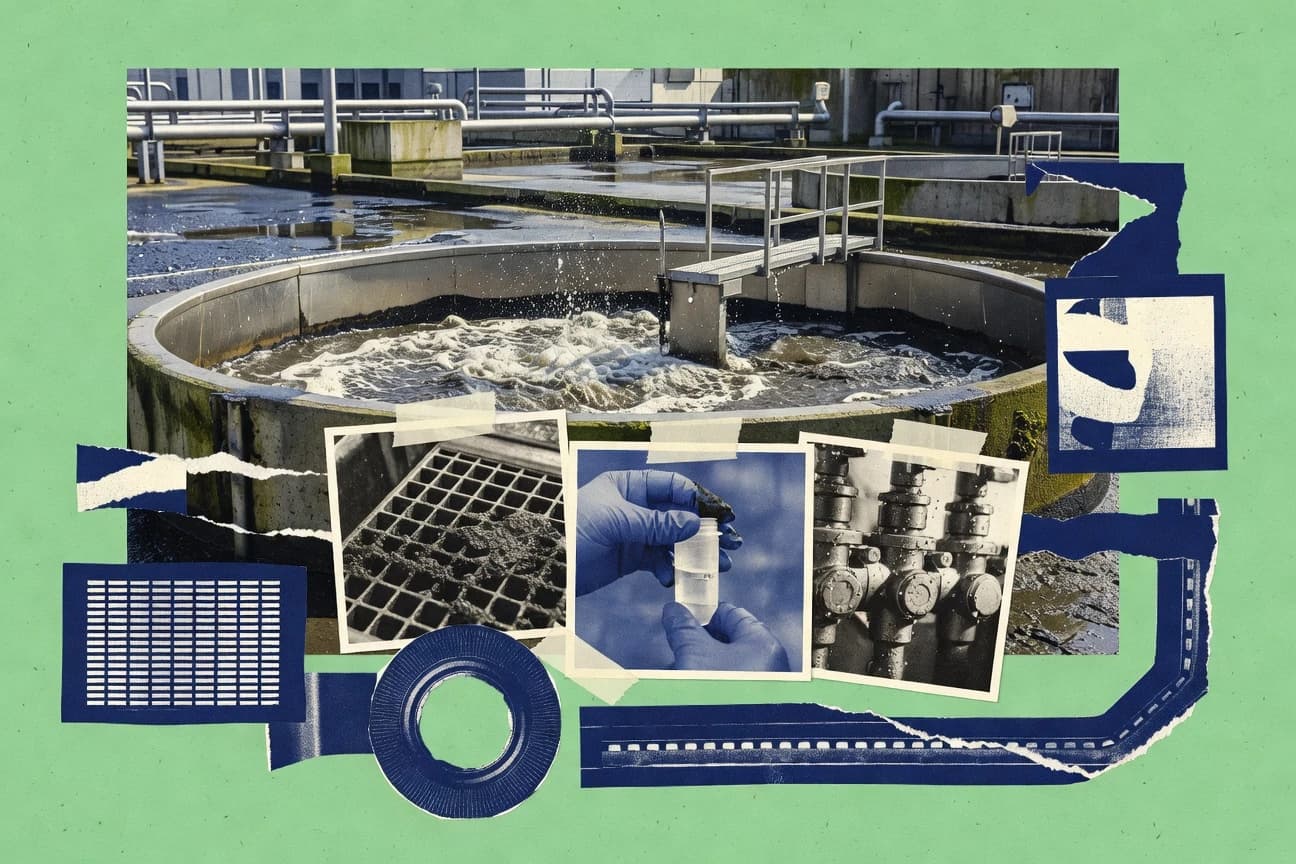

Wastewater treatment is a $300.75 billion global market valued in 2022, yet the price to keep it running is often decided by pressure points like energy, sludge handling, and compliance costs. Even in the US, the average household wastewater bill rose to $0.004 per gallon in 2023, a 4% jump year over year, while NPDES penalties still landed at $150 million in 2022. This post lines up the cost and performance statistics behind new builds, upgrades, and emerging technologies so you can see where budgets strain and where efficiencies actually pay back.
Key Takeaways
- The U.S. average cost to construct a new WWTP is $1,200-$2,500 per m³/day capacity, totaling $45 billion backlog for upgrades
- Global operational costs for WWTPs average $0.50-$1.50/m³ treated, with energy comprising 30-50% ($0.20-$0.60/m³)
- U.S. household wastewater bill averaged $0.004/gallon in 2023, up 4% YoY, totaling $60 billion national spend
- U.S. wastewater treatment discharges contributed 3.5% of national phosphorus loads to waterways in 2021
- Globally, untreated wastewater causes 1.8 million deaths annually from waterborne diseases, with 80% from inadequate treatment
- Wastewater treatment plants emit 3-5% of national N2O greenhouse gases in OECD countries, equivalent to 1.5 Gt CO2e/year globally in 2022
- The global wastewater treatment market size was valued at USD 300.75 billion in 2022 and is expected to grow at a CAGR of 6.3% from 2023 to 2030, driven by urbanization and stringent regulations
- In the United States, the wastewater treatment industry generated revenue of $76.4 billion in 2023, with a projected annual growth of 2.1% through 2028
- Europe's wastewater treatment equipment market reached €12.5 billion in 2022, forecasted to expand at 5.8% CAGR to €18.9 billion by 2028 due to EU Water Framework Directive compliance
- The EU Urban Wastewater Treatment Directive (91/271/EEC) mandates secondary treatment for agglomerations over 10,000 PE, covering 96% compliance by 2023
- U.S. Clean Water Act NPDES permits regulated 16,000 major WWTPs, with 85% meeting effluent limits in 2022 MS4 reporting
- China's 14th Five-Year Plan requires 95% urban wastewater collection by 2025, with Class IV/V standards for 70% discharge
- The activated sludge process dominates 55% of global wastewater treatment plants, handling over 70% of municipal flows in 2023
- Membrane bioreactors (MBRs) achieved 99.9% BOD removal and 98% nutrient removal in over 5,000 installations worldwide by 2023
- Advanced oxidation processes (AOPs) using UV/H2O2 removed 95% of pharmaceutical micropollutants in pilot studies across 20 EU plants in 2022
Rising costs and tighter rules are pushing WWTP upgrades, while energy efficiency and reuse boost savings and revenue.
Related reading
01 · Category
Economic and Operational Costs19 stats
01
The U.S. average cost to construct a new WWTP is $1,200-$2,500 per m³/day capacity, totaling $45 billion backlog for upgrades
02
Global operational costs for WWTPs average $0.50-$1.50/m³ treated, with energy comprising 30-50% ($0.20-$0.60/m³)
03
U.S. household wastewater bill averaged $0.004/gallon in 2023, up 4% YoY, totaling $60 billion national spend
04
Chemical costs for coagulation/flocculation in WWTPs range $0.10-$0.30/m³, representing 15-25% of O&M budget globally
05
Sludge management costs 40-60% of total WWTP Opex, averaging $500-$1,000/ton dry solids in EU 2023
06
Energy efficiency upgrades saved $0.15/kWh in 1,000 U.S. plants via aeration optimization, ROI in 2-3 years
07
Decentralized systems cost $50,000-$200,000 per unit vs. $10 million central plants, but O&M $0.20/m³ lower long-term
08
Biosolids beneficial reuse generated $2 billion revenue in U.S. 2022, offsetting 20% disposal costs
09
Retrofitting for nutrient removal adds $1-3 million per MG/day capacity, with $0.10/m³ annual O&M increase
10
PPP models financed 30% of new WWTPs in Asia, reducing public capex by 40% but raising tariffs 15-20%
11
Labor costs account for 20-30% of WWTP Opex in developed nations, $0.15-$0.40/m³ amid skilled shortage
12
Membrane replacement in MBRs costs $50-$100/m² every 5-10 years, 25% of lifecycle expenses
13
Biogas energy sales yielded $100-$200/MWh, recovering 10-15% costs in 500 EU digesters 2023
14
Compliance fines for NPDES violations totaled $150 million in U.S. 2022, averaging $10,000 per incident
15
Rate structure analysis shows tiered pricing increases revenue 12% while promoting conservation in 60% utilities
16
Carbon credits from methane capture valued at $20/ton CO2e, benefiting 200 WWTPs under CDM $50M/year
17
In 2022, U.S. WWTPs employed 120,000 workers, with average salary $65,000,facing 15% vacancy rate
18
Digital twin tech reduced O&M costs 10-20% ($0.05/m³ savings) in 100 pilot WWTPs globally 2023
19
Extended aeration systems Opex $0.30/m³ vs. $0.60/m³ for conventional, popular in small U.S. communities
Interpretation
Economic and Operational Costs Interpretation
We flush our money down the drain, but at least the clever plants flush some of it back as biosolids revenue and energy savings, proving that with smart investment, our wastewater infrastructure can be less of a money pit and more of a resource mine.
02 · Category
Environmental Impact17 stats
01
U.S. wastewater treatment discharges contributed 3.5% of national phosphorus loads to waterways in 2021
02
Globally, untreated wastewater causes 1.8 million deaths annually from waterborne diseases, with 80% from inadequate treatment
03
Wastewater treatment plants emit 3-5% of national N2O greenhouse gases in OECD countries, equivalent to 1.5 Gt CO2e/year globally in 2022
04
In 2023, 44% of global wastewater was safely treated, leaving 56% (352 billion m³) polluting rivers and oceans
05
U.S. WWTPs released 400,000 tons of nitrogen annually, contributing to 60% of Gulf of Mexico dead zone hypoxia
06
Microplastics in untreated wastewater effluents reached 1-10 particles/L, accumulating 300,000 tons/year in EU waters in 2022
07
Global wastewater discharge projected to increase 24% to 463 billion m³ by 2030, exacerbating eutrophication in 40% of lakes
08
In India, 70% untreated urban wastewater pollutes rivers, causing $6.7 billion annual economic loss from water quality degradation
09
WWTP sludge contains 50-200 mg/kg PFAS, with incineration releasing 10% to air, detected in 85% of U.S. biosolids in 2023
10
Methane emissions from anaerobic WWTPs totaled 1.1 billion m³/year globally in 2022, 28% of water sector GHG footprint
11
Coastal wastewater outfalls discharged 5,000 tons antibiotics/year, fostering AMR genes in 30% of marine sediments
12
In China, WWTP effluents contributed 25% of river heavy metal pollution (Cd, Pb), exceeding standards in 40% sites in 2022
13
Energy recovery from WWTP biogas offset 15% of operational electricity, avoiding 20 Mt CO2e emissions in EU annually
14
Endocrine disruptors in 90% of U.S. WWTP effluents at 10-100 ng/L, impacting fish reproduction in downstream rivers
15
Global reuse of treated wastewater reached 62 billion m³ in 2023, offsetting 5% freshwater demand but risking 20% soil salinity increase
16
Australian WWTPs discharged 1.2 Mt nitrogen to oceans yearly, fueling algal blooms covering 15,000 km² coral reefs
17
Biosolids application leached 10-20% excess nutrients to groundwater, contaminating 25% aquifers near 500 U.S. fields
Interpretation
Environmental Impact Interpretation
While wastewater treatment plants are quietly keeping society afloat, their imperfect performance and our collective failure to treat the world's sewage means we are, in essence, meticulously processing a fraction of our waste only to still poison our water, sicken our populations, and heat our planet with a cocktail of nutrients, chemicals, and greenhouse gases.
03 · Category
Market Size and Growth20 stats
01
The global wastewater treatment market size was valued at USD 300.75 billion in 2022 and is expected to grow at a CAGR of 6.3% from 2023 to 2030, driven by urbanization and stringent regulations
02
In the United States, the wastewater treatment industry generated revenue of $76.4 billion in 2023, with a projected annual growth of 2.1% through 2028
03
Europe's wastewater treatment equipment market reached €12.5 billion in 2022, forecasted to expand at 5.8% CAGR to €18.9 billion by 2028 due to EU Water Framework Directive compliance
04
Asia-Pacific wastewater treatment market is projected to grow from USD 55.2 billion in 2023 to USD 92.4 billion by 2030 at a CAGR of 7.5%, led by China and India industrialization
05
The industrial wastewater treatment segment accounted for 42% of the global market share in 2022, valued at approximately USD 126 billion
06
U.S. municipal wastewater treatment plants processed 34 billion gallons per day in 2021, with capital expenditures totaling $11.5 billion annually
07
Global investment in wastewater treatment infrastructure is expected to reach $1 trillion by 2030, with 60% allocated to emerging markets
08
The U.S. wastewater utility revenue grew 3.2% to $52.3 billion in 2022, supported by rate increases averaging 4.5%
09
China's wastewater treatment capacity expanded to 250 million tons per day by 2023, representing 30% of global capacity growth since 2015
10
The global membrane bioreactor market, a subset of wastewater treatment, was valued at $3.4 billion in 2022, growing at 9.2% CAGR
11
In 2023, North America's wastewater treatment chemicals market size was USD 12.6 billion, projected to reach USD 18.2 billion by 2030 at 5.4% CAGR
12
India's wastewater treatment market is anticipated to grow from INR 25,000 crore in 2022 to INR 45,000 crore by 2028 at 10.2% CAGR, driven by Smart Cities Mission
13
The Latin America wastewater treatment market valued at $8.9 billion in 2022, expected to grow at 6.1% CAGR to $13.7 billion by 2030
14
Global wastewater treatment services market revenue hit $250 billion in 2023, with a forecasted 6.8% CAGR through 2032
15
U.S. residential wastewater treatment systems market size was $6.2 billion in 2022, growing at 4.7% CAGR due to septic system upgrades
16
The Middle East wastewater treatment market is projected to grow from $4.5 billion in 2023 to $7.8 billion by 2030 at 8.1% CAGR, fueled by water scarcity
17
Australia's wastewater treatment industry revenue reached AUD 5.6 billion in 2023, with 2.8% annual growth expected to 2029
18
Global decentralized wastewater treatment market valued at $22.4 billion in 2022, projected to $38.7 billion by 2030 at 7.2% CAGR
19
In 2022, the U.K. wastewater treatment market was worth £4.2 billion, expected to reach £5.9 billion by 2028 at 5.9% CAGR
20
Brazil's wastewater treatment capacity covered 50% of population in 2023, with market size at BRL 15 billion growing 7.3% annually
Interpretation
Market Size and Growth Interpretation
The global wastewater industry is booming with a trillion-dollar flush of investment, proving that while civilization's dirty work may flow downhill, the money to clean it up is decidedly flowing uphill.
More related reading
04 · Category
Regulatory and Compliance14 stats
01
The EU Urban Wastewater Treatment Directive (91/271/EEC) mandates secondary treatment for agglomerations over 10,000 PE, covering 96% compliance by 2023
02
U.S. Clean Water Act NPDES permits regulated 16,000 major WWTPs, with 85% meeting effluent limits in 2022 MS4 reporting
03
China's 14th Five-Year Plan requires 95% urban wastewater collection by 2025, with Class IV/V standards for 70% discharge
04
India's CPCB mandates 100 MLD capacity for cities over 1 million population by 2025 under NGT orders
05
WHO Guidelines for Safe Use of Wastewater (2006) set <1,000 FC/100mL for unrestricted irrigation, adopted by 120 countries
06
U.S. EPA Effluent Guidelines (40 CFR Part 437) limit BOD to 30 mg/L and TSS 30 mg/L for new sources since 2000
07
EU's revised UWWTD (2023/878) requires quaternary treatment for 50% micropollutants by 2035 in sensitive areas
08
Australia's National Water Quality Management Strategy enforces 95% compliance with ANZECC guidelines in 90% states
09
Brazil's CONAMA Resolution 430/2011 sets CBOD5 <120 mg/L for discharge, with 60% plants fined for non-compliance in 2022
10
Japan's Water Pollution Control Law mandates BOD <160 mg/L for Class A rivers, achieving 92% compliance in 3,500 monitored sites 2023
11
South Korea's Water Environment Conservation Act requires nutrient removal (TN<20 mg/L) for 80% plants over 100,000 m³/day since 2015
12
Canada's Wastewater Systems Effluent Regulations limit CBOD5 to 25 mg/L and TSS 25 mg/L for all systems since 2012
13
South Africa's Green Drop certification program assessed 1,850 WWTPs, with only 47% scoring >80% compliance in 2022
14
Mexico's NOM-001-SEMARNAT-2021 updates BOD to 30 mg/L and TSS 30 mg/L for coastal discharge
Interpretation
Regulatory and Compliance Interpretation
The world's dirty secret is that, despite some impressive compliance statistics, wastewater treatment remains a patchwork of ambition, enforcement, and unfinished business, proving that humanity is still learning to properly clean up after itself.
05 · Category
Technology and Methods18 stats
01
The activated sludge process dominates 55% of global wastewater treatment plants, handling over 70% of municipal flows in 2023
02
Membrane bioreactors (MBRs) achieved 99.9% BOD removal and 98% nutrient removal in over 5,000 installations worldwide by 2023
03
Advanced oxidation processes (AOPs) using UV/H2O2 removed 95% of pharmaceutical micropollutants in pilot studies across 20 EU plants in 2022
04
Constructed wetlands treat 1.2 million m³/day globally, with 85-95% nitrogen removal efficiency in horizontal flow systems
05
Moving bed biofilm reactor (MBBR) technology upgraded 1,500 wastewater plants by 2023, achieving 90% COD reduction at 30% lower energy use
06
Reverse osmosis (RO) membranes in wastewater reuse recovered 75-85% water from industrial effluents in 40% of U.S. facilities in 2022
07
Anaerobic digestion produced 15 billion m³ biogas from wastewater sludge annually worldwide in 2023, equivalent to 10% of natural gas use
08
Ultrafiltration (UF) systems removed 99.99% pathogens in 2,200 drinking water reuse projects by 2023
09
Electrochemical oxidation degraded 98% of recalcitrant organics like dyes in 150 industrial pilots in Asia by 2022
10
Sequencing batch reactors (SBRs) handled variable flows in 3,000 U.S. plants, with 92% TSS removal and energy savings of 25%
11
Forward osmosis (FO) technology concentrated wastewater brines 10-fold with 90% rejection of salts in 50 desalination-integrated plants in 2023
12
Ozone disinfection inactivated 99.99% of viruses in tertiary treatment at 500 EU facilities, reducing chlorine residuals by 80%
13
Granular activated carbon (GAC) adsorption removed 95% PFAS from wastewater in 200 U.S. sites post-2020 regulations
14
Integrated fixed-film activated sludge (IFAS) enhanced nitrification by 50% in 800 retrofitted plants globally by 2023
15
Photocatalytic TiO2 reactors achieved 90% degradation of antibiotics in 100 lab-to-pilot scales in 2022
16
Vacuum distillation systems recovered 95% distillate from oily wastewater in 300 petrochemical plants
17
Bioelectrochemical systems (BES) generated 0.5-1 kWh/m³ electricity while treating wastewater in 50 pilot projects by 2023
18
Hybrid coagulation-flocculation with nanotechnology removed 98% heavy metals from 200 mining wastewaters in 2022
Interpretation
Technology and Methods Interpretation
Despite the unglamorous reality of our daily contributions to it, human civilization has quietly and brilliantly engineered a vast, global symphony of processes that not only render our wastewater harmless but often transform it into clean water, energy, and valuable resources with an efficiency that should make every other industry green with envy.
Reference
Cite This Report
This report is designed to be cited. We maintain stable URLs and versioned verification dates. Copy the format appropriate for your publication below.
APA
Felix Zimmermann. (2026, February 13). Wastewater Treatment Industry Statistics. Gitnux. https://gitnux.org/wastewater-treatment-industry-statistics
MLA
Felix Zimmermann. "Wastewater Treatment Industry Statistics." Gitnux, 13 Feb 2026, https://gitnux.org/wastewater-treatment-industry-statistics.
Chicago
Felix Zimmermann. 2026. "Wastewater Treatment Industry Statistics." Gitnux. https://gitnux.org/wastewater-treatment-industry-statistics.
Sources & references
59 datasets cited across this report · attribution is report-level