
Market data
Aerospace Aviation Space
Explore aerospace aviation space statistics and market research reports with sourced data and trend analysis.
Latest update:
 Timothy Grant


Commercial Flight Statistics
Commercial aviation is turning a $964 billion revenue engine, with IATA net profits at $30.5 billion and fuel still consuming 28% of operating costs. At the same time, safety trends keep sharpening and environmental pressure keeps rising, from lower per passenger emissions to 915 million tonnes of CO2 in 2023 and a 0.80 all accident rate per million sectors for IATA members.

Aviation Statistics
Last year’s aviation footprint is big enough to reshape national accounts, with global aviation contributing $992 billion to GDP in 2023 and supporting 10.6 million jobs worldwide. Yet the same sector is also tightening its environmental and safety margins, with CO2 emissions reaching 1.1 billion tonnes while accident counts in commercial aviation fell to just 2 fatal incidents and engine efficiencies continue to climb.

Japan Space Industry Statistics
Japan’s draft FY2024 space budget proposes 520 billion yen for space activities, an 8.4% jump year over year, while private momentum is rising fast with 150 billion yen in startup investment in 2023 and 40 billion yen pledged for H3 rocket development. This page connects the dots from JAXA’s lunar and reusable rocket R&D to procurement, venture funding, and the launch system that actually delivers payloads, showing where Japanese spending is tightening and where it is accelerating.

Lax Passenger Statistics
LAX passenger activity in 2023 powered $84.5 billion in regional GDP and 523,000 jobs, with tourism revenue of $23.7 billion fueled by travelers spending an average $145 each and business passengers driving 45% of that spend. You will also see the far reach of those same trips, from $2.8 billion in local tax revenue and 18.4 million hotel nights to $450 million in terminal retail sales, then zoom in on the operational reality behind it all with 483,000 takeoffs and landings and 78.4% on time arrivals.

Aerospace Defense Industry Statistics
U.S. defense budgets are still tracking toward a $1.0T FY2025 topline while software SBOM compliance reaches 87.6%, setting a sharp contrast between spending scale and supply chain transparency pressure. You will also see where the money goes across SATCOM, air defense procurement, missile production, autonomy and training markets, and even readiness and delivery performance that can turn procurement cycle time into real capability.

Rotorcraft Industry Statistics
Rotorcraft Industry numbers are bigger and more competitive than many expect, with a global rotorcraft workforce of 450,000 people in 2023 and a global pilot shortage projected to reach 15,000 professionals by 2025. This page also tracks where the risk and innovation are shifting, from an IHST global fatality rate of 0.72 per 100,000 flight hours in 2023 to tech advances that are cutting downtime and redefining training, maintenance, and safety across the fleet.

Aircraft Industry Statistics
Aviation’s reach extends far beyond tickets, with a 3.7% share of global GDP tied to aviation in 2022 and a U.S. air traffic surge that moved 1.25 billion passengers through TSA checkpoints in 2023. Pair that economic weight with hard systems and services forecasts like the global MRO market topping $109.4 billion by 2032 and ADS-B’s 1090ES spectrum requirement of 2.0 MHz to see how infrastructure, maintenance, and data links are reshaping the next decade.

Earth Observation Industry Statistics
Real-time Earth observation has surged to 10 Gbps of aggregate streaming and an average one hour latency in 2023 while daily constellation data volumes now hit 50 TB and hyperspectral output doubles to 5 TB per day. This page connects the throughput with what’s happening downstream, from 300% faster AI processing since 2020 to major platform usage like Google Earth Engine at 1 petabyte monthly, showing exactly how the industry is scaling delivery, not just collecting images.

Global Airline Industry Statistics
See how airlines moved from revenue recovery to margin pressure, with global airline net profit forecast at $30.5 billion in 2024 and passenger yield at 14.4 US cents per RPK. Then get the operational reality check, from jet accident rates at 0.81 per million departures in 2023 to CO2 emissions reaching 1.03 billion tonnes while SAF still represents just 0.2% of jet fuel use.

Aerospace Space Industry Statistics
Space is scaling fast while the ledger keeps changing hands. Boeing’s $19.4 billion space and defense haul in 2023, alongside a $546 billion global space economy and 212 orbital launches, sets up a striking tension between surging satellite demand, shifting launch cadence, and uneven company fortunes from SpaceX to Astra.

India Aerospace And Defence Industry Statistics
With FY 2024-25 defence outlay at ₹6.21 lakh crore and modernisation capital outlay jumping to ₹1.72 lakh crore, India Aerospace And Defence Industry finances are shifting from routine spend to growth, even as pensions consume ₹1.58 lakh crore. Track how domestic procurement is set to take 68 percent of capital acquisition and R&D rises to ₹24,824 crore alongside a surge in border infrastructure and defence exports reaching ₹21,083 crore, turning budget lines into a live read on Atmanirbhar manufacturing.
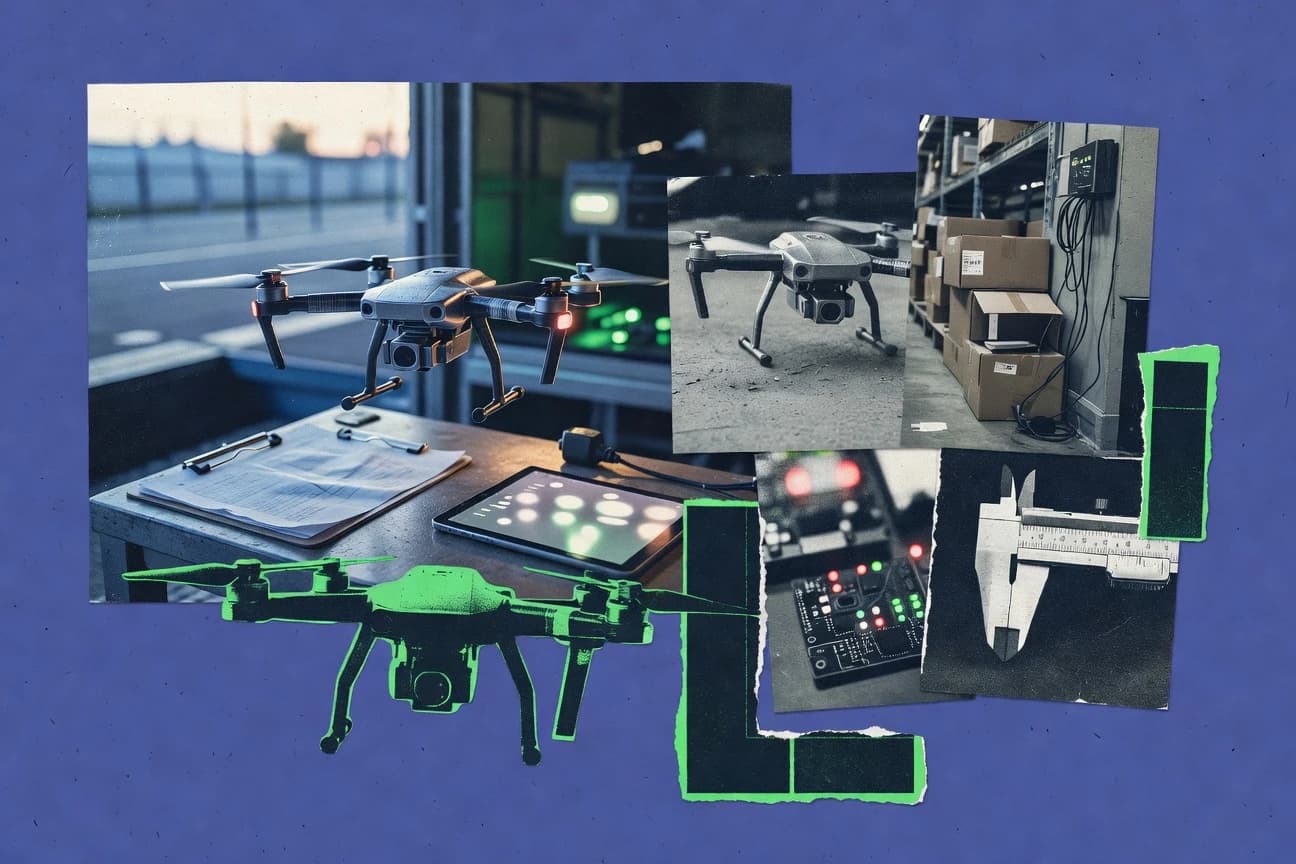
Commercial Drone Industry Statistics
With 1,500-plus U.S. public safety agencies and over 800,000 FAA certified pilots by 2023, commercial drones have moved from niche tooling to everyday infrastructure support, from power line patrols to search and rescue. You will see exactly why adoption is surging in precision agriculture and inspection, plus the cost savings and revenue outcomes driving growth from USD 22.5 billion in 2022 toward a projected USD 91.3 billion by 2032.

Pilot Statistics
With 94.2% of U.S. commercial airline pilots still men and only 5.8% women, Pilot statistics trace who flies, who leads, and how that mix is shifting alongside pay, training pipelines, and safety trends. You will see how factors like age and prior military experience line up against real operational pressures from 50,000 daily U.S. controlled flights to the accident and runway incursion patterns that keep changing.

Mro Industry Statistics
W.W. Grainger still leads the 2023 U.S. MRO race with a 12% share, but the biggest story is how electrification, automation, and predictive maintenance are reshaping what gets bought and who sells it, from Motion Industries at 11% U.S. industrial MRO share to 3M PPE’s 20% global lead. With the global MRO market projected to reach USD 850 billion by 2030 and digital transformation expected to add USD 100 billion in value by 2028, this page maps the shifting balance between regional spending and global technology momentum.

Private Aviation Industry Statistics
Private aviation underwrites a $52.8 billion U.S. GDP contribution and 624,000 direct U.S. jobs, while 2025 readiness shows up in the operating details, like $12.5 billion in global FBO spending and 68% of private jets already equipped with ADS B. The page connects the dots between money and movement, from $28 billion in worldwide fuel purchases to a record low private aviation accident rate of 0.97 per 100,000 flight hours in 2023, plus what safety, sustainability, and new eVTOL momentum mean for where the industry is headed next.