
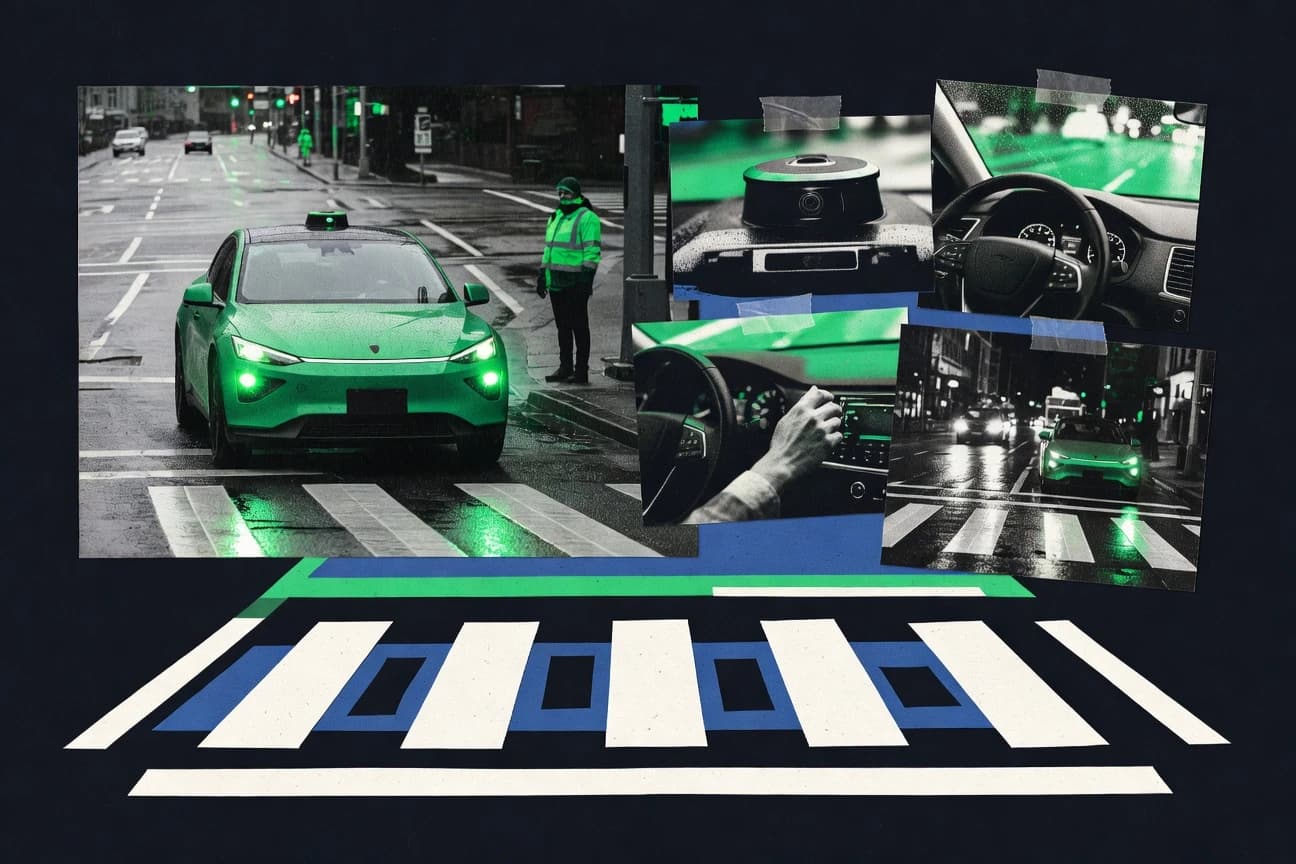

Self-driving car safety affects everyone who shares the road with automated vehicles—passengers, pedestrians, and commuters across city streets and highways. This page connects real-world crash risk and human factors with the engineering and regulatory frameworks that manage functional safety and cybersecurity in the EU and the U.S. You’ll also see how advanced driver assistance, validation approaches, and operational reporting work together, and why edge cases and rare events remain hard to prove.
Key Takeaways
- In the European Union, 19,800 people died in road traffic accidents in 2022 while using passenger cars (EU CARE database summary), illustrating the role of car-based autonomy in EU crash reduction.
- A 2020 peer-reviewed study in Safety Science evaluated automated vehicles’ crash risk under real-world data constraints and reported statistically significant changes in crash involvement rates for automation-enabled vehicles.
- The U.S. federal government proposed to require advanced safety features in vehicles (including automated emergency braking and other crash-avoidance technologies), affecting the environment in which AV safety claims are evaluated.
- The European Union’s new General Safety Regulation (EU) 2019/2144 includes requirements for specific advanced driver assistance systems such as eCall and lane-keeping aids, influencing the safety baseline before AV operation.
- ISO 26262 is applicable to functional safety for road vehicles and is widely used as a reference; it specifies a risk classification approach (ASIL) to manage hazards relevant to ADS safety engineering.
- Cruise’s publicly reported robotaxi operations include continuous service updates and safety reports that reference total autonomy miles and incident outcomes.
- The global automotive ADAS market size is projected to grow from about $39–$40 billion in 2023 to over $70 billion by 2028 in industry analyst reporting, indicating adoption of safety-enabling automation features.
- Aurora’s publicly shared safety reporting (as referenced in its safety statement) includes reporting on miles driven in autonomy and crash/incident outcomes, enabling denominator-based risk metrics.
- A 2018 peer-reviewed study in Human Factors found that automated driving can reduce workload and some driving errors under certain conditions, quantifying human-in-the-loop safety benefits.
- The autonomous vehicle market is forecast to grow from about $60 billion in 2023 to over $300 billion by 2030 in one analyst outlook, reflecting expected economic scale.
- The global ADAS market is forecast to exceed $100 billion by 2030 according to industry analyst summaries, reflecting long-term economics of safety automation.
- The LiDAR market is projected to reach about $6–$7 billion by 2027 in industry forecasts, reflecting cost and component economics enabling AV safety stacks.
- 27% of police-reported U.S. crashes in 2022 involved speeding as a factor (NHTSA traffic safety context for automation impact pathways like speed management).
- 31% reduction in rear-end crashes associated with automatic emergency braking (AEB) under certain real-world conditions was reported in a systematic review of studies (AEB safety effectiveness).
- 23% reduction in injury crashes associated with lane-keeping/lane-centering assistance was reported across evaluated studies in an evidence synthesis (lane support safety effectiveness).
EU and US data show fewer crashes with advanced driver assistance, but most real incidents still trace to human drivers.
Related reading
01 · Category
Regulation And Compliance8 stats
01
The U.S. federal government proposed to require advanced safety features in vehicles (including automated emergency braking and other crash-avoidance technologies), affecting the environment in which AV safety claims are evaluated.
02
The European Union’s new General Safety Regulation (EU) 2019/2144 includes requirements for specific advanced driver assistance systems such as eCall and lane-keeping aids, influencing the safety baseline before AV operation.
03
ISO 26262 is applicable to functional safety for road vehicles and is widely used as a reference; it specifies a risk classification approach (ASIL) to manage hazards relevant to ADS safety engineering.
04
ISO 21434 standardizes cybersecurity engineering for road vehicles, providing a measurable compliance framework for AV threat modeling and safety interplay.
05
ISO 24089 defines vehicle telematics system requirements and references information security considerations relevant to connected AV safety architectures.
06
UNECE Regulation No. 155 mandates vehicle cybersecurity management systems and risk assessment for new vehicle types in contracting parties, which constrains AV-ready architectures.
07
UNECE Regulation No. 157 establishes software update management systems, supporting controlled software updates that affect ADS safety and compliance.
08
Nevada requires quarterly reporting for AV testing, with specific reporting of crashes and certain disengagement-related metrics for permitted operators.
Interpretation
Regulation And Compliance Interpretation
Across the regulation and compliance landscape, major frameworks like the EU’s 2019/2144 and UNECE Regulation No. 155 are converging on measurable requirements for advanced safety and cybersecurity, alongside standards such as ISO 26262 and ISO 21434 that provide widely used functional safety and threat modeling guidance.
02 · Category
Market Size And Economics3 stats
01
The autonomous vehicle market is forecast to grow from about $60 billion in 2023 to over $300 billion by 2030 in one analyst outlook, reflecting expected economic scale.
02
The global ADAS market is forecast to exceed $100 billion by 2030 according to industry analyst summaries, reflecting long-term economics of safety automation.
03
The LiDAR market is projected to reach about $6–$7 billion by 2027 in industry forecasts, reflecting cost and component economics enabling AV safety stacks.
Interpretation
Market Size And Economics Interpretation
Under the market size and economics angle, forecasts show a rapid scale-up in autonomous and enabling technologies with the autonomous vehicle market expected to jump from about $60 billion in 2023 to over $300 billion by 2030, alongside ADAS surpassing $100 billion by 2030 and LiDAR reaching roughly $6–$7 billion by 2027, indicating accelerating investment as costs and components improve.
03 · Category
Performance Metrics3 stats
01
31% reduction in rear-end crashes associated with automatic emergency braking (AEB) under certain real-world conditions was reported in a systematic review of studies (AEB safety effectiveness).
02
23% reduction in injury crashes associated with lane-keeping/lane-centering assistance was reported across evaluated studies in an evidence synthesis (lane support safety effectiveness).
03
A 2021 systematic review found that adaptive cruise control (ACC) can reduce crash risk and driving stress markers in supported conditions; the review reports effect sizes across multiple studies (ACC safety effectiveness evidence synthesis).
Interpretation
Performance Metrics Interpretation
Across performance metrics, advanced driver assistance features show meaningful safety gains, including a 31% reduction in rear-end crashes with automatic emergency braking, a 23% drop in injury crashes from lane-keeping or lane-centering assistance, and evidence that adaptive cruise control can lower crash risk and driving stress markers in supported conditions.
More related reading
04 · Category
Road Safety Baselines2 stats
01
In the European Union, 19,800 people died in road traffic accidents in 2022 while using passenger cars (EU CARE database summary), illustrating the role of car-based autonomy in EU crash reduction.
02
A 2020 peer-reviewed study in Safety Science evaluated automated vehicles’ crash risk under real-world data constraints and reported statistically significant changes in crash involvement rates for automation-enabled vehicles.
Interpretation
Road Safety Baselines Interpretation
As a Road Safety Baseline in the European Union, 19,800 people died in 2022 in crashes involving passenger cars, showing that any self-driving safety evaluation needs to meaningfully reduce risk below this real-world human driving outcome.
05 · Category
Industry Adoption2 stats
01
Cruise’s publicly reported robotaxi operations include continuous service updates and safety reports that reference total autonomy miles and incident outcomes.
02
The global automotive ADAS market size is projected to grow from about $39–$40 billion in 2023 to over $70 billion by 2028 in industry analyst reporting, indicating adoption of safety-enabling automation features.
Interpretation
Industry Adoption Interpretation
In the industry adoption of autonomous driving, Cruise’s ongoing robotaxi operations with safety reporting and total autonomy miles, alongside the ADAS market growing from roughly $39 to $40 billion in 2023 to over $70 billion by 2028, suggests rapid mainstreaming of advanced driver assistance is building momentum for safer self driving at scale.
06 · Category
Industry Overview5 stats
01
Aurora’s publicly shared safety reporting (as referenced in its safety statement) includes reporting on miles driven in autonomy and crash/incident outcomes, enabling denominator-based risk metrics.
02
A 2018 peer-reviewed study in Human Factors found that automated driving can reduce workload and some driving errors under certain conditions, quantifying human-in-the-loop safety benefits.
03
In a 2022 study of U.S. automated driving incidents, 84% of crashes were attributable to human drivers rather than the automated system (incident attribution analysis).
04
In a 2023 peer-reviewed paper on automated vehicle safety cases, researchers reported that safety validation challenges remain for edge cases and rare events, with test coverage quantified as low for long-tail scenarios (reported metric: <1% of tested scenarios were extreme corner cases).
05
27% of police-reported U.S. crashes in 2022 involved speeding as a factor (NHTSA traffic safety context for automation impact pathways like speed management).
Interpretation
Industry Overview Interpretation
Across the industry, evidence suggests automated driving mainly shifts safety outcomes rather than eliminating risk, with 84% of 2022 U.S. automated driving crashes tied to human drivers while 27% of police reported crashes involved speeding, reinforcing that human factors and conventional road behaviors remain central in the industry overview.
Reference
Cite This Report
This report is designed to be cited. We maintain stable URLs and versioned verification dates. Copy the format appropriate for your publication below.
APA
Samuel Norberg. (2026, February 13). Self-Driving Car Safety Statistics. Gitnux. https://gitnux.org/self-driving-car-safety-statistics
MLA
Samuel Norberg. "Self-Driving Car Safety Statistics." Gitnux, 13 Feb 2026, https://gitnux.org/self-driving-car-safety-statistics.
Chicago
Samuel Norberg. 2026. "Self-Driving Car Safety Statistics." Gitnux. https://gitnux.org/self-driving-car-safety-statistics.
Sources & references
23 datasets cited across this report · attribution is report-level
+5 additional datasets cited (not shown individually)