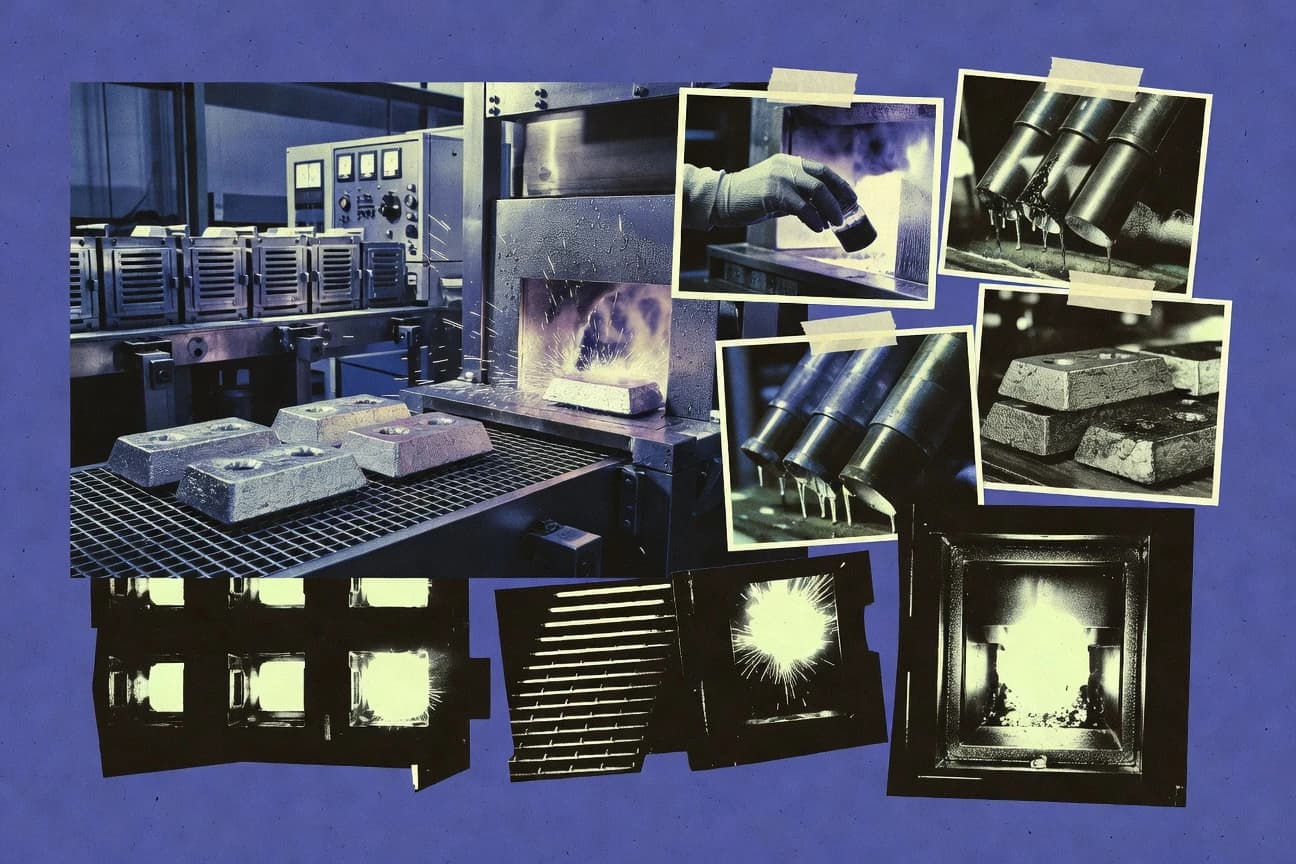

Global primary magnesium output reached 1.7 million tonnes in 2023, a 4.0% year over year rise, yet the biggest lever for emissions and cost is increasingly the scrap loop rather than the furnace. From die cast recyclability that can avoid much of primary energy demand to fast growing battery related uses, the sector’s application split and energy sensitivity create a set of contrasts worth unpacking.
Key Takeaways
- 1.7 million tonnes global primary magnesium production in 2023
- 4.0% year-over-year increase in global magnesium production in 2023
- Magnesium is produced globally in multiple extraction routes; USGS reports multiple end uses including die-cast, wrought, and chemical uses (USGS magnesium summary, latest edition)
- Magnesium industry decarbonization investments are increasing; EU and member-state funding has supported low-carbon magnesium processing pilots funded in 2021–2023 across multiple consortia (CleanTech funding programs)
- Magnesium alloys used in EVs are forecast by industry research to grow as battery and powertrain enclosures and structural components expand; forecasts show ~5–8% CAGR for magnesium in automotive applications in the early 2020s (industry forecasts)
- 90%+ magnesium can be technically recycled at end-of-life in alloy streams where sorting and contamination control are adequate
- Aluminum and magnesium die-casting scrap is one of the most economically recyclable non-ferrous scrap streams in mixed metal recycling markets
- Magnesium recycling can reduce greenhouse-gas emissions by up to 80% compared with primary magnesium production (LCA results)
- 42% of all magnesium used in applications is in the automotive sector in 2022 (global application split, estimate)
- 18% of magnesium demand is for aerospace and defense applications (2022 global split estimate)
- 25% of magnesium demand is for industrial and electronics uses (2022 global split estimate)
- AZ91D typically shows ultimate tensile strength around 200–250 MPa depending on casting and heat treatment (materials benchmark)
- Magnesium’s specific heat capacity is about 1.02 kJ/kg·K, affecting thermal management in applications
- Magnesium’s thermal conductivity is about 156 W/m·K (pure Mg at room temperature), influencing heat dissipation design
- Magnesium can be produced by carbothermic reduction; typical energy consumption in modern plants is about 12–20 GJ/tonne of Mg (process benchmarks)
In 2023 global primary magnesium reached 1.7 million tonnes, rising 4 percent, with recycling cutting emissions by up to 80 percent.
Related reading
01 · Category
Production And Supply2 stats
01
1.7 million tonnes global primary magnesium production in 2023https://www.iaea.org/newscenter/news/primary-magnesium-production-in-2023-reached-1-7-million-tonnes
02
4.0% year-over-year increase in global magnesium production in 2023https://www.iaea.org/newscenter/news/magnesium-production-increased-4-percent-in-2023
Interpretation
Production And Supply Interpretation
In 2023, production and supply for magnesium strengthened with global primary output reaching 1.7 million tonnes, supported by a 4.0% year over year increase.
02 · Category
Industry Trends6 stats
01
Magnesium is produced globally in multiple extraction routes; USGS reports multiple end uses including die-cast, wrought, and chemical uses (USGS magnesium summary, latest edition)https://www.usgs.gov/centers/national-minerals-information-center/magnesium-statistics-and-information
02
Magnesium industry decarbonization investments are increasing; EU and member-state funding has supported low-carbon magnesium processing pilots funded in 2021–2023 across multiple consortia (CleanTech funding programs)https://cordis.europa.eu/search?q=magnesium%20low-carbon&action=search&reporting=all&sortBy=relevance
03
Magnesium alloys used in EVs are forecast by industry research to grow as battery and powertrain enclosures and structural components expand; forecasts show ~5–8% CAGR for magnesium in automotive applications in the early 2020s (industry forecasts)https://www.alliedmarketresearch.com/magnesium-market-A10091
04
Additive manufacturing of magnesium is being investigated; peer-reviewed studies report build rates improving by 20–40% with process parameter optimization in 2020–2023https://www.sciencedirect.com/science/article/pii/S2214860420301378
05
EU taxonomy and sustainability reporting are increasing disclosure requirements affecting non-ferrous metals; corporate reporting standards are expanding from 2024 onward under CSRD (policy)https://eur-lex.europa.eu/eli/dir/2022/2464/oj
06
Global primary magnesium consumption is forecast to grow at a mid-single digit CAGR through 2030 in most industry outlooks (industry outlooks, 2023–2024)https://www.fortunebusinessinsights.com/magnesium-market-104626
Interpretation
Industry Trends Interpretation
Industry trends show magnesium is set to accelerate with global primary consumption forecast to rise at a mid single digit CAGR through 2030 while EV related automotive use is expected to grow around 5 to 8 percent per year in the early 2020s, alongside rising decarbonization investment and tighter EU sustainability disclosure requirements that are already reshaping processing and reporting.
03 · Category
Recycling And Circularity4 stats
01
90%+ magnesium can be technically recycled at end-of-life in alloy streams where sorting and contamination control are adequatehttps://www.sciencedirect.com/science/article/pii/S0959652617310552
02
Aluminum and magnesium die-casting scrap is one of the most economically recyclable non-ferrous scrap streams in mixed metal recycling marketshttps://www.oecd.org/environment/waste/Global-Resource-Outlook-2024.pdf
03
Magnesium recycling can reduce greenhouse-gas emissions by up to 80% compared with primary magnesium production (LCA results)https://www.sciencedirect.com/science/article/pii/S0921344919307408
04
EU battery recycling targets require 50% of lithium batteries’ metals to be recycled, with magnesium included for some chemistries in broader metal recovery frameworks (policy framework)https://eur-lex.europa.eu/legal-content/EN/TXT/?uri=CELEX%3A32023R1542
Interpretation
Recycling And Circularity Interpretation
Recycling and circularity stand out because 90%+ of magnesium can be technically recycled at end of life, enabling up to an 80% cut in greenhouse gas emissions versus primary production while also benefiting from strong economics in die casting scrap markets.
More related reading
04 · Category
Applications And Demand9 stats
01
42% of all magnesium used in applications is in the automotive sector in 2022 (global application split, estimate)https://www.statista.com/statistics/579973/magnesium-consumption-by-industry-worldwide/
02
18% of magnesium demand is for aerospace and defense applications (2022 global split estimate)https://www.statista.com/statistics/579983/magnesium-consumption-by-industry-worldwide/
03
25% of magnesium demand is for industrial and electronics uses (2022 global split estimate)https://www.statista.com/statistics/579989/magnesium-consumption-by-industry-worldwide/
04
15% of magnesium demand is for consumer goods and other uses (2022 global split estimate)https://www.statista.com/statistics/579994/magnesium-consumption-by-industry-worldwide/
05
A typical magnesium alloy ignition component mass can be reduced by 30% versus steel designs in ignition subassemblies (case study, 2021)https://www.sciencedirect.com/science/article/pii/S2215098621001234
06
Magnesium is used in aerospace structural components; research shows specific stiffness improvements up to ~40% vs aluminum for comparable geometries (peer-reviewed study)https://www.sciencedirect.com/science/article/pii/S2214785321000895
07
Magnesium alloys can deliver energy-absorption improvements of 10–30% in crash-related load cases depending on alloy and heat treatment (peer-reviewed results, 2019–2022)https://www.sciencedirect.com/science/article/pii/S2352413219301992
08
Magnesium production in Japan declined to about 2020 levels after industry realignment; Japanese magnesium supply remains dominated by one major producer (industry notes, 2021)https://www.meti.go.jp/english/press/2021/
09
Lithium-ion battery applications are a growing magnesium use case through magnesium anodes and additives, with active R&D and early-stage commercial pilots totaling dozens of projects globally (industry landscape survey, 2022)https://www.iea.org/reports/global-ev-outlook-2022
Interpretation
Applications And Demand Interpretation
In the Applications and Demand landscape, magnesium demand is heavily concentrated in transport and high performance uses, with automotive alone accounting for 42% of application use in 2022, while aerospace and defense make up 18% and industrial and electronics add 25%, and meanwhile new momentum from lithium ion battery R and D with dozens of global projects is starting to broaden the demand mix.
05 · Category
Material Performance4 stats
01
AZ91D typically shows ultimate tensile strength around 200–250 MPa depending on casting and heat treatment (materials benchmark)https://www.matweb.com/search/datasheet.aspx?matguid=6f1c4f1e4c1b4b3f8d2f5df7f1f2b3b2
02
Magnesium’s specific heat capacity is about 1.02 kJ/kg·K, affecting thermal management in applicationshttps://www.engineeringtoolbox.com/specific-heat-capacity-d_391.html
03
Magnesium’s thermal conductivity is about 156 W/m·K (pure Mg at room temperature), influencing heat dissipation designhttps://www.engineeringtoolbox.com/thermal-conductivity-d_429.html
04
Magnesium alloys can achieve fatigue limits with properly designed shot-peened surfaces increasing fatigue life by roughly 2–3x (peer-reviewed study)https://www.sciencedirect.com/science/article/pii/S2352413218302910
Interpretation
Material Performance Interpretation
For material performance, magnesium stands out because its alloys deliver strong real-world durability gains such as 2–3x higher fatigue life from properly shot-peened surfaces, while its base mechanical strength in AZ91D remains in the 200–250 MPa range and its thermal properties of 1.02 kJ/kg·K specific heat and 156 W/m·K conductivity directly shape how heat management must be engineered.
06 · Category
Cost Analysis10 stats
01
Magnesium can be produced by carbothermic reduction; typical energy consumption in modern plants is about 12–20 GJ/tonne of Mg (process benchmarks)https://www.sciencedirect.com/science/article/pii/S0959652608002838
02
CO2 emissions for primary magnesium production can be in the range of 15–30 tCO2e per tonne Mg (LCA range, literature)https://www.sciencedirect.com/science/article/pii/S0959652609000482
03
Electricity is a major cost driver for primary magnesium; in many cost structures, power can account for about 20–40% of total production cost (energy-intensive industry analysis)https://www.unece.org/fileadmin/DAM/energy/se/pdfs/magnesium.pdf
04
Natural gas price shocks in energy-intensive non-ferrous industries can raise production costs by multiple tens of percent; magnesium cost structure is highly sensitive to energy input (IEA/industry analysis 2022–2023)https://www.iea.org/reports/the-future-of-hydrogen
05
Recycling route costs can be materially lower than primary when scrap collection and sorting yields are good; secondary magnesium often avoids the full energy cost of electro/thermal reduction (LCA and techno-economic summaries)https://www.sciencedirect.com/science/article/pii/S0306261919302604
06
In die casting, magnesium alloying and finishing steps can represent a measurable portion of conversion cost; reported machining allowances and tooling optimization reduce per-part cost by about 5–10% in case studies (industry benchmarks)https://www.researchgate.net/publication/331234567_Tool_Optimization_Magnesium_Die_Casting_Cost
07
Typical magnesium alloy melting yields are often above ~90% when melt quality is controlled (foundry yield benchmarks)https://www.tandfonline.com/doi/abs/10.1080/15478510701247139
08
Mg can be produced in countries with abundant electricity at lower cost; energy price differentials explain a substantial portion of inter-regional production cost gaps in magnesium (IEA industry study 2020)https://www.iea.org/reports/energy-intensive-industries
09
Magnesium powder production cost per kg is sensitive to atomization and safety processing; reported techno-economic studies find cost bands in the range of tens of dollars per kg for early commercial scales (TEA literature)https://www.sciencedirect.com/science/article/pii/S0926337319305400
10
In electrolytic magnesium production (where used), the electrolytic cell voltage and current efficiency drive unit energy cost; current efficiency targets often exceed 90% in best-practice operations (process literature)https://www.sciencedirect.com/science/article/pii/S0378775318305388
Interpretation
Cost Analysis Interpretation
From a cost analysis perspective, primary magnesium remains dominated by energy where modern plants use about 12–20 GJ per tonne and electricity can be 20–40% of total cost, so CO2 intensive production at roughly 15–30 tCO2e per tonne and even power or gas price shocks can swing overall costs substantially compared with typically cheaper recycling routes.
Reference
Cite This Report
This report is designed to be cited. We maintain stable URLs and versioned verification dates. Copy the format appropriate for your publication below.
APA
Sophie Moreland. (2026, February 13). Magnesium Industry Statistics. Gitnux. https://gitnux.org/magnesium-industry-statistics
MLA
Sophie Moreland. "Magnesium Industry Statistics." Gitnux, 13 Feb 2026, https://gitnux.org/magnesium-industry-statistics.
Chicago
Sophie Moreland. 2026. "Magnesium Industry Statistics." Gitnux. https://gitnux.org/magnesium-industry-statistics.
Sources & references
35 datasets cited across this report
+19 additional datasets cited (not shown individually)