
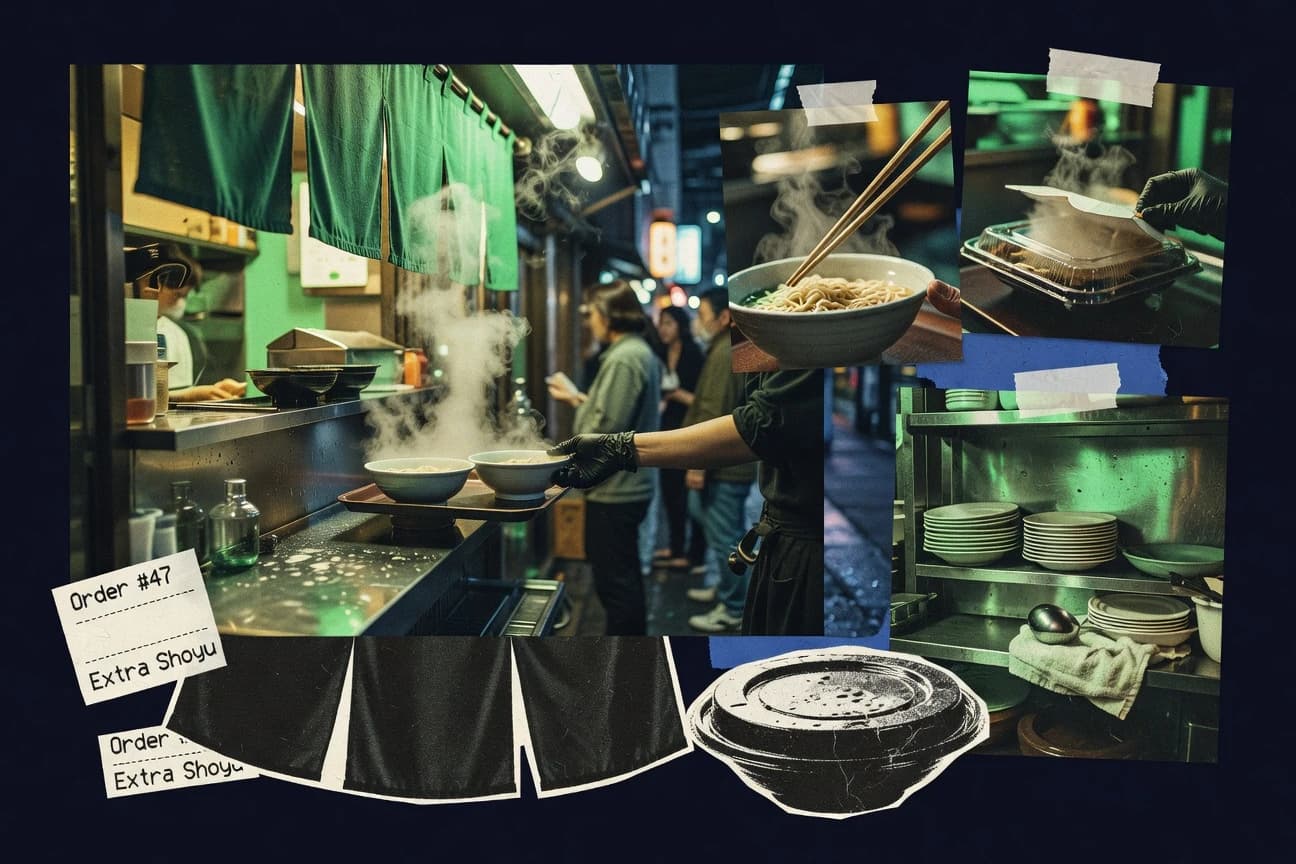

Japan’s foodservice industry has rebounded fast enough that 26.8 trillion JPY in total sales sits at 92% of pre-COVID levels, yet customer habits have shifted in ways that are harder to ignore. From takeout preferences and quiet-venue expectations to loyalty apps, plant-based burgers, and even staffing and wage realities, the survey and market figures don’t just map demand, they reveal exactly where dining in Japan is pulling next.
Key Takeaways
- 65% of consumers aged 20-29 visited restaurants weekly in 2023 survey
- 42% of Japanese consumers prefer takeout over dine-in post-2023
- Health-conscious menu choices rose to 58% among urban consumers in 2023
- Total employment in Japan's foodservice industry was 4.2 million workers in 2023
- Part-time workers comprised 68% of foodservice workforce in 2023
- Average hourly wage for foodservice staff was 1,120 JPY in 2023
- Family restaurant chain revenues totaled 5.2 trillion JPY in FY2023, up 11% YoY
- Average operating profit margin for foodservice firms was 4.2% in 2023
- Fast food segment EBITDA grew 22% to 1.1 trillion JPY in 2023
- In 2023, Japan's foodservice industry generated total sales of 26.8 trillion JPY, recovering 92% from pre-COVID levels
- The foodservice market in Japan grew by 8.7% year-on-year in 2023 to reach 27.2 trillion JPY including takeaways
- Japan's restaurant industry accounted for 75% of the total foodservice market in 2022, equating to 20.1 trillion JPY
- Full-service restaurants held 52% market share by outlets in 2023 with 318,000 locations
- Quick service restaurants (QSR) grew to 18% market share at 110,000 outlets in 2023
- Cafes and coffee shops numbered 85,000 outlets capturing 12% revenue in 2023
In 2023 Japan’s foodservice boom was driven by loyalty apps, takeout, digitalization, and rising health and plant based demand.
Related reading
01 · Category
Consumer Insights26 stats
01
65% of consumers aged 20-29 visited restaurants weekly in 2023 survey
02
42% of Japanese consumers prefer takeout over dine-in post-2023
03
Health-conscious menu choices rose to 58% among urban consumers in 2023
04
Vegetarian options demand increased 35% in foodservice 2023
05
71% of diners use loyalty apps for foodservice rewards in 2023
06
Solo dining accounted for 38% of restaurant visits in 2023
07
Preference for local ingredients surged to 62% in consumer polls 2023
08
Average time spent per restaurant visit was 85 minutes in 2023
09
55% of consumers aged 40+ seek alcohol-free options in 2023
10
Delivery service usage hit 29% of total foodservice occasions 2023
11
Gender split shows women 52% of fine dining visitors in 2023
12
48% prioritize sustainability in menu choices per 2023 survey
13
Peak dining time shifted to 7 PM with 40% visits then in 2023
14
Allergy-aware menu demand up 27% among families 2023
15
37% of Gen Z prefer plant-based burgers in fast food 2023
16
Weekend brunch popularity rose 22% in urban areas 2023
17
Cashless payment preference at 75% for under-30s in 2023
18
Regional cuisine trial rate 41% among tourists 2023
19
Noise level tolerance low, 63% prefer quiet venues 2023
20
Menu digitalization satisfaction at 82% in 2023 polls
21
51% avoid chains for unique experiences in 2023
22
Coffee shop dwell time averaged 45 minutes up 15% 2023
23
Halal food demand grew 40% with Muslim tourists 2023
24
Pet-friendly outlets visited by 28% of owners 2023
25
69% check reviews before dining in 2023
26
Fast casual segment share 25% driven by millennials 2023
Interpretation
Consumer Insights Interpretation
In 2023, Japan's diners are a paradox of convenience and conscience, eating out weekly yet often alone, ordering takeout from quiet local spots via an app while checking reviews for vegetarian options, proving they'll spend 85 minutes deciding on a sustainable, allergy-aware meal they can Instagram, preferably with their pet.
02 · Category
Employment & Operations20 stats
01
Total employment in Japan's foodservice industry was 4.2 million workers in 2023
02
Part-time workers comprised 68% of foodservice workforce in 2023
03
Average hourly wage for foodservice staff was 1,120 JPY in 2023
04
Staff turnover rate in restaurants was 42% annually in 2023
05
Training hours per new hire averaged 24 hours in chains 2023
06
Female employment ratio reached 55% in foodservice 2023
07
Foreign worker visas for foodservice hit 150,000 in 2023
08
Average workweek was 38.5 hours for full-time staff 2023
09
Automation robots installed in 12% of kitchens by 2023
10
Overtime hours averaged 15 per month in urban outlets 2023
11
Manager salaries averaged 5.8 million JPY annually 2023
12
Hygiene certification holders grew 25% to 2.1 million 2023
13
Shift scheduling software adoption at 67% in 2023
14
Injury rate in kitchens was 2.1 per 100 workers 2023
15
Diversity training implemented in 45% of chains 2023
16
Peak staffing needs 20% higher on weekends 2023
17
Online recruitment filled 35% of vacancies in 2023
18
Average tenure for cooks was 4.2 years in 2023
19
Mental health support programs in 28% outlets 2023
20
Energy efficiency training covered 52% workforce 2023
Interpretation
Employment & Operations Interpretation
Japan's food service industry is running on a precarious but well-oiled machine of transient part-timers, cautious robots, and overworked managers, all held together by sheer will, a little software, and a lot of takeout on a Saturday night.
03 · Category
Financial Performance25 stats
01
Family restaurant chain revenues totaled 5.2 trillion JPY in FY2023, up 11% YoY
02
Average operating profit margin for foodservice firms was 4.2% in 2023
03
Fast food segment EBITDA grew 22% to 1.1 trillion JPY in 2023
04
Cost of goods sold for restaurants averaged 32% of revenue in 2023
05
Labor costs represented 28.5% of total expenses in foodservice in 2023
06
Rent expenses for urban foodservice outlets averaged 12% of sales in 2023
07
Net profit for top 10 foodservice chains averaged 8.7 billion JPY each in 2023
08
Debt-to-equity ratio in foodservice industry was 0.65 in FY2023
09
Revenue per employee in foodservice reached 12.5 million JPY in 2023
10
Inventory turnover ratio for foodservice was 18.2 times per year in 2023
11
Marketing spend as % of revenue was 3.8% in 2023 for chains
12
Utility costs rose 18% YoY to average 5.2% of expenses in 2023
13
Franchise royalty fees averaged 5.1% of sales in 2023
14
Cash flow from operations for industry averaged 2.1 trillion JPY in 2023
15
Asset utilization ratio stood at 1.45 in foodservice firms 2023
16
Tax payments by foodservice totaled 450 billion JPY in FY2023
17
R&D expense ratio was 1.2% of revenue in innovative chains 2023
18
Dividend payout ratio averaged 32% for listed foodservice cos in 2023
19
Average ROE for foodservice was 7.8% in FY2023
20
CAPEX per outlet was 45 million JPY for new openings in 2023
21
Bad debt ratio in foodservice was 0.8% in 2023
22
Insurance premiums averaged 2.1% of revenue in 2023
23
Supply chain cost savings achieved 4.5% through digitization in 2023
24
Average price increase implemented was 7.2% across chains in 2023
25
Profit before tax for izakaya operators was 320 billion JPY in 2023
Interpretation
Financial Performance Interpretation
In Japan's cutthroat food service industry, the numbers reveal a high-stakes balancing act where chains are squeezing out juicier profits by passing on costs to diners, yet they're still running on the razor-thin margin of a salaryman's lunch break, proving that serving happiness is a business measured to the very last yen.
More related reading
04 · Category
Market Overview30 stats
01
In 2023, Japan's foodservice industry generated total sales of 26.8 trillion JPY, recovering 92% from pre-COVID levels
02
The foodservice market in Japan grew by 8.7% year-on-year in 2023 to reach 27.2 trillion JPY including takeaways
03
Japan's restaurant industry accounted for 75% of the total foodservice market in 2022, equating to 20.1 trillion JPY
04
Foodservice sales per outlet in Japan averaged 145 million JPY in 2023, up 6.4% from 2022
05
The overall foodservice penetration rate in Japan stood at 28.5% of household food expenditure in FY2023
06
Japan's foodservice industry saw a 12.3% CAGR from 2019-2023 despite pandemic impacts
07
Total number of foodservice outlets in Japan reached 612,000 in 2023
08
Urban areas like Tokyo accounted for 45% of Japan's foodservice market revenue in 2023
09
Per capita foodservice spending in Japan was 215,000 JPY in 2023
10
The industry's contribution to Japan's GDP was 1.8% in 2023
11
Foodservice sales volume grew 7.2% to 12.4 billion kg in 2023
12
Online foodservice reservations increased by 25% in Japan in 2023
13
Average annual sales growth for family restaurants was 9.1% in 2023
14
Japan's foodservice export-related revenue hit 1.2 trillion JPY in 2023 from tourist influx
15
Inflation impacted foodservice costs by 15.4% in Japan in FY2023
16
Total revenue from izakayas reached 4.5 trillion JPY in 2023
17
Foodservice market share of independents was 58% versus 42% chains in 2023
18
Peak sales month for foodservice was December 2023 at 2.4 trillion JPY
19
Smartphone app usage for foodservice orders rose to 42% in 2023
20
Japan's foodservice recovery rate post-COVID was 95% by Q4 2023
21
Average check size in full-service restaurants was 3,200 JPY in 2023
22
Foodservice R&D investment totaled 450 billion JPY in 2023
23
Visitor tourist spending on foodservice hit 800 billion JPY in 2023
24
Sustainability-focused foodservice outlets grew 18% to 45,000 in 2023
25
Digital payment adoption in foodservice reached 68% in 2023
26
Foodservice waste reduction efforts saved 120,000 tons in 2023
27
Corporate catering segment sales were 1.8 trillion JPY in 2023
28
Vending machine foodservice revenue was 650 billion JPY in 2023
29
Foodservice franchise openings increased by 4,200 outlets in 2023
30
E-commerce integration boosted foodservice sales by 15% in 2023
Interpretation
Market Overview Interpretation
Fueled by ramen-eating robots, omnipresent vending machines, and a relentless tourist stampede for sushi, Japan's foodservice industry has, with impressive dexterity, dodged a pandemic, absorbed inflation's punch, and now hums along at 95% of its pre-COVID hustle, proving that the nation's dedication to a good meal out is nearly as robust as its vending machine infrastructure.
05 · Category
Segment Analysis21 stats
01
Full-service restaurants held 52% market share by outlets in 2023 with 318,000 locations
02
Quick service restaurants (QSR) grew to 18% market share at 110,000 outlets in 2023
03
Cafes and coffee shops numbered 85,000 outlets capturing 12% revenue in 2023
04
Izakaya pubs totaled 62,000 with 15% sales share in 2023
05
Delivery-only kitchens expanded to 15,000 virtual brands in 2023
06
Convenience store foodservice sales hit 2.1 trillion JPY or 8% total in 2023
07
Hotel restaurants contributed 4.5% market share in 2023
08
Street food vendors and yatai stalls numbered 12,000 with 2% share 2023
09
Corporate cafeterias served 1.2 million meals daily in 2023, 3% share
10
Bars excluding izakaya had 28,000 outlets, 5% revenue 2023
11
Buffet restaurants grew 12% to 9,500 outlets in 2023
12
Ramen specialty shops reached 45,000 with high density in Tokyo 2023
13
Sushi chains expanded to 18% of seafood segment in 2023
14
Bakery-cafes overtook traditional cafes with 22,000 sites 2023
15
Ghost kitchens for platforms like DoorDash totaled 8,200 in 2023
16
School meal services covered 99% of public schools with 6 million daily 2023
17
Hospital foodservice prepared 2.5 million meals daily in 2023
18
Food trucks numbered 4,500 with urban festival focus 2023
19
Premium steak houses grew 9% to 2,800 outlets 2023
20
Tempura specialists held steady at 11,000 shops 2023
21
Okonomiyaki houses concentrated in Osaka with 3,200 outlets 2023
Interpretation
Segment Analysis Interpretation
In the intricate dance of Japan's food service industry, the enduring reign of sit-down restaurants shares the stage with a swelling cast of quick-service upstarts, caffeine-fueled havens, and izakaya stalwarts, while convenience stores quietly serve as a culinary Swiss Army knife and the future winks from behind ghost kitchen doors.
Reference
Cite This Report
This report is designed to be cited. We maintain stable URLs and versioned verification dates. Copy the format appropriate for your publication below.
APA
Megan Gallagher. (2026, February 13). Japan Food Service Industry Statistics. Gitnux. https://gitnux.org/japan-food-service-industry-statistics
MLA
Megan Gallagher. "Japan Food Service Industry Statistics." Gitnux, 13 Feb 2026, https://gitnux.org/japan-food-service-industry-statistics.
Chicago
Megan Gallagher. 2026. "Japan Food Service Industry Statistics." Gitnux. https://gitnux.org/japan-food-service-industry-statistics.
Sources & references
91 datasets cited across this report · attribution is report-level