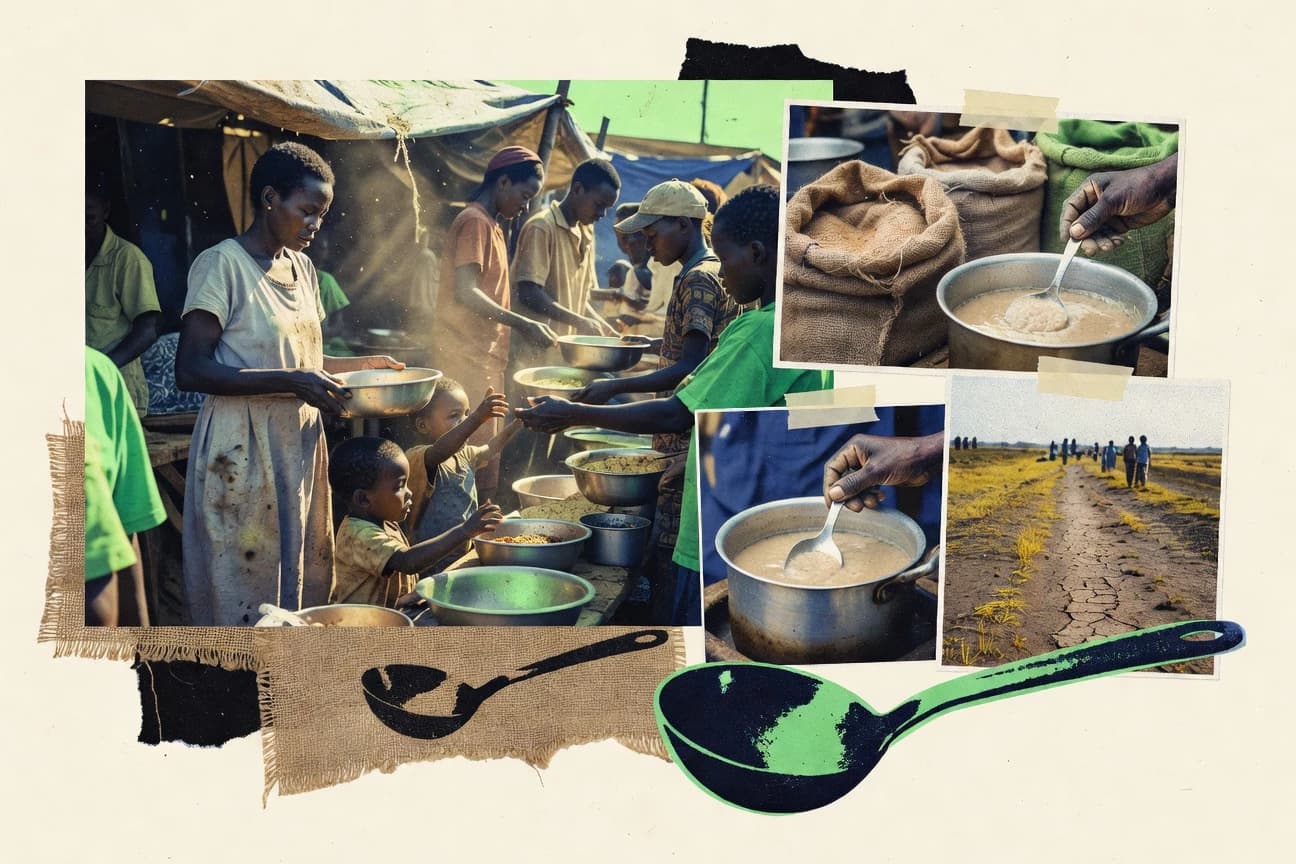

Acute food insecurity now threatens 258 million people globally. Every year, 1.35 billion tonnes of food are lost or wasted, undermining efforts to meet this need.
Key Takeaways
- In 2022, 26.6% of the world’s population lacked access to sufficient food (prevalence of moderate-to-severe food insecurity, estimate used in SOFI).
- Severe food insecurity is associated with a higher risk of acute malnutrition; WHO reports wasting thresholds reflect acute undernutrition risk for children.
- About 45% of deaths of children under 5 are linked to undernutrition (WHO/UNICEF nutrition causal link estimate).
- 45.0% of children under 5 who are wasted globally are in Asia (share of global wasting burden).
- 11.3% of the world’s population was estimated to be severely food insecure in 2022 (about 828 million people).
- Up to 152 million people in 38 countries were projected to experience acute food insecurity levels consistent with IPC Phase 3 or worse in 2022 (global figure reported in IPC outlook).
- Over 700 million people were estimated to be experiencing hunger in sub-Saharan Africa and South Asia combined in 2022 (FAO Regional distribution reported in SOFI 2023).
- WFP’s 2022 total humanitarian funding received was about $10.4 billion (WFP annual report).
- WFP’s 2023 total humanitarian funding received was about $13.2 billion (WFP annual report).
- FAO estimated 1.35 billion tonnes of food were lost or wasted globally each year (approx. 1/3 of all food produced).
- Agriculture accounts for about 40% of global food losses, while retail and consumer stages account for about 39% (global stage distribution, FAO).
- Food loss and waste contribute an estimated 8%–10% of global greenhouse gas emissions (FAO).
- The FAO Vegetable Oil Price Index averaged 186.5 points in 2022, up from 144.9 in 2021.
- The global number of people facing crisis or worse acute food insecurity increased to 202.4 million in 2022 (IPC/FAO).
- The number of people facing crisis or worse acute food insecurity increased to 258 million in 2024 (IPC/FAO).
In 2024, hunger threatens 258 million people, fueled by rising crises, shortages, and still vast food waste.
Related reading
01 · Category
Nutrition, Health And Outcomes6 stats
01
In 2022, 26.6% of the world’s population lacked access to sufficient food (prevalence of moderate-to-severe food insecurity, estimate used in SOFI).https://www.fao.org/publications/card/en/c/cc0639en
02
Severe food insecurity is associated with a higher risk of acute malnutrition; WHO reports wasting thresholds reflect acute undernutrition risk for children.https://apps.who.int/iris/bitstream/handle/10665/42433/9241545744.pdf
03
About 45% of deaths of children under 5 are linked to undernutrition (WHO/UNICEF nutrition causal link estimate).https://apps.who.int/iris/bitstream/handle/10665/43407/9789241503183_eng.pdf
04
2.3 million child deaths were attributable to undernutrition in 2021 (UNICEF/WHO global nutrition reports estimate).https://data.unicef.org/resources/jme-unicef-who-wb-joint-child-malnutrition-estimates/
05
In 2020, 22% of children under 5 were affected by exclusive breastfeeding rates below WHO recommendations (global breastfeeding status estimate).https://data.unicef.org/topic/nutrition/infant-and-young-child-feeding/
06
Low birth weight affected 14.7% of newborns globally in 2020 (WHO/UNICEF/World Bank estimate).https://data.unicef.org/topic/child-survival/low-birthweight/
Interpretation
Nutrition, Health And Outcomes Interpretation
In the Nutrition, Health And Outcomes lens, the data show that undernutrition remains widespread and deadly with 26.6% of people lacking sufficient food in 2022 and undernutrition contributing to about 2.3 million child deaths in 2021, underscoring a major health outcome driven by food insecurity.
02 · Category
Prevalence And Trends6 stats
01
45.0% of children under 5 who are wasted globally are in Asia (share of global wasting burden).https://www.unicef.org/media/110341/file/UNICEF-WHO-World-Bank-Joint-child-malnutrition-estimates-2023.pdf
02
11.3% of the world’s population was estimated to be severely food insecure in 2022 (about 828 million people).https://www.fao.org/state-of-food-security-nutrition/en/
03
Up to 152 million people in 38 countries were projected to experience acute food insecurity levels consistent with IPC Phase 3 or worse in 2022 (global figure reported in IPC outlook).https://www.ipcinfo.org/ipcinfo-detail-article/ipc-acute-food-insecurity-projections-december-2021-june-2022
04
Up to 258 million people in 58 countries were projected to face acute food insecurity in 2024 (IPC/FAO global figure for severe acute food insecurity conditions).https://www.ipcinfo.org/ipcinfo-detail-article/ipc-acute-food-insecurity-projections-august-2024-october-2024
05
Famine (IPC Phase 5) affected 53,000 people in 2023 across the countries reported with IPC Phase 5 classification.https://www.ipcinfo.org/ipcinfo-detail-article/ipc-acute-food-insecurity-projections-august-2023-october-2023
06
In 2023, IPC estimated 24.2 million people in IPC Phase 5 or worse globally (acute hunger at famine/excess mortality risk thresholds).https://www.ipcinfo.org/ipcinfo-detail-article/ipc-acute-food-insecurity-projections-october-2023-december-2023
Interpretation
Prevalence And Trends Interpretation
For the prevalence and trends angle, the data show that severe hunger is not only persistent but rising in scale with 11.3% of the world facing severe food insecurity in 2022 alongside projections of up to 258 million people in 2024 experiencing acute food insecurity, and famine levels still reaching 24.2 million people in IPC Phase 5 or worse globally in 2023.
03 · Category
Policy, Finance And Aid5 stats
01
Over 700 million people were estimated to be experiencing hunger in sub-Saharan Africa and South Asia combined in 2022 (FAO Regional distribution reported in SOFI 2023).https://www.fao.org/3/cc3017en/cc3017en.pdf
02
WFP’s 2022 total humanitarian funding received was about $10.4 billion (WFP annual report).https://docs.wfp.org/api/documents/WFP-0000137626/download
03
WFP’s 2023 total humanitarian funding received was about $13.2 billion (WFP annual report).https://docs.wfp.org/api/documents/WFP-0000157027/download
04
FAO estimated total official development assistance (ODA) for agriculture and rural development to be about $14.3 billion in 2022 (OECD Creditor Reporting System compilation).https://www.fao.org/family-farming/detail/en/c/1580566/
05
In 2023, global humanitarian funding for food security and nutrition reached $14.0 billion (FTS/OCHA sector reporting).https://fts.unocha.org/sector/food-security-and-nutrition
Interpretation
Policy, Finance And Aid Interpretation
In the Policy, Finance And Aid space, humanitarian food-related funding rose from about $10.4 billion in 2022 to $13.2 billion in 2023 while hunger for over 700 million people in sub-Saharan Africa and South Asia persisted, underscoring that increased aid commitments are necessary but not yet sufficient.
04 · Category
Food Systems And Loss6 stats
01
FAO estimated 1.35 billion tonnes of food were lost or wasted globally each year (approx. 1/3 of all food produced).https://www.fao.org/food-loss-and-food-waste/en/
02
Agriculture accounts for about 40% of global food losses, while retail and consumer stages account for about 39% (global stage distribution, FAO).https://www.fao.org/3/i2697e/i2697e.pdf
03
Food loss and waste contribute an estimated 8%–10% of global greenhouse gas emissions (FAO).https://www.fao.org/3/a-i3347e.pdf
04
In 2022, cereal imports rose by 9.8% globally compared with 2021, reaching 209 million tonnes (UN Comtrade + FAO compilation reported in FAO update).https://www.fao.org/3/cc3376en/cc3376en.pdf
05
Global fertilizer use is estimated to have fallen by 8.5% in 2022 compared with 2021 due to high prices and supply disruptions (FAO/GAF).https://www.fao.org/3/cc2939en/cc2939en.pdf
06
In 2022, about 33% of food produced for human consumption was lost or wasted globally (FAO).https://www.fao.org/3/i9990e/i9990e.pdf
Interpretation
Food Systems And Loss Interpretation
Food Systems and Loss remains a major driver of hunger and environmental harm because about a third of what is produced is lost or wasted globally, totaling 1.35 billion tonnes each year and responsible for roughly 8% to 10% of global greenhouse gas emissions.
05 · Category
Drivers And Shocks8 stats
01
The FAO Vegetable Oil Price Index averaged 186.5 points in 2022, up from 144.9 in 2021.https://www.fao.org/worldfoodsituation/foodpricesindex/en/
02
The global number of people facing crisis or worse acute food insecurity increased to 202.4 million in 2022 (IPC/FAO).https://www.fao.org/3/cb9231en/cb9231en.pdf
03
The number of people facing crisis or worse acute food insecurity increased to 258 million in 2024 (IPC/FAO).https://www.fao.org/3/cc7994en/cc7994en.pdf
04
In 2022, Russia’s share of global wheat exports was about 17% prior to the war (share reported in trade/agri outlook references).https://unctad.org/system/files/official-document/TDR2023_en.pdf
05
As of 2024, 55 conflicts were identified as drivers of food insecurity in the Global Report on Food Crises (GRFC) framework (count).https://www.fsinplatform.org/global-report-food-crises
06
The 2023 Global Report on Food Crises estimated 282 million people in 59 countries faced acute food insecurity requiring urgent humanitarian action.https://reliefweb.int/report/world/global-report-food-crises-2023
07
The 2024 Global Report on Food Crises estimated 300 million people in 72 countries faced acute food insecurity requiring urgent humanitarian action.https://reliefweb.int/report/world/global-report-food-crises-2024
08
In 2023, the Houthi blockade and war-related disruptions affected Yemen’s imports of staple foods, contributing to severe food insecurity (humanitarian needs scale: 18.2 million people in Yemen at risk of acute food insecurity in 2023 per IPC/partners).https://www.ipcinfo.org/ipcinfo-detail-article/ipc-acute-food-insecurity-projections-march-2023-may-2023-yemen
Interpretation
Drivers And Shocks Interpretation
Drivers and shocks behind hunger are clearly intensifying, with acute food insecurity rising from 202.4 million people in 2022 to 258 million in 2024 and then an estimated 300 million people in 72 countries in 2024 needing urgent humanitarian action.
More related reading
06 · Category
Markets, Supply & Trade4 stats
01
209 million tonnes of wheat were traded globally in 2022 (FAO/WTO-style compilation reflected in major trade outlook summaries).https://www.fao.org/3/cc3017en/online/cc3017en.html
02
The number of people facing acute food insecurity in conflict-affected countries rose to 250 million in 2023 (GRFC conflict focus estimate).https://www.wfp.org/publications/global-report-food-crises-2023
03
2.5% global growth in cereal production is expected in 2024–2025, insufficient to close gaps in vulnerable regions (FAO global cereal supply/demand outlook).https://www.fao.org/worldfoodsituation/csdb/en/
04
Fertilizer use is estimated to have fallen by 8.5% in 2022 vs 2021 (FAO/GAF).https://www.fao.org/publications/card/en/c/1459994/
Interpretation
Markets, Supply & Trade Interpretation
In Markets, Supply & Trade, wheat volumes of 209 million tonnes in 2022 and only 2.5% cereal production growth in 2024 to 2025 are coming up short while fertilizer use fell 8.5% in 2022, leaving acute food insecurity in conflict-affected countries at 250 million people in 2023.
07 · Category
Food Insecurity Levels1 stats
01
22 countries were at IPC Phase 4 or above for multiple months in 2023 (protracted food insecurity reported in the 2024 global overview).https://www.fao.org/publications/card/en/c/1712322/
Interpretation
Food Insecurity Levels Interpretation
In the Food Insecurity Levels category, 22 countries were stuck in IPC Phase 4 or worse for multiple months in 2023, showing that severe food insecurity is not just a short term shock but a prolonged challenge highlighted in the 2024 global overview.
08 · Category
Malnutrition Burden3 stats
01
1 in 3 children under 5 globally are affected by stunting (2022 estimate reported in The Lancet series and reflected in Global Nutrition Report 2023/2024 synthesis).https://www.thelancet.com/journals/langlo/article/PIIS2214-109X(22)00311-9/fulltext
02
62 million children under 5 are affected by wasting globally (estimate reported in the 2023 UN-WHO-World Bank joint child malnutrition dataset synthesis).https://www.who.int/publications/i/item/9789240025257
03
2.6 million deaths of children under 5 were attributed to malnutrition in 2020 (WHO/UNICEF estimates compiled in a peer-reviewed assessment).https://www.nejm.org/doi/full/10.1056/NEJMoa1911495
Interpretation
Malnutrition Burden Interpretation
The malnutrition burden remains severe, with 1 in 3 children under 5 affected by stunting and 62 million affected by wasting worldwide, and these conditions contributed to 2.6 million under 5 deaths from malnutrition in 2020.
09 · Category
Underlying Drivers1 stats
01
7.8% of global land area is affected by drought, with drought recognized as a growing contributor to food insecurity (IPCC AR6 estimate summarized in IPCC drought risk assessments).https://www.ipcc.ch/report/ar6/wg2/
Interpretation
Underlying Drivers Interpretation
As an underlying driver of global hunger, drought is now affecting 7.8% of global land area, signaling that worsening water stress is becoming an increasingly important contributor to food insecurity.
10 · Category
Aid, Funding & Coverage2 stats
01
$15.3 billion was requested for humanitarian action for 2024 food security and nutrition (OCHA Global Humanitarian Overview 2024 sector estimates).https://reliefweb.int/report/world/global-humanitarian-overview-2024
02
Only 57% of the estimated humanitarian funding required for 2023 was received globally (OCHA financing data in 2024 funding update referencing 2023).https://www.unocha.org/publications/report/world/global-humanitarian-overview-2024
Interpretation
Aid, Funding & Coverage Interpretation
In the Aid, Funding & Coverage picture, funding still lags behind need with just 57% of estimated 2023 humanitarian requirements received globally, even as $15.3 billion was requested for 2024 food security and nutrition.
Reference
Cite This Report
This report is designed to be cited. We maintain stable URLs and versioned verification dates. Copy the format appropriate for your publication below.
APA
Henrik Dahl. (2026, February 13). Global Hunger Statistics. Gitnux. https://gitnux.org/global-hunger-statistics
MLA
Henrik Dahl. "Global Hunger Statistics." Gitnux, 13 Feb 2026, https://gitnux.org/global-hunger-statistics.
Chicago
Henrik Dahl. 2026. "Global Hunger Statistics." Gitnux. https://gitnux.org/global-hunger-statistics.
Sources & references
42 datasets cited across this report
+26 additional datasets cited (not shown individually)