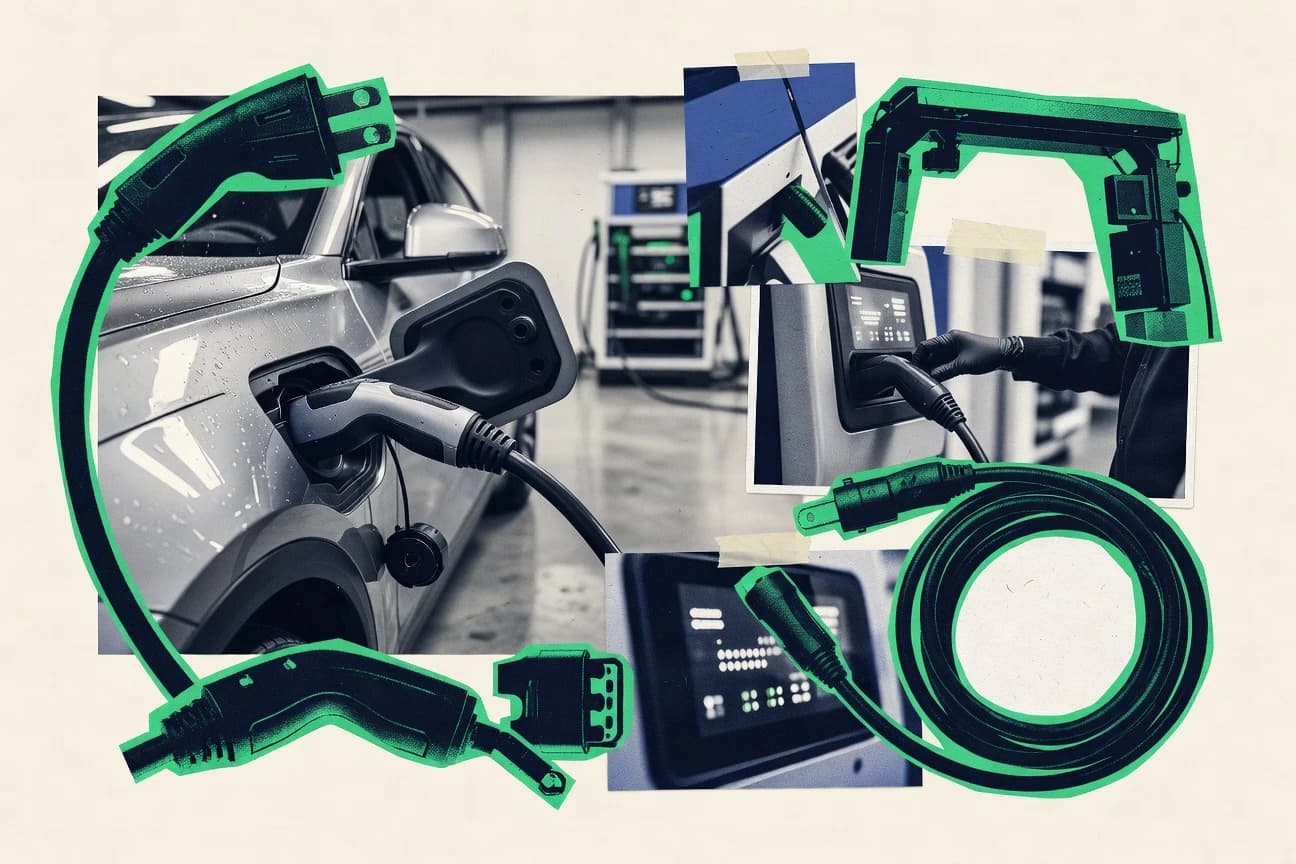

With public charging infrastructure crossing 3.7 million chargers worldwide in 2023 and global EV sales hitting 14 million units, the EV automotive industry is moving faster than most roadmaps anticipated. What stands out even more is how concentrated that momentum is, with China holding 70% of all public chargers while EV manufacturing, battery costs, and policy targets reshape demand block by block. In the pages ahead, we pair those big milestones with the details that explain why 2023 was such a pivot year for vehicles, batteries, and emissions.
Key Takeaways
- Public EV chargers worldwide reached 3.7 million in 2023, up 40% YoY.
- China deployed 2.7 million public chargers by end-2023, 70% of global total.
- US public charging ports grew to 168,000 in 2023, a 55% increase.
- Global electric vehicle (EV) sales surged to 14 million units in 2023, marking a 35% increase from 2022 and accounting for 18% of total passenger car sales worldwide.
- The EV market is projected to grow from $383.2 billion in 2021 to $1.4 trillion by 2030, with a CAGR of 14.2%.
- China's EV market share reached 35.6% of new vehicle sales in 2023, up from 25.6% in 2022.
- Tesla delivered 1.81 million vehicles in 2023, a 38% increase from 2022.
- BYD sold 3.02 million new energy vehicles (NEVs) in 2023, surpassing Tesla globally.
- Volkswagen Group sold 771,000 EVs in 2023, up 35% from prior year.
- EVs avoided 220 million tonnes of CO2 emissions globally in 2023.
- EU's Fit for 55 package mandates 100% ZEV sales by 2035.
- US IRA tax credits boosted EV adoption by 40% in eligible states in 2023.
- Average EV battery pack price fell to $139/kWh in 2023, down 14% from 2022.
- LFP battery adoption in EVs rose to 41% globally in 2023 from 30% in 2022.
- Solid-state batteries are expected to enter mass production by 2027, offering 50% higher energy density.
EV charging and sales surged in 2023, with faster infrastructure growth, cleaner batteries, and EVs at record adoption levels worldwide.
Related reading
01 · Category
Charging Infrastructure20 stats
01
Public EV chargers worldwide reached 3.7 million in 2023, up 40% YoY.
02
China deployed 2.7 million public chargers by end-2023, 70% of global total.
03
US public charging ports grew to 168,000 in 2023, a 55% increase.
04
Europe added 300,000 public chargers in 2023, totaling 630,000.
05
Ultra-fast chargers (>150 kW) comprised 15% of new installations in 2023.
06
Home charging accounts for 80% of EV charging sessions globally.
07
Tesla Supercharger network expanded to 50,000 stalls worldwide in 2023.
08
Wireless charging pilots reached 11 kW power levels with 93% efficiency.
09
India plans 1 million public chargers by 2030, with 10,000 installed by 2023.
10
EV-to-grid (V2G) pilots in Europe enabled 10 GWh bidirectional energy flow in 2023.
11
Global public fast chargers (>50 kW) totaled 1.2 million in 2023.
12
CCS connectors dominated 60% of new charger sales in Europe 2023.
13
UK's public chargers grew 42% to 50,000 in 2023.
14
Electrify America network hit 4,400 chargers in US 2023.
15
Bidirectional charging standardized in 25% of new EVs 2023.
16
Australia's chargers reached 3,000 public units by end-2023.
17
Level 3 chargers utilization averaged 20% in urban areas 2023.
18
Korea installed 250,000 chargers, 80% private, in 2023.
19
Dynamic wireless charging roads tested at 20 kW/m in Sweden.
20
California's chargers hit 100,000 total, public 42,000 in 2023.
Interpretation
Charging Infrastructure Interpretation
Charging infrastructure is scaling fast as public EV chargers hit 3.7 million worldwide in 2023, up 40% year over year, with China alone accounting for 2.7 million and Europe and the US adding another 300,000 and reaching 168,000 ports respectively.
02 · Category
Market Growth19 stats
01
Global electric vehicle (EV) sales surged to 14 million units in 2023, marking a 35% increase from 2022 and accounting for 18% of total passenger car sales worldwide.
02
The EV market is projected to grow from $383.2 billion in 2021 to $1.4 trillion by 2030, with a CAGR of 14.2%.
03
China's EV market share reached 35.6% of new vehicle sales in 2023, up from 25.6% in 2022.
04
Europe saw EV sales grow by 37% year-over-year in 2023, totaling 2.4 million units.
05
The US EV market expanded by 49% in 2023, with 1.2 million units sold.
06
Battery electric vehicles (BEVs) are expected to constitute 52% of global light-duty vehicle sales by 2030.
07
India's EV market is forecasted to reach 10 million annual sales by 2030, from 1.5 million in 2023.
08
Global EV production capacity is set to exceed 40 million units annually by 2025.
09
Southeast Asia's EV market grew 300% in 2023, led by Thailand and Indonesia.
10
Luxury EV segment grew 28% globally in 2023, driven by Tesla Model Y and BMW i4.
11
Global EV sales hit 14 million in 2023, with BEVs at 70% of total.
12
EV market revenue projected at $823 billion in 2024, CAGR 21% to 2030.
13
BEV production in China reached 6.6 million units in 2023.
14
Germany's EV sales grew 21% to 524,000 units in 2023.
15
Japan EV market share at 2.2% in 2023, up from 1.7%.
16
PHEV sales globally totaled 3.8 million in 2023.
17
Brazil EV sales tripled to 75,000 units in 2023.
18
Middle East EV market grew 150% in 2023, led by UAE.
19
Commercial EV sales reached 1.1 million globally in 2023.
Interpretation
Market Growth Interpretation
Under the market growth lens, global EV sales jumped to 14 million units in 2023, up 35% from 2022, and with the EV market forecast to reach $1.4 trillion by 2030 at a 14.2% CAGR, the expansion is clearly accelerating worldwide.
03 · Category
Sales Figures19 stats
01
Tesla delivered 1.81 million vehicles in 2023, a 38% increase from 2022.
02
BYD sold 3.02 million new energy vehicles (NEVs) in 2023, surpassing Tesla globally.
03
Volkswagen Group sold 771,000 EVs in 2023, up 35% from prior year.
04
Ford's US EV sales reached 116,000 units in 2023, doubling from 2022.
05
Hyundai-Kia sold 485,000 EVs globally in 2023, a 45% YoY growth.
06
GM delivered 75,000 EVs in the US in 2023, up from 40,000 in 2022.
07
Rivian produced 19,468 vehicles in Q4 2023, totaling 57,232 for the year.
08
NIO delivered 160,038 vehicles in 2023, a 82.7% increase YoY.
09
Polestar sold 54,600 cars in 2023, up 26% from 2022.
10
BMW Group EV sales hit 375,716 units in 2023, doubling from 2022.
11
Mercedes-Benz sold 222,600 EVs in 2023, up 65%.
12
Lucid delivered 6,001 vehicles in 2023.
13
XPeng delivered 141,601 vehicles in 2023, up 17%.
14
GM's Ultium platform EVs sold 43,000 in Q4 2023 alone.
15
Stellantis EV sales up 54% to 366,000 in Europe 2023.
16
Li Auto sold 376,030 vehicles in 2023, all extended-range EVs.
17
Fisker delivered 4,129 Ocean SUVs in 2023.
18
Renault Group EV sales rose 41% to 344,000 in 2023.
19
Zeekr delivered 118,685 vehicles in 2023.
Interpretation
Sales Figures Interpretation
The 2023 sales figures show EV momentum accelerating across the market, with BYD leading at 3.02 million NEVs and Tesla reaching 1.81 million deliveries, while several major automakers also posted strong growth such as Ford doubling US EV sales to 116,000 units.
More related reading
04 · Category
Sustainability And Policy18 stats
01
EVs avoided 220 million tonnes of CO2 emissions globally in 2023.
02
EU's Fit for 55 package mandates 100% ZEV sales by 2035.
03
US IRA tax credits boosted EV adoption by 40% in eligible states in 2023.
04
Battery production emissions reduced 50% via low-carbon processes in 2023.
05
Global EV fleet saved 1.2 million barrels of oil daily in 2023.
06
China's NEV credit system enforced 20% EV sales mandate in 2023.
07
Recycled battery materials reached 20% of new cathode production in 2023.
08
Norway achieved 89% EV market share for new cars in 2023.
09
EV lifecycle emissions are 50-70% lower than ICE vehicles per IEA models.
10
EV NOx emissions savings: 1.5 million tonnes avoided in EU 2023.
11
California's ZEV mandate requires 100% EV sales by 2035.
12
Global mining for EV batteries needs 3x copper supply by 2030.
13
EU banned new ICE car sales post-2035 under Green Deal.
14
EV incentives in India: $4,500tax cut boosted sales 50% 2023.
15
Lifecycle GHG savings from EVs: 66% vs ICE in EU grid.
16
US NEVI program funds $5B for 500,000 chargers by 2030.
17
China's dual-credit policy doubled NEV production to 9.5M 2023.
18
EV fleet reduced urban PM2.5 by 15% in Beijing 2023.
Interpretation
Sustainability And Policy Interpretation
In the Sustainability And Policy category, government and incentive frameworks are clearly accelerating clean transport, with policies and market mandates driving 220 million tonnes of CO2 emissions avoided globally in 2023 and supporting rapid EV adoption such as a 100% ZEV sales requirement by 2035 in the EU and a 40% boost in eligible US states from IRA tax credits.
05 · Category
Technology And Batteries19 stats
01
Average EV battery pack price fell to $139/kWh in 2023, down 14% from 2022.
02
LFP battery adoption in EVs rose to 41% globally in 2023 from 30% in 2022.
03
Solid-state batteries are expected to enter mass production by 2027, offering 50% higher energy density.
04
Global lithium-ion battery demand for EVs reached 750 GWh in 2023.
05
Sodium-ion batteries could reduce costs by 30% compared to LFP by 2025.
06
CATL's Qilin battery offers 1,000 km range and 10-minute charging for 400 km.
07
Battery recycling rates for EVs are projected to reach 95% by 2030.
08
Fast-charging batteries with 4C rates are in development, enabling 80% SOC in 15 minutes.
09
Global EV battery manufacturing capacity hit 2.5 TWh in 2023.
10
NMC 811 cathodes improved to 230 Wh/kg energy density in 2023 pilots.
11
Battery prices dropped to $126/kWh for packs in China 2023.
12
Global battery cell production reached 1.2 TWh in 2023.
13
Silicon anodes in development boost capacity 20% over graphite.
14
EV battery warranty averages 8 years/160,000 km globally.
15
Semi-solid state batteries tested at 400 Wh/kg density.
16
Lithium iron phosphate (LFP) costs fell to $70/kWh in 2023.
17
Nickel-free batteries gained 25% market share in China 2023.
18
Battery swapping stations reached 3,600 in China by 2023.
19
Advanced thermal management cut battery degradation to <10% over 200,000 km.
Interpretation
Technology And Batteries Interpretation
Technology and batteries are advancing fast as EV battery pack prices dropped to $139 per kWh in 2023 and LFP adoption climbed to 41 percent, while demand hit 750 GWh and next generation options like solid state batteries are slated for mass production by 2027.
report visual · Key figures
EV Charging Expansion: Global and Key Markets (2023)
Global EV charging infrastructure is expanding rapidly, with China accounting for most public chargers and several major regions adding significant capacity in 2023.
40%
Public EV chargers worldwide reached 3.7 million in 2023, up 40% YoY.
70%
China deployed 2.7 million public chargers by end-2023, 70% of global total.
55%
US public charging ports grew to 168,000 in 2023, a 55% increase.
300,000
Europe added 300,000 public chargers in 2023, totaling 630,000.
42%
UK's public chargers grew 42% to 50,000 in 2023.
Reference
Cite This Report
This report is designed to be cited. We maintain stable URLs and versioned verification dates. Copy the format appropriate for your publication below.
APA
Lukas Bauer. (2026, February 13). Ev Automotive Industry Statistics. Gitnux. https://gitnux.org/ev-automotive-industry-statistics
MLA
Lukas Bauer. "Ev Automotive Industry Statistics." Gitnux, 13 Feb 2026, https://gitnux.org/ev-automotive-industry-statistics.
Chicago
Lukas Bauer. 2026. "Ev Automotive Industry Statistics." Gitnux. https://gitnux.org/ev-automotive-industry-statistics.
Sources & references
72 datasets cited across this report