
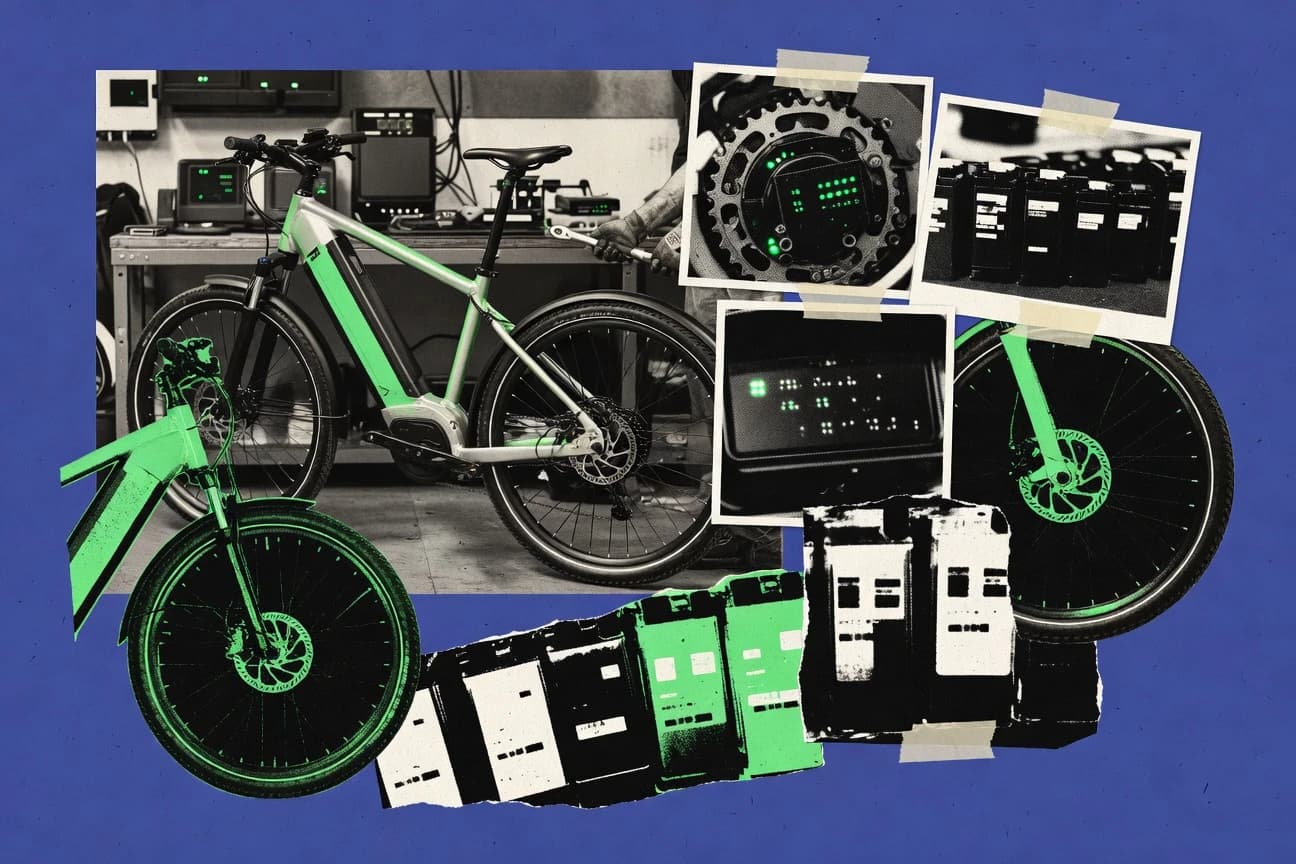

By 2027, global e-bike sales are forecast to hit about 69 million units, and the market could climb to roughly $17.7 billion by 2030. What’s more, the shifts are not just economic or technical since many riders say an e-bike helps replace car trips and even reduces emissions compared with equivalent car travel. We pull together the industry benchmarks, battery and safety metrics, and real-world behavior data to show where growth is coming from and what might actually limit it.
Key Takeaways
- Global e-bike sales are forecast to reach about 69 million units by 2027—indicating expected expansion over the next few years
- $17.7 billion global market size for electric bicycles by 2030 (forecast)—capturing projected revenue growth
- Asia-Pacific was the fastest-growing regional e-bike market at about 9% CAGR (forecast period)—indicating high growth from production and emerging demand
- About 30% of e-bike riders report replacing at least one car trip per week—measuring modal shift potential
- EU consumer survey: 52% cite “avoiding sweat” as a key reason for buying an e-bike—measuring psychological/comfort drivers
- A 2020 peer-reviewed review estimated that e-bikes can enable sustained moderate-intensity exercise, with heart-rate increases typically comparable to brisk cycling at lower effort—quantifying physiological intensity effect
- Lithium-ion battery chemistry dominates the e-bike market; one industry technical review reports >90% of e-bike packs use Li-ion—quantifying technology share
- Cadence sensors are used in a majority of EU-compliant pedelecs; one market survey estimated >60% adoption of cadence-based control—quantifying control architecture prevalence
- Torque sensing is less common than cadence sensing but can be used by higher-end models; market survey estimated around 25–35% of premium units use torque sensing—quantifying segment differences
- A peer-reviewed meta-analysis found e-bikes can reduce greenhouse gas emissions by around 25–50% compared with car use for comparable trips (range)—quantifying average mitigation
- Studies estimate an average increase in cycling distance of ~10–50% after e-bike adoption—quantifying induced travel effects
- E-bikes can improve energy efficiency versus cars by factors reported around 10x or more in passenger transport—quantifying efficiency advantage
- Bosch claims their eBike battery can achieve about 500 full cycles depending on usage—quantifying expected cycle life for a major supplier
- EU pedelec assistance generally cuts off at 25 km/h (or earlier if speed is lower)—quantifying another key performance constraint
- In IEC 62133-2 safety testing, cells must pass specific tests including charge/discharge and forced discharge to qualify for use—quantifying safety testing performance criteria
With global e-bike sales set to reach 69 million by 2027, these rides could cut car trips and emissions significantly.
Related reading
01 · Category
Market Size5 stats
01
Global e-bike sales are forecast to reach about 69 million units by 2027—indicating expected expansion over the next few years
02
$17.7 billion global market size for electric bicycles by 2030 (forecast)—capturing projected revenue growth
03
Asia-Pacific was the fastest-growing regional e-bike market at about 9% CAGR (forecast period)—indicating high growth from production and emerging demand
04
31.8% of global e-bicycle sales value was in Europe in 2023—showing Europe’s share of global revenue within e-bikes.
05
2.7 million e-bikes were sold in the Netherlands in 2022—indicating the country’s large sales volume for a single market.
Interpretation
Market Size Interpretation
The electric bicycle market is set to grow sharply, with global sales forecast to reach about 69 million units by 2027 and the market size rising to $17.7 billion by 2030, led by fast expansion in Asia Pacific at roughly 9% CAGR.
02 · Category
User Adoption8 stats
01
About 30% of e-bike riders report replacing at least one car trip per week—measuring modal shift potential
02
EU consumer survey: 52% cite “avoiding sweat” as a key reason for buying an e-bike—measuring psychological/comfort drivers
03
A 2020 peer-reviewed review estimated that e-bikes can enable sustained moderate-intensity exercise, with heart-rate increases typically comparable to brisk cycling at lower effort—quantifying physiological intensity effect
04
The same Swedish study reported that electric assistance increased acceptance of longer commutes (distance) by reducing effort—quantifying behavioral change
05
A 2022 consumer survey in Denmark found about 25% charged at workplaces or public spots—quantifying partial mobility/charging needs
06
12% of U.S. consumers reported owning an e-bike in 2023—measuring consumer adoption penetration.
07
26% of surveyed U.S. adults said they would consider buying an e-bike in the next 12 months in 2024—indicating near-term purchase intent.
08
46% of e-bike owners in a 2021 UK survey reported they ride at least twice per week—showing activity intensity among owners.
Interpretation
User Adoption Interpretation
User adoption is already strong and growing, with 12% of U.S. consumers owning an e-bike in 2023 and 26% saying they would consider buying one within 12 months in 2024, while adoption is reinforced by practical benefits such as 30% of riders replacing at least one car trip per week.
03 · Category
Industry Trends5 stats
01
Lithium-ion battery chemistry dominates the e-bike market; one industry technical review reports >90% of e-bike packs use Li-ion—quantifying technology share
02
Cadence sensors are used in a majority of EU-compliant pedelecs; one market survey estimated >60% adoption of cadence-based control—quantifying control architecture prevalence
03
Torque sensing is less common than cadence sensing but can be used by higher-end models; market survey estimated around 25–35% of premium units use torque sensing—quantifying segment differences
04
65% of e-bikes in a 2023 French retail audit used torque sensing—quantifying a higher-end control technology share in that market segment.
05
Lithium-ion batteries comprised 97% of global battery sales by value in 2023—demonstrating technology dominance across battery markets feeding e-bikes.
Interpretation
Industry Trends Interpretation
In the Industry Trends category, the data shows just how settled the e-bike technology stack is, with lithium-ion powering over 90% of e-bike packs and accounting for 97% of global battery sales by value in 2023.
04 · Category
Environmental Impact6 stats
01
A peer-reviewed meta-analysis found e-bikes can reduce greenhouse gas emissions by around 25–50% compared with car use for comparable trips (range)—quantifying average mitigation
02
Studies estimate an average increase in cycling distance of ~10–50% after e-bike adoption—quantifying induced travel effects
03
E-bikes can improve energy efficiency versus cars by factors reported around 10x or more in passenger transport—quantifying efficiency advantage
04
Recycling rates for e-bike components (battery materials) can exceed 90% in advanced recycling processes—quantifying end-of-life recovery potential
05
Lithium-ion battery recycling can recover nickel/cobalt at levels above ~80% in commercial hydrometallurgical routes (reported ranges)—quantifying material recovery effectiveness
06
EU regulation (2023/1542) sets recycling efficiency targets for lithium batteries at 50% by 2025 and 80% by 2030 (for specific categories depending on chemistry)—quantifying end-of-life recycling requirements
Interpretation
Environmental Impact Interpretation
From an environmental impact perspective, e-bikes are linked to substantial emissions cuts of about 25 to 50 percent versus car use while also supporting a strong end of life recovery story, with EU rules requiring lithium battery recycling to reach 50 percent by 2025 and 80 percent by 2030.
05 · Category
Performance Metrics8 stats
01
Bosch claims their eBike battery can achieve about 500 full cycles depending on usage—quantifying expected cycle life for a major supplier
02
EU pedelec assistance generally cuts off at 25 km/h (or earlier if speed is lower)—quantifying another key performance constraint
03
In IEC 62133-2 safety testing, cells must pass specific tests including charge/discharge and forced discharge to qualify for use—quantifying safety testing performance criteria
04
ISO 4210 provides bicycle safety requirements; for e-bikes it applies relevant mechanical safety checks—quantifying safety standard coverage
05
E-bikes increase average cycling speed; one study reported speed increases on the order of ~20–30% compared with conventional bicycles for comparable riders—quantifying performance shift
06
A 2020 study found e-bikes can enable riders to sustain moderate exercise, with heart-rate levels comparable to brisk cycling at lower perceived effort—indicating physiological intensity suitability.
07
A 2021 peer-reviewed field study measured that the majority of e-bike rides fall within WHO-recommended activity intensity ranges for substantial time fractions—showing health-relevant intensity distribution.
08
A 2024 durability study reported an e-bike drivetrain replacement interval of about 3,000–5,000 km for typical urban usage—quantifying maintenance cycles.
Interpretation
Performance Metrics Interpretation
Across key performance metrics like cycle life and real world speed, e-bikes deliver measurable gains while operating under clear constraints, such as Bosch’s roughly 500 full battery cycles and the EU assistance cut off at 25 km/h, alongside studies showing about a 20 to 30 percent speed increase and health relevant intensity for much of the ride.
More related reading
06 · Category
Cost Analysis4 stats
01
Li-ion battery pack costs fell to around $132per kWh in 2019 (industry benchmark from BloombergNEF)—quantifying cost-down trajectory relevant to e-bike packs
02
BloombergNEF reported battery pack costs of about $139per kWh in 2020—quantifying continued cost declines
03
BloombergNEF reported pack costs about $153per kWh in 2021 (annual update)—quantifying recent pack cost levels
04
A 2021 peer-reviewed cost review estimated drivetrain and battery components are the primary cost drivers, with batteries typically accounting for roughly 30%–45% of total e-bike bill of materials—quantifying cost composition.
Interpretation
Cost Analysis Interpretation
Cost analysis of the e-bike supply chain shows Li-ion battery pack prices kept dropping from about $132 per kWh in 2019 to roughly $139 in 2020 and to about $153 per kWh in 2021, while peer-reviewed research indicates batteries remain a major bill of materials driver at around 30% to 45% of total e-bike costs.
07 · Category
Regulatory & Standards3 stats
01
The EU Battery Regulation (EU) 2023/1542 sets a target of 80% battery recycling efficiency by 2030 for lithium batteries (with category/chemistry-dependent targets)—indicating mandated end-of-life recovery performance
02
UNECE Regulation No. 155 requires type-approval for electric vehicle batteries (including safety and durability performance requirements)—indicating a regulatory framework for battery safety
03
UN Manual on Battery Storage and Transportation reports that lithium-ion batteries are subject to specific test and documentation requirements during transport—indicating compliance drivers for battery supply chains
Interpretation
Regulatory & Standards Interpretation
Regulatory and standards pressure is tightening quickly for electric bicycle batteries, with the EU Battery Regulation (EU) 2023/1542 targeting 80% lithium battery recycling efficiency by 2030 alongside UNECE Regulation No. 155 battery type approval and UN transport testing and documentation requirements.
08 · Category
Safety & Compliance5 stats
01
A 2023 safety analysis reported that e-bike-related emergency department visits accounted for 26% of bicycle-related injuries in the US among the studied period—indicating growing injury burden relative to non-electric bicycles
02
In a systematic review, e-bike users had a higher risk of head injury compared with conventional bicycle users (pooled effect reported)—indicating safety outcomes depend on injury mechanisms
03
A 2022 study using US hospital data found that the share of bicycle injury admissions involving e-bikes increased from 2010 to 2018—indicating rapid growth in exposure
04
In a UK study of injured cyclists, e-bike casualties were overrepresented among older age groups compared with conventional cyclists (age distribution reported)—indicating demographic shifts in risk
05
A 2021 peer-reviewed analysis reported that e-bikes are associated with higher impact speeds than conventional bicycles in real-world conditions (reported measured speed distributions)—indicating a mechanistic safety factor
Interpretation
Safety & Compliance Interpretation
Safety and compliance concerns are rising because e-bikes made up 26% of bicycle related emergency department injuries in the US during the 2023 analysis, while evidence from multiple studies shows growing head injury risk, faster growth in admissions from 2010 to 2018, and higher real world impact speeds than conventional bicycles.
09 · Category
Technology & Costs3 stats
01
A 2023 LCA study reported that the life-cycle greenhouse gas impact of an e-bike is dominated by electricity and battery manufacturing assumptions (relative contribution stated in results)—indicating hotspots for decarbonization
02
A 2024 benchmarking report found that the mean advertised battery capacity across mass-market e-bikes in Europe was 500–600 Wh (dataset summary)—indicating typical pack sizing
03
TÜV SÜD reported that battery defect-related claims represent a measurable share of warranty cases for e-mobility products (share reported in warranty analysis)—indicating reliability/compliance importance
Interpretation
Technology & Costs Interpretation
For the Technology and Costs angle, the biggest decarbonization hotspot is rooted in how electricity and battery manufacturing are assumed in life cycle impacts, while today’s mass market e bikes typically carry 500 to 600 Wh packs and battery reliability issues already show up in a measurable share of warranty cases, tying both emissions and cost risks directly to battery technology choices.
10 · Category
Environmental & Energy6 stats
01
A 2022 academic study found e-bike battery charging energy needs were lower than vehicle energy use for comparable trips (reported energy per trip metrics)—indicating energy-cost efficiency in practice
02
A 2023 life-cycle assessment meta-analysis reported that substituting short car trips with e-bikes results in net GHG reductions under a range of electricity mixes (pooled scenarios reported)—indicating robustness of environmental benefits
03
A 2020 peer-reviewed review found that e-bikes can be powered by renewable electricity to further reduce operational emissions compared with cars (scenario results)—indicating cleaner electricity use amplifies benefits
04
In an urban mobility study, e-bikes were found to reduce transport energy intensity relative to car travel by an order-of-magnitude in scenario modeling (energy intensity ratio reported)—indicating large energy advantage
05
A 2019 peer-reviewed study on micro-mobility found that e-bikes can reduce local pollutants (tailpipe NOx/PM) when they displace car trips (emissions displacement metrics reported)—indicating air-quality benefits
06
A 2021 study in Transportation Research Part D reported that modal shift from cars to e-bikes can reduce total urban transport emissions in modeled scenarios (emissions reduction percentage reported)—indicating quantified climate impact
Interpretation
Environmental & Energy Interpretation
Across multiple peer reviewed analyses, substituting short car trips with e-bikes shows consistent and robust environmental gains, with studies reporting net greenhouse gas reductions under pooled electricity mixes and even an order of magnitude drop in transport energy intensity versus car travel, reinforcing the Environmental & Energy advantage of e-bikes.
Reference
Cite This Report
This report is designed to be cited. We maintain stable URLs and versioned verification dates. Copy the format appropriate for your publication below.
APA
Helena Kowalczyk. (2026, February 13). Electric Bicycle Industry Statistics. Gitnux. https://gitnux.org/electric-bicycle-industry-statistics
MLA
Helena Kowalczyk. "Electric Bicycle Industry Statistics." Gitnux, 13 Feb 2026, https://gitnux.org/electric-bicycle-industry-statistics.
Chicago
Helena Kowalczyk. 2026. "Electric Bicycle Industry Statistics." Gitnux. https://gitnux.org/electric-bicycle-industry-statistics.
Sources & references
53 datasets cited across this report · attribution is report-level
+21 additional datasets cited (not shown individually)