
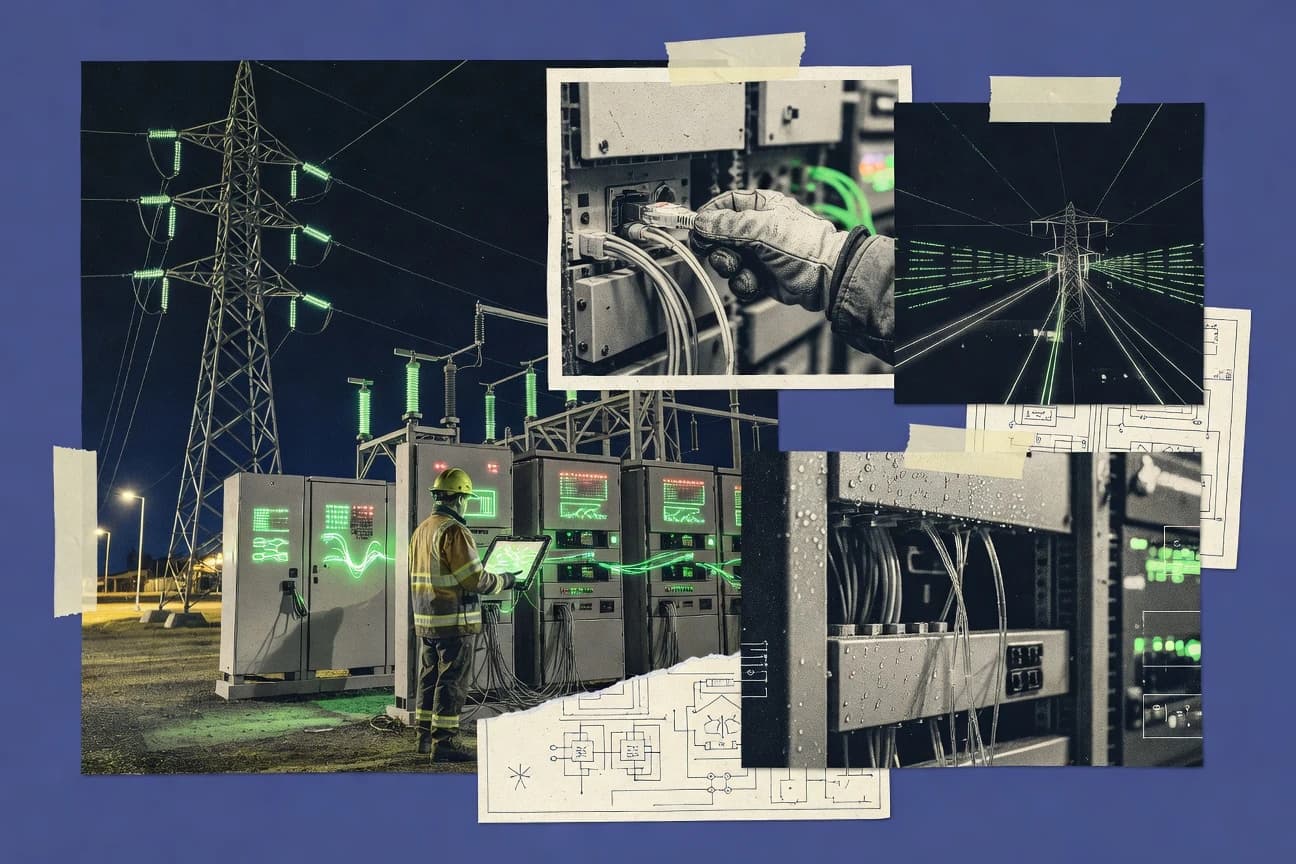

Digital transformation in the power industry is reshaping how utilities across North America, Europe, and Asia manage grids, forecasting, assets, and distributed energy. From cloud-based SCADA and AI demand forecasting to big data analytics, these tools can improve reliability and cut outages. This page also examines the cyber constraints behind modernization—like limited OT visibility and legacy-system risk—so readers understand how to upgrade securely from transmission to the edge.
Key Takeaways
- 45% of global utilities have adopted IoT at scale, with 72% reporting improved grid reliability post-implementation.
- In 2023, 62% of European utilities implemented AI-driven demand forecasting, achieving 18% accuracy improvement over traditional methods.
- US utilities saw 55% adoption rate for cloud-based SCADA systems by end-2023, up from 32% in 2021.
- 65% of cybersecurity incidents in power grids stemmed from legacy systems in 2023.
- Ransomware attacks on utilities rose 150% YoY to 214 incidents globally in 2023.
- 42% of utilities lack full visibility into OT networks, per 2024 Ponemon Institute.
- In 2023, global spending on digital transformation in the power sector reached $78.2 billion, marking a 12.5% increase from 2022, driven by investments in AI and IoT for grid modernization.
- Utilities investing over $10 billion annually in digital technologies saw a 22% higher ROI compared to those spending less, according to a 2024 Deloitte survey of 150 power companies.
- By 2025, cumulative investments in smart grid technologies worldwide are projected to exceed $500 billion, with North America accounting for 35% of the total.
- 29% reduction in operational costs achieved by utilities using AI for asset management, based on 2023 Accenture analysis of 200 firms.
- Predictive maintenance via IoT cut unplanned outages by 35% in 75% of adopting utilities, per Gartner 2024.
- Smart grids improved energy efficiency by 12-15% in US utilities post-digital upgrade, DOE 2023 data.
- Digital transformation enabled 42% higher renewable penetration without grid instability.
- IoT sensors increased wind farm efficiency by 18%, adding 5% to annual output globally.
- AI forecasting improved solar output predictability by 25%, reducing curtailment by 30%.
Utilities that adopt AI and IoT are boosting reliability and efficiency, while cybersecurity and visibility gaps remain critical.
Related reading
- Digital Transformation In IndustryDigital Transformation In The Petroleum Industry Statistics
- Digital Transformation In IndustryDigital Transformation In The Real Estate Industry Statistics
- Digital Transformation In IndustryDigital Transformation In The Material Handling Industry Statistics
- Digital Transformation In IndustryDigital Transformation In The Oil Industry Statistics
01 · Category
Adoption And Usage18 stats
01
45% of global utilities have adopted IoT at scale, with 72% reporting improved grid reliability post-implementation.
02
In 2023, 62% of European utilities implemented AI-driven demand forecasting, achieving 18% accuracy improvement over traditional methods.
03
US utilities saw 55% adoption rate for cloud-based SCADA systems by end-2023, up from 32% in 2021.
04
78% of large Asian utilities (over 1GW capacity) use big data analytics for outage prediction, per 2024 PwC study.
05
51% of utilities worldwide have deployed digital twins for substations, with 85% planning expansion by 2026.
06
In 2024, 67% of Middle Eastern power firms adopted blockchain for peer-to-peer energy trading pilots.
07
40% of African utilities integrated drones for grid inspections, reducing manual checks by 60%.
08
Canadian utilities reached 73% adoption of edge computing for real-time grid data processing in 2023.
09
59% of Indian power companies use AR/VR for workforce training, improving safety compliance by 25%.
10
South African utilities adopted 5G for smart metering at 48% rate, covering 12 million households by 2024.
11
82% adoption of digital substations expected by 2030 in leading markets.
12
Machine learning models deployed in 70% of grids for anomaly detection by 2025.
13
55% of utilities piloting quantum computing for optimization problems.
14
AR glasses used by 35% of field technicians, cutting repair time 30%.
15
90% of new grid projects include digital-native designs since 2023.
16
Big data platforms integrated in 64% of control rooms worldwide.
17
Robotic process automation adopted by 52% for back-office efficiency.
18
Dynamic line rating tech rolled out to 25% of high-voltage lines.
Interpretation
Adoption And Usage Interpretation
Adoption and usage in power utilities is clearly accelerating, with multiple technologies now crossing the half mark such as 62% using AI demand forecasting in Europe, 55% adopting cloud-based SCADA in the US, and 51% deploying substation digital twins worldwide.
02 · Category
Cybersecurity And Risks15 stats
01
65% of cybersecurity incidents in power grids stemmed from legacy systems in 2023.
02
Ransomware attacks on utilities rose 150% YoY to 214 incidents globally in 2023.
03
42% of utilities lack full visibility into OT networks, per 2024 Ponemon Institute.
04
Digital transformation increased attack surfaces by 300% due to IoT proliferation.
05
73% of breaches involved third-party vendors in power supply chains 2023.
06
Skills gap affects 58% of utilities in hiring cybersecurity experts for digital ops.
07
Zero-trust architectures reduced breach impacts by 50% in early adopters.
08
Regulatory fines for data breaches averaged $4.2 million per incident in EU utilities.
09
AI-powered threats evaded detection in 29% of simulated power grid attacks.
10
OT vulnerability assessments missed 40% of risks pre-digital audit.
11
Phishing trained utilities saw 70% drop in successful social engineering.
12
ICS protocol exploits caused 25% of outages in 2023 incidents.
13
Multi-factor auth covered only 55% of critical grid access points.
14
Insider threats accounted for 28% of data exfiltration cases.
15
Patch management delays averaged 90 days in 60% of utilities.
Interpretation
Cybersecurity And Risks Interpretation
As digital transformation expands attack surfaces by 300% through IoT, the cybersecurity risk in power grids is getting sharper, with ransomware up 150% year over year to 214 global incidents in 2023 and 42% of utilities lacking full visibility into their OT networks.
03 · Category
Investment And Spending15 stats
01
In 2023, global spending on digital transformation in the power sector reached $78.2 billion, marking a 12.5% increase from 2022, driven by investments in AI and IoT for grid modernization.
02
Utilities investing over $10 billion annually in digital technologies saw a 22% higher ROI compared to those spending less, according to a 2024 Deloitte survey of 150 power companies.
03
By 2025, cumulative investments in smart grid technologies worldwide are projected to exceed $500 billion, with North America accounting for 35% of the total.
04
European power firms allocated 15% of their 2023 capex to digital initiatives, up from 8% in 2020, focusing on cloud migration and data analytics.
05
In Asia-Pacific, digital transformation budgets for utilities grew by 18% YoY in 2023, reaching $22.4 billion, primarily for EV charging infrastructure integration.
06
68% of North American utilities plan to increase digital spending by at least 20% in 2024, targeting predictive maintenance systems.
07
Global venture capital funding for digital power startups hit $4.5 billion in 2023, a 30% rise, with focus on blockchain for energy trading.
08
UK utilities invested £2.1 billion in digital twins for asset management in 2023, reducing downtime by 15% on average.
09
Brazilian power sector digital capex surged 25% to $1.8 billion in 2023, emphasizing 5G-enabled remote monitoring.
10
Australian utilities committed AUD 3.2 billion to digital grid projects in 2024-2025, focusing on VPPs and DER management.
11
By 2030, digital twins market for power assets projected to reach $15 billion.
12
AI software spending in utilities to grow at 28% CAGR to $12.6 billion by 2028.
13
Global smart meter rollout investments to hit $120 billion by 2027.
14
Cloud migration costs for power firms averaged $50 million per large utility in 2023.
15
5G infrastructure for grids to require $8 billion globally by 2026.
Interpretation
Investment And Spending Interpretation
In the investment and spending view of digital transformation in power, global spending hit $78.2 billion in 2023 up 12.5% from 2022 while major regions are steadily shifting more capex and budgets toward digital initiatives such as North America’s 68% of utilities planning at least a 20% increase in 2024.
More related reading
04 · Category
Operational Efficiency19 stats
01
29% reduction in operational costs achieved by utilities using AI for asset management, based on 2023 Accenture analysis of 200 firms.
02
Predictive maintenance via IoT cut unplanned outages by 35% in 75% of adopting utilities, per Gartner 2024.
03
Smart grids improved energy efficiency by 12-15% in US utilities post-digital upgrade, DOE 2023 data.
04
Real-time analytics reduced peak demand response time by 40% for 60% of European utilities.
05
Digital twins enabled 22% faster substation repairs, saving $500k per incident on average.
06
Automation of DER integration boosted grid stability by 28%, per IEA 2024 study on 50 utilities.
07
Big data optimization lowered transmission losses by 8.5% in Asian grids with full deployment.
08
VR training programs reduced safety incidents by 33% in Australian power workforce.
09
Cloud SCADA systems improved response to cyber threats by 45%, minimizing downtime.
10
Edge AI for load balancing cut energy waste by 14% in real-time operations.
11
Generative AI cut engineering design time by 40% in simulations.
12
Automated switching restored service 50% faster during faults.
13
Demand-side management apps engaged 40 million consumers, shifting 5GW peak.
14
Fleet electrification optimized by telematics, saving 15% fuel.
15
Digital work order systems boosted labor productivity 27%.
16
Congestion management via AI freed 10% more transmission capacity.
17
Remote-operated switches reduced crew deployments by 65%.
18
Energy storage optimization software increased utilization 22%.
19
Microgrid controllers using ML balanced loads 99.8% reliably.
Interpretation
Operational Efficiency Interpretation
Operational efficiency gains are accelerating as digital tools move from experiments to measurable outcomes, with utilities reporting 29% lower operational costs from AI asset management and predictive maintenance cutting unplanned outages by 35% in 75% of adopters.
05 · Category
Sustainability And Renewables18 stats
01
Digital transformation enabled 42% higher renewable penetration without grid instability.
02
IoT sensors increased wind farm efficiency by 18%, adding 5% to annual output globally.
03
AI forecasting improved solar output predictability by 25%, reducing curtailment by 30%.
04
Blockchain P2P trading platforms grew to 15% of residential renewable sales in Europe 2023.
05
Digital platforms integrated 22 GW of rooftop solar into grids without upgrades.
06
VPPs managed by AI handled 10% of peak demand in California, cutting emissions by 12%.
07
Smart metering enabled 20% higher EV charging efficiency, supporting 5 million EVs.
08
Data analytics optimized hydro reservoirs, boosting output by 11% during droughts.
09
Digital twins for offshore wind reduced O&M costs by 25%, accelerating deployment.
10
AI-driven carbon tracking cut reporting errors by 90% in 80% of utilities.
11
Digital transformation to enable 50% renewables by 2030, cutting 4 Gt CO2.
12
Sensor data enabled 16% better battery health in grid storage.
13
Digital certificates tracked 30% of green energy trades accurately.
14
Predictive weather AI boosted geothermal output forecasts 20%.
15
V2G pilots with 100k EVs provided 2GW ancillary services.
16
Satellite imagery optimized biomass supply chains, reducing waste 18%.
17
Digital platforms recycled 1.5 million tons of e-waste from grids.
18
Quantum sensors for renewables monitoring to deploy in 10% farms by 2028.
Interpretation
Sustainability And Renewables Interpretation
Across the sustainability and renewables angle, digital transformation is measurably accelerating clean energy adoption, enabling 42% higher renewable penetration without grid instability while boosting solar predictability by 25% and cutting curtailment by 30%.
Reference
Cite This Report
This report is designed to be cited. We maintain stable URLs and versioned verification dates. Copy the format appropriate for your publication below.
APA
Samuel Norberg. (2026, February 13). Digital Transformation In The Power Industry Statistics. Gitnux. https://gitnux.org/digital-transformation-in-the-power-industry-statistics
MLA
Samuel Norberg. "Digital Transformation In The Power Industry Statistics." Gitnux, 13 Feb 2026, https://gitnux.org/digital-transformation-in-the-power-industry-statistics.
Chicago
Samuel Norberg. 2026. "Digital Transformation In The Power Industry Statistics." Gitnux. https://gitnux.org/digital-transformation-in-the-power-industry-statistics.
Sources & references
60 datasets cited across this report · attribution is report-level