
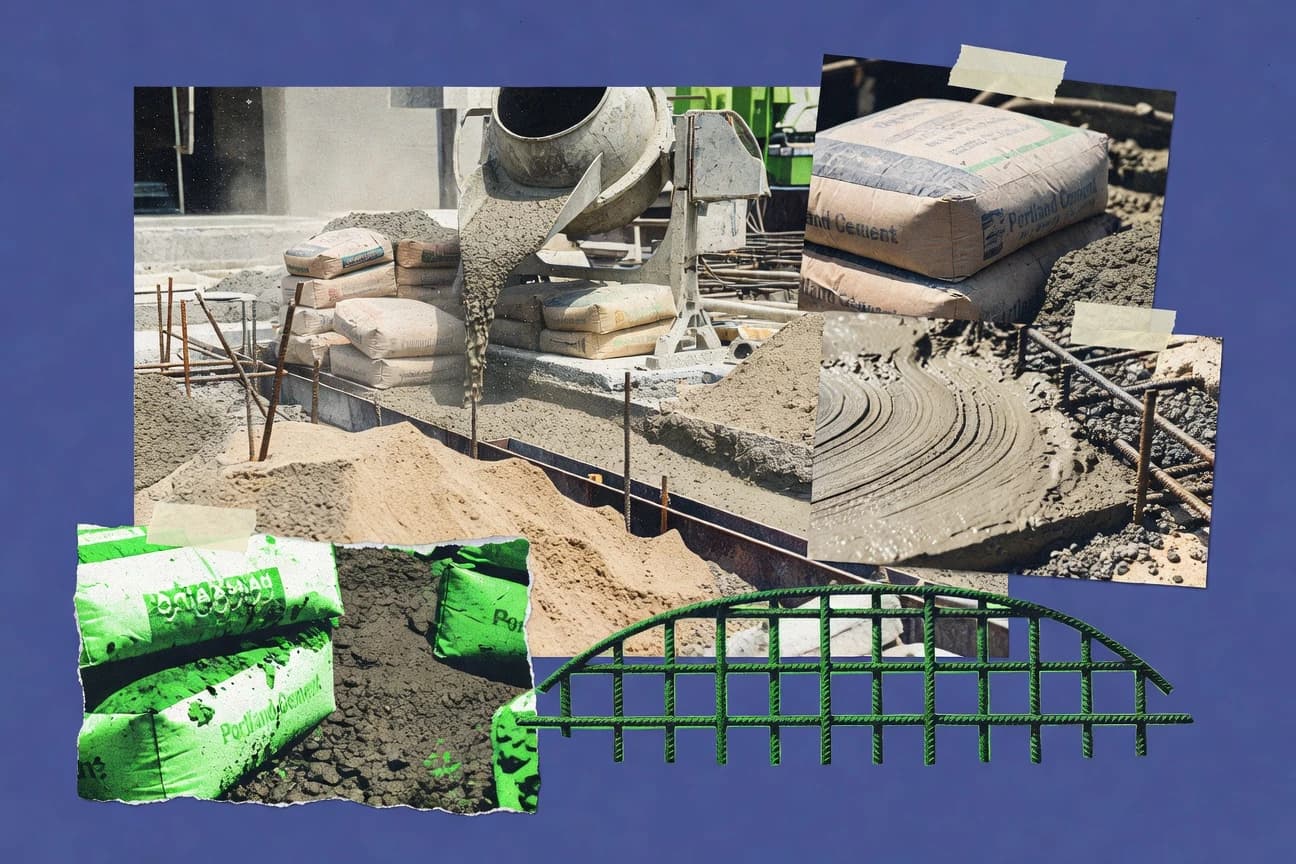

White cement reached a $497.84 million global market size in 2023. Cement production generated about 3.2 billion tonnes worldwide, and the cement sector contributes roughly 7% of global CO2 emissions. Growth through 2032 is projected at a 3.9% CAGR, but freight transport costs and high kiln fuel use keep prices and emissions tightly linked to each tonne.
Key Takeaways
- $497.84 million global market size for white cement in 2023
- 6.8% CAGR for the ready-mix concrete market forecast for 2024–2032
- 3.9% CAGR for the cement market forecast for 2024–2032
- 3.2 billion tonnes of cement produced worldwide in 2023
- ~90% of global cement production is in China, India, the United States, and the EU-27 plus UK (combined)
- India produced about 330 million tonnes of cement in 2022
- Freight/transport costs strongly constrain cement trade volumes; IEA notes high bulk transport costs for cement and short haul ranges
- Kiln fuel consumption typically ~3.0–4.0 GJ per tonne of clinker (industry benchmarks)
- Cement production water use is commonly reported around 0.5–2.0 m3 per tonne of cement in industry studies (typical ranges)
- ~7% of global CO2 emissions come from the cement sector (direct process and fuel emissions)
- ~90% of cement sector emissions are from the chemical process and fuel used to heat the kiln
- Global concrete and cement value chain accounts for roughly 1/4 of global building-related GHG emissions (IPCC AR6)
- ~30% reduction in CO2 intensity is achievable by increasing the share of clinker substitutes up to typical blended-cement levels (IEA)
- HeidelbergCement reported bringing 100% renewable electricity to multiple sites by 2022 (company sustainability disclosures)
- Per peer-reviewed trials, LC3 mortar can reach compressive strengths comparable to reference cement at 28 days under controlled conditions
Cement markets are growing alongside pressure to cut CO2, with additives, clinker substitution, and new kiln tech leading sustainability gains.
Related reading
01 · Category
Market Size6 stats
01
$497.84 million global market size for white cement in 2023
02
6.8% CAGR for the ready-mix concrete market forecast for 2024–2032
03
3.9% CAGR for the cement market forecast for 2024–2032
04
$5.2 billion global cement additives market size in 2022
05
$76.8 billion global construction materials market size in 2023
06
$24.6 billion global slag cement market size in 2023
Interpretation
Market Size Interpretation
For the Market Size lens on construction materials, the sector shows strong momentum with the global construction materials market reaching $76.8 billion in 2023 while cement-related demand is projected to grow at 3.9% CAGR through 2032 and ready-mix concrete at 6.8% CAGR through 2032, alongside a sizable $24.6 billion slag cement market in 2023.
02 · Category
Production And Trade3 stats
01
3.2 billion tonnes of cement produced worldwide in 2023
02
~90% of global cement production is in China, India, the United States, and the EU-27 plus UK (combined)
03
India produced about 330 million tonnes of cement in 2022
Interpretation
Production And Trade Interpretation
In the Production and Trade landscape, cement output is highly concentrated with 3.2 billion tonnes produced worldwide in 2023 and roughly 90% coming from China, India, the United States, and the EU-27 plus UK combined, while India alone contributed about 330 million tonnes in 2022.
03 · Category
Cost Analysis3 stats
01
Freight/transport costs strongly constrain cement trade volumes; IEA notes high bulk transport costs for cement and short haul ranges
02
Kiln fuel consumption typically ~3.0–4.0 GJ per tonne of clinker (industry benchmarks)
03
Cement production water use is commonly reported around 0.5–2.0 m3 per tonne of cement in industry studies (typical ranges)
Interpretation
Cost Analysis Interpretation
In cost analysis, cement trade volumes are tightly constrained by high bulk transport costs and short haul ranges, while production costs are also driven by kiln fuel use of about 3.0 to 4.0 GJ per tonne of clinker and water demand of roughly 0.5 to 2.0 m3 per tonne of cement.
More related reading
04 · Category
Environmental Impact6 stats
01
~7% of global CO2 emissions come from the cement sector (direct process and fuel emissions)
02
~90% of cement sector emissions are from the chemical process and fuel used to heat the kiln
03
Global concrete and cement value chain accounts for roughly 1/4 of global building-related GHG emissions (IPCC AR6)
04
The European Cement Association reports clinker substitution strategies reduce CO2 per tonne of cement
05
Alternative fuels can reduce CO2 intensity depending on fossil substitution rate; reports typically cite 0.1–0.3 tCO2/t cement reductions
06
Carbon capture deployment for cement is in pilot to early commercial stages; IEA notes limited full-scale capture-to-cement plants as of 2023
Interpretation
Environmental Impact Interpretation
Because cement is responsible for about 7% of global CO2 emissions and roughly 90% of its emissions come from the kiln’s chemical process and fuel use, the environmental impact is being driven mainly by how heat and clinker are supplied, with strategies like clinker substitution and alternative fuels typically cutting CO2 intensity by around 0.1 to 0.3 tCO2 per tonne while carbon capture remains largely in pilot to early commercial stages.
05 · Category
Technology And Adoption6 stats
01
~30% reduction in CO2 intensity is achievable by increasing the share of clinker substitutes up to typical blended-cement levels (IEA)
02
HeidelbergCement reported bringing 100% renewable electricity to multiple sites by 2022 (company sustainability disclosures)
03
Per peer-reviewed trials, LC3 mortar can reach compressive strengths comparable to reference cement at 28 days under controlled conditions
04
Geopolymer binders can reduce lifecycle GHG emissions; peer-reviewed meta-analysis finds average reductions around 50–80% under certain assumptions
05
Electric kilns are under development; IEA notes they remain at pilot/early commercial scale with significant energy constraints (IEA)
06
Predictive maintenance reduces kiln downtime; peer-reviewed studies commonly show double-digit downtime reductions with machine learning (meta evidence)
Interpretation
Technology And Adoption Interpretation
In the Technology and Adoption race, cement firms and researchers are showing that emissions gains are increasingly tied to real deployment options, from roughly a 30% CO2 intensity cut via higher clinker substitution and 50–80% lifecycle GHG reductions from geopolymer binders to evidence that predictive maintenance can deliver double digit kiln downtime reductions.
report visual · Key figures
Cement & Related Market Scale (Global)
Global demand and market sizing span cement production volume and multiple adjacent segments (e.g., slag cement, cement additives).
3.2
3.2 billion tonnes of cement produced worldwide in 2023
3.9%
3.9% CAGR for the cement market forecast for 2024–2032
$5.2 billion
$5.2 billion global cement additives market size in 2022
$24.6 billion
$24.6 billion global slag cement market size in 2023
$76.8 billion
$76.8 billion global construction materials market size in 2023
source-verifiedbuildupindia.com · fortunebusinessinsights.com · reportlinker.com · gminsights.com2024
Reference
Cite This Report
This report is designed to be cited. We maintain stable URLs and versioned verification dates. Copy the format appropriate for your publication below.
APA
Thomas Lindqvist. (2026, February 13). Construction Materials Cement Industry Statistics. Gitnux. https://gitnux.org/construction-materials-cement-industry-statistics
MLA
Thomas Lindqvist. "Construction Materials Cement Industry Statistics." Gitnux, 13 Feb 2026, https://gitnux.org/construction-materials-cement-industry-statistics.
Chicago
Thomas Lindqvist. 2026. "Construction Materials Cement Industry Statistics." Gitnux. https://gitnux.org/construction-materials-cement-industry-statistics.
Sources & references
24 datasets cited across this report · attribution is report-level
+9 additional datasets cited (not shown individually)