
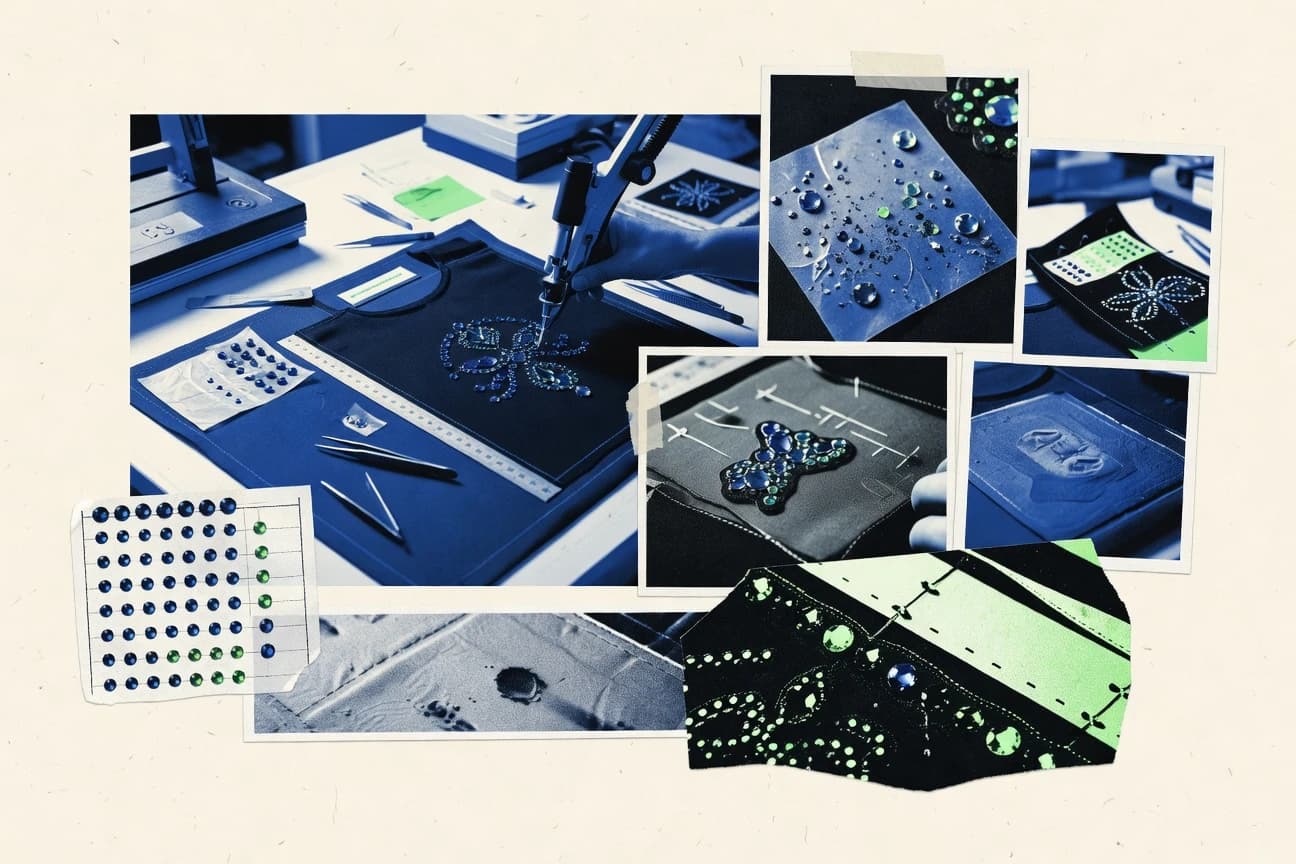

Customized apparel is the default expectation, with 55% of consumers preferring personal designs in 2023 surveys. The shift is showing up in spend and production, since 75% of buyers will pay a 10 to 15% premium for eco-friendly prints. Classic techniques still lead, but screen printed tees remain the top pick for 62% of promotional buyers.
Key Takeaways
- 55% of consumers prefer customized apparel with personal designs in 2023 surveys.
- The global apparel decoration market size was valued at USD 12.5 billion in 2022 and is projected to grow at a CAGR of 6.8% from 2023 to 2030.
- Screen printing equipment sales $2.8 billion in apparel sector 2022.
- 78% of industry aims for carbon-neutral production by 2030.
- AI and machine learning integration in 45% of new decoration printers launched in 2023.
Apparel decoration demand is rising fast, driven by personalization and growth in custom clothing businesses.
Related reading
01 · Category
Consumer Behavior20 stats
01
55% of consumers prefer customized apparel with personal designs in 2023 surveys.
02
68% of millennials opt for embroidered logos on workwear.
03
42% growth in demand for sustainable decoration methods among Gen Z.
04
75% of buyers willing to pay 10-15% premium for eco-friendly prints.
05
Screen printed tees remain top choice for 62% of promotional buyers.
06
51% of women prefer heat transfer designs for athleisure apparel.
07
Online customization tools used by 80% of individual apparel buyers in 2023.
08
35% increase in demand for glow-in-dark and reflective decorations.
09
Corporate clients account for 45% of embroidery orders volume.
10
60% of sports teams choose sublimation for uniform customization.
11
Vinyl graphics popular with 48% of event merchandise buyers.
12
70% satisfaction rate with DTG print quality among end-users.
13
Rhinestone embellishments favored by 28% in fashion-forward segments.
14
52% of parents select screen printed kids' apparel for durability.
15
Premium patches demanded by 39% of streetwear enthusiasts.
16
65% prefer quick turnaround under 7 days for custom orders.
17
AI-driven design previews influence 55% of purchase decisions.
18
47% shift to digital proofs before approving decorations.
19
UV-reactive inks appeal to 31% of festival-goer apparel buyers.
20
3D puff printing chosen by 22% for tactile premium feel.
Interpretation
Consumer Behavior Interpretation
The data paints a picture of an industry juggling a savvy, impatient customer who demands a sustainable, personal, and premium feel for their dollar, while still stubbornly clinging to the proven classics that work.
02 · Category
Market Overview20 stats
01
The global apparel decoration market size was valued at USD 12.5 billion in 2022 and is projected to grow at a CAGR of 6.8% from 2023 to 2030.
02
In the US, the custom apparel printing segment accounted for 42% of the apparel decoration industry revenue in 2023.
03
Embroidery services generated $4.2 billion in revenue for the North American market in 2022.
04
The Asia-Pacific region holds 55% market share in global apparel decoration due to manufacturing hubs in 2023.
05
Screen printing dominated with 38% share in the apparel decoration techniques market in 2023.
06
Digital printing segment expected to grow at 9.2% CAGR in apparel decoration from 2023-2028.
07
Europe apparel decoration market valued at EUR 3.8 billion in 2022.
08
Heat transfer printing revenue reached $2.1 billion globally in 2023.
09
US embroidery market grew 5.4% YoY in 2023 to $1.8 billion.
10
Global patches and badges segment in apparel decoration at $1.5 billion in 2023.
11
Sublimation printing market for apparel hit $900 million in 2022.
12
Latin America apparel decoration market CAGR projected at 7.1% through 2030.
13
Corporate apparel decoration orders surged 15% in 2023 globally.
14
Middle East apparel decoration market valued at $800 million in 2023.
15
Vinyl graphics segment grew to $1.2 billion in apparel decoration 2023.
16
Australia/New Zealand apparel decoration market at AUD 450 million in 2022.
17
Direct-to-garment printing revenue $1.1 billion globally 2023.
18
Africa apparel decoration emerging market at $400 million 2023.
19
Promotional apparel decoration segment $3.4 billion US 2023.
20
Global rhinestone/rhinestud application market $650 million 2023.
Interpretation
Market Overview Interpretation
The world is awash in twelve and a half billion dollars of decorated t-shirts, where screen printing still stubbornly rules a roost that digital printing is rapidly gentrifying, proving our collective urge to wear our affiliations—corporate, fandom, or just fabulous—is a nearly recession-proof, globally stitched and printed economy.
03 · Category
Production and Manufacturing19 stats
01
Screen printing equipment sales $2.8 billion in apparel sector 2022.
02
Embroidery machines installed base reached 450,000 units globally in 2023.
03
Average production speed for DTG printers in apparel decoration is 45 shirts per hour.
04
65% of apparel decoration manufacturers use automated embroidery systems in 2023.
05
Heat press machines output 200-300 units per shift in high-volume factories.
06
Vinyl cutting machines process 1,500 meters of material daily on average.
07
Sublimation dyeing consumes 20% less water than traditional printing methods.
08
Global embroidery thread consumption 1.2 million tons annually in 2023.
09
Screen printing ink usage averages 15 liters per 1,000 garments.
10
72% of factories report 95% uptime on digital printers in 2023.
11
Patches production cycle time reduced to 2 days with laser cutting tech.
12
Rhinestone application machines handle 10,000 stones per hour.
13
DTG pretreatment stations process 500 garments per hour in optimized lines.
14
Embroidery hoop setups average 15 minutes per design changeover.
15
Heat transfer vinyl rolls yield 500 applications per roll standard size.
16
Screen exposure time standardized at 8-12 minutes for optimal results.
17
Global capacity for apparel sublimation printing at 2.5 billion units/year.
18
40% of manufacturers integrate CAD software for decoration design prep.
19
Average defect rate in screen printing dropped to 1.2% in 2023.
Interpretation
Production and Manufacturing Interpretation
From the roaring throughput of heat presses to the meticulous sparkle of rhinestone machines, the apparel decoration industry is a carefully orchestrated ballet of mass production and precision, where billions of dollars in equipment hum along to reduce waste, slash water use, and turn a plain tee into a statement in under two days.
More related reading
04 · Category
Sustainability and Future Trends21 stats
01
78% of industry aims for carbon-neutral production by 2030.
02
Recycled polyester threads used in 35% of embroidery globally 2023.
03
Water-based inks replace plastisol in 52% of screen printing ops.
04
Organic cotton base for 28% of decorated apparel in EU markets.
05
Solar-powered decoration facilities rose 18% in 2023.
06
Phthalate-free inks mandatory in 90% of US childrenswear decorations.
07
Compostable vinyl alternatives tested in 12% of production lines.
08
Zero-waste pattern cutting software adopted by 40% of patch makers.
09
Bio-based dyes for sublimation reduce VOC emissions 65%.
10
Circular economy models recycle 22% of decoration scraps.
11
EU REACH compliance achieved by 88% of imported decorations.
12
Low-impact heat transfer films with 50% less energy use.
13
Regenerative agriculture sourcing for 15% of base fabrics.
14
Microplastic shedding from prints reduced 70% with new binders.
15
Green certifications held by 62% of major decoration firms.
16
Projected 12% CAGR for eco-decoration segment to 2030.
17
Fungible NFTs linked to unique apparel designs in 5% of sales.
18
On-demand production cuts overstock waste by 45%.
19
Enzyme-based pre-treatments replace chemicals in DTG 30%.
20
Future metaverse virtual try-ons to reduce returns 25%.
21
Plant-based rhinestones from recycled glass in 8% production.
Interpretation
Sustainability and Future Trends Interpretation
The industry is frantically sewing its green credentials, one organic cotton patch at a time, as the data reveals a genuine and scattered sprint toward sustainability where even the rhinestones are trying to be virtuous.
05 · Category
Technological Advancements20 stats
01
AI and machine learning integration in 45% of new decoration printers launched in 2023.
02
UV-LED curing systems adopted by 60% of screen printers for faster drying.
03
Automated embroidery robots handle 99.5% precision in multi-head machines.
04
Inkjet DTG printers now support 16-color palettes for photorealism.
05
Laser cutting for patches reduces waste by 30% with CAD integration.
06
Augmented reality try-on apps for custom designs used by 25% of brands.
07
Nano-ink formulations enable wash-fastness up to 100 cycles.
08
RFID tracking in production lines boosts efficiency by 22%.
09
4D printing tech emerging for shape-shifting apparel decorations.
10
Blockchain for supply chain transparency in 15% of decoration inks.
11
High-speed sublimation printers at 200 sqm/hour production rate.
12
IoT sensors monitor ink levels reducing downtime by 40%.
13
Waterless digital printing tech cuts usage by 90% in pilots.
14
Holographic foil applications via digital hot stamping machines.
15
AI predictive maintenance in embroidery machines cuts failures 35%.
16
Piezoelectric printheads enable 1200 dpi resolution in DTG.
17
Robotic arms for vinyl application at 500 units/hour.
18
Quantum dot inks for brighter, longer-lasting colors.
19
5G-enabled remote production control in 10% of factories.
20
Biodegradable conductive inks for smart apparel decorations.
Interpretation
Technological Advancements Interpretation
While we still can't make a shirt that folds itself, the industry is now confidently printing, cutting, and embroidering its way to a smarter, faster, and almost eerily precise future, where your custom logo dries in seconds, survives a hundred washes, and might even quietly track its own journey to your doorstep.
Reference
Cite This Report
This report is designed to be cited. We maintain stable URLs and versioned verification dates. Copy the format appropriate for your publication below.
APA
Priyanka Sharma. (2026, February 13). Apparel Decoration Industry Statistics. Gitnux. https://gitnux.org/apparel-decoration-industry-statistics
MLA
Priyanka Sharma. "Apparel Decoration Industry Statistics." Gitnux, 13 Feb 2026, https://gitnux.org/apparel-decoration-industry-statistics.
Chicago
Priyanka Sharma. 2026. "Apparel Decoration Industry Statistics." Gitnux. https://gitnux.org/apparel-decoration-industry-statistics.
Sources & references
97 datasets cited across this report · attribution is report-level
 shopify.com