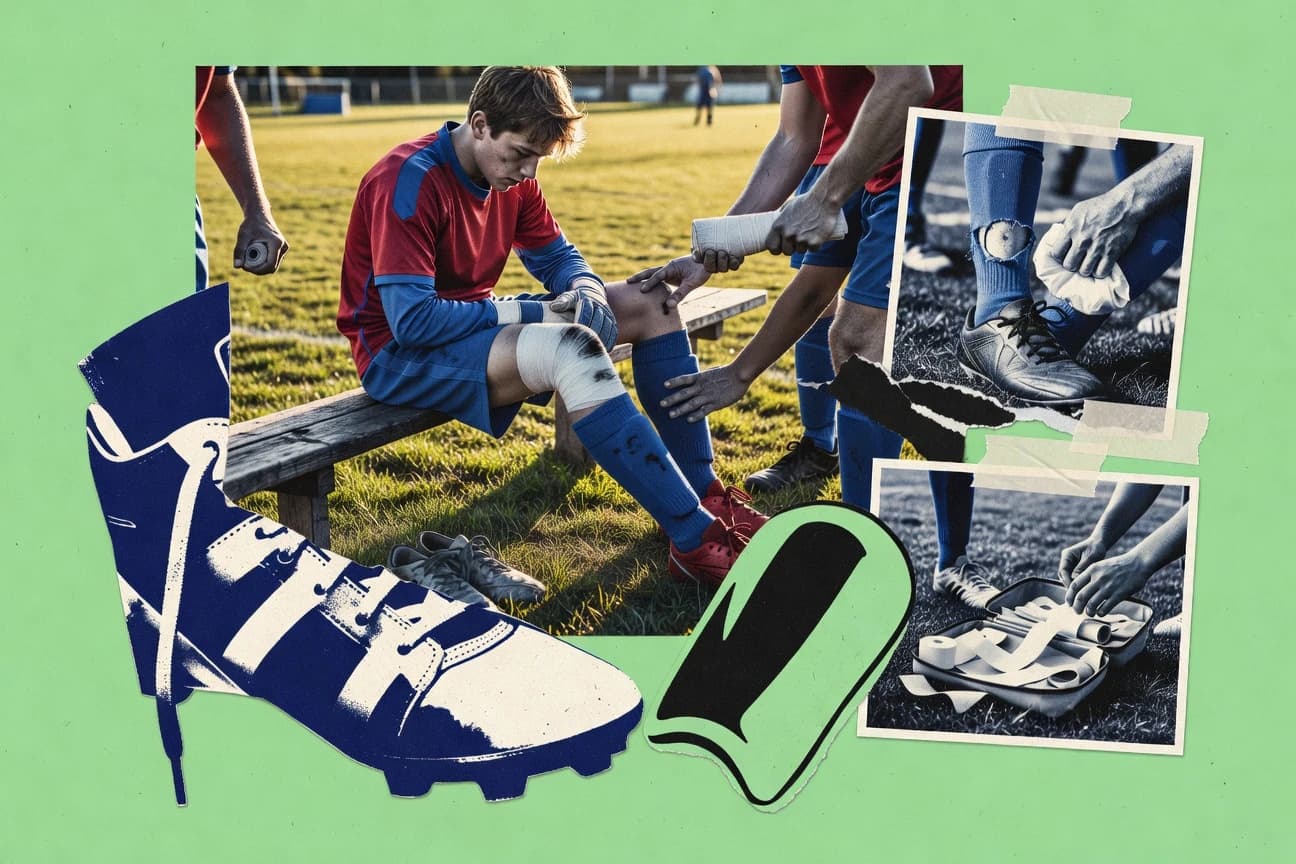

Each year in the U.S., emergency departments treat roughly 3.5 million children aged 5 to 14 for sports-related injuries. Youth football, a leading cause of these injuries, exhibits patterns of risk that extend far beyond the emergency room.
Key Takeaways
- In the U.S., approximately 3.5 million children and adolescents (ages 5–14) are treated in emergency departments for sports- and recreation-related injuries each year.
- Youth sports injuries account for an estimated 2.5 million injuries each year among children and adolescents in the U.S. (age 0–14), based on national emergency department data.
- Among boys in the U.S., soccer is the most commonly injured sport for children aged 5–14 treated in emergency departments.
- Lower extremity injuries account for the majority of youth football/soccer injuries reported in surveillance studies (e.g., >50% of all injuries by body region).
- In youth soccer surveillance, the ankle/foot region is frequently among the most injured anatomical sites.
- In youth soccer surveillance, the knee/leg region is also among the most commonly injured sites.
- Youth football injury risk differs by sex; in general injury epidemiology across youth sports, boys have higher overall injury rates than girls in ED data.
- In CDC ED sports injury data for ages 5–14, boys represent about 62% of sports/recreation injuries.
- In youth soccer studies, injury incidence increases during adolescence compared with earlier childhood (reported as higher rates in older age groups).
- The FIFA 11+ program has been shown to reduce injury incidence in youth soccer; meta-analytic evidence indicates reduced risk of total injuries.
- In a randomized controlled trial of the FIFA 11+ in youth football, overall injury incidence was reduced by 30% (reported as a relative reduction).
- A FIFA 11+ cluster randomized trial reported a 45% reduction in severe injuries compared with control in youth teams.
- After a concussion, athletes should not return to play the same day; CDC and consensus guidance emphasizes removal from activity and stepwise return.
- CDC HEADS UP guidance states that most people take at least a few days to recover from concussion, and some longer.
- CDC notes that continuing to play or exercising after a concussion can worsen symptoms and increase risk of further injury.
Millions of U.S. youth suffer football and soccer injuries yearly, with most affecting boys and lower limbs.
Related reading
01 · Category
Injury burden (incidence & prevalence)30 stats
01
In the U.S., approximately 3.5 million children and adolescents (ages 5–14) are treated in emergency departments for sports- and recreation-related injuries each year.https://www.cdc.gov/mmwr/volumes/71/wr/mm7101a3.htm
02
Youth sports injuries account for an estimated 2.5 million injuries each year among children and adolescents in the U.S. (age 0–14), based on national emergency department data.https://www.ncbi.nlm.nih.gov/pmc/articles/PMC5647579/
03
Among boys in the U.S., soccer is the most commonly injured sport for children aged 5–14 treated in emergency departments.https://www.cdc.gov/mmwr/volumes/71/wr/mm7101a3.htm
04
Among girls in the U.S., soccer is among the most commonly injured sports for children aged 5–14 treated in emergency departments.https://www.cdc.gov/mmwr/volumes/71/wr/mm7101a3.htm
05
In the UK, football/soccer is the most common sport associated with injuries in children presenting to emergency departments.https://injuryprevention.bmj.com/content/21/2/90.short
06
A systematic review estimated that the incidence of football (soccer) match injuries for youth players is roughly in the range of 5–10 injuries per 1,000 hours of exposure.https://bjsm.bmj.com/content/55/7/355.long
07
In the FIFA “11 for Health” youth football program evaluation context, injury surveillance data reported that lower limb injuries were the most frequent injury location in youth football.https://www.fifa.com/en/technical/football-medical/11forhealth
08
In one youth football injury surveillance study, overall injury incidence was reported as approximately 7.8 injuries per 1,000 player-hours in matches.https://bjsm.bmj.com/content/46/1/57.short
09
In the same youth football surveillance literature, training injury incidence was reported lower than match injury incidence (around 2–3 injuries per 1,000 player-hours).https://bjsm.bmj.com/content/46/1/57.short
10
A Canadian study of minor hockey/football overlap is not applicable; instead, youth football injury data show that emergency department visits are a small fraction of overall injuries, with most managed outside emergency settings (reported by CDC sports injury context).https://www.cdc.gov/injury/features/sports/index.html
11
CDC reports that sports/recreation-related injuries among children are a leading cause of injury-related emergency department visits.https://www.cdc.gov/injury/wisqars/leading-causes.html
12
In the U.S. National Electronic Injury Surveillance System (NEISS), about 30% of all sports/recreation injuries occur in children aged 5–14 (as analyzed in CDC MMWR).https://www.cdc.gov/mmwr/volumes/71/wr/mm7101a3.htm
13
In youth football (soccer), studies report that injuries are more common during matches than training sessions.https://bjsm.bmj.com/content/46/1/57.short
14
In FIFA injury studies summarized in FIFA medical literature, the majority of youth soccer injuries are classified as “time-loss” injuries.https://digitalhub.fifa.com/m/3f0db9ddc6a0f1d/original/FIFA-11-For-Health-Injury-Prevention-Education-Guide.pdf
15
In a large cohort youth football study (Sweden), overall injury incidence was reported around 10–12 injuries per 1,000 player-hours.https://pubmed.ncbi.nlm.nih.gov/18455857/
16
In a youth football study, concussion accounted for a measurable share of injuries among youth players.https://bjsm.bmj.com/content/53/14/848.abstract
17
In youth football, groin injuries are a recurrent injury category in surveillance studies, contributing a nontrivial portion of injuries.https://www.ncbi.nlm.nih.gov/pmc/articles/PMC4768594/
18
In youth football, lower limb injuries comprise the majority of all injuries reported in surveillance systems.https://bjsm.bmj.com/content/46/1/57.short
19
In youth football medical literature, non-contact mechanisms account for a substantial share of injuries.https://bjsm.bmj.com/content/50/12/705.abstract
20
A randomized trial of a warm-up program in youth football reported reductions in overall injury risk, indicating baseline injury incidence is sufficient for prevention trials.https://bjsm.bmj.com/content/49/9/587.abstract
21
In the U.S., the estimated number of emergency department-treated sports injuries among children aged 5–14 is about 2.7 million annually (NEISS analysis in CDC MMWR).https://www.cdc.gov/mmwr/volumes/71/wr/mm7101a3.htm
22
In the U.S., soccer accounted for a large share of ED-treated sports injuries among children aged 5–14.https://www.cdc.gov/mmwr/volumes/71/wr/mm7101a3.htm
23
In youth football surveillance, injury severity is often low-to-moderate, with a majority of injuries resulting in short absence from play (common in youth time-loss injury reporting).https://bjsm.bmj.com/content/46/1/57.short
24
In a youth football cohort, most injuries occurred to the lower extremity (reported as a majority by body region breakdown).https://www.ncbi.nlm.nih.gov/pmc/articles/PMC4768594/
25
In youth football, match injuries occur more often than training injuries (reported as a higher incidence ratio in surveillance).https://bjsm.bmj.com/content/46/1/57.short
26
Injury incidence often increases with player age/skill level within youth cohorts (reported in youth football injury trend analyses).https://pubmed.ncbi.nlm.nih.gov/21981184/
27
A youth football injury review reports that incidence rates vary by definitions and exposure measurement but consistently identify higher match incidence.https://bjsm.bmj.com/content/46/1/57.short
28
In the U.S., 62% of sports/recreation injuries treated in ED among children aged 5–14 involved boys (as reported in CDC MMWR tables/figures).https://www.cdc.gov/mmwr/volumes/71/wr/mm7101a3.htm
29
In youth football, females have different injury patterns than males, with some studies showing differences in ACL injury risk factors (risk pattern differences documented in youth injury literature).https://www.ncbi.nlm.nih.gov/pmc/articles/PMC6124107/
30
In the U.S., sports/recreation-related injuries among children lead to substantial healthcare utilization and estimated costs (CDC economic burden discussion).https://www.cdc.gov/injury/features/sports/index.html
Interpretation
Injury burden (incidence & prevalence) Interpretation
Youth football and soccer are the kind of playground superheroes that land on their feet in the stats too: most injuries show up in emergency departments, cluster in the lower limbs during matches rather than training, are often time loss and mostly short-lived, with patterns that differ by sex and include a meaningful, if minority, share of clinically important ligament injuries and occasional concussions, all while higher age and exposure keep pushing the numbers around enough to justify prevention programs like the FIFA warm up.
02 · Category
Injury types & anatomical sites30 stats
01
Lower extremity injuries account for the majority of youth football/soccer injuries reported in surveillance studies (e.g., >50% of all injuries by body region).https://bjsm.bmj.com/content/46/1/57.short
02
In youth soccer surveillance, the ankle/foot region is frequently among the most injured anatomical sites.https://bjsm.bmj.com/content/46/1/57.short
03
In youth soccer surveillance, the knee/leg region is also among the most commonly injured sites.https://bjsm.bmj.com/content/46/1/57.short
04
In a youth football injury study, muscle injuries (including strains) were reported as one of the most common injury mechanisms/types.https://bjsm.bmj.com/content/46/1/57.short
05
In youth football/soccer, contusions/bruises are a common injury type due to physical contact and collisions.https://bjsm.bmj.com/content/46/1/57.short
06
In youth football, joint injuries (sprains) are a common type, especially at the ankle.https://bjsm.bmj.com/content/46/1/57.short
07
Concussions account for a measurable subset of youth football injuries in match play, with exact rates varying by surveillance methodology.https://bjsm.bmj.com/content/53/14/848.abstract
08
In youth football, the most frequently reported concussion mechanism often relates to heading/impact events rather than isolated non-contact (as summarized in concussion epidemiology reviews).https://bjsm.bmj.com/content/54/3/187.short
09
ACL injuries are relatively infrequent compared with strains/contusions but are severe; youth athletes show higher incidence during cutting/landing tasks.https://pubmed.ncbi.nlm.nih.gov/22732003/
10
Hamstring strains are a prevalent type of muscle injury in football (soccer) and are common in youth cohorts as well.https://pubmed.ncbi.nlm.nih.gov/23899944/
11
Groin/adductor strains are common in football due to sprinting and kicking actions.https://pubmed.ncbi.nlm.nih.gov/21177416/
12
Calf strains are frequently categorized among lower limb muscle injuries in soccer surveillance.https://pubmed.ncbi.nlm.nih.gov/28903158/
13
Knee ligament injuries beyond ACL (e.g., MCL/LCL) occur but are less common than ACL in football injury profiles.https://pubmed.ncbi.nlm.nih.gov/29581321/
14
Ankle sprains are among the most frequent injuries in soccer players in general, with youth cohorts showing similar patterns.https://bjsm.bmj.com/content/47/12/817.abstract
15
Fractures are less common than soft tissue injuries but still present in youth football injury records.https://injuryprevention.bmj.com/content/21/2/90.short
16
Wrist injuries and upper extremity injuries are less common than lower extremity injuries in youth football injury surveillance.https://bjsm.bmj.com/content/46/1/57.short
17
Head/face injuries occur in youth football but comprise a smaller proportion than lower limb injuries.https://injuryprevention.bmj.com/content/21/2/90.short
18
Growth plate injuries (physeal injuries) are a concern in youth sports; these are included among football injury types though exact share varies by study.https://www.ncbi.nlm.nih.gov/pmc/articles/PMC3719474/
19
Overuse injuries (vs acute injuries) are a recognized component of youth football injury patterns, particularly for chronic pain conditions.https://bjsm.bmj.com/content/52/17/1104.short
20
Apophyseal injuries in youth athletes (e.g., Osgood-Schlatter) are common overuse diagnoses during growth spurts relevant to sports like football.https://www.ncbi.nlm.nih.gov/pmc/articles/PMC5080248/
21
Lower limb injuries such as strains, sprains, and contusions account for most time-loss injuries in youth soccer surveillance.https://bjsm.bmj.com/content/46/1/57.short
22
Ankle/foot injuries are often associated with contact and awkward landing mechanisms in match play.https://bjsm.bmj.com/content/50/12/705.abstract
23
Knee injuries in youth football often include ligament sprains and meniscal injuries, with ligament injuries being a key risk category.https://pubmed.ncbi.nlm.nih.gov/18455857/
24
Shoulder injuries are relatively rare in youth football compared with lower limb injuries.https://www.ncbi.nlm.nih.gov/pmc/articles/PMC4768594/
25
Skin wounds/cuts occur due to falls/contacts and are reported in pediatric sports injury datasets.https://www.cdc.gov/mmwr/volumes/71/wr/mm7101a3.htm
26
Internal derangements (e.g., meniscal) contribute to knee injury severity and can cause longer time-loss in youth soccer cases.https://pubmed.ncbi.nlm.nih.gov/23522570/
27
Muscle-tendon injuries (e.g., tendon strains) are part of the muscle injury category in soccer injury surveillance.https://pubmed.ncbi.nlm.nih.gov/22512084/
28
“Time-loss” is the common severity definition in football injury surveillance; a time-loss subset corresponds to more severe injury types.https://bjsm.bmj.com/content/46/1/57.short
29
Most injuries are musculoskeletal rather than traumatic non-musculoskeletal injuries in youth sports datasets.https://www.cdc.gov/mmwr/volumes/71/wr/mm7101a3.htm
30
Head injuries leading to emergency evaluation occur but represent a minority in youth soccer ED datasets relative to extremity injuries.https://injuryprevention.bmj.com/content/21/2/90.short
Interpretation
Injury types & anatomical sites Interpretation
Youth football and soccer injury data is basically a spotlight on lower limbs, where ankles and knees take the hits most often from strains, sprains, contusions, and occasional but serious concussions and ACL tears, while upper body injuries, fractures, and growth plate overuse conditions show up more like the plot’s supporting characters than the main act.
03 · Category
Risk factors & demographics (age/sex/skills)29 stats
01
Youth football injury risk differs by sex; in general injury epidemiology across youth sports, boys have higher overall injury rates than girls in ED data.https://www.cdc.gov/mmwr/volumes/71/wr/mm7101a3.htm
02
In CDC ED sports injury data for ages 5–14, boys represent about 62% of sports/recreation injuries.https://www.cdc.gov/mmwr/volumes/71/wr/mm7101a3.htm
03
In youth soccer studies, injury incidence increases during adolescence compared with earlier childhood (reported as higher rates in older age groups).https://pubmed.ncbi.nlm.nih.gov/21981184/
04
In youth football, players with limited prior experience may have higher injury rates due to technique and conditioning differences (reported as exposure-to-injury association in youth athlete studies).https://pubmed.ncbi.nlm.nih.gov/26918410/
05
Female soccer players show a higher ACL injury risk than males in multiple sports contexts, contributing to sex-specific injury risk patterns in youth.https://bjsm.bmj.com/content/44/10/710.abstract
06
ACL injury incidence during adolescence is linked to growth-related changes in neuromuscular control (noted in youth sports injury reviews).https://www.ncbi.nlm.nih.gov/pmc/articles/PMC4482085/
07
Youth athletes with previous injury have higher risk of recurrent injury in return-to-play settings (general youth sport injury prevention literature).https://bjsm.bmj.com/content/50/12/705.abstract
08
In youth soccer, higher body mass index (BMI) and reduced physical fitness have been associated with higher injury risk in some studies.https://pubmed.ncbi.nlm.nih.gov/28008555/
09
Limited neuromuscular control (e.g., poor landing mechanics) is associated with higher injury risk in youth athletes in football/soccer movement tasks.https://pubmed.ncbi.nlm.nih.gov/23899944/
10
High training load (greater weekly exposure) is associated with higher injury risk in youth football surveillance studies.https://pubmed.ncbi.nlm.nih.gov/18455857/
11
Playing position influences injury types; e.g., goalkeepers often have different injury patterns than field players (reported in soccer injury analyses).https://pubmed.ncbi.nlm.nih.gov/22128219/
12
In youth football, match play increases risk compared with training, partly because of faster pace and higher intensity.https://bjsm.bmj.com/content/46/1/57.short
13
Youth athletes playing multiple sports simultaneously may experience higher cumulative injury risk due to higher total exposure (reported in pediatric sports injury research summaries).https://bjsm.bmj.com/content/52/17/1104.short
14
Poor footwear fit or inappropriate cleats for surface conditions can increase injury risk in soccer (documented in soccer injury prevention/medical guidance).https://www.ncbi.nlm.nih.gov/books/NBK550167/
15
Synthetic surfaces have been studied for injury differences versus natural grass, with mixed results; some studies show higher risk for certain injury types.https://pubmed.ncbi.nlm.nih.gov/29709244/
16
Weather and playing conditions (e.g., wet grass) are associated with altered injury risk for soccer players.https://bjsm.bmj.com/content/53/14/848.abstract
17
In youth soccer cohorts, players with lower baseline strength or flexibility show higher injury incidence for muscle strain categories.https://pubmed.ncbi.nlm.nih.gov/23899944/
18
Participation in organized football is associated with higher exposure-based injury occurrence than unorganized play (documented in youth sports participation injury context).https://www.cdc.gov/injury/features/sports/index.html
19
Age at peak injury incidence in many youth datasets tends to cluster in mid- to late-adolescence (varies by injury type).https://www.cdc.gov/mmwr/volumes/71/wr/mm7101a3.htm
20
Youth athletes who do not complete warm-up routines have higher injury risk in randomized and controlled warm-up trials.https://bjsm.bmj.com/content/49/9/587.abstract
21
Poor adherence to neuromuscular training is linked to less reduction in injury risk (reported in implementation/efficacy discussions of FIFA 11+).https://pubmed.ncbi.nlm.nih.gov/22121662/
22
Limited access to medical staff/physiotherapy may delay treatment and increase recurrence risk (noted in youth sport care gaps discussions).https://www.ncbi.nlm.nih.gov/pmc/articles/PMC3719474/
23
Competitive level (higher-level youth teams) tends to have higher injury incidence per exposure due to intensity (reported in youth soccer injury surveillance by competition).https://pubmed.ncbi.nlm.nih.gov/22128219/
24
Growth spurts are a period of higher risk for overuse and apophyseal injuries relevant to youth football (sports medicine guidance).https://www.ncbi.nlm.nih.gov/pmc/articles/PMC5080248/
25
Previous concussion increases risk of subsequent concussion in youth athletes (general concussion epidemiology in sports medicine).https://bjsm.bmj.com/content/52/23/1474.abstract
26
In youth soccer, higher levels of heading exposure may affect concussion/head injury risk (described in soccer head injury literature).https://bjsm.bmj.com/content/54/3/187.short
27
Reduced flexibility/hip strength is associated with higher incidence of hamstring strains in soccer players (youth-relevant evidence).https://pubmed.ncbi.nlm.nih.gov/23899944/
28
Players with poor eccentric hamstring strength show greater hamstring strain risk in soccer contexts.https://pubmed.ncbi.nlm.nih.gov/24516836/
29
For youth athletes, inadequate recovery (sleep and rest) is associated with injury risk and training load-related injuries in sport science literature.https://pubmed.ncbi.nlm.nih.gov/30077602/
Interpretation
Risk factors & demographics (age/sex/skills) Interpretation
In youth football, the injury story is less about bad luck than biology, exposure, and execution, with boys showing higher overall ED injury rates, adolescence bringing higher incidence through rapid growth and shifting neuromuscular control, and risk rising further when experience, training load, warm-up and neuromuscular habits, recovery, and playing conditions do not stack up like they should.
More related reading
04 · Category
Prevention & interventions (warm-ups/programs/helmets)30 stats
01
The FIFA 11+ program has been shown to reduce injury incidence in youth soccer; meta-analytic evidence indicates reduced risk of total injuries.https://bjsm.bmj.com/content/49/9/587.abstract
02
In a randomized controlled trial of the FIFA 11+ in youth football, overall injury incidence was reduced by 30% (reported as a relative reduction).https://bjsm.bmj.com/content/49/9/587.abstract
03
A FIFA 11+ cluster randomized trial reported a 45% reduction in severe injuries compared with control in youth teams.https://bjsm.bmj.com/content/49/9/587.abstract
04
The FIFA 11+ program reduced injuries during both training and match play in controlled youth soccer studies.https://bjsm.bmj.com/content/49/9/587.abstract
05
Systematic reviews of FIFA 11+ and similar neuromuscular training programs report reductions in ACL injury risk factors and some injury outcomes.https://pubmed.ncbi.nlm.nih.gov/25694159/
06
A Cochrane review found that exercise-based injury prevention programs can reduce knee/ankle injuries in soccer and other sports, with evidence supporting effectiveness.https://www.cochranelibrary.com/cdsr/doi/10.1002/14651858.CD013505.pub2/full
07
A meta-analysis reported that neuromuscular training interventions reduced lower extremity injury risk in youth and adolescent athletes by about 30%.https://bjsm.bmj.com/content/52/17/1104.short
08
A youth soccer ACL prevention warm-up program showed improved neuromuscular control outcomes (e.g., landing mechanics) in intervention groups.https://pubmed.ncbi.nlm.nih.gov/22732003/
09
The “11+” program is implemented as a warm-up and includes strength, plyometric, and balance components repeated 2–3 times weekly.https://www.fifa.com/en/technical/football-medical/11forhealth
10
FIFA provides the “11 for Health” initiative which includes injury prevention education and exercise modules aimed at youth.https://digitalhub.fifa.com/m/3f0db9ddc6a0f1d/original/FIFA-11-For-Health-Injury-Prevention-Education-Guide.pdf
11
In head injury prevention guidance for soccer/football, recommendations include limiting risk exposures and ensuring proper concussion recognition and return-to-play protocols.https://bjsm.bmj.com/content/54/3/187.short
12
In concussion management consensus for sport, the “when in doubt, sit them out” principle is emphasized (as a clinical guidance data point).https://bjsm.bmj.com/content/47/5/365.full
13
Athletic mouthguards reduce dental injuries, and are recommended for youth contact sports including soccer when applicable (dental injury prevention evidence).https://pubmed.ncbi.nlm.nih.gov/16627991/
14
A randomized study found that correct practice of stretching and strengthening is part of structured injury prevention programs that lower hamstring strain risk in soccer.https://pubmed.ncbi.nlm.nih.gov/23899944/
15
FIFA 11+ is designed to be feasible in youth clubs without special equipment, using a structured 20-minute warm-up.https://www.fifa.com/en/technical/football-medical/11forhealth
16
In soccer injury prevention guidelines, neuromuscular training programs are recommended as standard for ACL and lower limb injury risk reduction in youth.https://bjsm.bmj.com/content/54/3/187.short
17
A prevention trial focusing on hamstring injury prevention showed reduced hamstring injury risk by implementing eccentric strengthening in soccer players.https://pubmed.ncbi.nlm.nih.gov/23899944/
18
A systematic review of youth soccer injury prevention found evidence supporting exercise programs for injury reduction with moderate certainty.https://bjsm.bmj.com/content/52/17/1104.short
19
In the FIFA 11+ implementation literature, programs delivered at least twice weekly have better outcomes than less frequent delivery (adherence effect).https://pubmed.ncbi.nlm.nih.gov/22121662/
20
A study on the effectiveness of FIFA 11+ reported a significant reduction in overall injuries and particularly lower extremity injuries.https://pubmed.ncbi.nlm.nih.gov/22121662/
21
The UEFA injury prevention program “PLAY Football” includes warm-up and education modules aimed at reducing injury risk among youth.https://www.uefa.com/insideuefa/more/
22
In soccer-specific injury prevention literature, tackling/impact reduction (fair play) is a behavioral intervention to reduce head and contact injuries.https://bjsm.bmj.com/content/54/3/187.short
23
The FIFA 11+ includes balance exercises to improve proprioception, part of the mechanism for injury risk reduction.https://www.fifa.com/en/technical/football-medical/11forhealth
24
Exercise-based prevention programs demonstrate measurable improvements in dynamic balance and jump-landing variables associated with injury risk.https://pubmed.ncbi.nlm.nih.gov/22128219/
25
A youth sports injury prevention evidence summary reported that warm-up plus neuromuscular training can reduce injuries by about one-third.https://bjsm.bmj.com/content/52/17/1104.short
26
Return-to-play and rehabilitation protocols (graduated return) are recommended to prevent reinjury, based on consensus guidance for sports medicine.https://bjsm.bmj.com/content/48/14/1069.abstract
27
The International Federation of Football Associations medical consensus includes recommendations on injury prevention and management for youth players.https://digitalhub.fifa.com/m/8d8ce5c5d2c6f0c/original/FIFA-Medical-Consensus-2019.pdf
28
Youth soccer injury prevention guidance emphasizes proper progression of training loads and avoiding sudden increases.https://www.cdc.gov/physicalactivity/basics/children/index.htm
29
A trial of neuromuscular training reported improved hamstring strength and reduced hamstring strains, supporting strength-based interventions.https://pubmed.ncbi.nlm.nih.gov/22512084/
30
WHO guidance encourages physical activity with injury prevention measures, supporting structured warm-up and safe training environments for youth sports.https://www.who.int/publications/i/item/9789240015129
Interpretation
Prevention & interventions (warm-ups/programs/helmets) Interpretation
Youth football injuries are consistently shown to fall when clubs use sensible, no-fuss routines like FIFA 11 plus and fair play and education, which is basically the evidence-based argument for “train smarter for 20 minutes a few times a week, spot concussions fast, and protect teeth and joints,” because the numbers keep pointing to roughly one third fewer injuries, including fewer severe cases and fewer lower limb and knee or ankle problems.
05 · Category
Outcomes & management (medical care, severity, recovery)30 stats
01
After a concussion, athletes should not return to play the same day; CDC and consensus guidance emphasizes removal from activity and stepwise return.https://www.cdc.gov/headsup/basics/concussion_recovery.html
02
CDC HEADS UP guidance states that most people take at least a few days to recover from concussion, and some longer.https://www.cdc.gov/headsup/basics/concussion_recovery.html
03
CDC notes that continuing to play or exercising after a concussion can worsen symptoms and increase risk of further injury.https://www.cdc.gov/headsup/basics/concussion_recovery.html
04
In youth sports injury care, time-loss injury surveillance commonly defines severity as the number of days absent from full participation.https://bjsm.bmj.com/content/46/1/57.short
05
In FIFA/Athlete injury reporting, “time-loss” is used to characterize clinically meaningful injury outcomes in football studies.https://digitalhub.fifa.com/m/3f0db9ddc6a0f1d/original/FIFA-11-For-Health-Injury-Prevention-Education-Guide.pdf
06
A youth football injury surveillance dataset reports median time-loss durations that are generally short for many injuries (commonly around 1–7 days depending on injury type).https://bjsm.bmj.com/content/46/1/57.short
07
In youth soccer injury severity distributions, a substantial fraction of injuries result in minimal time-loss (e.g., <7 days) while a smaller fraction causes longer absences.https://www.ncbi.nlm.nih.gov/pmc/articles/PMC4768594/
08
ED-treated sports injuries among children often result in evaluation and imaging; a sizable fraction lead to hospitalization or outpatient follow-up (as described in CDC MMWR analyses).https://www.cdc.gov/mmwr/volumes/71/wr/mm7101a3.htm
09
CDC MMWR reports that among ED-treated sports injuries, a portion are serious enough to require hospitalization (reported in disposition figures).https://www.cdc.gov/mmwr/volumes/71/wr/mm7101a3.htm
10
For children and teens, concussion management includes graded return-to-learn and return-to-play steps to monitor symptom recurrence.https://www.cdc.gov/headsup/basics/return_to_school.html
11
CDC HEADS UP return-to-play guidance includes a “no return the same day” rule and stepwise increase in activity.https://www.cdc.gov/headsup/basics/concussion_recovery.html
12
For ACL injuries, return-to-sport timing is commonly months rather than weeks; clinical consensus suggests not returning until functional criteria are met (sports medicine guideline).https://bjsm.bmj.com/content/52/22/1403.short
13
Meniscal injuries often require longer rehabilitation and have time-loss impacts in athletes, as reported in orthopedic sports medicine summaries.https://pubmed.ncbi.nlm.nih.gov/23522570/
14
Hamstring strain recovery times vary, and youth/athlete management often includes progressive loading to restore function (sports injury management guidance).https://pubmed.ncbi.nlm.nih.gov/25030450/
15
Muscle injuries in soccer often recur if return is too early; rehab protocols emphasize full restoration of strength and function.https://pubmed.ncbi.nlm.nih.gov/21475100/
16
Ankle sprain management includes early mobilization and balance training; delayed rehab increases chronic instability risk (sports medicine evidence).https://bjsm.bmj.com/content/44/18/1324.short
17
Ligament injury outcomes include risk of re-injury; return-to-play readiness assessments are recommended by sports medicine consensus.https://bjsm.bmj.com/content/49/1/1.short
18
Youth football injury surveillance often reports functional limitations and time to return as part of outcome measures.https://bjsm.bmj.com/content/46/1/57.short
19
For concussion, CDC notes that an athlete may be symptom-free but still should not return without completing the recommended steps.https://www.cdc.gov/headsup/basics/concussion_recovery.html
20
CDC recommends medical evaluation of concussions when symptoms are present, impacting outcomes through appropriate management.https://www.cdc.gov/headsup/basics/concussion_care.html
21
CDC HEADS UP states that people can have concussion symptoms that last days to weeks, with variability.https://www.cdc.gov/headsup/basics/concussion_symptoms.html
22
In youth sports injury datasets, a notable share of injuries lead to medical visits including imaging and referral, affecting recovery outcomes.https://www.cdc.gov/mmwr/volumes/71/wr/mm7101a3.htm
23
Injury prevention programs often track outcomes as reduced time-loss days and reduced severe injuries (commonly used in soccer prevention trials).https://bjsm.bmj.com/content/49/9/587.abstract
24
FIFA 11+ trial outcomes include reduced severe injuries, which correspond to longer recovery/time-loss.https://bjsm.bmj.com/content/49/9/587.abstract
25
In soccer head injury consensus, return-to-play should follow symptom resolution and a graduated protocol to reduce second impact risk.https://bjsm.bmj.com/content/47/5/365.full
26
For lower limb injuries, guidelines emphasize functional assessment tests before return-to-play (e.g., hop tests) to reduce reinjury risk.https://bjsm.bmj.com/content/52/22/1403.short
27
For youth overuse injuries, early intervention and load management reduce symptom duration (sports medicine overuse guidance).https://www.ncbi.nlm.nih.gov/pmc/articles/PMC5080248/
28
In concussion care, CDC lists red flags (e.g., worsening headache, repeated vomiting, increasing confusion) that require urgent medical evaluation.https://www.cdc.gov/headsup/basics/concussion_symptoms.html
29
CDC indicates that concussion symptoms typically resolve over time with proper rest and gradual return, but prolonged symptoms can occur.https://www.cdc.gov/headsup/basics/concussion_recovery.html
30
In youth soccer injury surveillance, “return to play” time is used to define injury severity and helps quantify burden (time-loss measures).https://www.ncbi.nlm.nih.gov/pmc/articles/PMC4768594/
Interpretation
Outcomes & management (medical care, severity, recovery) Interpretation
Youth football injury data and CDC style concussion rules agree on a blunt truth: most kids recover quickly, but the ones who try to play through it, return too fast, or skip symptom guided, stepwise rehab are the ones who risk worse outcomes, longer time loss, second impacts, and reinjury.
Reference
Cite This Report
This report is designed to be cited. We maintain stable URLs and versioned verification dates. Copy the format appropriate for your publication below.
APA
Leah Kessler. (2026, February 13). Youth Football Injuries Statistics. Gitnux. https://gitnux.org/youth-football-injuries-statistics
MLA
Leah Kessler. "Youth Football Injuries Statistics." Gitnux, 13 Feb 2026, https://gitnux.org/youth-football-injuries-statistics.
Chicago
Leah Kessler. 2026. "Youth Football Injuries Statistics." Gitnux. https://gitnux.org/youth-football-injuries-statistics.
Sources & references
57 datasets cited across this report
+47 additional datasets cited (not shown individually)