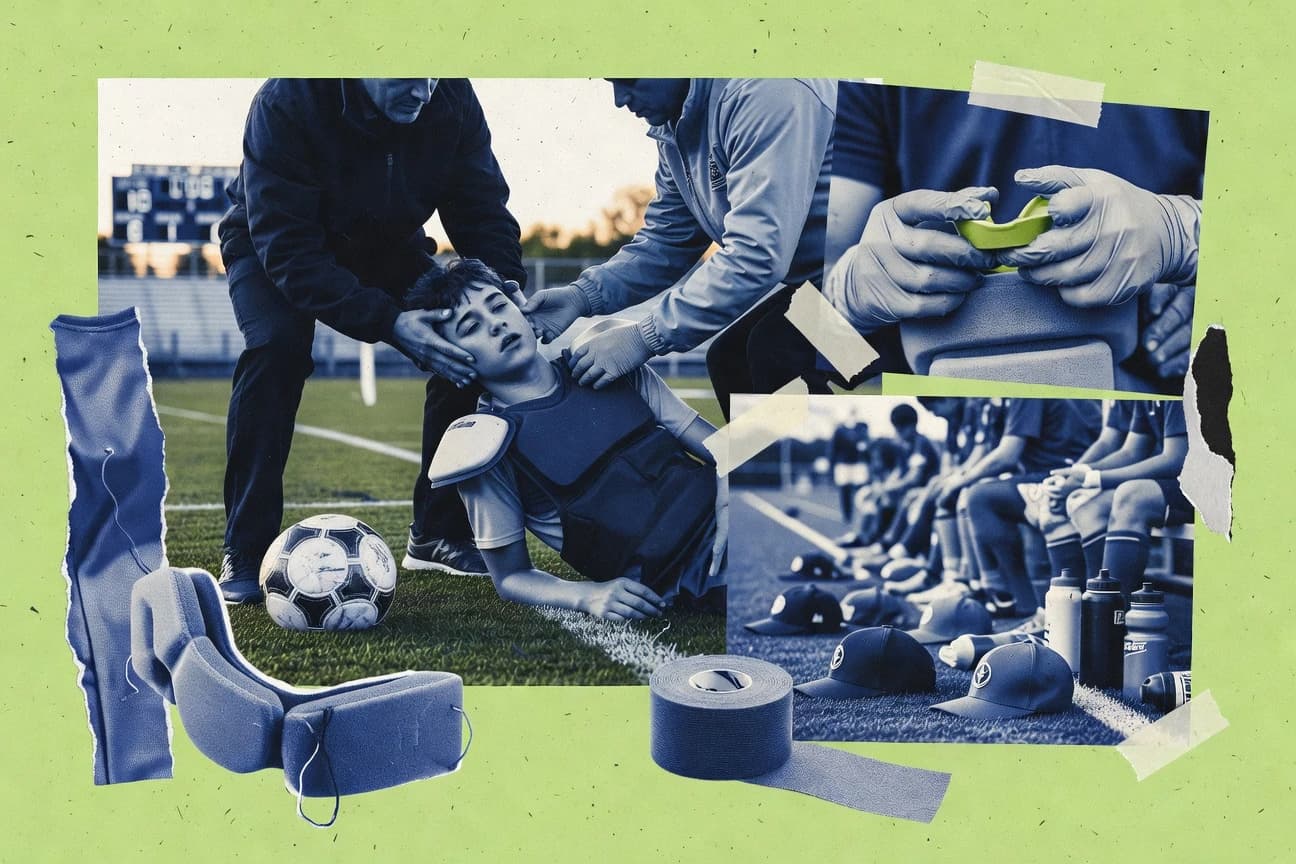

Sport-related concussions affect an estimated 1.9 million children and adolescents worldwide each year. Adolescents aged 15 to 19 account for 23 percent of sports and recreation concussions in emergency department data. One analysis found 55 percent of affected children returned to play without medical clearance.
Key Takeaways
- 23% of sports and recreation concussions occur among adolescents aged 15–19 years (NEISS-based estimates for 2016–2022).
- Youth and young adults account for the majority of sport-related concussion emergency department visits in US administrative datasets (systematic review of US data sources).
- Estimated sport-related concussion incidence in children and adolescents is about 1.9 million per year globally (systematic review meta-estimates).
- 20%–30% of children and adolescents report symptoms persisting beyond 4 weeks after sport concussion (systematic reviews).
- 3–5 days is a common evidence-based window for initial symptom-limiting activity after concussion (clinical guidance for early recovery).
- Most children and adolescents recover from concussion within about 4 weeks (clinical review consensus).
- Risk of concussion is higher in boys participating in certain sports, with sex-based differences reported in population-level survey studies of youth concussion.
- Contact sports have the highest risk of concussion among youth sports in observational datasets, compared with non-contact sports (systematic review of sport-specific incidence).
- In youth football, concussion incidence estimates commonly fall in the mid–single-digit per 1,000 athlete-exposures in cohort studies (reviewed incidence ranges).
- The International Consensus Statement on Concussion in Sport recommends a graduated return-to-play with each step separated by at least 24 hours if symptoms do not worsen (consensus).
- In Canada, Ontario’s Rowan’s Law (2018) requires medical authorization and an education standard after concussion for youth athletes in school sports, including requirements for return-to-play decisions.
- School absences after concussion are associated with educational impacts; studies quantify missed school days and related indirect costs (educational outcomes literature).
- Concussion education for youth athletes improves symptom reporting accuracy and increases appropriate care-seeking behaviors in experimental and observational studies (systematic review).
- Concussion care involves clinician visits, imaging when indicated, and follow-up; in claims analyses, median per-episode costs vary widely but are non-trivial (health claims studies).
- Concussion recognition training for coaches can improve correct response rates in vignette-based assessments by roughly 20% in intervention studies (meta-analysis).
Adolescents aged 15 to 19 drive most youth sport concussion emergencies, yet many return without clearance.
Related reading
01 · Category
Epidemiology6 stats
01
23% of sports and recreation concussions occur among adolescents aged 15–19 years (NEISS-based estimates for 2016–2022).https://pubmed.ncbi.nlm.nih.gov/38444639/
02
Youth and young adults account for the majority of sport-related concussion emergency department visits in US administrative datasets (systematic review of US data sources).https://jamanetwork.com/journals/jamapediatrics/fullarticle/2796598
03
Estimated sport-related concussion incidence in children and adolescents is about 1.9 million per year globally (systematic review meta-estimates).https://pubmed.ncbi.nlm.nih.gov/28623206/
04
In a systematic review, children and adolescents with sport-related concussion had recovery times with a median around 2 to 3 weeks, but a substantial subset had longer recovery (review of clinical studies).https://pubmed.ncbi.nlm.nih.gov/28901853/
05
In youth sport, second-impact syndrome is rare but potentially fatal; documented cases are very small in number (case-series literature synthesis).https://pubmed.ncbi.nlm.nih.gov/11867649/
06
Repeated concussions are associated with increased risk of cognitive/neurologic symptoms; risk increases with the number of prior concussions (systematic review evidence synthesis).https://pubmed.ncbi.nlm.nih.gov/30338201/
Interpretation
Epidemiology Interpretation
Epidemiologically, sport-related concussions heavily affect youth with about 1.9 million cases per year globally and NEISS-based estimates showing 23% of sports and recreation concussion among adolescents aged 15–19, and the evidence also indicates that longer recoveries and escalating symptom risk are more likely as concussions accumulate.
02 · Category
Outcomes And Treatment11 stats
01
20%–30% of children and adolescents report symptoms persisting beyond 4 weeks after sport concussion (systematic reviews).https://pubmed.ncbi.nlm.nih.gov/25701115/
02
3–5 days is a common evidence-based window for initial symptom-limiting activity after concussion (clinical guidance for early recovery).https://www.ninds.nih.gov/health-information/disorders/brain-injury/concussion
03
Most children and adolescents recover from concussion within about 4 weeks (clinical review consensus).https://pubmed.ncbi.nlm.nih.gov/28191170/
04
Near 60% of youth concussion patients report at least one sleep disturbance symptom during the first post-injury weeks (observational cohort study).https://pubmed.ncbi.nlm.nih.gov/27548156/
05
Approximately 50% of pediatric concussion patients report headache symptoms after injury (cohort study).https://pubmed.ncbi.nlm.nih.gov/25281467/
06
Aerobic exercise interventions have shown symptom improvement in subgroups; one randomized clinical trial reported improved symptom scores with sub-symptom threshold aerobic exercise compared with stretching in adolescents (randomized trial).https://jamanetwork.com/journals/jama/fullarticle/2599885
07
A randomized trial found that structured aerobic exercise reduced post-concussion symptom severity and improved recovery metrics in adolescents compared with placebo/standard care (trial).https://pubmed.ncbi.nlm.nih.gov/29967344/
08
Vestibular rehabilitation has evidence for improving dizziness and balance-related outcomes after concussion in youth (systematic review).https://pubmed.ncbi.nlm.nih.gov/30170218/
09
Cognitive behavioral therapy and targeted symptom management are used in persistent post-concussion symptoms; systematic review reports benefit on psychological symptoms and symptom burden in adolescents (review).https://pubmed.ncbi.nlm.nih.gov/33610484/
10
A systematic review of computerized cognitive testing found mixed evidence for SCAT/ImPACT-related tools in youth decision-making, with more consistent value when used as part of a multi-domain assessment rather than alone (review).https://pubmed.ncbi.nlm.nih.gov/29754072/
11
Systematic review evidence indicates that early, gradual return to normal activities (including academics) with symptom monitoring is associated with improved functional outcomes compared with strict rest beyond the initial short period (review).https://pubmed.ncbi.nlm.nih.gov/30404936/
Interpretation
Outcomes And Treatment Interpretation
In youth concussion outcomes and treatment, most children recover in about 4 weeks, yet 20% to 30% still have symptoms beyond 4 weeks, with around 60% reporting early sleep problems, which is why evidence increasingly favors early symptom guided, activity based recovery and targeted therapies like aerobic exercise and vestibular or behavioral care rather than prolonged strict rest.
03 · Category
Incidence And Risk9 stats
01
Risk of concussion is higher in boys participating in certain sports, with sex-based differences reported in population-level survey studies of youth concussion.https://jamanetwork.com/journals/jamapediatrics/fullarticle/2759278
02
Contact sports have the highest risk of concussion among youth sports in observational datasets, compared with non-contact sports (systematic review of sport-specific incidence).https://pubmed.ncbi.nlm.nih.gov/25022256/
03
In youth football, concussion incidence estimates commonly fall in the mid–single-digit per 1,000 athlete-exposures in cohort studies (reviewed incidence ranges).https://pubmed.ncbi.nlm.nih.gov/31482971/
04
In youth ice hockey, cohort studies report concussion incidence higher than many non-collision sports, with incidence per 1,000 athlete-exposures consistently elevated (systematic review of youth hockey).https://pubmed.ncbi.nlm.nih.gov/31347176/
05
In youth soccer, concussion incidence is lower than collision sports but still measurable, with studies reporting non-trivial rates per 1,000 athlete-exposures (systematic review of soccer concussions).https://pubmed.ncbi.nlm.nih.gov/31090780/
06
In a systematic review, children and adolescents with concussion had a small but measurable risk of persistent post-concussion symptoms extending beyond 3 months (review meta-analysis).https://pubmed.ncbi.nlm.nih.gov/32024708/
07
Adolescents with migraine history show higher likelihood of prolonged concussion symptoms in observational studies (risk factor review).https://pubmed.ncbi.nlm.nih.gov/30191762/
08
Pre-existing mental health symptoms are associated with increased risk of persistent post-concussion symptoms in youth (systematic review of prognostic factors).https://pubmed.ncbi.nlm.nih.gov/33225758/
09
In a CDC/US-focused analysis, 55% of children with sports-related concussions reported returning to play without medical clearance (survey-based measure).https://www.cdc.gov/traumatic-brain-injury/data-research/index.html
Interpretation
Incidence And Risk Interpretation
Overall, concussion risk in youth sports is not evenly distributed, with contact sports showing the highest incidence and youth football commonly in the mid single digits per 1,000 athlete-exposures while persistent symptoms beyond 3 months occur in a measurable subset, and one CDC focused analysis found 55% of children returned to play without medical clearance.
More related reading
04 · Category
Policy And Compliance2 stats
01
The International Consensus Statement on Concussion in Sport recommends a graduated return-to-play with each step separated by at least 24 hours if symptoms do not worsen (consensus).https://bjsm.bmj.com/content/57/11/695
02
In Canada, Ontario’s Rowan’s Law (2018) requires medical authorization and an education standard after concussion for youth athletes in school sports, including requirements for return-to-play decisions.https://www.ontario.ca/laws/regulation/140034
Interpretation
Policy And Compliance Interpretation
Policy and compliance in youth sports are moving toward stricter concussion management, with the International Consensus Statement recommending return to play steps separated by at least 24 hours and Ontario’s Rowan’s Law requiring medical authorization and education before youth athletes can return.
05 · Category
Economics And Costs8 stats
01
School absences after concussion are associated with educational impacts; studies quantify missed school days and related indirect costs (educational outcomes literature).https://pubmed.ncbi.nlm.nih.gov/30805040/
02
Concussion education for youth athletes improves symptom reporting accuracy and increases appropriate care-seeking behaviors in experimental and observational studies (systematic review).https://pubmed.ncbi.nlm.nih.gov/27356448/
03
Concussion care involves clinician visits, imaging when indicated, and follow-up; in claims analyses, median per-episode costs vary widely but are non-trivial (health claims studies).https://pubmed.ncbi.nlm.nih.gov/31564607/
04
A large claims study found that concussion diagnosis is associated with increased subsequent healthcare utilization compared with matched controls (claims-based economics utilization).https://jamanetwork.com/journals/jama/fullarticle/2813179
05
In insured populations, concussion episodes are associated with higher follow-up visits and rehabilitation use within 3–12 months (claims).https://pubmed.ncbi.nlm.nih.gov/30957905/
06
Return-to-play restrictions can lead to reduced season participation; studies of youth sport participation show that injury can reduce training/attendance by multiple weeks (cohort).https://pubmed.ncbi.nlm.nih.gov/29267008/
07
Underdiagnosis and delayed evaluation can increase downstream costs by prolonging recovery; delayed care increases utilization in healthcare claims analyses (observational).https://pubmed.ncbi.nlm.nih.gov/34300077/
08
The US HEADS UP concussion education program emphasizes clinician-guided management and documentation; implementation supports reduced risk and downstream costs (program).https://www.cdc.gov/headsup/index.html
Interpretation
Economics And Costs Interpretation
Across youth concussion research, the biggest economics signal is that missed school days and delayed or underdiagnosed care translate into higher follow-up and rehabilitation use, with claims-based studies showing costs that vary widely but remain non-trivial and, in the US HEADS UP program, clinician-guided education aimed at reducing downstream costs.
06 · Category
Market Adoption6 stats
01
Concussion recognition training for coaches can improve correct response rates in vignette-based assessments by roughly 20% in intervention studies (meta-analysis).https://pubmed.ncbi.nlm.nih.gov/31873508/
02
ImPACT is one of the most commonly used computerized concussion test systems in sports medicine; clinical/implementation reports document large-scale deployments across school and sports settings (vendor evidence/academic evaluations).https://pubmed.ncbi.nlm.nih.gov/25048086/
03
Smartphone-based symptom monitoring apps for concussion are used in youth and collegiate sport; effectiveness depends on adherence and structured follow-up (systematic review of digital health for concussion).https://pubmed.ncbi.nlm.nih.gov/35644840/
04
Telemedicine visits for concussion follow-up increased substantially during and after the COVID-19 period; remote concussion care usage rose in healthcare system utilization reports (telehealth utilization).https://www.hhs.gov/about/news/2021/07/09/telehealth-continued-to-grow-during-2020.html
05
A 2019–2020 national survey of youth sport administrators found that many programs rely on coaches’ knowledge and local protocol, with gaps in standardized concussion management practices (survey-based evidence).https://pubmed.ncbi.nlm.nih.gov/31919922/
06
Among youth sports stakeholders, awareness of concussion return-to-play rules is incomplete; surveys report that a minority can accurately state required removal and graduated return steps (survey-based).https://pubmed.ncbi.nlm.nih.gov/27993522/
Interpretation
Market Adoption Interpretation
Under the Market Adoption lens, the evidence shows momentum but still patchy uptake because coach recognition training boosts correct responses by about 20% while national surveys in 2019 to 2020 found many youth programs depend on coaches’ local knowledge and only a minority can accurately state return to play rules.
Reference
Cite This Report
This report is designed to be cited. We maintain stable URLs and versioned verification dates. Copy the format appropriate for your publication below.
APA
Marcus Engström. (2026, February 13). Concussions In Youth Sports Statistics. Gitnux. https://gitnux.org/concussions-in-youth-sports-statistics
MLA
Marcus Engström. "Concussions In Youth Sports Statistics." Gitnux, 13 Feb 2026, https://gitnux.org/concussions-in-youth-sports-statistics.
Chicago
Marcus Engström. 2026. "Concussions In Youth Sports Statistics." Gitnux. https://gitnux.org/concussions-in-youth-sports-statistics.
Sources & references
42 datasets cited across this report
+35 additional datasets cited (not shown individually)