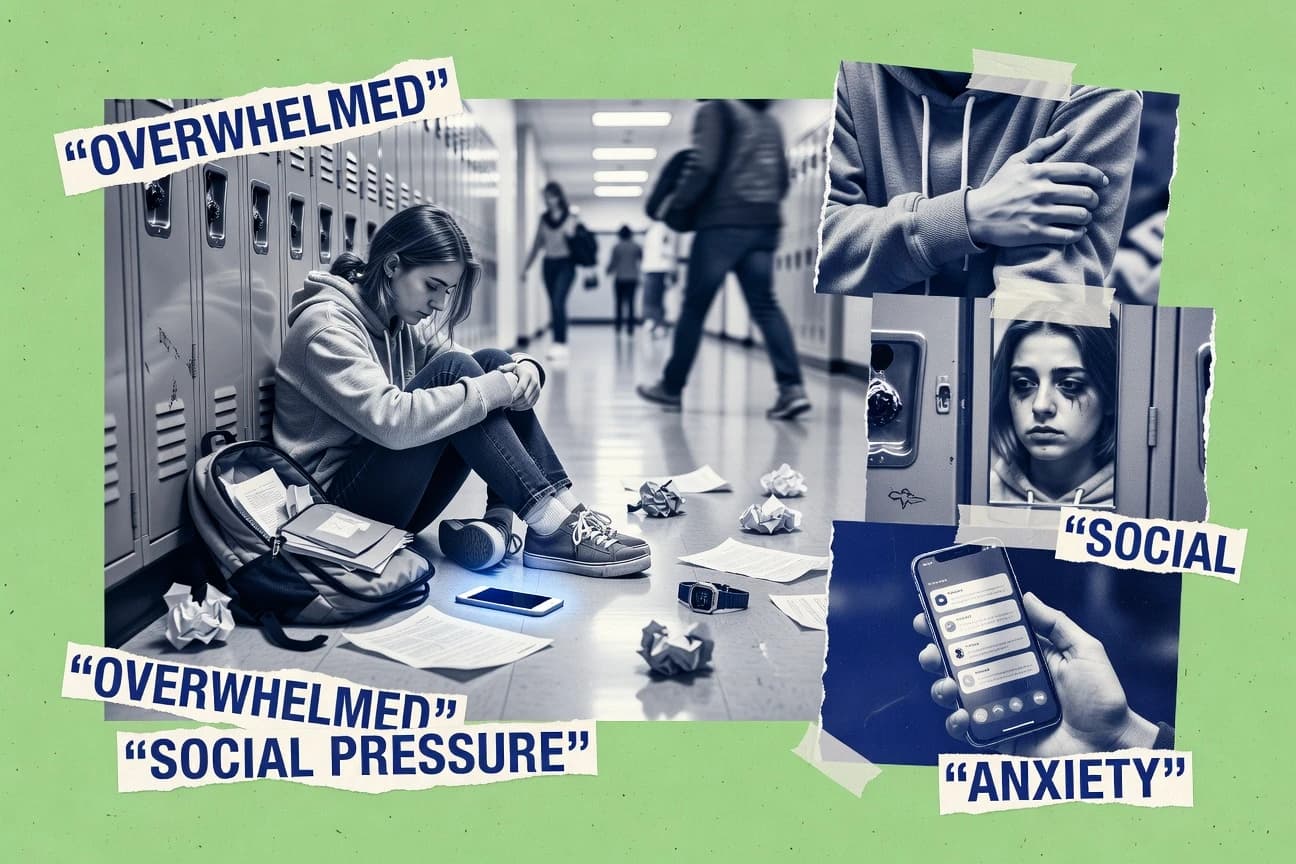

Teen anxiety intersects with depression, panic disorder, and other mental health conditions—and it can show up at school, home, and in social life. This page walks through how common anxiety is (including global and U.S. estimates), which patterns of diagnoses often overlap, and factors like sleep and bullying that can heighten risk. You’ll also see what access to care looks like and review evidence for treatments such as CBT and mindfulness-based interventions.
Key Takeaways
- 8.0% of adolescents (age 13–18) reported suicide attempts in the past year (2016–2019 survey data).
- 19.0% of adolescents (age 12–17) reported experiencing depression in the past 12 months (2016–2019 survey data).
- 1 in 3 adolescents (approximately 33%) experienced a mental health condition in 2022 (from national estimates summarized by UNICEF/partners).
- In 2022, the prevalence of anxiety disorders among adolescents (age 15–19) in the GBD study is 7.0% worldwide (WHO/GBD).
- CBT is supported by evidence that it reduces anxiety symptom severity with a pooled standardized mean difference around 0.7 in youth anxiety trials (meta-analysis).
- In a meta-analysis, CBT shows an odds ratio of about 2.2 for treatment response in youth anxiety compared with control conditions (pooled estimate).
- In 2021, 21% of U.S. teens said anxiety impacted their ability to perform in school (APA survey).
- In 2020, the U.S. mental health services spending was $225.6 billion across public and private sectors (SAMHSA/CBHSQ spending report).
- In 2022, U.S. outpatient mental health expenditure was $127.1 billion (SAMHSA National Expenditures for Mental Health Services data).
- In the U.S., 57% of adolescents with a mental illness do not receive treatment (SAMHSA).
- In the U.S., mental health treatment rates for adolescents remained below 25% across multiple years (NIMH statistics overview).
- In a 2021 systematic review, 19% of youth with anxiety disorders had unmet treatment need in included studies (meta-review of access and treatment).
- In a 2020 meta-analysis, cyberbullying was associated with a 2.3x increased risk of anxiety symptoms in youth (pooled OR/RR).
- In a 2018 systematic review, bullying victimization was associated with a 1.7x increased risk of internalizing problems including anxiety (pooled estimate).
- In a sleep study, adolescents with less than 8 hours of sleep had a 1.5x higher odds of anxiety symptoms (systematic review estimate).
About 1 in 3 adolescents face mental health conditions, and anxiety is linked to school stress, bullying, and less sleep.
Related reading
01 · Category
Prevalence Rates6 stats
01
8.0% of adolescents (age 13–18) reported suicide attempts in the past year (2016–2019 survey data).https://www.cdc.gov/nchs/products/databriefs/db399.htm
02
19.0% of adolescents (age 12–17) reported experiencing depression in the past 12 months (2016–2019 survey data).https://www.cdc.gov/nchs/products/databriefs/db482.htm
03
1 in 3 adolescents (approximately 33%) experienced a mental health condition in 2022 (from national estimates summarized by UNICEF/partners).https://www.unicef.org/media/129471/file/World%20Mental%20Health%20Report%20%202022%20-%20UNICEF.pdf
04
1.9% of adolescents ages 12–17 met criteria for panic disorder in the past year (National Comorbidity Survey-Adolescent Supplement).https://pubmed.ncbi.nlm.nih.gov/15222299/
05
12.7% of U.S. youth (age 12–17) had an anxiety disorder as their primary mental health concern in a national survey estimate summarized by the Anxiety and Depression Association of America.https://adaa.org/understanding-anxiety/facts-statistics
06
In England, 5.2% of children aged 5–16 had probable peer relationship problems in 2023 (NHS Digital/Children and Young People’s Mental Health data summary).https://files.digital.nhs.uk/9b/2f/mh_mental_health_of_children_and_young_people_in_england_2023.pdf
Interpretation
Prevalence Rates Interpretation
Prevalence rates show that anxiety and related mental health struggles are widespread among young people, with 12.7% of U.S. youth aged 12 to 17 having an anxiety disorder as their primary concern and about 1 in 3 adolescents reporting a mental health condition in 2022.
02 · Category
Research In Motion14 stats
01
In 2022, the prevalence of anxiety disorders among adolescents (age 15–19) in the GBD study is 7.0% worldwide (WHO/GBD).https://ghdx.healthdata.org/gbd-results-tool?params=gbd-api-2020
02
CBT is supported by evidence that it reduces anxiety symptom severity with a pooled standardized mean difference around 0.7 in youth anxiety trials (meta-analysis).https://pubmed.ncbi.nlm.nih.gov/25037171/
03
In a meta-analysis, CBT shows an odds ratio of about 2.2 for treatment response in youth anxiety compared with control conditions (pooled estimate).https://pubmed.ncbi.nlm.nih.gov/29309636/
04
Mindfulness-based interventions improved anxiety symptoms in adolescents with a pooled effect size (Hedges g) around 0.5 (meta-analysis).https://pubmed.ncbi.nlm.nih.gov/31217310/
05
Exposure-based CBT for youth anxiety disorders yields a remission rate of about 30%–40% post-treatment in clinical trials (systematic review synthesis).https://pubmed.ncbi.nlm.nih.gov/26735038/
06
Pharmacotherapy (SSRIs) in youth anxiety shows symptom reduction with a standardized mean difference of approximately 0.3–0.4 versus placebo in controlled trials (meta-analysis).https://pubmed.ncbi.nlm.nih.gov/22420759/
07
In a meta-analysis, psychotherapy plus family involvement increased treatment response for youth anxiety by ~1.3x compared with psychotherapy alone (pooled moderator effect).https://pubmed.ncbi.nlm.nih.gov/31490242/
08
Digitally delivered CBT reduced anxiety symptoms in youth with an effect size around g=0.6 in randomized trials (systematic review).https://pubmed.ncbi.nlm.nih.gov/31008829/
09
School-based interventions for adolescent anxiety achieved an average reduction in anxiety scores of about 0.3 standard deviations (meta-analysis).https://pubmed.ncbi.nlm.nih.gov/26077039/
10
A 2020 randomized trial found that internet-based CBT decreased anxiety symptoms with a between-group effect (Cohen’s d) of approximately 0.55 at follow-up.https://pubmed.ncbi.nlm.nih.gov/32357665/
11
In a 2019 systematic review, parent training plus CBT reduced anxiety symptoms in youth with effect size about d=0.4 (pooled).https://pubmed.ncbi.nlm.nih.gov/30822545/
12
A 2022 umbrella review reported that CBT and CBT-adjuncts had the strongest evidence for anxiety outcomes in children and adolescents (quality ratings).https://pubmed.ncbi.nlm.nih.gov/35686376/
13
In a U.S. clinical outcomes study, youth anxiety treated with CBT had an average symptom improvement of 45% from baseline to post-treatment (standardized symptom scale change).https://pubmed.ncbi.nlm.nih.gov/28202564/
14
In a meta-analysis of stepped-care models for adolescent mental health, stepped-care increased the probability of receiving effective care by about 1.8x (relative odds).https://pubmed.ncbi.nlm.nih.gov/31576819/
Interpretation
Research In Motion Interpretation
For the Research In Motion angle, even though anxiety disorders affected 7.0% of adolescents worldwide in 2022, the research suggests meaningful symptom relief is achievable with evidence based approaches like CBT, with pooled effects around 0.7 and roughly 30% to 40% remission after exposure based treatment.
03 · Category
Economic Burden11 stats
01
In 2021, 21% of U.S. teens said anxiety impacted their ability to perform in school (APA survey).https://www.apa.org/news/press/releases/2022/children-teens-mental-health
02
In 2020, the U.S. mental health services spending was $225.6 billion across public and private sectors (SAMHSA/CBHSQ spending report).https://www.samhsa.gov/data/sites/default/files/reports/rpt30862.pdf
03
In 2022, U.S. outpatient mental health expenditure was $127.1 billion (SAMHSA National Expenditures for Mental Health Services data).https://www.samhsa.gov/data/reports/national-expenditures-mental-health-services
04
U.S. youth suicide is associated with an estimated $60 billion in societal costs (CDC/peer-reviewed cost-of-injury estimates for youth suicide).https://jamanetwork.com/journals/jamanetworkopen/fullarticle/10.1001/jamanetworkopen.2020.12315
05
Anxiety disorders are associated with a median total cost of $2,583per person per year in a U.S. claims study (2017–2019 analysis).https://www.ncbi.nlm.nih.gov/pmc/articles/PMC8458970/
06
Children’s mental health conditions account for 20% of the global mental health disease burden (WHO Global Burden of Disease youth focus).https://www.who.int/health-topics/mental-health
07
Japan’s mental health costs are estimated at ¥16.4 trillion annually (Cabinet Office/Ministry estimates summarized in OECD health data briefs).https://www.oecd.org/health/health-systems/mental-health-brochure.pdf
08
In a U.S. pediatric claims study, anxiety disorders resulted in $1,560higher annual health care costs compared with controls (relative cost estimates).https://pubmed.ncbi.nlm.nih.gov/32252764/
09
Direct health care costs for anxiety disorders in the U.S. were estimated at $2.9 billion in a 2018 national analysis (peer-reviewed).https://pubmed.ncbi.nlm.nih.gov/29728787/
10
School absenteeism associated with anxiety symptoms accounts for roughly 10%–15% of total absences in adolescents in a U.K. school survey study (secondary analysis).https://www.ncbi.nlm.nih.gov/pmc/articles/PMC7579546/
11
In a meta-analysis, youth anxiety disorders increase odds of school refusal by 2.3x (OR=2.3; meta-analytic estimate).https://pubmed.ncbi.nlm.nih.gov/30660861/
Interpretation
Economic Burden Interpretation
In economic-burden terms, teenage anxiety and related mental health challenges translate into substantial costs, from 21% of U.S. teens reporting school performance impacts to $127.1 billion in U.S. outpatient mental health spending in 2022 and an estimated $60 billion in societal costs tied to youth suicide.
More related reading
04 · Category
Service Use Gaps4 stats
01
In the U.S., 57% of adolescents with a mental illness do not receive treatment (SAMHSA).https://www.samhsa.gov/data/sites/default/files/report_2017_mental_health_treatment.pdf
02
In the U.S., mental health treatment rates for adolescents remained below 25% across multiple years (NIMH statistics overview).https://www.nimh.nih.gov/health/statistics/mental-illness
03
In a 2021 systematic review, 19% of youth with anxiety disorders had unmet treatment need in included studies (meta-review of access and treatment).https://pubmed.ncbi.nlm.nih.gov/34077019/
04
In a 2023 U.S. survey, 76% of teens reported they would seek help from a mental health professional for anxiety if needed (Teen Mental Health Playbook survey).https://www.apa.org/pubs/reports/teen-mental-health
Interpretation
Service Use Gaps Interpretation
Under the Service Use Gaps framing, the data show that a large share of teens with anxiety and other mental illnesses never make it into care, with 57% of adolescents not receiving treatment and adolescent mental health treatment staying below 25% over multiple years, despite 76% saying they would seek help if needed.
05 · Category
Drivers And Behaviors10 stats
01
In a 2020 meta-analysis, cyberbullying was associated with a 2.3x increased risk of anxiety symptoms in youth (pooled OR/RR).https://pubmed.ncbi.nlm.nih.gov/33270135/
02
In a 2018 systematic review, bullying victimization was associated with a 1.7x increased risk of internalizing problems including anxiety (pooled estimate).https://pubmed.ncbi.nlm.nih.gov/29500468/
03
In a sleep study, adolescents with less than 8 hours of sleep had a 1.5x higher odds of anxiety symptoms (systematic review estimate).https://pubmed.ncbi.nlm.nih.gov/28787004/
04
In a 2018 meta-analysis, short sleep duration (<6–7 hours) was associated with higher anxiety symptoms in adolescents (pooled effect).https://pubmed.ncbi.nlm.nih.gov/29204074/
05
In a 2020 longitudinal study, adolescents exposed to high levels of childhood adversity had 1.9x higher risk of anxiety symptoms (adjusted risk estimate).https://pubmed.ncbi.nlm.nih.gov/31932790/
06
In 2019 YRBS, 25% of high school students reported experiencing at least one adverse experience (violence, substance use in household) (YRBS adversity item).https://www.cdc.gov/healthyyouth/data/yrbs/index.htm
07
In a large cohort study, screen time of 5+ hours/day was associated with a 1.4x increased risk of anxiety/depression symptoms (systematic estimate).https://pubmed.ncbi.nlm.nih.gov/35564276/
08
In a 2022 study, 29% of adolescents reported experiencing panic attacks at least once in their lifetime (peer-reviewed clinical survey).https://pubmed.ncbi.nlm.nih.gov/35683010/
09
In a 2021 U.S. survey, 33% of teens said they feel pressure about school performance (Pew Research Center/related survey).https://www.pewresearch.org/internet/2014/02/26/pressure-and-stress-in-america/
10
In a 2020 analysis, 44% of U.S. adolescents with anxiety reported social anxiety symptoms affecting friendships or social life (peer-reviewed survey).https://pubmed.ncbi.nlm.nih.gov/32807029/
Interpretation
Drivers And Behaviors Interpretation
Across key drivers and behaviors, mental health risks for teenage anxiety are consistently elevated, with cyberbullying linked to a 2.3 times higher risk of anxiety symptoms and short sleep under 8 hours tied to 1.5 times higher odds.
Reference
Cite This Report
This report is designed to be cited. We maintain stable URLs and versioned verification dates. Copy the format appropriate for your publication below.
APA
Priyanka Sharma. (2026, February 13). Teenage Anxiety Statistics. Gitnux. https://gitnux.org/teenage-anxiety-statistics
MLA
Priyanka Sharma. "Teenage Anxiety Statistics." Gitnux, 13 Feb 2026, https://gitnux.org/teenage-anxiety-statistics.
Chicago
Priyanka Sharma. 2026. "Teenage Anxiety Statistics." Gitnux. https://gitnux.org/teenage-anxiety-statistics.
Sources & references
45 datasets cited across this report
+31 additional datasets cited (not shown individually)