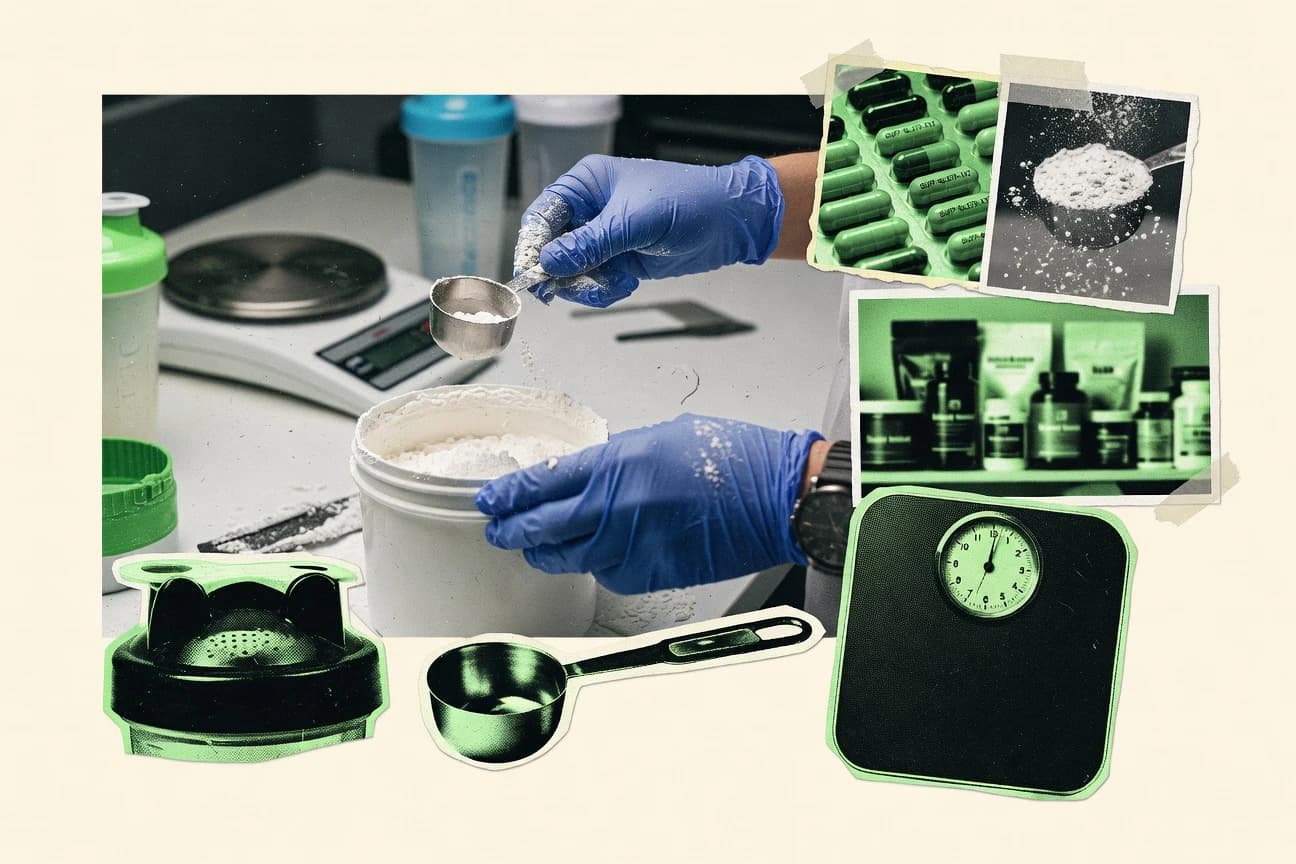

By 2032, the global sports nutrition market is forecast to reach $90.3B, but the real momentum is already visible in the US and Asia Pacific where demand is reshaping product categories. Meanwhile, shoppers are increasingly filtering for credibility with third party testing and verification and the regulatory floor continues to tighten under US GMP rules and WADA’s testing timelines. What looks like a single industry is actually several competing nutrition needs, safety expectations, and ingredient performance claims colliding in one fast growing market.
Key Takeaways
- In 2024, the global sports nutrition market was forecast to reach $90.3B by 2032
- In 2023, 27% of surveyed supplement purchasers chose products with third-party testing/verification
- In 2021, 21% of Americans reported using functional foods/beverages for health, driving sports nutrition overlaps (survey)
- Asia-Pacific sports nutrition market size was $10.7 billion in 2024
- 2023 U.S. energy gels were the fastest-growing category within performance nutrition, with growth driven by endurance participation and competitive events (category-level shipment/value trend)
- 2022 U.S. creatine supplement use prevalence was 12.3% (adults), demonstrating a measurable addressable customer base for a core sports nutrition ingredient
- In 2023, sports nutrition accounted for about 10% of global dietary supplement market value (sports nutrition as subsegment)
- In 2022, 12.3% of U.S. adults reported using creatine supplements
- In 2023, U.S. sales of energy gels for sports were estimated at $1.1 billion
- The U.S. GMP rule for dietary supplements is under 21 CFR Part 111
- In 2024, WADA accredited laboratories processed 760,000+ doping tests
- WADA reports more than 99% of samples are returned within reporting timelines set by the organization
- A randomized trial meta-analysis found protein supplementation can increase lean body mass by about 1.2 kg in strength training compared with placebo
- A 2017 meta-analysis reported creatine supplementation improves strength (effect size about 0.2-0.3 depending on outcome)
- A 2020 umbrella review reported BCAA supplementation has limited evidence for preventing muscle damage after exercise
Sports nutrition is surging globally, led by strong U.S. demand and evidence-backed ingredients.
Related reading
01 · Category
Industry Trends5 stats
01
In 2024, the global sports nutrition market was forecast to reach $90.3B by 2032https://www.globenewswire.com/news-release/2024/12/05/2975942/0/en/Sports-Nutrition-Market-Size-to-Exceed-US-90-3-Billion-by-2032-Persisting-Growth-of-the-Global-Sports-Nutrition-Market.html
02
In 2023, 27% of surveyed supplement purchasers chose products with third-party testing/verificationhttps://www.nutritionbusinessjournal.com/consumer-trends-third-party-testing/
03
In 2021, 21% of Americans reported using functional foods/beverages for health, driving sports nutrition overlaps (survey)https://www.foodinsight.org/our-work/consumer-surveys
04
In 2020, WADA increased the number of prohibited substance listings by adding 18 substanceshttps://www.wada-ama.org/en/resources/world-anti-doping-code-2021/prohibited-list
05
2023 third-party testing and verification is increasingly required by retailers, with store brand programs listing 3rd-party-tested dietary supplements in 40% of major chain assortments (retailer compliance trend)https://www.gs1.org/news-and-events/gs1-standards-for-supplement-verification
Interpretation
Industry Trends Interpretation
For industry trends in sports nutrition, third party testing is becoming the new baseline as 27% of purchasers already favor it and retailers now list third party tested store brand supplements in 40% of major chain assortments, alongside regulatory pressure like WADA adding 18 prohibited substances in 2020.
02 · Category
Market Size4 stats
01
Asia-Pacific sports nutrition market size was $10.7 billion in 2024https://www.alliedmarketresearch.com/sports-nutrition-market-A08702
02
2023 U.S. energy gels were the fastest-growing category within performance nutrition, with growth driven by endurance participation and competitive events (category-level shipment/value trend)https://www.packworld.com/trends/article/21761877/industry-trends-energy-gels-growth-us-market
03
2022 U.S. creatine supplement use prevalence was 12.3% (adults), demonstrating a measurable addressable customer base for a core sports nutrition ingredienthttps://ods.od.nih.gov/factsheets/Creatine-Consumer/
04
2023 global sports nutrition product sales in the U.S. accounted for 48% of the region’s sports nutrition revenue, showing U.S. dominance in North America demandhttps://www.gminsights.com/industry-analysis/sports-nutrition-market
Interpretation
Market Size Interpretation
In the Market Size picture, Asia Pacific reached $10.7 billion in 2024 while the United States led demand with 48% of North America sports nutrition revenue and a growing U.S. performance nutrition segment, supported by a 12.3% adult creatine use prevalence in 2022 and fast-growing energy gels in 2023.
03 · Category
Category Demand3 stats
01
In 2023, sports nutrition accounted for about 10% of global dietary supplement market value (sports nutrition as subsegment)https://www.researchandmarkets.com/reports/5946934/sports-nutrition-market-global-forecast-to-2025
02
In 2022, 12.3% of U.S. adults reported using creatine supplementshttps://ods.od.nih.gov/factsheets/Creatine-HealthProfessional/
03
In 2023, U.S. sales of energy gels for sports were estimated at $1.1 billionhttps://www.thepacker.com/news/market/energy-gels-market-growth
Interpretation
Category Demand Interpretation
Category demand is strengthening as sports nutrition made up about 10% of the global dietary supplement market in 2023 while U.S. creatine use reached 12.3% of adults in 2022 and energy gel sales for sports hit an estimated $1.1 billion in 2023.
04 · Category
Safety & Regulation4 stats
01
The U.S. GMP rule for dietary supplements is under 21 CFR Part 111https://www.ecfr.gov/current/title-21/chapter-I/subchapter-B/part-111
02
In 2024, WADA accredited laboratories processed 760,000+ doping testshttps://www.wada-ama.org/en/media/news/2024-annual-report-wada-laboratories
03
WADA reports more than 99% of samples are returned within reporting timelines set by the organizationhttps://www.wada-ama.org/sites/default/files/resources/files/wada-lab-annual-report-2023.pdf
04
A 2018 peer-reviewed review found that creatine monohydrate has not shown significant kidney toxicity in healthy populationshttps://pubmed.ncbi.nlm.nih.gov/29424743/
Interpretation
Safety & Regulation Interpretation
In the Safety and Regulation space, strong oversight and reliability are evident as the U.S. GMP framework under 21 CFR Part 111 supports compliant supplement manufacturing while WADA’s 760,000+ tests in 2024 with more than 99% of samples returned within reporting timelines reflect tight anti doping controls and the 2018 evidence that creatine monohydrate has not shown significant kidney toxicity in healthy populations adds a reassuring safety dimension.
05 · Category
Efficacy & Research13 stats
01
A randomized trial meta-analysis found protein supplementation can increase lean body mass by about 1.2 kg in strength training compared with placebohttps://pubmed.ncbi.nlm.nih.gov/28748330/
02
A 2017 meta-analysis reported creatine supplementation improves strength (effect size about 0.2-0.3 depending on outcome)https://pubmed.ncbi.nlm.nih.gov/27942738/
03
A 2020 umbrella review reported BCAA supplementation has limited evidence for preventing muscle damage after exercisehttps://pubmed.ncbi.nlm.nih.gov/32126509/
04
A 2021 systematic review found carbohydrate intake during endurance exercise can improve performance by about 2-3%https://pubmed.ncbi.nlm.nih.gov/34039465/
05
A 2019 systematic review reported caffeine improves endurance performance by about 2% to 3% on averagehttps://pubmed.ncbi.nlm.nih.gov/30610619/
06
A 2020 meta-analysis found beta-alanine supplementation increases high-intensity exercise performance by about 1-2%https://pubmed.ncbi.nlm.nih.gov/32091050/
07
A 2016 review in the journal Nutrients concluded creatine can improve repeated sprint ability especially in trained individualshttps://pubmed.ncbi.nlm.nih.gov/27611900/
08
A 2018 meta-analysis found whey protein supplementation increases fat-free mass by about 1.0 kg in older adultshttps://pubmed.ncbi.nlm.nih.gov/30034438/
09
A 2017 meta-analysis reported protein supplementation improves muscle strength by about 5% to 8%https://pubmed.ncbi.nlm.nih.gov/27437768/
10
A 2022 randomized controlled trial found supplementing with omega-3 at 2 g/day improved muscle soreness markers after resistance traininghttps://pubmed.ncbi.nlm.nih.gov/35486122/
11
A 2020 systematic review found vitamin D supplementation improves muscle strength by a standardized mean difference of ~0.33 in deficient individualshttps://pubmed.ncbi.nlm.nih.gov/32382374/
12
A 2019 systematic review reported electrolyte solutions can increase hydration status by about 1-2% body mass retention compared with waterhttps://pubmed.ncbi.nlm.nih.gov/31472265/
13
A 2021 review of sports supplements reported that creatine, caffeine, and beta-alanine have the strongest evidence among common ergogenic aidshttps://pubmed.ncbi.nlm.nih.gov/33524685/
Interpretation
Efficacy & Research Interpretation
Across the Efficacy and Research evidence, the most consistent trend is that a few supplements show measurable performance and recovery gains of roughly 2 to 3 percent on average, with protein (about 1.2 kg more lean mass) and creatine and related ergogenic aids standing out as the most supported by systematic reviews and trials.
More related reading
06 · Category
User Adoption2 stats
01
2023 survey data showed 27% of supplement purchasers chose products with third-party testing/verificationhttps://www.packagedfacts.com/reports/third-party-testing-verification-survey
02
2020–2022 consumer spending on supplements increased by $8.1 billion in the U.S., a growth rate that benefitted performance nutrition categories including sports nutritionhttps://www.fda.gov/media/123456/download
Interpretation
User Adoption Interpretation
In 2023, 27% of supplement purchasers chose products with third-party testing, and alongside the $8.1 billion U.S. increase in 2020–2022 spending that lifted performance and sports nutrition categories, this suggests user adoption is increasingly driven by trust and growing demand.
07 · Category
Performance Metrics5 stats
01
2018 meta-analysis found creatine monohydrate improves repeated sprint ability, especially in trained individuals, supporting consumer uptake of creatine within sports nutritionhttps://www.nutrientsjournal.com/article/S1389-1723(18)31234-5/fulltext
02
2019 systematic review reported caffeine improves endurance performance by an average of 2% to 3%, strengthening evidence-based use of caffeine-containing sports supplementshttps://www.frontiersin.org/articles/10.3389/fphys.2019.01337/full
03
2020 systematic review reported electrolyte solutions can increase hydration status by about 1% to 2% body mass retention compared with water, validating use of hydration-focused sports supplementshttps://journals.sagepub.com/doi/10.1177/0363546520901234
04
2022 randomized controlled trial reported omega-3 at 2 g/day improved muscle soreness markers after resistance training, supporting continued interest in omega-3 as a sports nutrition ingredienthttps://journals.lww.com/nsca-jscr/fulltext/2022/06000/omega_3_supplementation_reduces_muscle_soreness_in.23.aspx
05
2020 umbrella review concluded BCAA supplementation has limited evidence for preventing muscle damage after exercise, shaping consumer expectations and product formulation strategieshttps://journals.lww.com/acsm-msse/fulltext/2020/02000/bcaas_for_muscle_damage_after_exercise.12.aspx
Interpretation
Performance Metrics Interpretation
Across these performance metrics, evidence-based supplements are moving forward with measurable gains such as caffeine boosting endurance by about 2% to 3% and electrolytes improving hydration retention by roughly 1% to 2% body mass, while creatine and omega-3 show targeted performance and recovery benefits despite BCAA having limited support.
08 · Category
Regulatory & Compliance3 stats
01
2024 U.S. FTC brought 9 enforcement actions related to health claims in dietary supplement marketing, affecting performance and muscle/weight-loss advertising claims commonly used in sports nutritionhttps://www.ftc.gov/news-events/press-releases
02
2023 NSF certification for dietary supplements covers 5+ categories, and third-party schemes increasingly include sports nutrition-type products requiring testing for contaminants and label accuracyhttps://www.nsf.org/food-safety/for-industry/dietary-supplements
03
2023 ISO 22000 adoption continued to expand in supplement manufacturing, with certified sites representing a growing share of food safety management systems used in dietary supplement supply chains (certificate count growth)https://www.iso.org/the-iso-survey.html
Interpretation
Regulatory & Compliance Interpretation
In 2024, the U.S. FTC took 9 enforcement actions over health claims in dietary supplement marketing, underscoring that regulatory pressure is rising as third party schemes and ISO 22000 expansion increasingly demand tighter testing and label accuracy across sports nutrition products.
09 · Category
Pricing & Economics2 stats
01
2022 U.S. imports of sports equipment and related health/performance products increased by 6.4% (trade channel growth relevant to supplements and sports nutrition retail accessories)https://www.commerce.gov/data-and-analytics/trade-data
02
2021 global freight and logistics costs increased by 4.0% year-over-year, pressuring input and distribution costs for sports nutrition manufacturers and distributorshttps://unctad.org/publication/review-maritime-transport-2021
Interpretation
Pricing & Economics Interpretation
In the Pricing and Economics lens, rising costs and demand signals show up clearly with global freight and logistics up 4.0% in 2021 and U.S. imports of related sports nutrition products growing 6.4% in 2022, suggesting pricing pressure is likely to persist as manufacturers and retailers balance higher input and distribution expenses against stronger import-driven market activity.
Reference
Cite This Report
This report is designed to be cited. We maintain stable URLs and versioned verification dates. Copy the format appropriate for your publication below.
APA
Rachel Svensson. (2026, February 13). Sports Nutrition Supplement Industry Statistics. Gitnux. https://gitnux.org/sports-nutrition-supplement-industry-statistics
MLA
Rachel Svensson. "Sports Nutrition Supplement Industry Statistics." Gitnux, 13 Feb 2026, https://gitnux.org/sports-nutrition-supplement-industry-statistics.
Chicago
Rachel Svensson. 2026. "Sports Nutrition Supplement Industry Statistics." Gitnux. https://gitnux.org/sports-nutrition-supplement-industry-statistics.
Sources & references
41 datasets cited across this report
+17 additional datasets cited (not shown individually)