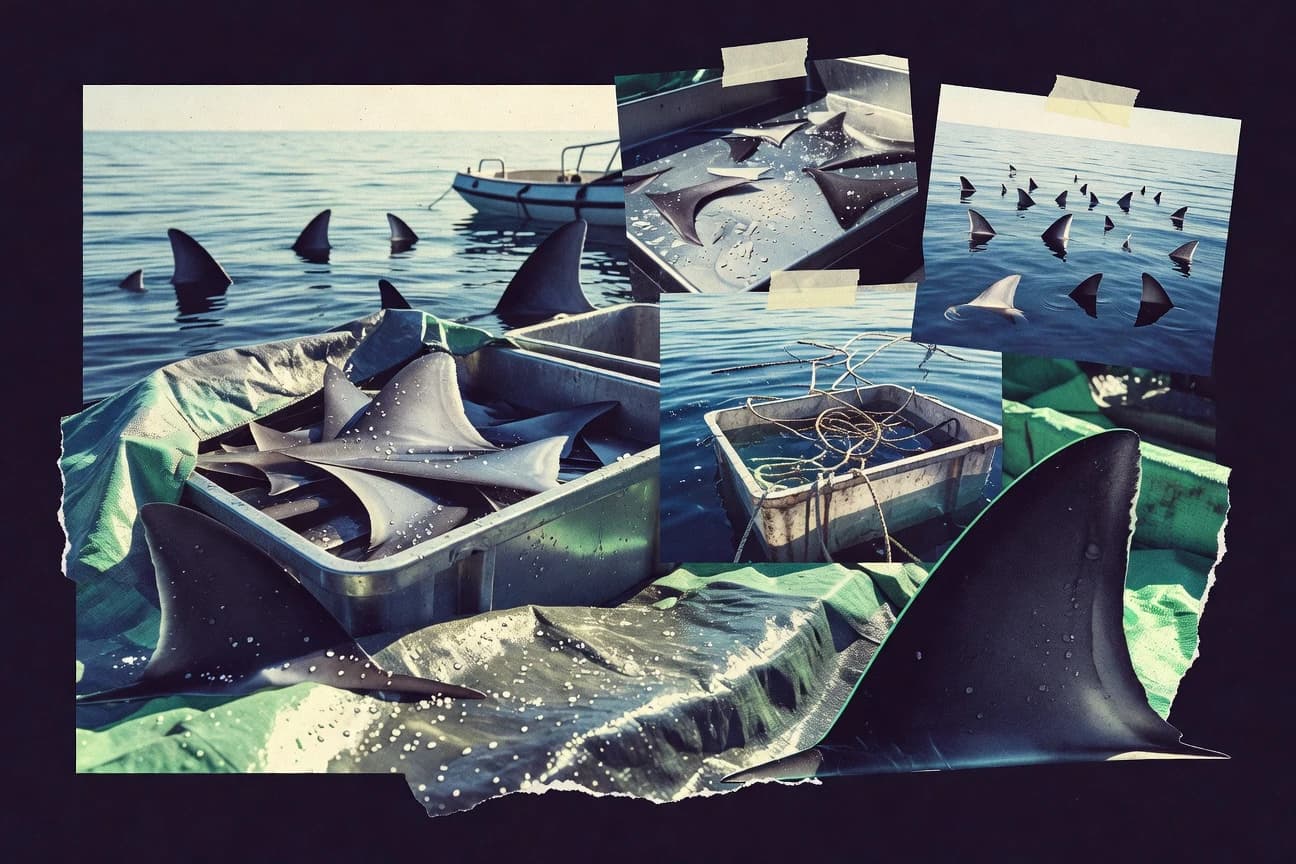

The global shark fin trade generates 1 to 2 billion dollars in value each year. Hong Kong imports an average of 8828 tons of fins annually while China accounts for 95 percent of total consumption. Approximately 73 million sharks are killed for fins every year.
Key Takeaways
- WWF Shark Initiative launched in 2011 for policy change
- 50 shark sanctuaries covering 20 million sq km established by 2023
- CITES protections extended to 3 more shark species in 2023
- The global shark fin trade is valued at around $1-2 billion annually
- Hong Kong imports 8,828 tons of shark fins yearly on average
- China consumes 95% of the world's shark fins
- Sharks are finned at sea to save space, with bodies discarded
- Finning involves cutting off dorsal, pectoral, pelvic, and caudal fins
- One shark yields 4-6% of body weight in fins
- Over 50 countries have banned shark finning domestically
- EU requires full shark carcasses landed since 2010
- US Shark Finning Prohibition Act passed in 2000
- Approximately 73 million sharks are killed annually for their fins
- Shark populations have declined by up to 90% in some regions due to finning
- The oceanic whitetip shark has experienced a 70-90% population decline in the Gulf of Mexico since 1950s
Hong Kong’s 50 percent demand drop and global shark protections are helping curb finning worldwide.
Related reading
01 · Category
Conservation Measures25 stats
01
WWF Shark Initiative launched in 2011 for policy change
02
50 shark sanctuaries covering 20 million sq km established by 2023
03
CITES protections extended to 3 more shark species in 2023
04
Hong Kong's Shark Fin Declaration reduced consumption by 50% since 2014
05
Oceana campaigns led to 20 country bans by 2020
06
FAO's Shark Database aids 100+ countries in management
07
Global Shark Movement Project tags 1,000 sharks yearly
08
Coral Triangle shark refuge protects 10 species since 2015
09
Pew's campaign stopped EU fin subsidies worth $33 million
10
Shark Trust's Finning Tracker monitors 500 vessels
11
Bloom's Hong Kong restaurant pledge: 1,000 venues no-fin since 2011
12
WildAid PSAs reached 500 million viewers reducing demand
13
IUCN Shark Specialist Group assesses 1,200 species
14
Maldives eco-tourism generates $20 million replacing fin trade
15
AZA zoos promote shark conservation exhibits to 50 million visitors
16
FAO promotes shark finning bans in 80 RFMOs
17
Sea Shepherd patrols seized 100 tons of fins since 2010
18
Global Ghost Gear Initiative recovers 50,000 sharks from nets
19
Shark fins alternatives like urchin used in 200 restaurants
20
TRAFFIC monitors fin trade reducing illegal volume by 30%
21
Fiji's shark sanctuary boosts tourism by 15%
22
Education programs in 50 schools reach 100,000 students yearly
23
Satellite tracking reveals 80% migration overlap with finning zones
24
Reintroduction efforts for angel sharks in 5 sites
25
Fin-free corporate pledges by 100 companies since 2015
Interpretation
Conservation Measures Interpretation
Under conservation measures, targeted policy and protection have scaled rapidly, with 50 shark sanctuaries covering 20 million sq km established by 2023 and CITES protections expanding to three more shark species in 2023, alongside major demand cuts like Hong Kong’s Shark Fin Declaration reducing consumption by 50% since 2014.
02 · Category
Economic Value27 stats
01
The global shark fin trade is valued at around $1-2 billion annually
02
Hong Kong imports 8,828 tons of shark fins yearly on average
03
China consumes 95% of the world's shark fins
04
Shark fin soup retails for $100per bowl in high-end restaurants
05
Dried shark fins sell for $300-$500 per kilogram
06
Annual trade volume of shark fins exceeds 10,000 metric tons
07
Taiwan exports shark fins worth $100 million USD yearly
08
Singapore seizes shark fins valued at $10 million in 2020
09
Ecuador's Galapagos fin trade generated $20 million before bans
10
India exports 1,200 tons of fins annually worth $50 million
11
Spain's fin exports peaked at 12,000 tons in 2007
12
United Arab Emirates handles 20% of global fin trade
13
Shark fin market in Vietnam worth $200 million per year
14
Malaysia's fin industry employs 10,000 people directly
15
Fin prices rose 25% from 2010-2020 due to scarcity
16
Hong Kong fin retail market valued at $500 million annually
17
Illegal fin trade evades $400 million in tariffs yearly
18
Costa Rica fin exports dropped from $15 million to $1 million post-ban
19
Shark fin derivatives like gelatin worth $100 million globally
20
Chinese fin imports fell 80% from 2001 peak of 11,000 tons
21
Japan imports 500 tons of fins yearly for $30 million
22
Fin trading hubs like Guangzhou handle 5,000 tons annually
23
Global fin market projected to decline 5% yearly post-2020
24
Shark finning provides $800 million to developing nations fisheries
25
UAE fin re-exports to Asia valued at $50 million in 2019
26
Shark fins constitute 5% of global seafood trade value
27
Average fin from a large shark fetches $50-$100 wholesale
Interpretation
Economic Value Interpretation
From an economic value perspective, the shark fin market is worth about $1 to $2 billion a year with China consuming 95% of the supply, and high-end pricing like $100 per bowl and $300 to $500 per kilogram shows strong financial incentive driving trade volumes over 10,000 metric tons annually.
03 · Category
Harvesting Methods23 stats
01
Sharks are finned at sea to save space, with bodies discarded
02
Finning involves cutting off dorsal, pectoral, pelvic, and caudal fins
03
One shark yields 4-6% of body weight in fins
04
Longline fisheries catch 90% of fins for trade
05
Gillnets used in 70% of finning operations in Asia
06
Driftnets entangle sharks for finning in Pacific waters
07
Purse seine bycatch contributes 20% of fins processed
08
Fins are air-dried on deck for 4-5 days post-removal
09
Sharks are often alive when finned and discarded to drown
10
100 fins require meat from 30-50 sharks due to varying sizes
11
Handlines used by artisanal fishers for targeted finning
12
Finning occurs primarily on high seas beyond EEZs
13
Frozen fins shipped in containers mislabeled as fish maws
14
Trawl nets capture juvenile sharks for fins in India
15
Spear fishing contributes to finning in Indonesia reefs
16
Fin quotas ignored in 80% of flagged vessels
17
Sharks finned in processing plants post-landing illegally
18
Bycatch finning rates 50% in tuna fisheries
19
Fins sorted by size: large dorsal $150/kg, small pectorals $20/kg
20
Live sharks transported to ports for finning to evade laws
21
Drift gillnets up to 10km long used for mass finning
22
Finning peaks during monsoon seasons in Indian Ocean
23
Sharks gutted before finning to reduce weight
Interpretation
Harvesting Methods Interpretation
Harvesting methods show a highly standardized and industrial pattern where longline fisheries account for 90% of fins taken for trade and gillnets are used in 70% of finning operations in Asia, with entire sharks being finned at sea and yielding only 4 to 6% of their body weight in fins.
More related reading
04 · Category
Legal Status24 stats
01
Over 50 countries have banned shark finning domestically
02
EU requires full shark carcasses landed since 2010
03
US Shark Finning Prohibition Act passed in 2000
04
Hawaii banned shark fin possession in 2010, first US state
05
China banned finning at sea in 2013 but imports continue
06
Palau established world's first shark sanctuary in 2009
07
Bahamas prohibited all shark fishing in 2011
08
Marshall Islands banned shark catch in EEZ in 2015
09
India mandates full shark landing since 2016
10
Brazil banned shark fin trade in 2014
11
Costa Rica finning ban enforced since 2012
12
South Africa limits shark quotas strictly since 2017
13
CITES lists 5 shark species protected from trade since 2014
14
UN FAO International Plan of Action for Sharks adopted 1999
15
ICCAT bans bluefin tuna shark finning since 2005
16
Spain fined €2 million for illegal finning in 2018
17
Hong Kong fines up to HK$500,000for fin possession
18
Australia destroyed 15 tons of illegal fins in 2021
19
California banned shark fin sales in 2011
20
Mexico prohibited fin exports in 2014
21
Maldives banned shark fishing in 2010
22
French Polynesia shark sanctuary since 2006
23
40 US states have some form of finning restrictions
24
Global seizure of 1,800 tons of illegal fins in 2019
Interpretation
Legal Status Interpretation
Legal action is accelerating worldwide, with more than 50 countries banning shark finning domestically and the EU and US leading with stricter landing and prohibition measures since 2010 and 2000 respectively.
05 · Category
Population Decline30 stats
01
Approximately 73 million sharks are killed annually for their fins
02
Shark populations have declined by up to 90% in some regions due to finning
03
The oceanic whitetip shark has experienced a 70-90% population decline in the Gulf of Mexico since 1950s
04
Blue shark populations in the Atlantic have dropped by 60-70% over the last 30 years
05
Hammerhead shark populations have declined by over 50% globally since 1990s
06
Shortfin mako sharks have seen a 40-60% decline in the North Atlantic
07
Porbeagle shark populations in the North Atlantic reduced by 80% since 1960s
08
Great white shark populations declined by 50% in South Africa waters due to finning
09
Tiger shark numbers in the Indo-Pacific fell by 50-70%
10
Bull shark populations in the Mediterranean have crashed by over 90%
11
Silky shark stocks in the Pacific declined by 60% from 1994-2010
12
Thresher shark populations in the Indian Ocean dropped by 65%
13
Sandbar shark populations in the Atlantic reduced by 87% since 1970s
14
Dusky shark declined by 75-90% in the Northwest Atlantic
15
Scalloped hammerhead populations fell by 89% in the Atlantic
16
Smooth hammerhead sharks declined by 50% globally
17
Winghead shark populations reduced by 70% in Southeast Asia
18
Bigeye thresher shark declined by 80% in the Pacific
19
Pelagic thresher populations crashed by 85% in the Coral Triangle
20
Blacktip shark numbers down 40% in the Gulf of Mexico
21
Lemon shark populations declined by 60% in the Caribbean
22
Nurse shark stocks fell by 50% around Bahamas
23
Whale shark sightings reduced by 63% in the Indian Ocean
24
Basking shark populations declined by 95% in the Northeast Atlantic
25
Greenland shark populations impacted by 30% incidental finning
26
Sixgill shark deep-sea populations down 40%
27
Angel shark extinct in the Mediterranean due to finning pressures
28
Sawfish populations declined by 90% globally from fin trade
29
Goblin shark rare captures indicate 50% rarity increase
30
Megamouth shark sightings sparse, linked to finning bycatch
Interpretation
Population Decline Interpretation
Under the Population Decline framing, finning has driven dramatic losses such as oceanic whitetip sharks falling 70 to 90% in the Gulf of Mexico since the 1950s and blue sharks dropping 60 to 70% in the Atlantic over the last 30 years.
report visual · Key figures
Shark finning’s impact and response over time
Policy actions and enforcement vary over time, alongside evidence of large population declines linked to finning.
73
Approximately 73 million sharks are killed annually for their fins
50%
Great white shark populations declined by 50% in South Africa waters due to finning
2000
US Shark Finning Prohibition Act passed in 2000
2010
Hawaii banned shark fin possession in 2010, first US state
2013
China banned finning at sea in 2013 but imports continue
2014
Brazil banned shark fin trade in 2014
Reference
Cite This Report
This report is designed to be cited. We maintain stable URLs and versioned verification dates. Copy the format appropriate for your publication below.
APA
Marcus Engström. (2026, February 13). Shark Finning Statistics. Gitnux. https://gitnux.org/shark-finning-statistics
MLA
Marcus Engström. "Shark Finning Statistics." Gitnux, 13 Feb 2026, https://gitnux.org/shark-finning-statistics.
Chicago
Marcus Engström. 2026. "Shark Finning Statistics." Gitnux. https://gitnux.org/shark-finning-statistics.
Sources & references
93 datasets cited across this report