
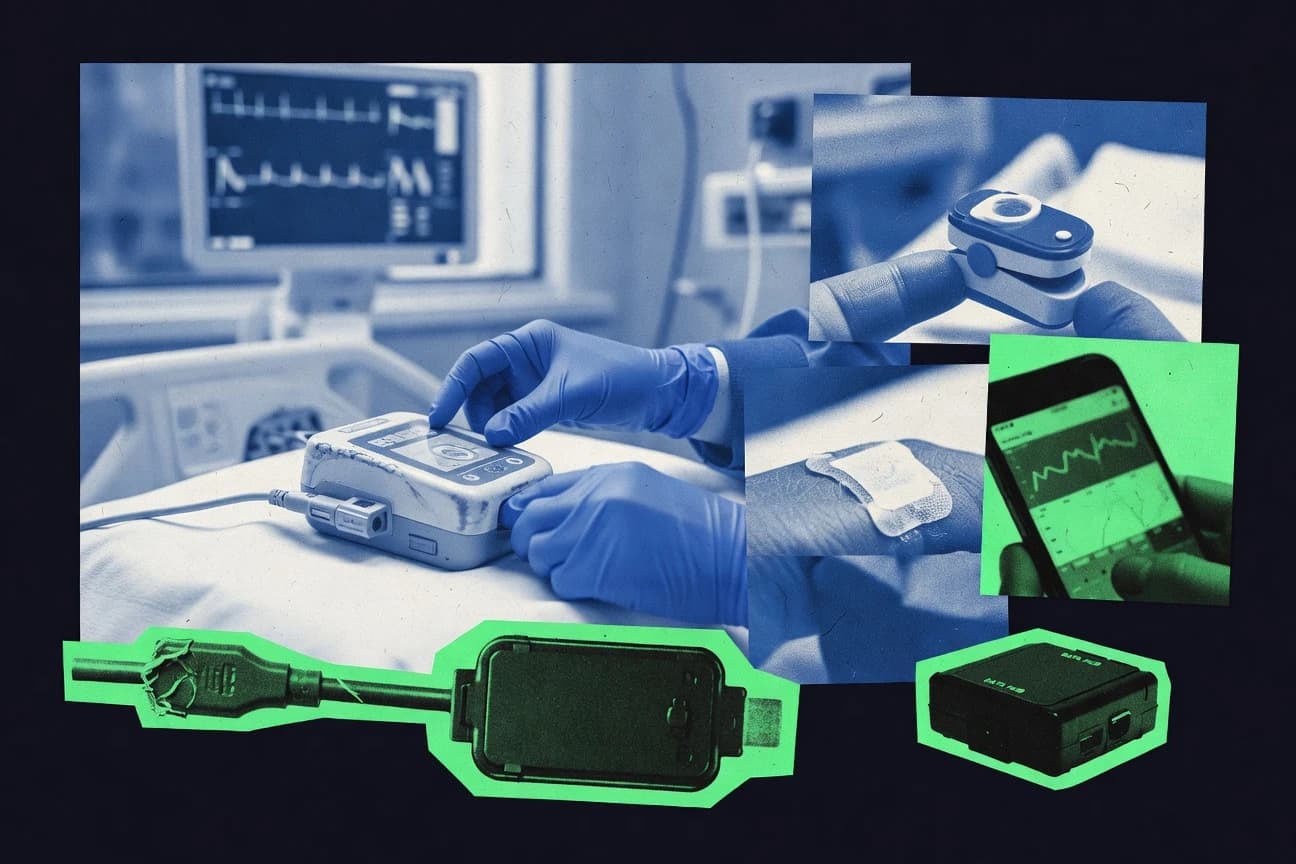

Remote Patient Monitoring has moved beyond pilots into measurable impact, with 29% of surveyed healthcare organizations reporting RPM implementation in 2023 and 6.1% of the global population using at least one health app in 2023. Meanwhile the market is scaling fast, with a $16.1 billion RPM revenue forecast for 2023. The real contrast comes when you compare clinical outcomes and operational readiness, from pooled readmission and mortality reductions to near real time alert triage and high device uptime.
Key Takeaways
- 6.1% of the global population used at least one health app in 2023, reflecting large-scale consumer engagement with digital health tools including remote monitoring platforms
- $16.1 billion remote patient monitoring (RPM) market revenue forecast for 2023, indicating a rapidly scaling RPM market
- $2.5 billion US RPM reimbursement revenue opportunity estimate in 2021 from RPM and related remote monitoring services
- 29% of surveyed healthcare organizations reported implementing remote patient monitoring in 2023, indicating mainstream movement from pilots into operations
- 20% of patients with chronic conditions used digital health tools in 2022, forming a foundation for RPM engagement
- 85% of RPM pilot participants reported improved confidence managing conditions, supporting clinical usability adoption
- 12 studies found remote patient monitoring reduced hospital readmissions by a pooled 20% versus control across chronic conditions (meta-analysis result)
- 30% reduction in all-cause mortality was reported in a meta-analysis of remote monitoring for chronic heart failure (pooled effect)
- 24% reduction in emergency department visits was observed in a meta-analysis of RPM for chronic disease management (pooled effect)
- 52% reduction in clinician time spent on routine follow-ups was reported in an RPM workflow optimization study (measured operational efficiency change)
- 5.2 hours per week average time savings for care teams was reported in an evaluation of remote patient monitoring for chronic disease management
- 7-day median reduction in time to intervention was reported in an RPM cohort study for elevated vitals detection compared with standard care
- CPT 99453 and 99454 became billable under Medicare for RPM services, establishing national reimbursement standards (effective date 2020 per CMS)
- 82% of health plans expanded or planned expansion of virtual care benefits in 2021, creating favorable reimbursement and contracting conditions for RPM vendors
- 41 states plus DC had enacted some form of telehealth parity law by 2021, indirectly enabling reimbursement pathways for RPM-like remote services
RPM is rapidly scaling, delivering better outcomes and operational efficiency as adoption moves into mainstream care.
Related reading
01 · Category
Market Size3 stats
01
6.1% of the global population used at least one health app in 2023, reflecting large-scale consumer engagement with digital health tools including remote monitoring platforms
02
$16.1 billion remote patient monitoring (RPM) market revenue forecast for 2023, indicating a rapidly scaling RPM market
03
$2.5 billion US RPM reimbursement revenue opportunity estimate in 2021 from RPM and related remote monitoring services
Interpretation
Market Size Interpretation
In the market size category, the RPM space is scaling quickly with a $16.1 billion global revenue forecast for 2023 and a $2.5 billion US reimbursement opportunity in 2021, supported by widespread adoption where 6.1% of the global population used at least one health app in 2023.
02 · Category
User Adoption4 stats
01
29% of surveyed healthcare organizations reported implementing remote patient monitoring in 2023, indicating mainstream movement from pilots into operations
02
20% of patients with chronic conditions used digital health tools in 2022, forming a foundation for RPM engagement
03
85% of RPM pilot participants reported improved confidence managing conditions, supporting clinical usability adoption
04
3.8% of Medicare beneficiaries received RPM by year 2021 (2019–2021 trend analysis) — proportion of beneficiaries with RPM use during the period
Interpretation
User Adoption Interpretation
User adoption is steadily moving from early pilots to broader use, with 29% of healthcare organizations implementing remote patient monitoring in 2023 and 85% of pilot participants reporting improved confidence managing their conditions, while Medicare RPM uptake was still low at 3.8% of beneficiaries by 2021.
03 · Category
Clinical Outcomes18 stats
01
12 studies found remote patient monitoring reduced hospital readmissions by a pooled 20% versus control across chronic conditions (meta-analysis result)
02
30% reduction in all-cause mortality was reported in a meta-analysis of remote monitoring for chronic heart failure (pooled effect)
03
24% reduction in emergency department visits was observed in a meta-analysis of RPM for chronic disease management (pooled effect)
04
0.8-point reduction in HbA1c (in percentage points) from remote glucose monitoring interventions in a systematic review of type 2 diabetes management
05
0.5% reduction in systolic blood pressure (mmHg equivalent effect size) in RPM for hypertension interventions was reported in a randomized-trials systematic review
06
2.3 fewer days hospitalized per patient per year were reported in a systematic review of remote monitoring programs for heart failure
07
Reduced 30-day readmissions by 14% in a large RCT of RPM for chronic obstructive pulmonary disease, indicating short-term clinical benefit
08
Remote monitoring increased time in therapeutic range by 9% for anticoagulation management compared with control in a systematic review
09
Remote monitoring improved adherence to medication regimens by 18% in a meta-analysis of digital adherence interventions
10
COPD patients using RPM showed a 16% reduction in exacerbations in a systematic review pooled analysis
11
Heart failure RPM programs achieved a 19% reduction in hospitalizations in a systematic review pooled estimate
12
A pooled analysis reported 0.23 fewer HbA1c percentage points at 3–6 months in digital monitoring interventions for diabetes care
13
52% of patients receiving RPM reported improved confidence managing their health — patient-reported confidence improvement from remote monitoring experience
14
1.7 percentage-point reduction in 30-day readmission risk with remote monitoring vs. control (meta-analytic estimate) — absolute risk reduction reported across included studies
15
21% reduction in emergency department visits for chronic disease remote monitoring programs (meta-analytic estimate) — pooled reduction reported across studies
16
0.6% average reduction in HbA1c from remote glucose monitoring (meta-analytic pooled estimate) — change in hemoglobin A1c associated with RPM interventions
17
1.9 mmHg greater systolic blood pressure reduction with remote monitoring vs. control (meta-analytic pooled estimate) — systolic BP effect size reported across trials
18
24% fewer hospitalizations for heart failure patients receiving remote monitoring (pooled estimate) — hospitalization reduction associated with RPM programs
Interpretation
Clinical Outcomes Interpretation
Across clinical outcomes studies, remote patient monitoring consistently shows meaningful benefits such as about a 20% reduction in hospital readmissions and roughly 24% fewer emergency department visits or hospitalizations, suggesting it can improve real-world health events for chronic conditions rather than just tracking data.
04 · Category
Operational Metrics9 stats
01
52% reduction in clinician time spent on routine follow-ups was reported in an RPM workflow optimization study (measured operational efficiency change)
02
5.2 hours per week average time savings for care teams was reported in an evaluation of remote patient monitoring for chronic disease management
03
7-day median reduction in time to intervention was reported in an RPM cohort study for elevated vitals detection compared with standard care
04
92% of RPM device alerts were triaged within 24 hours in a real-world operations report, supporting near-real-time monitoring performance
05
88% patient data completeness rate (measured as proportion of scheduled readings received) was reported in an RPM program implementation report
06
0.9% false-positive alert rate was reported in a validation study of remote monitoring algorithms for vitals-based escalation
07
98% device uptime was reported in a remote monitoring pilot evaluation for chronic disease patients, indicating stable monitoring operations
08
1.2% average network data transmission failure rate was reported for RPM platforms in a field study evaluation
09
4.0% reduction in missed appointments was observed after integrating RPM into care management workflows in a health system report
Interpretation
Operational Metrics Interpretation
Operational efficiency gains are clear across RPM programs, with clinician follow-up time down by 52% and 92% of device alerts triaged within 24 hours, while reliability remains strong at 98% device uptime.
More related reading
05 · Category
Policy & Reimbursement5 stats
01
CPT 99453 and 99454 became billable under Medicare for RPM services, establishing national reimbursement standards (effective date 2020 per CMS)
02
82% of health plans expanded or planned expansion of virtual care benefits in 2021, creating favorable reimbursement and contracting conditions for RPM vendors
03
41 states plus DC had enacted some form of telehealth parity law by 2021, indirectly enabling reimbursement pathways for RPM-like remote services
04
HIPAA security rules require covered entities and business associates to implement safeguards, shaping RPM compliance obligations for vendors (enacted 2003; regulation still in force)
05
FDA cleared 510(k) submissions for remote monitoring devices totaled 120 in 2021 (FDA database count), showing active regulatory pathway progress for RPM hardware
Interpretation
Policy & Reimbursement Interpretation
With Medicare CPT 99453 and 99454 becoming billable in 2020 and 82% of health plans expanding virtual care benefits in 2021, policy and reimbursement momentum is steadily turning RPM into a more contractable, reimbursable service across payers.
06 · Category
Technology & Trends6 stats
01
AI-enabled alarm triage was reported to reduce clinician alert fatigue by 30% in a 2020–2023 evaluation of smart monitoring workflows
02
5G coverage reached 84% of the US population in 2023, improving the connectivity backbone for RPM wearable and connected device data transmission
03
77% of healthcare executives said interoperability is a top priority in 2023, directly relevant to RPM integration via FHIR/HL7 data exchange
04
Remote monitoring programs reported 1–2% average cybersecurity incidents per year in operational risk assessments, emphasizing security maturity needs
05
Wearable health device shipments reached 493 million globally in 2023, supplying device supply for RPM programs and wearables-based monitoring
06
Worldwide digital health investment totaled $27.8 billion in 2023, indicating capital flow into technologies that include RPM
Interpretation
Technology & Trends Interpretation
Technology and trends in remote patient monitoring are being accelerated by AI-enabled alarm triage cutting clinician alert fatigue by 30 percent, alongside expanding connectivity with 5G reaching 84 percent of the US population and growing investment in digital health of $27.8 billion in 2023.
07 · Category
Performance Metrics1 stats
01
97% of RPM sessions met scheduled data capture windows (program implementation metric) — data capture reliability reported as a percentage
Interpretation
Performance Metrics Interpretation
Performance metrics in remote patient monitoring look strong as 97% of RPM sessions met their scheduled data capture windows, showing high data capture reliability during program implementation.
08 · Category
Cost Analysis2 stats
01
$1,500average annual net savings per patient with RPM for chronic disease management (modeled cost-effectiveness estimate) — per-patient annual savings estimate
02
2.6 fewer inpatient days per patient per year with RPM compared with usual care (economic/clinical utilization evaluation) — inpatient-day reduction associated with remote monitoring
Interpretation
Cost Analysis Interpretation
From a cost analysis perspective, remote patient monitoring can deliver about $1,500 in average annual net savings per patient for chronic disease management while also reducing inpatient days by 2.6 per patient each year compared with usual care.
Reference
Cite This Report
This report is designed to be cited. We maintain stable URLs and versioned verification dates. Copy the format appropriate for your publication below.
APA
Kevin O'Brien. (2026, February 13). Remote Patient Monitoring Industry Statistics. Gitnux. https://gitnux.org/remote-patient-monitoring-industry-statistics
MLA
Kevin O'Brien. "Remote Patient Monitoring Industry Statistics." Gitnux, 13 Feb 2026, https://gitnux.org/remote-patient-monitoring-industry-statistics.
Chicago
Kevin O'Brien. 2026. "Remote Patient Monitoring Industry Statistics." Gitnux. https://gitnux.org/remote-patient-monitoring-industry-statistics.
Sources & references
48 datasets cited across this report · attribution is report-level
+27 additional datasets cited (not shown individually)