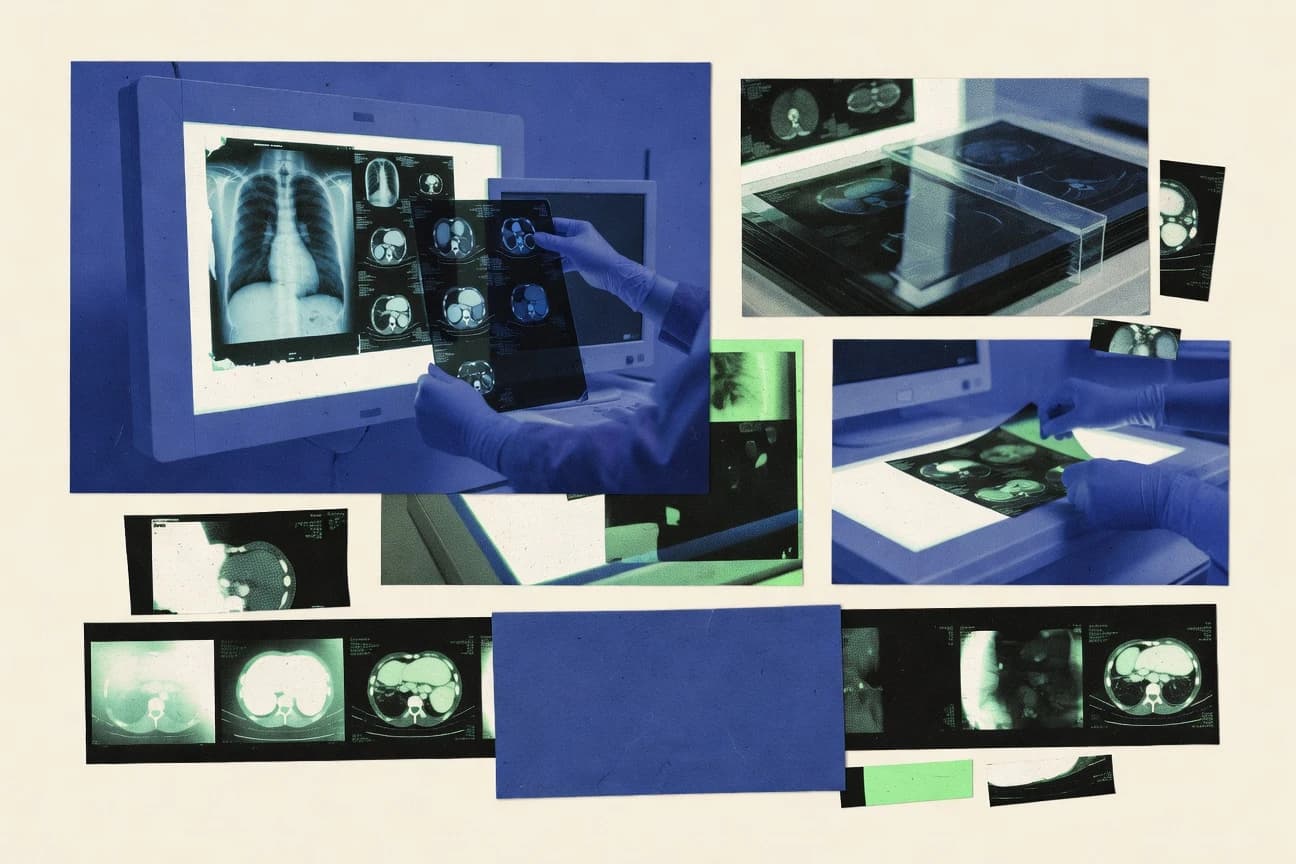

Radiology departments generate approximately 80 percent of all medical imaging data. Global medical imaging reached 26.89 billion dollars alongside modality markets such as ultrasound at 8.35 billion dollars, CT at 5.41 billion dollars, and MRI at 6.55 billion dollars. Deep learning has reduced interpretation time by up to 60 percent while AI triage systems have improved turnaround time by a median of 30 percent.
Key Takeaways
- 2021 global PACS market was valued at $3.62 billion (IMARC baseline figure cited for the market)
- 2023 global teleradiology market size was $1.61 billion
- 2023 global radiology information systems (RIS) market size was $1.64 billion
- Approximately 80% of all medical imaging data is produced by radiology departments
- Deep learning can reduce radiology interpretation time by up to 60% in reported clinical workflows (systematic review figure)
- Radiology is cited as one of the earliest specialties to deploy AI in clinical practice (major AI adoption reports)
- In a 2021 peer-reviewed study, 70% of radiology residents reported using AI tools for learning/decision support
- EHR adoption accelerates radiology reporting: 84% of radiology practices reported sharing clinical data electronically in 2021 (industry survey)
- In 2021, 30% of radiologists reported using AI-assisted triage tools at least occasionally (peer-reviewed survey evidence)
- AI triage systems have been reported to improve turnaround time by a median of 30% in clinical evaluations (systematic review range)
- In a multi-center evaluation, a deep learning detection model achieved 0.85 AUC for identifying pulmonary nodules (peer-reviewed study)
- In a study on fracture detection, AI achieved 0.91 sensitivity (receiver operating curve analysis reported)
- PACS storage cost savings can be realized by replacing local storage with tiered cloud storage; case studies report 20–60% total cost reductions (vendor/independent case studies)
- Remote reading (teleradiology) can reduce staffing costs: one US operational study reported 15–25% cost reduction by shifting excess demand to remote radiologists (study result)
- Film-to-digital conversion reduces consumables costs; one health system reported cutting film and processing costs by 60% after PACS go-live (case study)
Radiology markets are expanding fast, while AI, PACS and digital standards are improving speed, quality, and costs.
Related reading
01 · Category
Market Size11 stats
01
2021 global PACS market was valued at $3.62 billion (IMARC baseline figure cited for the market)https://www.imarcgroup.com/pacs-market
02
2023 global teleradiology market size was $1.61 billionhttps://www.imarcgroup.com/teleradiology-market
03
2023 global radiology information systems (RIS) market size was $1.64 billionhttps://www.imarcgroup.com/radiology-information-system-market
04
2023 global medical imaging market size was $26.89 billionhttps://www.imarcgroup.com/medical-imaging-market
05
2023 global digital radiography (DR) market size was $4.96 billionhttps://www.imarcgroup.com/digital-radiography-market
06
2023 global ultrasound device market size was $8.35 billion (imaging modalities context for radiology departments)https://www.imarcgroup.com/ultrasound-devices-market
07
2023 global computed tomography (CT) scanner market size was $5.41 billionhttps://www.imarcgroup.com/ct-scanner-market
08
2023 global MRI system market size was $6.55 billionhttps://www.imarcgroup.com/magnetic-resonance-imaging-market
09
2023 global nuclear medicine market size was $7.04 billion (often integrated into radiology/imaging operations)https://www.imarcgroup.com/nuclear-medicine-market
10
2020 US radiology imaging market revenue was $8.2 billion (estimate reported by market intelligence publishers)https://www.alliedmarketresearch.com/radiology-imaging-market
11
Global radiology equipment market is projected to grow at ~5–7% CAGR in recent industry forecasts (multiple market forecasts)https://www.alliedmarketresearch.com/medical-imaging-devices-market-A06651
Interpretation
Market Size Interpretation
The market size data show that while the 2023 global medical imaging market reaches $26.89 billion, the core radiology IT and imaging modality segments are smaller but still substantial, with 2021 PACS at $3.62 billion and 2023 RIS and teleradiology at $1.64 billion and $1.61 billion respectively.
02 · Category
Industry Trends7 stats
01
Approximately 80% of all medical imaging data is produced by radiology departmentshttps://www.ncbi.nlm.nih.gov/pmc/articles/PMC4723441/
02
Deep learning can reduce radiology interpretation time by up to 60% in reported clinical workflows (systematic review figure)https://pubmed.ncbi.nlm.nih.gov/33623715/
03
Radiology is cited as one of the earliest specialties to deploy AI in clinical practice (major AI adoption reports)https://www.auntminnie.com/index.aspx?sec=rsna19&sub=announcements&pag=discovery-of-ai-in-imaging
04
By 2024, the installed base of ultrasound devices worldwide was projected to exceed 15 million units (driver for imaging utilization demand)https://www.fortunebusinessinsights.com/ultrasound-devices-market-102798
05
DICOM and HL7 standards adoption is widespread across imaging systems; HL7 is used broadly for radiology workflow interoperability in EHR-integrated environments (standards adoption evidence)https://www.hl7.org/implement/standards/
06
PACS downtime risk is a key operational issue; studies report that downtime can lead to significant delays in clinical care (review evidence)https://www.ncbi.nlm.nih.gov/pmc/articles/PMC7487130/
07
Radiology departments have increasingly moved from film to digital imaging; many countries report near-universal digital adoption (OECD healthcare digitization reporting)https://www.oecd.org/health/health-data.htm
Interpretation
Industry Trends Interpretation
Industry trends are being shaped by fast-growing imaging demand and automation with radiology producing about 80% of medical imaging data while deep learning can cut interpretation time by up to 60%, alongside expanding infrastructure such as ultrasound devices projected to exceed 15 million units by 2024.
03 · Category
User Adoption5 stats
01
In a 2021 peer-reviewed study, 70% of radiology residents reported using AI tools for learning/decision supporthttps://pubmed.ncbi.nlm.nih.gov/33732946/
02
EHR adoption accelerates radiology reporting: 84% of radiology practices reported sharing clinical data electronically in 2021 (industry survey)https://www.ahajournals.org/doi/10.1161/CIRCULATIONAHA.121.056901
03
In 2021, 30% of radiologists reported using AI-assisted triage tools at least occasionally (peer-reviewed survey evidence)https://pubmed.ncbi.nlm.nih.gov/34308163/
04
By 2020, 64% of UK NHS trusts had implemented Picture Archiving and Communication Systems (PACS) for radiology (NHS technology reporting)https://digital.nhs.uk/data-and-information/publications/statistical/nhs-digital-publications
05
In 2022, 55% of US radiology stakeholders cited vendor-supported cybersecurity features as a key adoption criterion for imaging software (industry IT security surveys)https://www.himss.org/resources/cybersecurity-survey-2022-healthcare
Interpretation
User Adoption Interpretation
Across the user adoption signals, radiology is moving toward everyday use of digital and AI support, with 70% of residents already using AI tools for learning, 30% of radiologists using AI triage at least occasionally, and 84% of practices sharing clinical data electronically in 2021.
More related reading
04 · Category
Performance Metrics10 stats
01
AI triage systems have been reported to improve turnaround time by a median of 30% in clinical evaluations (systematic review range)https://pubmed.ncbi.nlm.nih.gov/36083518/
02
In a multi-center evaluation, a deep learning detection model achieved 0.85 AUC for identifying pulmonary nodules (peer-reviewed study)https://pubmed.ncbi.nlm.nih.gov/33702722/
03
In a study on fracture detection, AI achieved 0.91 sensitivity (receiver operating curve analysis reported)https://pubmed.ncbi.nlm.nih.gov/33128732/
04
In a peer-reviewed review, computer-aided detection systems improved sensitivity by 8–15% for some mammography tasks (range reported)https://pubmed.ncbi.nlm.nih.gov/31779072/
05
In radiology workflow studies, PACS/RIS integration reduced image-to-report time by 20–40 minutes (reviewed operational impacts)https://www.ncbi.nlm.nih.gov/pmc/articles/PMC6785723/
06
Radiology read by AI tools can reduce false negatives; one clinical study reported a 25% reduction in missed clinically significant findings (trial report)https://www.nejm.org/doi/full/10.1056/NEJMoa2001199
07
In a published disaster-recovery assessment, PACS availability targets of 99.9% uptime are recommended for radiology operations (operational reliability guidance)https://www.ncbi.nlm.nih.gov/pmc/articles/PMC6465790/
08
In the FDA MAUDE database, thousands of imaging device reports are logged annually; 2023 saw 5,000+ reports for imaging modalities (FDA device reports)https://www.accessdata.fda.gov/scripts/cdrh/cfdocs/cfmaude/search.cfm
09
Dose reduction is measurable: CT protocol optimization can reduce patient effective dose by 30–50% in clinical practice studies (review evidence)https://pubmed.ncbi.nlm.nih.gov/28673635/
10
Radiology report quality improvement: structured reporting interventions improved documentation completeness by 18% (study result)https://pubmed.ncbi.nlm.nih.gov/32763780/
Interpretation
Performance Metrics Interpretation
Performance metrics across radiology AI and workflow improvements show measurable gains, including a 30% median reduction in turnaround time from AI triage and up to 0.91 sensitivity or an 0.85 AUC for key detection tasks, alongside fewer missed findings such as a reported 25% reduction in clinically significant false negatives.
05 · Category
Cost Analysis7 stats
01
PACS storage cost savings can be realized by replacing local storage with tiered cloud storage; case studies report 20–60% total cost reductions (vendor/independent case studies)https://www.ncbi.nlm.nih.gov/pmc/articles/PMC8011304/
02
Remote reading (teleradiology) can reduce staffing costs: one US operational study reported 15–25% cost reduction by shifting excess demand to remote radiologists (study result)https://pubmed.ncbi.nlm.nih.gov/31383739/
03
Film-to-digital conversion reduces consumables costs; one health system reported cutting film and processing costs by 60% after PACS go-live (case study)https://www.healthimaging.com/topics/it-interop/story/2017/10/film-to-digital-saves-health-system-60-percent
04
Radiologists’ workforce shortage causes cost pressures: one analysis estimated US radiology workforce shortfall could require over $1 billion in incremental costs to meet demand (modeling study)https://www.aamc.org/data-reports/workforce/data/active-physicians-radiology
05
Operational savings from reduced repeat imaging: studies report 10–30% reductions in repeat rates with better image management (peer-reviewed findings)https://pubmed.ncbi.nlm.nih.gov/29596132/
06
Imaging cybersecurity risk has direct cost impact; Ponemon research reports median cost of a healthcare data breach was $10 million (industry study)https://www.ibm.com/reports/data-breach
07
Cloud migration for imaging: firms reported infrastructure cost optimization; a 2023 survey found 31% reduced IT costs after cloud adoption (cloud market survey)https://www.rightscale.com/resources/annual-state-of-the-cloud-report/
Interpretation
Cost Analysis Interpretation
Overall, the cost analysis trend shows that smarter infrastructure and operations can drive large savings, including 20–60% lower PACS storage costs with tiered cloud, 15–25% reductions in teleradiology staffing expenses, and film and processing cuts of up to 60% after PACS go live, while repeat imaging and breach costs remain key additional cost drivers.
report visual · Key figures
Radiology ecosystem market size (2021–2023)
Global spending across radiology-adjacent markets shows multi-category growth in recent years, led by medical imaging overall while segments like PACS, teleradiology, RIS, and key modalities each contribute substantial scale.
$3.62 billion
2021 global PACS market was valued at $3.62 billion (IMARC baseline figure cited for the market)
$1.61 billion
2023 global teleradiology market size was $1.61 billion
$1.64 billion
2023 global radiology information systems (RIS) market size was $1.64 billion
$26.89 billion
2023 global medical imaging market size was $26.89 billion
$4.96 billion
2023 global digital radiography (DR) market size was $4.96 billion
$5.41 billion
2023 global computed tomography (CT) scanner market size was $5.41 billion
source-verifiedimarcgroup.com2023
Reference
Cite This Report
This report is designed to be cited. We maintain stable URLs and versioned verification dates. Copy the format appropriate for your publication below.
APA
Samuel Norberg. (2026, February 13). Radiology Imaging Industry Statistics. Gitnux. https://gitnux.org/radiology-imaging-industry-statistics
MLA
Samuel Norberg. "Radiology Imaging Industry Statistics." Gitnux, 13 Feb 2026, https://gitnux.org/radiology-imaging-industry-statistics.
Chicago
Samuel Norberg. 2026. "Radiology Imaging Industry Statistics." Gitnux. https://gitnux.org/radiology-imaging-industry-statistics.
Sources & references
40 datasets cited across this report
+23 additional datasets cited (not shown individually)