
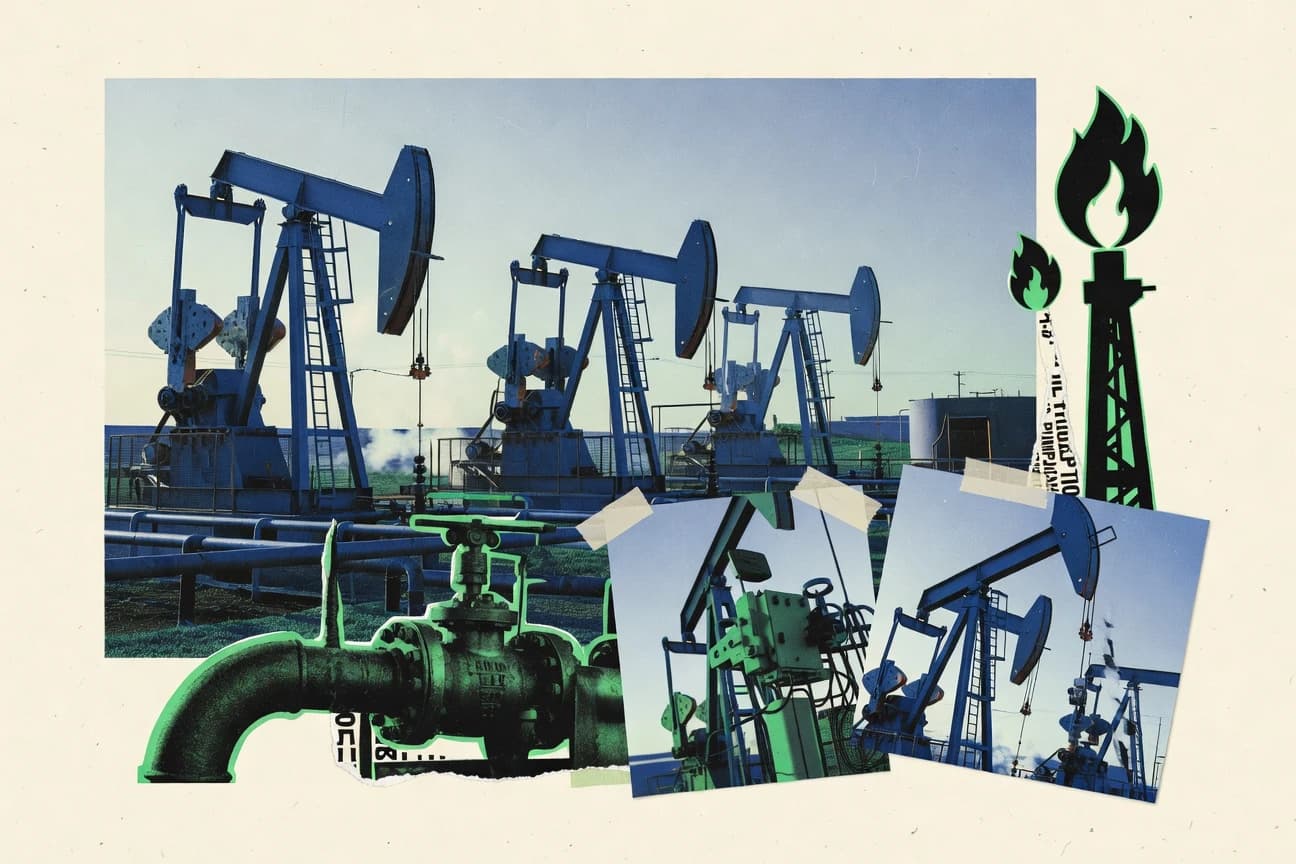

Global oil rig count averaged 772 in Q3 2023, yet the sector is moving under the hood with proven oil reserves of 1,732.4 billion barrels and refined product exports of 28.5 million b/d. At the same time, LNG has become a supply chain in its own right with Asia taking 70% of global LNG trade and total LNG trade volume reaching 404 bcm. This post pulls together the key oil, gas, trade, and financial signals so you can see where demand, flows, and risk are lining up.
Key Takeaways
- Global oil demand averaged 99.7 million b/d in 2022.
- US oil consumption was 20.0 million b/d in 2022.
- China consumed 15.0 million b/d of oil in 2022, up 4.6%.
- Brent crude averaged $100 per barrel in 2022.
- Global upstream oil and gas investment was $533 billion in 2022.
- ExxonMobil reported $55.7 billion net income in 2022.
- Global oil and gas emissions intensity averaged 20 kg CO2e/boed in 2022.
- Methane emissions from oil and gas operations were 120 Mt in 2022 globally.
- US oil and gas flared 1.4 bcf/d in 2022.
- World primary energy consumption from oil was 97.1 million barrels per day in 2022.
- US crude oil production reached a record 12.9 million b/d in 2022.
- Saudi Arabia produced 10.6 million b/d of oil in 2022.
- In 2022, global proven oil reserves stood at 1,732.4 billion barrels, with Venezuela holding the largest share at 303.3 billion barrels.
- Saudi Arabia's proven oil reserves were 267.0 billion barrels as of end-2022, accounting for 15.4% of global total.
- The United States had 47.1 billion barrels of proven oil reserves in 2022, boosted by shale discoveries.
In 2022 global oil demand averaged 99.7 million barrels per day while gas use hit 3,942 bcm.
Related reading
01 · Category
Consumption and Trade29 stats
01
Global oil demand averaged 99.7 million b/d in 2022.
02
US oil consumption was 20.0 million b/d in 2022.
03
China consumed 15.0 million b/d of oil in 2022, up 4.6%.
04
India oil demand grew to 5.0 million b/d in 2022.
05
Europe's oil consumption fell to 13.6 million b/d in 2022.
06
Japan imported 2.8 million b/d of crude oil in 2022.
07
Global natural gas consumption was 3,942 billion cubic meters in 2022.
08
US natural gas consumption hit 85.7 bcf/d in 2022.
09
EU imported 155 billion cubic meters of LNG in 2022.
10
China's gas consumption reached 364 billion cubic meters in 2022.
11
Global seaborne crude oil trade was 41.9 million b/d in 2022.
12
Saudi Arabia exported 7.1 million b/d of crude in 2022.
13
US became net oil exporter with 3.6 million b/d net exports in 2022.
14
Russia exported 7.7 million b/d oil equivalents in 2022.
15
Global LNG trade volume was 404 bcm in 2022.
16
Asia received 70% of global LNG trade in 2022.
17
India imported 5.5 million b/d of crude oil in 2022.
18
South Korea consumed 2.6 million b/d oil in 2022.
19
Global jet fuel demand recovered to 5.8 million b/d in 2022.
20
Gasoline demand worldwide was 25.1 million b/d in 2022.
21
Diesel demand reached 30.8 million b/d globally in 2022.
22
US gasoline consumption averaged 8.8 million b/d in 2022.
23
Europe's gas consumption dropped 12% to 295 bcm in 2022.
24
Japan LNG imports were 65.9 million tonnes in 2022.
25
Global oil product exports totaled 28.5 million b/d in 2022.
26
Middle East supplied 35% of China's crude imports in 2022.
27
Russia supplied 40% of EU pipeline gas before 2022 cuts.
28
Global petrochemical feedstock demand from oil was 15 million b/d in 2022.
29
US net gas exporter with 12 bcf/d LNG exports in 2022.
Interpretation
Consumption and Trade Interpretation
Despite appearing as a story of global rebalancing—with the US exporting, Europe reducing, and Asia voraciously consuming—these numbers ultimately reveal a world still stubbornly and dangerously addicted to fossil fuels.
02 · Category
Economic and Financial29 stats
01
Brent crude averaged $100per barrel in 2022.
02
Global upstream oil and gas investment was $533 billion in 2022.
03
ExxonMobil reported $55.7 billion net income in 2022.
04
Chevron earned $35.5 billion profit in 2022.
05
Shell's adjusted earnings were $42.3 billion in 2022.
06
TotalEnergies net income hit €37.4 billion in 2022.
07
Global oil market revenue reached $3.2 trillion in 2022.
08
OPEC revenues from oil exports were $1.0 trillion in 2022.
09
US shale producers' breakeven price averaged $50-60/bbl in Permian 2023.
10
Global refining margins peaked at $20/bbl crack spread in 2022.
11
Aramco market cap exceeded $2 trillion in 2022.
12
BP returned $23.3 billion to shareholders in 2022.
13
Global LNG market value was $250 billion in 2022.
14
Russia oil export revenues fell 35% to $218 billion in 2023 despite volumes.
15
US oil and gas sector contributed 8% to GDP in 2022.
16
Norway sovereign wealth fund from oil/gas reached $1.5 trillion in 2023.
17
Global capex for oil and gas FIDs was $110 billion in 2022.
18
Average dividend yield for supermajors was 4.5% in 2022.
19
Permian Basin well costs dropped to $6.5 million per well in 2022.
20
Global decommissioning spend projected at $500 billion by 2030.
21
Saudi Aramco free cash flow was $143 billion in 2022.
22
Eni net profit doubled to €5.7 billion in 2022.
23
Occidental Petroleum debt reduced by $4.5 billion in 2022.
24
Global midstream pipeline investments hit $45 billion in 2022.
25
ConocoPhillips generated $18.8 billion cash from operations in 2022.
26
EOG Resources return on capital employed was 25% in 2022.
27
Global oil trader Vitol profit was $15 billion in 2022.
28
Trafigura net profit reached $7.4 billion in 2022.
29
Oil and gas sector M&A deals totaled $180 billion in 2022.
Interpretation
Economic and Financial Interpretation
While Brent crude's wild $100-per-barrel rodeo in 2022 may have made headlines, the staggering $3.2 trillion in global oil revenue, eye-watering profits for supermajors, and a trillion-dollar year for OPEC reveal an industry that, for all its talk of energy transition, was still printing money faster than a Texas wildcatter could drill a $6.5 million Permian well.
03 · Category
Environmental Impact and Sustainability24 stats
01
Global oil and gas emissions intensity averaged 20 kg CO2e/boed in 2022.
02
Methane emissions from oil and gas operations were 120 Mt in 2022 globally.
03
US oil and gas flared 1.4 bcf/d in 2022.
04
Global oil spills from tankers totaled 160,000 tonnes in 2022.
05
Offshore oil production accounts for 30% of global oil but 50% of water use.
06
Natural gas flaring worldwide was 148 bcm in 2022.
07
Permian Basin methane intensity is 1.7% of production.
08
Global CCS capacity in oil/gas sector is 40 MtCO2/year as of 2023.
09
Oil sands production emits 80 kg CO2e per barrel.
10
LNG liquefaction process emits 2-5% methane slip.
11
45% of oil/gas companies have net-zero targets by 2050.
12
Global upstream water intensity for oil is 1 barrel water per barrel oil.
13
Norway's oil/gas emissions intensity is 6 kg CO2e/boed, lowest globally.
14
Shale gas fracturing uses 5-10 million gallons water per well.
15
Global oil/gas sector contributes 15% of anthropogenic methane emissions.
16
Biofuels blended in oil products reached 5.1 million b/d in 2022.
17
Saudi Aramco plans 15 MtCO2/year CCS by 2035.
18
US EPA reported 80% reduction in flaring since 2010.
19
Deepwater Horizon spill released 4.9 million barrels of oil.
20
Global renewable energy investment in oil majors was $3 billion in 2022.
21
Hydrogen production from natural gas reforming is 70 Mt/year globally.
22
Oil and gas rig electrification reduces emissions by 30%.
23
Global Scope 1+2 emissions from oil/gas were 3.5 GtCO2 in 2022.
24
Carbon capture projects in oil/gas numbered 25 operational in 2023.
Interpretation
Environmental Impact and Sustainability Interpretation
It seems the oil and gas industry, while diligently counting its tons of carbon captured, barrels saved, and percentages lowered, still can't quite manage to hide the enormous, messy, and often flammable elephant in the room it has to keep dragging behind it.
More related reading
04 · Category
Production Statistics27 stats
01
World primary energy consumption from oil was 97.1 million barrels per day in 2022.
02
US crude oil production reached a record 12.9 million b/d in 2022.
03
Saudi Arabia produced 10.6 million b/d of oil in 2022.
04
Russia averaged 10.1 million b/d oil production in 2022.
05
Canada produced 4.9 million b/d including oil sands in 2022.
06
Iraq's oil production was 4.5 million b/d in 2022.
07
Global natural gas production hit 4,089 billion cubic meters in 2022.
08
US dry natural gas production reached 1,034 billion cubic feet per day in 2022.
09
Russia produced 617 billion cubic meters of natural gas in 2022.
10
Qatar's LNG production capacity is 77 million tonnes per annum in 2023.
11
Permian Basin produced 5.9 million b/d of oil in Oct 2023.
12
Norway's oil production averaged 1.7 million b/d in 2022.
13
Brazil produced 3.1 million b/d of oil in 2022, mostly offshore.
14
UAE oil production was 3.4 million b/d in 2022.
15
Global LNG production reached 404 billion cubic meters in 2022.
16
Australia produced 147 billion cubic meters of natural gas in 2022.
17
Bakken shale oil production hit 1.2 million b/d in 2023.
18
Global oil production growth was 1.6 million b/d in 2022.
19
Kazakhstan produced 1.8 million b/d of oil in 2022.
20
Nigeria's oil production averaged 1.4 million b/d in 2022.
21
Guyana's oil production ramped to 390,000 b/d in 2023.
22
Global ethane production from natural gas liquids was 3.2 million b/d in 2022.
23
Algeria produced 99 billion cubic meters of natural gas in 2022.
24
Eagle Ford produced 1.1 million b/d oil in 2023.
25
Global oil rig count averaged 772 in Q3 2023.
26
Haynesville shale gas production at 14.5 bcf/d in 2023.
27
China oil production was 4.1 million b/d in 2022.
Interpretation
Production Statistics Interpretation
While the world gulps nearly 100 million barrels of oil daily, it's clear the thirst for fossil fuels remains stubbornly unquenched, as America, Saudi Arabia, and Russia keep the taps flowing to keep our global engine—for better or worse—humming along.
05 · Category
Reserves and Exploration29 stats
01
In 2022, global proven oil reserves stood at 1,732.4 billion barrels, with Venezuela holding the largest share at 303.3 billion barrels.
02
Saudi Arabia's proven oil reserves were 267.0 billion barrels as of end-2022, accounting for 15.4% of global total.
03
The United States had 47.1 billion barrels of proven oil reserves in 2022, boosted by shale discoveries.
04
Canada's oil sands contribute to its 168.1 billion barrels of proven reserves, primarily in Alberta.
05
Iran possesses 208.6 billion barrels of proven oil reserves, ranking fourth globally in 2022.
06
Global proven natural gas reserves reached 6,641 trillion cubic feet in 2022, led by Russia at 1,688 tcf.
07
Qatar holds 842 trillion cubic feet of proven natural gas reserves, primarily in the North Field.
08
The US added 47 billion barrels to its technically recoverable shale oil resources since 2011.
09
Offshore oil exploration in Guyana discovered over 11 billion barrels of recoverable oil since 2015.
10
Brazil's pre-salt layer holds estimated 30 billion barrels of recoverable oil reserves.
11
Namibia's offshore Orange Basin may contain up to 4 billion barrels of light oil equivalent.
12
Arctic regions hold an estimated 90 billion barrels of undiscovered oil resources.
13
Global R/P ratio for oil reserves was 47.5 years at end-2022 based on 2022 production.
14
Permian Basin in Texas and New Mexico has 46.3 billion barrels of technically recoverable tight oil.
15
Eagle Ford Shale contains 8.5 billion barrels of technically recoverable tight oil.
16
Bakken Formation holds 7.4 billion barrels of technically recoverable tight oil resources.
17
Global deepwater oil reserves are estimated at 200 billion barrels recoverable.
18
Mozambique's Rovuma Basin gas reserves exceed 180 trillion cubic feet proven.
19
Australia's Browse Basin has 40 trillion cubic feet of contingent gas resources.
20
Alaska's NPR-A holds 896 million barrels of undiscovered oil.
21
Global oil discoveries in 2022 totaled 4.7 billion barrels, lowest in seven decades.
22
Conventional oil reserves in Middle East exceed 800 billion barrels.
23
Unconventional oil resources worldwide estimated at 430 billion barrels recoverable.
24
Nigeria's deepwater reserves stand at 5 billion barrels recoverable.
25
Angola's Block 17 has produced from 2.2 billion barrels recoverable reserves.
26
Global gas hydrate resources potentially 100,000 tcf equivalent.
27
Permian Basin gas reserves assessed at 299 tcf technically recoverable.
28
Marcellus Shale has 410 tcf of technically recoverable gas.
29
Haynesville Shale contains 75 tcf recoverable gas resources.
Interpretation
Reserves and Exploration Interpretation
The planet is stubbornly sitting on a massive, but unevenly distributed, retirement fund of fossil fuels, yet our recent efforts to find new deposits suggest we're mostly just shuffling papers in the attic instead of building a sustainable future.
Reference
Cite This Report
This report is designed to be cited. We maintain stable URLs and versioned verification dates. Copy the format appropriate for your publication below.
APA
Karl Becker. (2026, February 13). Oil And Gas Industry Statistics. Gitnux. https://gitnux.org/oil-and-gas-industry-statistics
MLA
Karl Becker. "Oil And Gas Industry Statistics." Gitnux, 13 Feb 2026, https://gitnux.org/oil-and-gas-industry-statistics.
Chicago
Karl Becker. 2026. "Oil And Gas Industry Statistics." Gitnux. https://gitnux.org/oil-and-gas-industry-statistics.
Sources & references
36 datasets cited across this report · attribution is report-level