
Malaysia's food and beverage market stands at USD 25.6 billion. Exports total USD 15.7 billion while the sector employs 1.82 million workers. These numbers track shifts in consumer preferences for healthier options and online ordering alongside supply chain costs.
Key Takeaways
- 68% of Malaysian consumers aged 18-34 prefer healthy snacks, driving 14.3% growth in nut-based products in 2023
- F&B industry employed 1.82 million workers in 2023, accounting for 11.5% of total employment
- In 2023, the Malaysia Food and Beverage (F&B) market was valued at USD 25.6 billion, reflecting a 6.2% year-on-year growth driven by rising urban consumption and e-commerce penetration
- Palm oil production for F&B reached 18.5 million tonnes in 2023, supplying 85% of domestic edible oil needs
- Ready-to-eat meals segment grew 15.2% YoY in 2023, capturing 12% market share in packaged foods
Malaysia’s food and beverage industry shows steady growth, supported by rising consumer demand and steady production.
Related reading
01 · Category
Consumer Insights18 stats
01
68% of Malaysian consumers aged 18-34 prefer healthy snacks, driving 14.3% growth in nut-based products in 2023
02
72% of Malaysians dine out at least twice weekly in 2023, with 45% opting for local cuisine like nasi lemak
03
Online food ordering penetration reached 55% among urban millennials in 2023, up from 42% in 2022
04
61% of consumers prioritize halal certification in F&B purchases, rising to 85% among Muslims in 2023 survey
05
Health-conscious spending on low-sugar beverages increased 19.2% in 2023, 52% of Gen Z buyers
06
47% of Malaysians reduced meat consumption in 2023 for environmental reasons, boosting plant-based sales
07
Average household F&B expenditure was MYR 1,200 monthly in 2023, 28% on beverages
08
76% of consumers use apps for F&B deals, with loyalty programs influencing 62% of purchases in 2023
09
Preference for sustainable packaging rose to 58% in 2023, up 15% from 2022 among urban shoppers
10
55% of Malaysians aged 25-40 increased plant-based intake in 2023, per survey of 5,000 respondents
11
Delivery app usage for F&B peaked at 4.2 orders per user monthly in KL in 2023
12
64% prefer local flavors in snacks, with keropok lekor sales up 10%
13
Spending on premium F&B rose 12% among high-income groups (top 20%) to MYR 3,200 monthly in 2023
14
71% of families with children buy fortified cereals, market up 9%
15
Vegetarianism grew to 8% of population in 2023, urban 12%
16
Loyalty to brands like OldTown White Coffee at 48% repeat purchase rate in 2023
17
59% check nutritional labels more frequently post-2022, especially sugars
18
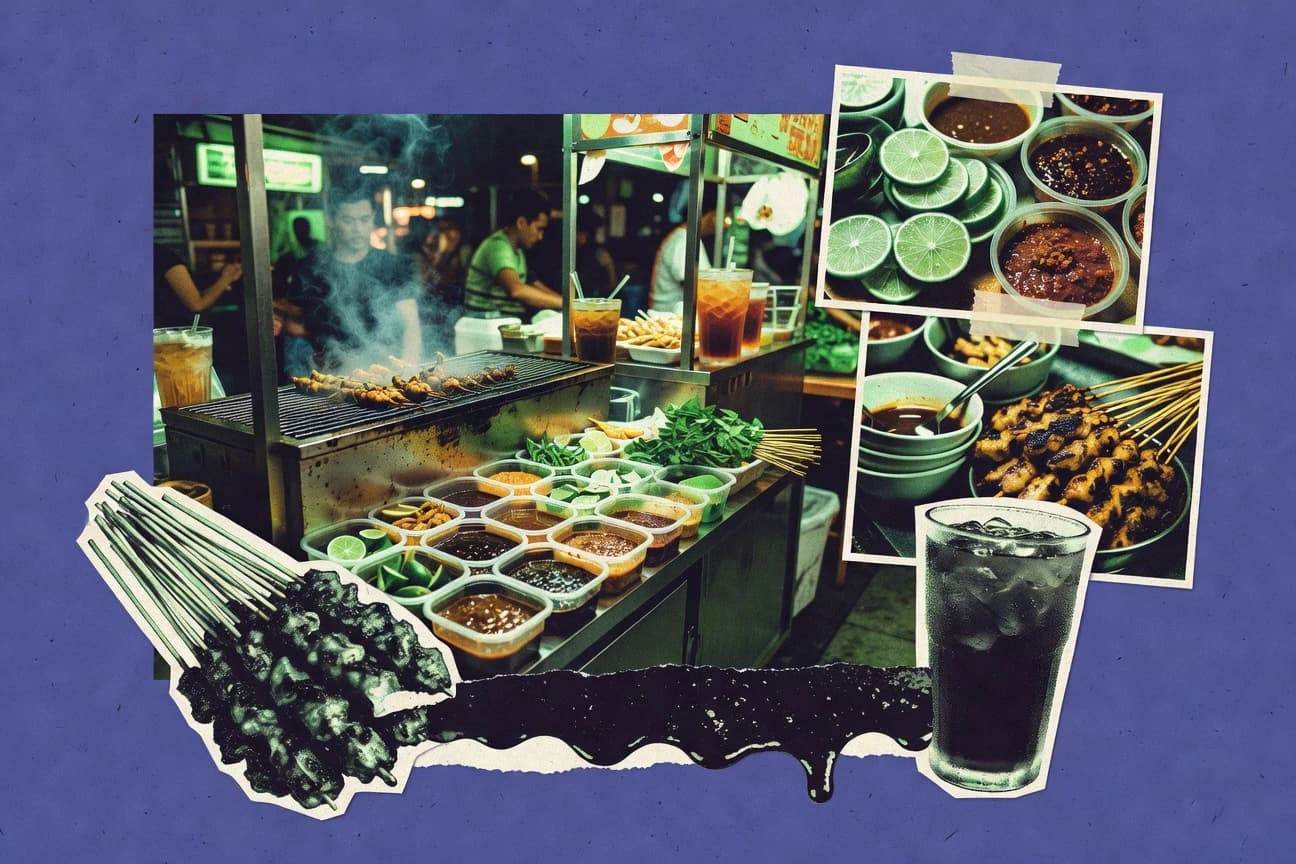
Night market F&B stalls generated MYR 15 billion annually in 2023, 30% cashless
Interpretation
Consumer Insights Interpretation
The Malaysian palate is being reshaped by a savvy, app-wielding generation that devoutly orders its nasi lemak online, scrutinizes sugar content with one hand while reaching for keropok lekor with the other, and is driving a quiet revolution where health, heritage, and halal certification are the new currency at the night market.
02 · Category
Economic Impact and Trade15 stats
01
F&B industry employed 1.82 million workers in 2023, accounting for 11.5% of total employment
02
F&B exports from Malaysia totaled USD 15.7 billion in 2023, up 9.4% YoY, led by palm oil at 60%
03
Imports of F&B products reached USD 12.3 billion in 2023, dairy and wheat dominant at 35% share
04
Trade surplus in F&B was USD 3.4 billion in 2023, with ASEAN markets taking 42% of exports
05
SMEs contributed 45% of F&B GDP value-add in 2023, employing 1.1 million
06
Tourism-related F&B revenue generated MYR 28.5 billion in 2023, 22% recovery to pre-COVID levels
07
Investment in F&B sector FDI inflows were USD 2.1 billion in 2023, 15% from Singapore
08
Tax contributions from F&B firms totaled MYR 8.7 billion in 2023, incentives claimed MYR 1.2B
09
F&B sector generated MYR 45.2 billion in tax revenue in 2023, 6% of national total
10
Palm oil F&B exports to China were USD 4.2 billion in 2023, 28% of total exports
11
Wheat imports for F&B baking totaled 1.8 million tonnes in 2023, 85% from Australia
12
Halal F&B exports grew 11.2% to USD 8.9 billion in 2023, Middle East 35% share
13
F&B tourism multiplier effect was 1.8x in 2023, supporting 250,000 jobs
14
Venture capital in F&B startups reached MYR 1.5 billion in 2023, 40 deals closed
15
Regional trade agreements boosted F&B exports by 7.5% in 2023 under CPTPP
Interpretation
Economic Impact and Trade Interpretation
Malaysia’s F&B sector thrives as a rich stew of palm oil exports and croissant imports, seasoned with halal certification, stirred by SMEs, and served by tourism—proving that while the world may run on wheat and dairy, its economic engine is generously lubricated with cooking oil.
03 · Category
Market Overview and Growth15 stats
01
In 2023, the Malaysia Food and Beverage (F&B) market was valued at USD 25.6 billion, reflecting a 6.2% year-on-year growth driven by rising urban consumption and e-commerce penetration
02
The compound annual growth rate (CAGR) for Malaysia's F&B sector from 2019 to 2023 stood at 5.8%, fueled by post-pandemic recovery and increased demand for convenience foods
03
By 2027, the Malaysia F&B market is projected to reach USD 32.4 billion, with a forecasted CAGR of 6.1% from 2024 onwards, attributed to halal certification expansions
04
In Q4 2023, F&B sales in Malaysia grew by 8.3% compared to Q4 2022, with quick-service restaurants (QSRs) leading at 12.5% growth
05
The online F&B delivery segment in Malaysia expanded by 22.4% in 2023, accounting for 15% of total F&B revenue
06
Malaysia's halal F&B market size reached MYR 98.2 billion (USD 21.5 billion) in 2023, representing 40% of the total F&B market
07
F&B industry contributed 4.2% to Malaysia's GDP in 2023, up from 3.8% in 2022
08
Inflation in Malaysia's F&B sector was 4.1% in 2023, lower than the overall CPI of 4.5%, due to stabilized palm oil prices
09
Number of F&B outlets in Malaysia increased to 850,000 in 2023 from 820,000 in 2022, a 3.7% rise
10
Per capita F&B spending in Malaysia averaged MYR 1,850 (USD 405) in 2023, with urban areas at MYR 2,200
11
In 2023, the non-alcoholic beverage segment held 28% of the total F&B market share in Malaysia, valued at USD 7.2 billion with functional drinks growing at 12.5% CAGR
12
Quick service restaurant (QSR) chains expanded by 450 new outlets in 2023, reaching 5,200 total, driven by KFC and McDonald's
13
The overall F&B inflation rate in Malaysia for 2023 was 3.9%, with rice prices up 5.2% due to global supply issues
14
E-commerce F&B sales via platforms like ShopeeFood hit MYR 4.5 billion in 2023, 18% growth
15
Halal tourism boosted F&B by 14% in 2023, with 12 million Muslim visitors spending avg MYR 850 on food
Interpretation
Market Overview and Growth Interpretation
It seems Malaysians are determined to eat their way to prosperity, with a side of halal certification and a delivery rider at the door, as the F&B industry steadily chews through both meals and economic challenges to become a quarter-trillion-ringgit cornerstone of the national economy.
More related reading
04 · Category
Operational and Supply Chain20 stats
01
Palm oil production for F&B reached 18.5 million tonnes in 2023, supplying 85% of domestic edible oil needs
02
Local sourcing in F&B supply chains covered 67% of ingredients in 2023, rice at 95% self-sufficiency
03
Logistics costs in Malaysia F&B averaged 12.3% of total expenses in 2023, down 2% due to improved highways
04
Cold chain infrastructure expanded to 1.2 million pallet positions in 2023, supporting 25% growth in frozen goods
05
Waste generation in F&B processing was 1.8 million tonnes in 2023, with 45% recycled via composting
06
Automation adoption in F&B manufacturing reached 32% of firms in 2023, reducing labor costs by 18%
07
Water usage per tonne of F&B output averaged 4.2 cubic meters in 2023, with beverage sector at 8.5 m³
08
Halal certification compliance in supply chains hit 92% for exporters in 2023, audited by JAKIM
09
Energy consumption in F&B plants was 15.2 GWh in 2023, with solar adoption at 8% of total
10
Poultry supply chain produced 1.56 billion kg of chicken in 2023, 98% meeting daily demand
11
Rice milling capacity utilization was 88% in 2023, producing 2.2 million tonnes paddy equivalent
12
F&B packaging waste recycled rate improved to 52% in 2023 from 45%
13
Vendor compliance in halal supply chain audits was 89% in 2023, 1,200 firms checked
14
Fruit supply chain yielded 2.8 million tonnes in 2023, durian exports key at 450,000 tonnes
15
Electricity costs for F&B SMEs averaged MYR 0.45/kWh in 2023, rebates saved 12%
16
Digital traceability adopted by 28% of palm oil F&B suppliers in 2023, blockchain pilots
17
Vegetable production hit 1.9 million tonnes in 2023, imports supplemented 15%
18
F&B R&D spending by top firms was MYR 450 million in 2023, 1.2% of revenue
19
Port throughput for F&B imports at Port Klang was 12.5 million TEUs in 2023, 20% reefer
20
Dairy farming output grew to 120,000 tonnes milk in 2023, local share 35%
Interpretation
Operational and Supply Chain Interpretation
While Malaysia's food industry masterfully balances its plates—from near-total self-sufficiency in rice and chicken to a booming, export-driven durian trade—it is simultaneously orchestrating a quiet revolution in logistics, waste, and automation to ensure the feast is both resilient and responsible.
05 · Category
Segment Analysis21 stats
01
Ready-to-eat meals segment grew 15.2% YoY in 2023, capturing 12% market share in packaged foods
02
Beverage market in Malaysia valued at USD 8.7 billion in 2023, with non-alcoholic drinks at 65% share led by bottled water (25%)
03
Instant noodles consumption reached 2.1 billion packs in 2023, up 7.8% from 2022, dominated by brands like Maggi (45% share)
04
Bakery products sales hit MYR 5.6 billion in 2023, with bread accounting for 55% and pastries 30%
05
Dairy products market grew to USD 2.3 billion in 2023, with UHT milk sales up 11.4% YoY
06
Snack foods segment expanded by 9.6% to MYR 4.2 billion in 2023, chips and crisps at 28% share
07
Confectionery sales in Malaysia totaled USD 1.1 billion in 2023, chocolate at 60% with imports from Indonesia at 35%
08
Frozen foods market reached MYR 3.8 billion in 2023, poultry-based at 40% share growing 13.2%
09
Plant-based alternatives sales surged 28.7% to MYR 450 million in 2023, soy milk leading at 35%
10
Coffee market valued at USD 650 million in 2023, ready-to-drink (RTD) coffee up 18.5% YoY
11
Tea consumption averaged 0.85 kg per capita in 2023, total market USD 420 million with black tea at 70%
12
Packaged food segment was 52% of F&B market in 2023 at USD 13.3 billion, convenience driving growth
13
Alcoholic beverages market remained niche at USD 1.2 billion in 2023, 4% of total beverages, beer 70%
14
Seafood processed volume was 1.45 million tonnes in 2023, exports up 11%
15
Edible oils market dominated by palm oil at MYR 25 billion in 2023, 92% local production
16
Functional foods sales grew 16.8% to USD 1.8 billion in 2023, probiotics leading
17
Soft drinks consumption per capita was 65 liters in 2023, carbonated at 40 liters
18
Ready meals market expanded to MYR 2.9 billion in 2023, 20% YoY growth in urban areas
19
Ice cream sales reached USD 280 million in 2023, impulse buys 55%
20
Organic food market valued at MYR 1.2 billion in 2023, 8.5% CAGR, fruits 30% share
21
Energy drinks segment hit USD 450 million in 2023, 22% growth among youth
Interpretation
Segment Analysis Interpretation
Malaysians are increasingly living life at a sprint, fueling up on grab-and-go noodles, sipping bottled water for virtue, splurging on chocolate for comfort, and cautiously dipping a toe into plant-based milk, all while dreaming of a fresh-baked pastry they're too busy to actually sit down and enjoy.
Reference
Cite This Report
This report is designed to be cited. We maintain stable URLs and versioned verification dates. Copy the format appropriate for your publication below.
APA
Margot Villeneuve. (2026, February 13). Malaysia Food And Beverage Industry Statistics. Gitnux. https://gitnux.org/malaysia-food-and-beverage-industry-statistics
MLA
Margot Villeneuve. "Malaysia Food And Beverage Industry Statistics." Gitnux, 13 Feb 2026, https://gitnux.org/malaysia-food-and-beverage-industry-statistics.
Chicago
Margot Villeneuve. 2026. "Malaysia Food And Beverage Industry Statistics." Gitnux. https://gitnux.org/malaysia-food-and-beverage-industry-statistics.
Sources & references
59 datasets cited across this report
+1 additional datasets cited (not shown individually)