
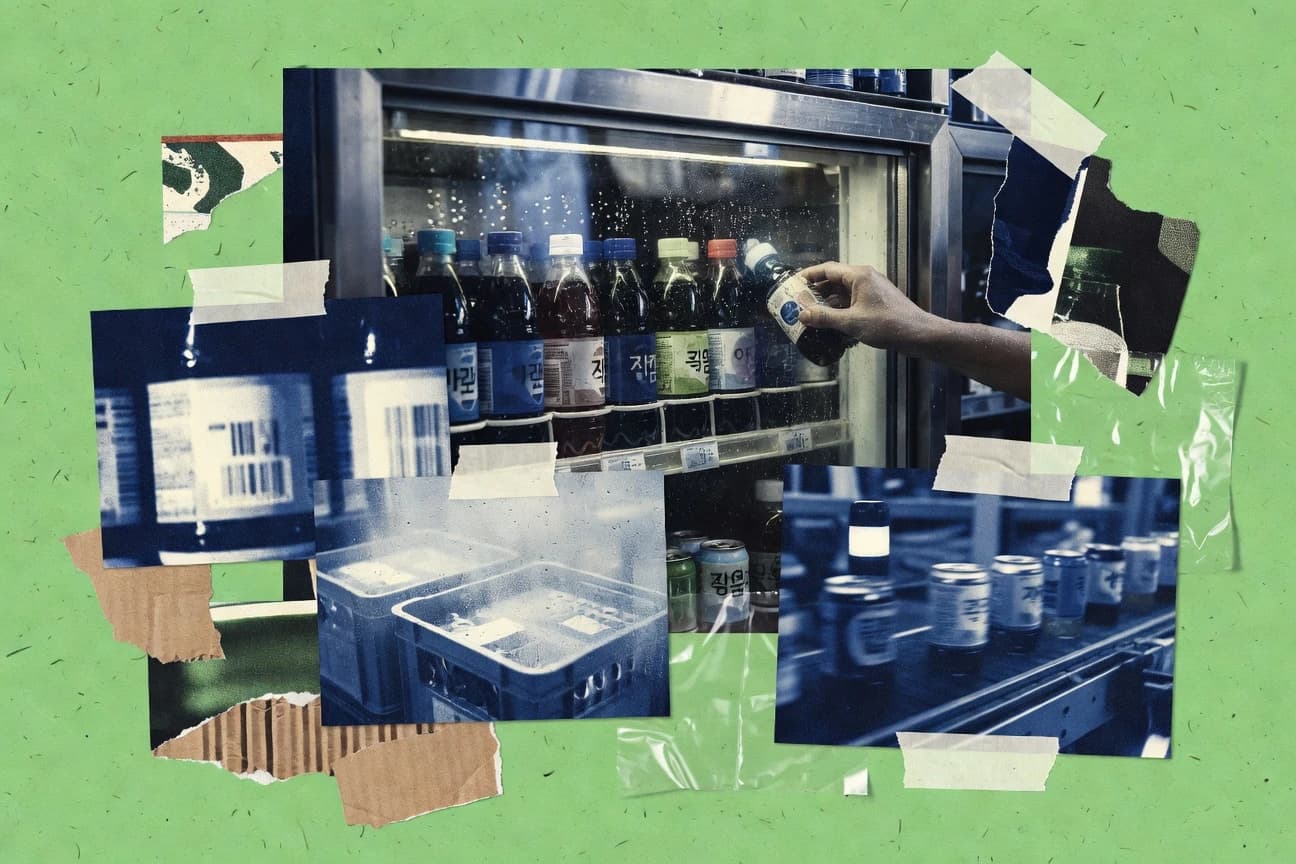

South Koreans check sugar content labels on 82 percent of beverages. Per capita consumption reaches 42.3 liters for soft drinks and 42 liters for bottled water. Market figures reveal simultaneous rises in low-calorie and functional options alongside steady traditional volumes.
Key Takeaways
- 75% of South Korean consumers prefer low-calorie beverages in 2023 surveys
- Per capita soft drink consumption in South Korea was 42.3 liters in 2023
- Lotte Chilsung Beverage held 18.5% market share in carbonated drinks in 2023
- In 2023, the total South Korean beverage market size was valued at 28.5 trillion KRW, reflecting a 4.2% year-over-year growth primarily fueled by non-alcoholic segments
- South Korea produced 15.2 billion liters of carbonated soft drinks in 2023, a 2.8% increase
- South Korea exported beverages worth 1.2 billion USD in 2023, up 8.7%
Korea’s beverage market grew steadily, driven by rising demand for healthier and convenient drinks.
Related reading
01 · Category
Consumer Trends18 stats
01
75% of South Korean consumers prefer low-calorie beverages in 2023 surveys
02
62% of millennials opt for functional beverages daily in 2023, health benefits key
03
Sustainable packaging influenced 58% purchase decisions in 2023 beverage market
04
Flavored sparkling water popularity rose 34% among Gen Z in 2023
05
41% increase in plant-based beverage trials by consumers in 2023
06
Online delivery apps drove 25% of beverage purchases in 2023 urban areas
07
Zero-sugar variants accounted for 45% of soft drink choices in 2023
08
Craft beer interest among 25-34 year olds: 52% tried in past year 2023
09
Health halo drove 68% preference for natural ingredient drinks in 2023
10
82% of consumers check sugar content labels on beverages in 2023
11
Subscription box services for premium teas grew 40% user base 2023
12
Mood-boosting beverages like adaptogen drinks up 35% interest 2023
13
55% prefer Korean heritage drinks like omija in modern formats 2023
14
Vending machine smart tech boosted impulse buys by 19% 2023
15
67% of parents choose fortified kids' beverages in 2023 surveys
16
Exotic fruit flavors like yuzu drove 27% trial rate increase 2023
17
Home infusion kits for beverages gained 12% household penetration 2023
18
Cross-category hybrids like coffee-beer up 22% buzz in 2023
Interpretation
Consumer Trends Interpretation
The Korean beverage market has become a fascinating paradox of health-conscious asceticism and hedonistic curiosity, where consumers fervently count sugar grams on labels while gleefully exploring coffee-beer hybrids and exotic yuzu flavors.
02 · Category
Consumption Patterns19 stats
01
Per capita soft drink consumption in South Korea was 42.3 liters in 2023
02
Bottled water consumption per capita hit 42 liters in 2023, urban areas 55% higher
03
RTD tea consumption volume: 28.4 liters per capita in 2022, women 65% share
04
Energy drink consumption among 20-29 year olds: 15.2 liters per capita annually in 2023
05
Beer consumption per capita declined to 28.5 liters in 2023 from 32 in 2019
06
Soju consumption averaged 90ml per adult weekly in 2023
07
Functional beverage intake: 12.1 liters per capita in 2023, millennials driving 70%
08
Low-sugar beverage consumption rose 22% YoY to 18.7 liters per capita in 2023
09
Coffee consumption per capita: 3.2 cups daily in urban Korea 2023
10
Plant-based milk consumption grew to 5.4 liters per capita in 2023
11
Instant coffee consumption per capita: 2.1 kg annually in 2023
12
Iced beverage consumption peaks at 72% in summer months 2023 surveys
13
Female consumers prefer tea-based drinks at 55% rate in 2023
14
Alcohol-free beer consumption up 28% to 8.5 liters per capita in 2023
15
Convenience store beverage purchases: 65% of total off-trade in 2023
16
Seniors' electrolyte drink intake: 22 liters per capita yearly 2023
17
Bubble tea consumption among teens: 4.5 cups monthly average 2023
18
Organic juice consumption rose 16% to 3.2 liters per capita 2023
19
Nighttime beverage sales (post-8pm): 28% of daily total in 2023
Interpretation
Consumption Patterns Interpretation
South Koreans are navigating a hydration paradox, simultaneously mainlining coffee and energy drinks to power through their days while meticulously swapping soju for soju-flavored sparkling water, all in a delicate dance between caffeinated hustle and wellness-conscious moderation.
03 · Category
Key Players19 stats
01
Lotte Chilsung Beverage held 18.5% market share in carbonated drinks in 2023
02
HiteJinro dominated soju market with 42.3% share in 2023 production volume
03
Oriental Brewery (OB) controlled 52% of beer market in 2023
04
Coca-Cola Korea's sales reached 1.2 trillion KRW in 2023, 15% market share in CSD
05
Amorepacific's RTD tea brand Amore captured 28% segment share in 2023
06
Dong-A Otsuka's Pocari Sweat held 65% sports drink market share in 2023
07
Ilhwa's ginseng beverage line had 35% functional drink share in 2023
08
PepsiCo Korea's revenue from beverages: 850 billion KRW in 2023
09
CJ CheilJedang's Sunny-C orange juice led with 22% fruit juice share in 2023
10
Binggrae held 14.2% in RTD coffee market 2023
11
Ottogi held 19% share in instant noodle-adjacent beverages like broth drinks 2023
12
Pulmuone's soy milk brand led plant-based with 31% share in 2023
13
GS25 convenience chain exclusive beverages generated 500 billion KRW 2023
14
Haitai Beverage's confections-beverage crossover hit 12% RTD share 2023
15
Yakult Korea's probiotic drinks captured 48% market in 2023
16
Monster Energy Korea sales: 220 billion KRW in 2023, 2nd to Hot6
17
Paris Croissant's RTD Americano line grew 25% share to 11% 2023
18
Lotte Pepsi's Mirinda brand revived with 8% CSD youth share 2023
19
Nongshim's Shin Ramyun flavored drinks niche 15% share 2023
Interpretation
Key Players Interpretation
The Korean beverage market is a fiercely competitive kingdom where soju and beer crown their respective rulers, while a caffeinated, probiotic, and ginseng-fueled court of niche contenders jostle for a loyal sip of the throne.
More related reading
04 · Category
Market Overview19 stats
01
In 2023, the total South Korean beverage market size was valued at 28.5 trillion KRW, reflecting a 4.2% year-over-year growth primarily fueled by non-alcoholic segments
02
The functional beverage segment in South Korea grew by 7.8% in 2022 to reach 1.2 trillion KRW, driven by health-conscious consumers
03
South Korea's bottled water market volume hit 2.1 billion liters in 2023, up 5.1% from previous year due to premiumization trends
04
Energy drink sales in Korea surged 12.3% in 2023 to 450 billion KRW, led by youth demographics
05
The RTD tea market in South Korea was valued at 3.8 trillion KRW in 2022, with 6.5% CAGR projected to 2027
06
Overall non-alcoholic beverage consumption per capita in Korea reached 85.4 liters in 2023
07
Alcoholic beverage market share in total beverages stood at 22.7% in 2023, valued at 6.5 trillion KRW
08
Premium beverage segment grew 9.1% YoY in 2023 to 4.2 trillion KRW
09
E-commerce beverage sales accounted for 18.4% of total market in 2023, up from 12% in 2020
10
Low/no alcohol beer market expanded to 1.1 trillion KRW in 2023, 15.2% growth
11
In 2023, Korea's beverage market CAGR was projected at 5.3% to 2028 reaching 35 trillion KRW
12
Non-carbonated soft drinks market size: 12.4 trillion KRW in 2023, 6.1% growth
13
Alcoholic ready-to-drink (RTD) market valued at 950 billion KRW in 2023
14
Sparkling water market expanded to 850 billion KRW in 2023, 18% YoY
15
Kombucha and fermented drink market: 120 billion KRW in 2023, niche growth 28%
16
Dairy-based beverages market: 4.1 trillion KRW in 2023, yogurt drinks 40%
17
In Q4 2023, beverage retail sales grew 3.8% amid inflation pressures
18
Vegan beverage segment projected to grow 22% annually to 2027
19
Hyper-local flavors boosted regional beverage sales by 14% in 2023
Interpretation
Market Overview Interpretation
While South Koreans are keeping their Soju tradition alive, the nation's collective fridge tells a more revealing story: it's rapidly filling with water for wellness, tea for calm, and energy drinks for the frantic pace, proving that modern life is now a carefully curated, non-alcoholic performance.
05 · Category
Production Statistics20 stats
01
South Korea produced 15.2 billion liters of carbonated soft drinks in 2023, a 2.8% increase
02
Bottled water production volume reached 2.3 billion liters in 2022, with Jeju water comprising 45%
03
RTD coffee production hit 1.8 billion units in 2023, led by canned formats
04
Fruit juice production totaled 1.1 billion liters in 2023, down 1.2% due to sugar tax
05
Soju production volume was 85 million cases in 2023, HiteJinro leading at 42%
06
Beer production reached 1.45 billion liters in 2023, with craft beer up 8.5%
07
Functional water production grew to 650 million liters in 2022, 11% YoY
08
Tea beverage production was 2.9 billion liters in 2023, green tea dominant at 60%
09
Energy drink production volume: 320 million liters in 2023, imported ingredients 35%
10
Sports drink output reached 450 million liters in 2023, Gatorade-like brands 55%
11
Carbonated fruit drink production: 950 million liters in 2023
12
Makgeolli production volume: 45 million liters in 2023, traditional 70%
13
Canned coffee production: 1.2 billion cans in 2023, PET bottles 25%
14
Electrolyte drink output: 280 million liters in 2023, summer peak 55%
15
Herbal tea production: 750 million liters in 2023, organic variants 18%
16
Wine production (domestic): 12 million liters in 2023, imports dominant
17
Probiotic beverage production grew 19% to 350 million liters in 2023
18
Flavored milk production: 620 million liters in 2023, kids segment 45%
19
Hard seltzer production launched with 50 million liters in 2023
20
Distilled spirits production: 120 million liters pure alcohol equivalent in 2023
Interpretation
Production Statistics Interpretation
It seems South Korea is collectively running on canned coffee, staying hydrated with Jeju's finest, drowning their existential dread in soju, and carefully sidestepping anything that triggers the sugar tax.
06 · Category
Trade and Exports20 stats
01
South Korea exported beverages worth 1.2 billion USD in 2023, up 8.7%
02
Soju exports reached 120 million liters in 2023, USA top destination at 35%
03
Beer exports grew 15.2% to 250 million USD in 2023, Asia 60% share
04
Bottled water imports from France: 150 million liters in 2023, Evian leading
05
RTD tea exports valued at 300 million USD in 2023, China main market
06
Energy drink imports totaled 80 million USD in 2023, Red Bull 40% share
07
Fruit juice exports up 12% to 180 million USD in 2023, Vietnam key
08
Total beverage imports: 2.8 billion USD in 2023, premium alcohols 50%
09
Ginseng drink exports hit 450 million USD in 2023, 20% YoY growth
10
Craft spirits exports rose 25% to 100 million USD in 2023, USA/Europe focus
11
Beverage exports to Southeast Asia rose 22% to 450 million USD in 2023
12
Imported premium whiskey volume: 45 million liters in 2023, Scotland 60%
13
Makgeolli exports to Japan: 15 million liters in 2023, up 18%
14
Functional water imports from Japan: 90 million liters 2023
15
Beer imports totaled 180 million liters in 2023, Belgium craft 25%
16
RTD cocktail exports: 50 million USD growth to 120 million in 2023
17
Tea imports from China: 350 million USD in 2023, green tea 70%
18
Energy shot imports up 30% to 25 million units in 2023
19
Distilled water for industry exported 200 million liters 2023
20
Hard kombucha imports niche but grew 45% volume in 2023
Interpretation
Trade and Exports Interpretation
While Korea strategically quenches global thirst with spirited exports of soju and craft gin, its own refined palate thirsts for French water and Scotch whiskey, revealing a global trade where everyone is both a gracious host and a discerning guest.
Reference
Cite This Report
This report is designed to be cited. We maintain stable URLs and versioned verification dates. Copy the format appropriate for your publication below.
APA
Stefan Wendt. (2026, February 13). Korea Beverage Industry Statistics. Gitnux. https://gitnux.org/korea-beverage-industry-statistics
MLA
Stefan Wendt. "Korea Beverage Industry Statistics." Gitnux, 13 Feb 2026, https://gitnux.org/korea-beverage-industry-statistics.
Chicago
Stefan Wendt. 2026. "Korea Beverage Industry Statistics." Gitnux. https://gitnux.org/korea-beverage-industry-statistics.
Sources & references
80 datasets cited across this report · attribution is report-level