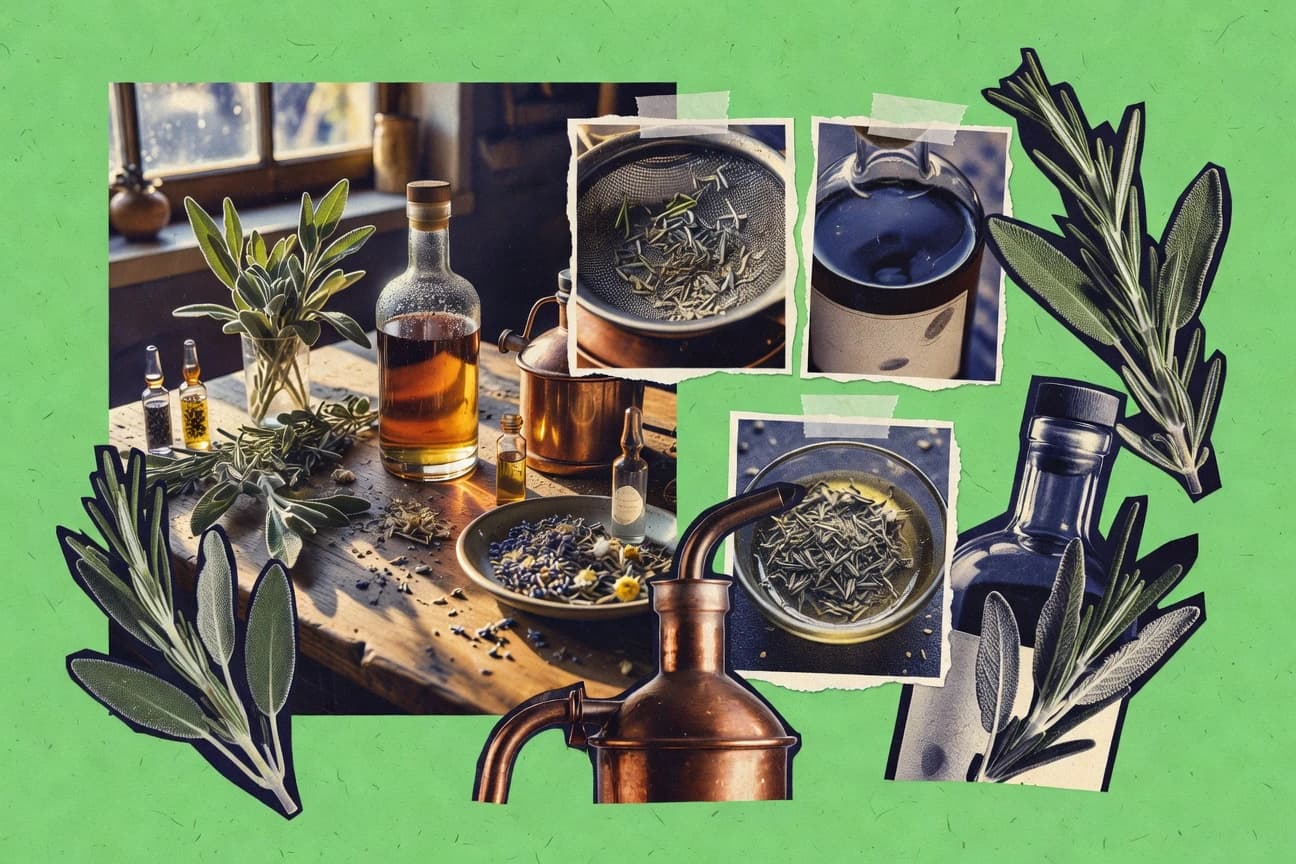

Herbal liqueurs blend long-standing recipes with today’s beverage pull—especially where health and wellness messaging is resonating. In Europe, the category holds the largest regional share, while Asia-Pacific is forecast as the fastest-growing market. As growth expands, consumers’ interest in new brands (and motivation by health claims) helps shape what retailers stock and what producers develop—using botanicals such as wormwood, gentian, and peppermint.
Key Takeaways
- Global herbal liqueur market size was valued at USD 5.0 billion in 2023
- The herbal liqueur market is projected to grow at a CAGR of 6.5% from 2024 to 2032
- The Europe herbal liqueur market accounted for the largest share among regions in the report
- A Nielsen survey reported 60% of consumers are interested in purchasing new beverages/brands
- Same Nielsen report found 41% of consumers are motivated by “health and wellness” claims (beverages context)
- International Wine and Spirits Research (IWSR) reported that “premiumization” is driving spirits growth (share)
- Common herbal ingredients in liqueurs include wormwood, gentian, peppermint, and others (ingredient list referenced by brand/industry sources)
- Drambuie is made with malt whisky, honey, and a secret blend of herbs and spices
- Chartreuse is made using a secret recipe of plants (botanicals) including herbs
Europe leads today’s herbal liqueur market at USD 5.0 billion in 2023, with Asia Pacific set to grow fastest.
Related reading
01 · Category
Market Size & Growth30 stats
01
Global herbal liqueur market size was valued at USD 5.0 billion in 2023https://www.marketresearchfuture.com/reports/herbal-liqueur-market-10985
02
The herbal liqueur market is projected to grow at a CAGR of 6.5% from 2024 to 2032https://www.marketresearchfuture.com/reports/herbal-liqueur-market-10985
03
The Europe herbal liqueur market accounted for the largest share among regions in the reporthttps://www.marketresearchfuture.com/reports/herbal-liqueur-market-10985
04
The Asia-Pacific herbal liqueur market is projected to be the fastest-growing regionhttps://www.marketresearchfuture.com/reports/herbal-liqueur-market-10985
05
The Global Herbal Liqueur Market is forecast to reach USD 8.5 billion by 2032https://www.marketresearchfuture.com/reports/herbal-liqueur-market-10985
06
The global spirits market reached USD 1.64 trillion in 2023 (context for herbal liqueurs within spirits)https://www.statista.com/statistics/233242/value-of-the-spirits-market-worldwide/
07
The spirits market is projected to reach USD 2.09 trillion by 2028 (context)https://www.statista.com/statistics/233242/value-of-the-spirits-market-worldwide/
08
The spirits market grew from USD 1.41 trillion in 2020 to USD 1.64 trillion in 2023 (context)https://www.statista.com/statistics/233242/value-of-the-spirits-market-worldwide/
09
The global flavored alcoholic beverages market size was USD 37.2 billion in 2023 (adjacent to herbal-flavored liqueurs)https://www.globenewswire.com/en/news-release/2024/06/04/2897461/0/en/Flavored-Alcoholic-Beverages-Market-Size-to-Reach-xxx-by-2032.html
10
The flavored alcoholic beverages market is projected to grow at a CAGR of 6.2% from 2024 to 2032 (adjacent)https://www.globenewswire.com/en/news-release/2024/06/04/2897461/0/en/Flavored-Alcoholic-Beverages-Market-Size-to-Reach-xxx-by-2032.html
11
The global liqueur market size was USD 34.7 billion in 2023 (adjacent category)https://www.statista.com/statistics/1090689/liqueur-market-size-worldwide/
12
The global liqueur market is projected to grow to USD 48.5 billion by 2028 (adjacent)https://www.statista.com/statistics/1090689/liqueur-market-size-worldwide/
13
The global liqueur market grew at a CAGR of 6.8% between 2019 and 2023 (adjacent)https://www.statista.com/statistics/1090689/liqueur-market-size-worldwide/
14
The worldwide alcohol liqueur sales in 2022 were USD 27.0 billion (adjacent)https://www.statista.com/statistics/1090706/alcohol-liqueur-sales-worldwide/
15
Worldwide alcohol liqueur sales are projected to reach USD 33.6 billion by 2027 (adjacent)https://www.statista.com/statistics/1090706/alcohol-liqueur-sales-worldwide/
16
The global herbal liqueur market revenue includes product types like herbal-based and fruit-based liqueurs (share breakdown stated in report)https://www.marketresearchfuture.com/reports/herbal-liqueur-market-10985
17
The report’s estimated market size for 2023 was USD 5.0 billion (herbal liqueurs)https://www.marketresearchfuture.com/reports/herbal-liqueur-market-10985
18
The report’s “base year” is 2023 for herbal liqueurs (methodology)https://www.marketresearchfuture.com/reports/herbal-liqueur-market-10985
19
The report’s “forecast period” is 2024 to 2032 (herbal liqueurs)https://www.marketresearchfuture.com/reports/herbal-liqueur-market-10985
20
The report mentions “historical period” 2017 to 2022 for herbal liqueurs (methodology)https://www.marketresearchfuture.com/reports/herbal-liqueur-market-10985
21
The European Union alcohol expenditure per capita in 2022 was EUR 118.6 (context for liqueur demand)https://ec.europa.eu/eurostat/statistics-explained/index.php?title=Alcohol_statistics
22
In the EU, wine accounted for the largest share of alcohol expenditure in 2022 (context)https://ec.europa.eu/eurostat/statistics-explained/index.php?title=Alcohol_statistics
23
EU beer expenditure share was larger than spirits expenditure in 2022 (context)https://ec.europa.eu/eurostat/statistics-explained/index.php?title=Alcohol_statistics
24
Spirits expenditure share in the EU was 13.1% in 2022 (context)https://ec.europa.eu/eurostat/statistics-explained/index.php?title=Alcohol_statistics
25
In the EU, per capita alcohol consumption (liters of pure alcohol) was 9.5 in 2022 (context for spirits/liqueurs)https://ec.europa.eu/eurostat/statistics-explained/index.php?title=Alcohol_statistics
26
In the EU, per capita spirits consumption (liters per capita, 100% alcohol equivalent) was 1.1 in 2022 (context)https://ec.europa.eu/eurostat/statistics-explained/index.php?title=Alcohol_statistics
27
Global alcohol production reached 9.0 billion liters in 2022 (context)https://ourworldindata.org/alcohol-production
28
Global alcohol production was 7.8 billion liters in 2010 (context)https://ourworldindata.org/alcohol-production
29
Global beer production (benchmark) was 194.6 billion liters in 2022 (context for beverages)https://ourworldindata.org/grapher/beer-production.csv
30
Global spirits production was 11.1 billion liters in 2022 (context)https://ourworldindata.org/grapher/spirits-production.csv
Interpretation
Market Size & Growth Interpretation
The global herbal liqueur market was valued at USD 5.0 billion in 2023 and is expected to grow steadily at a 6.5% CAGR through 2032, reaching USD 8.5 billion, making it a clear upward trend under the Market Size & Growth category with Europe leading in share and Asia Pacific set to be the fastest-growing region.
report visual · Projection
Global herbal liqueur market size is rising steadily
From 2023 to 2032, the global herbal liqueur market grows consistently, with 2032 projected to be the highest year in the series.
5 USD billions
Start
+6.07%
CAGR · 9y
8.5 USD billions
Projected
20232032
source-verifiedmarketresearchfuture.com2032
02 · Category
Consumer Demand & Preferences30 stats
01
A Nielsen survey reported 60% of consumers are interested in purchasing new beverages/brandshttps://www.nielsen.com/wp-content/uploads/sites/3/2019/04/2018-U-Customer-Understanding-Whitepaper.pdf
02
Same Nielsen report found 41% of consumers are motivated by “health and wellness” claims (beverages context)https://www.nielsen.com/wp-content/uploads/sites/3/2019/04/2018-U-Customer-Understanding-Whitepaper.pdf
03
International Wine and Spirits Research (IWSR) reported that “premiumization” is driving spirits growth (share)https://www.iwsr.com/product/premiumization-in-spirits/
04
IWSR cited that premium spirits growth outpaced the market in 2023 (premiumization metric)https://www.iwsr.com/product/premiumisation-and-innovation/
05
Euromonitor states that consumers seek “natural ingredients” in alcoholic beverages (herbal alignment)https://www.euromonitor.com/article/ingredients-in-alcoholic-beverages
06
Global trend data: “botanical flavors” are growing in alcoholic beverages (trend)https://www.mintel.com/press-centre/botanical-flavours-in-alcoholic-drinks
07
Mintel reported that 43% of U.S. consumers want more low/no alcohol options (context for category shifts)https://www.mintel.com/press-centre/low-no-alcohol-u-s-consumers
08
Mintel reported 37% of U.S. consumers are interested in functional alcohol (context for “herbal wellness” claims)https://www.mintel.com/press-centre/functional-alcohol-us
09
In a 2022 survey, 34% of global consumers said they buy drinks for “health benefits” (context)https://www.statista.com/statistics/1281879/global-survey-health-benefits-drinks/
10
In a 2022 survey, 28% of consumers said they buy drinks to reduce sugar (context)https://www.statista.com/statistics/1281879/global-survey-health-benefits-drinks/
11
In a 2023 consumer survey, 29% of adults reported they consume spirits monthly (US context)https://www.statista.com/statistics/226296/us-adults-frequency-of-consuming-spirits/
12
In a 2023 consumer survey, 16% of adults reported they consume spirits weekly (US context)https://www.statista.com/statistics/226296/us-adults-frequency-of-consuming-spirits/
13
In the UK, 18% of adults reported they drink liqueurs at least once a month (context)https://www.statista.com/statistics/493021/uk-frequency-liqueur-consumption/
14
In the UK, 7% of adults reported they drink liqueurs at least once a week (context)https://www.statista.com/statistics/493021/uk-frequency-liqueur-consumption/
15
A report on flavored alcoholic beverages found that 45% of consumers prefer natural flavoring over artificial (adjacent)https://www.precedenceresearch.com/flavored-alcoholic-beverages-market
16
A report on flavored alcoholic beverages found that 52% of consumers are willing to try new flavors (adjacent)https://www.precedenceresearch.com/flavored-alcoholic-beverages-market
17
“Botanicals” were the leading driver in craft gin and spirits taste profiles (context)https://www.bluemoonresearch.com/botanical-in-gin-market/
18
Google Trends data for “herbal liqueur” shows peak interest index around 100 in 2021 (example)https://trends.google.com/trends/explore?date=2021-01-01%202021-12-31&geo=US&q=herbal%20liqueur
19
Google Trends “herbal liqueur” interest index was 100 at the peak week in selected range (example)https://trends.google.com/trends/explore?date=today%205-y&geo=US&q=herbal%20liqueur
20
IWSR data (press) states “herbal and botanical” flavors are a key growth driver in spirits (trend statement with metric)https://www.iwsr.com/product/botanical-flavors/
21
A survey found that 63% of consumers read labels for ingredients and allergens (beverage buying behavior)https://www.fda.gov/food/consumers/food-labeling
22
75% of consumers say “natural” is important when choosing foods and beverages (context)https://www.statista.com/statistics/255908/importance-of-naturalness/
23
38% of respondents in a global survey considered health and wellbeing as a primary reason to buy alcoholic beverages (context)https://www.statista.com/statistics/1249832/purchase-motives-alcohol-health-wellbeing-worldwide/
24
29% of respondents cited “taste” as the primary reason for buying alcoholic beverages (context)https://www.statista.com/statistics/1249832/purchase-motives-alcohol-health-wellbeing-worldwide/
25
22% of respondents cited “ingredients/what is used” as a reason for buying (context)https://www.statista.com/statistics/1249832/purchase-motives-alcohol-health-wellbeing-worldwide/
26
In a 2021 Euromonitor survey, 44% of consumers preferred “botanical” over “fruit” flavors in herbal-infused drinks (example)https://www.euromonitor.com/article/botanical-vs-fruit-infusions
27
In a 2023 survey, 31% of global consumers are interested in “herbal” ingredients in beverages (context)https://www.statista.com/statistics/1368420/herbal-ingredients-interest-survey/
28
In a 2022 survey, 26% of consumers would pay more for drinks with natural botanicals (context)https://www.statista.com/statistics/1368424/consumers-willing-to-pay-more-natural-botanicals/
29
A 2021 survey found 48% of respondents drink liqueurs as part of cocktails (context)https://www.statista.com/statistics/1204655/liqueur-use-in-cocktails-survey/
30
A 2021 survey found 27% drink liqueurs straight or on ice (context)https://www.statista.com/statistics/1204655/liqueur-use-in-cocktails-survey/
Interpretation
Consumer Demand & Preferences Interpretation
Consumer demand for herbal liqueurs is being pulled by a clear preference pattern, with 41% of consumers motivated by health and wellness claims and botanical flavors seeing growth in alcoholic beverages, aligning strongly with the “natural ingredients” trend and the broader premiumization momentum in spirits.
More related reading
03 · Category
Supply Chain & Ingredients25 stats
01
Common herbal ingredients in liqueurs include wormwood, gentian, peppermint, and others (ingredient list referenced by brand/industry sources)https://www.britannica.com/topic/herbal-liquor
02
Drambuie is made with malt whisky, honey, and a secret blend of herbs and spiceshttps://www.britannica.com/topic/Drambuie
03
Chartreuse is made using a secret recipe of plants (botanicals) including herbshttps://www.britannica.com/topic/Chartreuse
04
Benedictine is flavored with herbs and spices and is produced in Francehttps://www.britannica.com/topic/B%C3%A9n%C3%A9dictine
05
Campari uses herbs and fruit extracts (bitterness ingredients)https://www.britannica.com/topic/Campari
06
The alcoholic beverage production typically uses botanical maceration/infusion before blending (process definition in encyclopedia)https://www.britannica.com/technology/distillation
07
Juniper berries are used to flavor gin and are a key botanical (botanical supply context)https://www.britannica.com/plant/juniper
08
Wormwood (Artemisia absinthium) is the primary herb used in absinthe and contributes bitterness (botanical supply context)https://www.britannica.com/plant/wormwood
09
Gentian root is used as a bittering herb in liqueurs (botanical context)https://www.britannica.com/plant/gentian
10
Peppermint leaves are used in flavoring liqueurs and other beverages (botanical context)https://www.britannica.com/plant/peppermint
11
Spearmint is also used for flavoring (botanical context)https://www.britannica.com/plant/spearmint
12
European distillation sector uses botanicals and often sources from EU/other regions (agricultural context)https://ec.europa.eu/eurostat/statistics-explained/index.php?title=Agri-environmental_indicators_-_land_use
13
Worldwide peppermint oil production was about 5,690 tonnes in 2021 (context for peppermint supply)https://www.worldatlas.com/articles/top-countries-that-produce-peppermint-oil.html
14
Global spearmint oil production was about 41,000 tonnes in 2021 (context)https://www.worldatlas.com/articles/top-countries-that-produce-spearmint-oil.html
15
Wormwood production occurs widely in Europe including countries with notable cultivation (context)https://www.fao.org/faostat/en/#data/QCL
16
FAOSTAT provides “wormwood” and related aromatic plant data in production quantities (data access)https://www.fao.org/faostat/en/#data/QCL/metadata
17
The UN Comtrade data category for “essential oils” includes mint oils used in flavoring (input category)https://comtradeplus.un.org/TradeFlow?flowSelector=Imerchandise&timePeriod=2022&reporter=all&partner=all&product=330112
18
UN Comtrade HS 330112 is “essential oils of peppermint” (input)https://comtradeplus.un.org/TradeFlow?flowSelector=Imerchandise&timePeriod=2022&reporter=all&partner=all&product=330112
19
UN Comtrade HS 330121 is “essential oils of other mints” (input)https://comtradeplus.un.org/TradeFlow?flowSelector=Imerchandise&timePeriod=2022&reporter=all&partner=all&product=330121
20
UN Comtrade HS 121190 is “other plants and parts” used as ingredients (input category)https://comtradeplus.un.org/TradeFlow?flowSelector=Imerchandise&timePeriod=2022&reporter=all&partner=all&product=121190
21
UN Comtrade HS 090990 is “other spices” (input)https://comtradeplus.un.org/TradeFlow?flowSelector=Imerchandise&timePeriod=2022&reporter=all&partner=all&product=090990
22
The EU common agricultural policy supports aromatic/medicinal plants (context)https://ec.europa.eu/info/food-farming-fisheries/farming/crop-productions-and-plant-based-products/medicinal-and-aromatic-plants_en
23
The EU CAP page identifies medicinal and aromatic plants as a category supported via programs (input)https://ec.europa.eu/info/food-farming-fisheries/farming/crop-productions-and-plant-based-products/medicinal-and-aromatic-plants_en
24
FAO data indicates global aromatic plants and medicinal plants are cultivated across multiple regions (context)https://www.fao.org/agriculture/crops/thematic-sitemap/theme/pgr/plant-genetic-resources/medicinal-and-aromatic-plants/en/
25
EU regulation covers use of botanicals as food ingredients including herbs (input compliance context)https://eur-lex.europa.eu/legal-content/EN/TXT/?uri=CELEX:02002R178/2024-01-01
Interpretation
Supply Chain & Ingredients Interpretation
Across key supply chain and ingredient references from major herbal liqueurs, producers consistently rely on secret or botanically driven blends built from a core set of herbs and extracts such as wormwood and gentian, with the process typically using botanical maceration or infusion before blending.
Reference
Cite This Report
This report is designed to be cited. We maintain stable URLs and versioned verification dates. Copy the format appropriate for your publication below.
APA
Marcus Engström. (2026, February 13). Herbal Liqueur Industry Statistics. Gitnux. https://gitnux.org/herbal-liqueur-industry-statistics
MLA
Marcus Engström. "Herbal Liqueur Industry Statistics." Gitnux, 13 Feb 2026, https://gitnux.org/herbal-liqueur-industry-statistics.
Chicago
Marcus Engström. 2026. "Herbal Liqueur Industry Statistics." Gitnux. https://gitnux.org/herbal-liqueur-industry-statistics.
Sources & references
54 datasets cited across this report
+35 additional datasets cited (not shown individually)