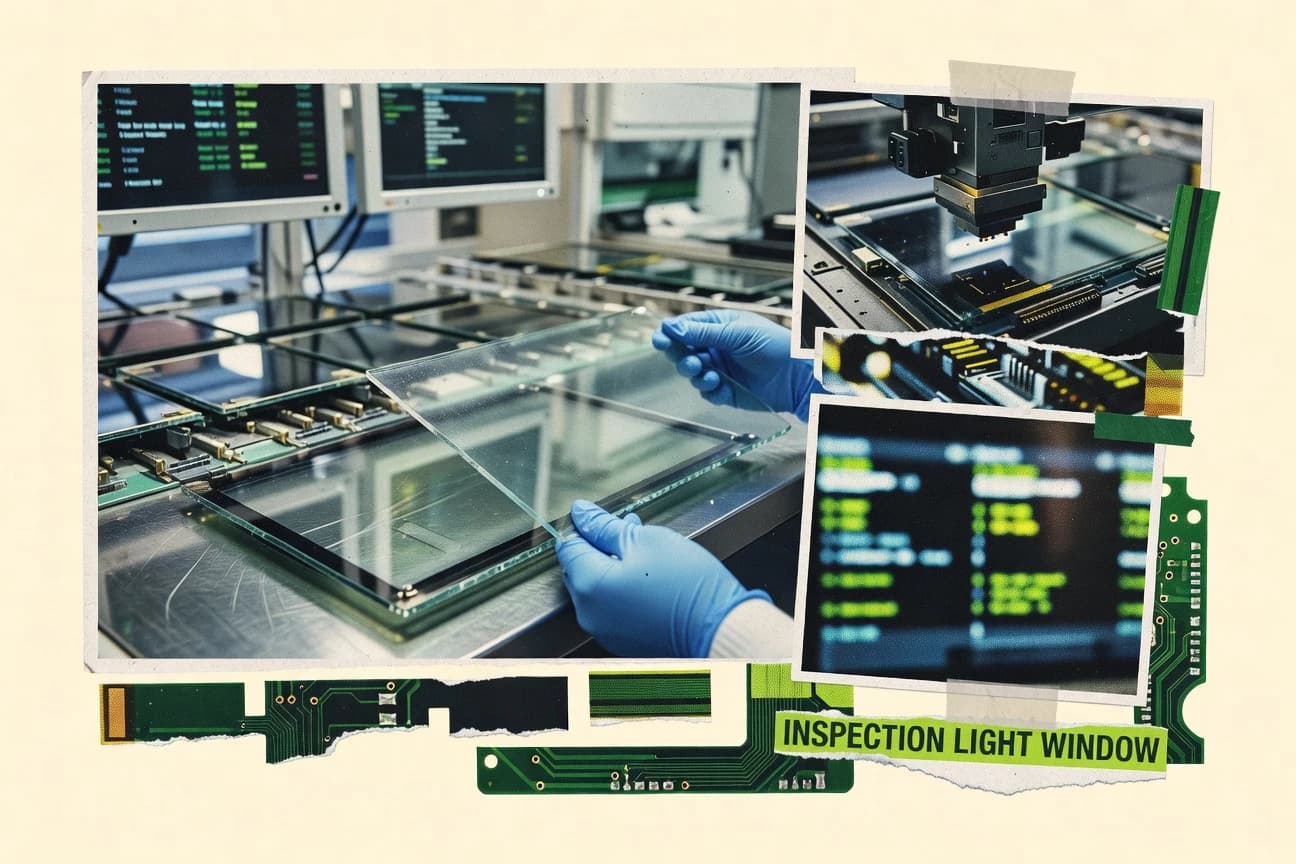

01 Industry overview
The display panel industry at a glance
The display panel industry reached approximately $72 billion for panels of nine inches or larger in 2025, while Chinese manufacturers held 63% of that market by revenue amid continued LCD scale expansion and OLED adoption.
- $72B[15]
- Large-panel market, 2025
- 910.5M[60]
- Large-area shipments, 2025
- 63%[15]
- China large-panel share, 2025
- 35.0%[60]
- BOE shipment share, 2025
- Market size
- The market for display panels measuring nine inches or larger generated approximately $72 billion in 2025, up from approximately $71 billion in 2024. Separately, the OLED panel market generated $52 billion in 2025, compared with $81 billion for TFT-LCD panels.[15]
- Forecast & CAGR
- One industry forecast estimates the global display panel market at $172.73 billion in 2026 and $210.68 billion in 2031, implying a 4.05% CAGR from 2026 to 2031. Omdia forecasts large-area unit shipments to reach approximately 0.94 billion units in 2026, up from 0.91 billion in 2025.[61]
- Market share & regions
- Chinese manufacturers accounted for 63% of the revenue market for panels of nine inches or larger in 2025, followed by Korea at 18%, Taiwan at 15% and Japan at 4%. For large-area LCD shipments, China was forecast to account for 66.7% in 2025, compared with 21.9% for Taiwan and 8.0% for Korea.[15][60]
- Segmentation
- OLED sales volume reached 1.063 billion units in 2025, compared with 2.526 billion TFT-LCD units. Small-sized mobile panels represented approximately 83% of global OLED panel revenue in 2025, making smartphones and other mobile devices the largest OLED application segment.[15]
- Key players & concentration
- The large-area market is concentrated among a small group of Asian manufacturers. BOE was expected to lead 2025 large-area shipments with a 35.0% share, followed by China Star at 15.8% and Innolux at 11.3%; LG Display reported a 13.4% revenue share for large-sized panels in 2025.[60][15]
- Pricing
- Average selling prices for panels of nine inches or larger declined approximately 4% year over year, from about $80 in 2024 to $76 in 2025. Panels smaller than nine inches declined approximately 3%, from about $23 to $22, reflecting intensified competition and manufacturing cost reductions.[15]
- Trends, drivers & challenges
- Large-area panel shipments grew 2.9% year over year to 910.5 million units in 2025, while shipment area benefited from continued migration toward larger screen sizes. Key challenges include overcapacity, cyclical demand, aggressive pricing by Chinese producers and restructuring by Korean and Japanese LCD suppliers.[60][15]
- Consumer behavior & competition
- Competition is centered on product specifications, price, availability, capacity allocation, reliability and customer support. OLED adoption is expanding beyond smartphones into televisions, monitors, tablets, notebooks, wearables, automotive displays and AR/VR products, while LCD remains the dominant flat-panel technology.[15]
- Regulation
- In the European Union, Regulation (EU) 2019/2021 applies ecodesign requirements to televisions, computer monitors and digital signage displays, while Regulation (EU) 2019/2013 establishes energy-label requirements. The rules include energy-use limits, repair and spare-parts requirements, information availability and an A-to-G efficiency label.[62][63]
- Latest news
- Omdia reported in January 2026 that 2025 large-area display shipments reached 910.5 million units, up 2.9% year over year. The company also identified BOE as the expected shipment leader with a 35.0% share, while noting that pricing pressure from Chinese panel makers caused some non-Chinese suppliers to reduce monitor LCD production.[60]
02 Ranking
Top 10 Companies in the Display Panel Industry
The leading companies in the display panel industry, ranked on market impact, performance, momentum, innovation and brand popularity.
Updated November 11, 2026 · Next review December 11, 2026
LG Display leads Gitnux's 2026 display panel ranking with an Overall score of 9.0, with OLED products accounting for 61% of 2025 revenue. TCL CSOT is the runner-up at 8.9, with 11 panel production lines and service across large, medium and small markets.
Ranked by Overall score · How we score ↓
Editor's top 3 picks
Where to start, by need.
#1 Overall · Leader in OLED and LCD panels
LG Display
KR
Ranked #1 · 9.0 · OLED and LCD panels
Why we picked it: It sells OLED and LCD panels, with 2025 revenue weighted toward OLED products at 61%.
#2 overall
TCL CSOT
CN
Ranked #2 · 8.9 · OLED and LCD panels
Why we picked it: Its LCD, OLED and Mini LED portfolio runs on 11 panel production lines feeding multiple market sizes.
Leader in electrophoretic ePaper
E Ink
TW
Ranked #4 · 8.8 · Electrophoretic ePaper
Why we picked it: Its electrophoretic ePaper panels saw 2025 revenue reach a record level as adoption expanded.
Pick 1 is the #1 company overall. Pick 2 is the highest-ranked company in the top 5 that adds a new segment; no further segment places in the top 5, so pick 3 follows rank.
Full ranking
| # | Company | Overall ↓ | Impact | Company snapshot |
|---|---|---|---|---|
| 1 | LG Display OLED and LCD panels · KR | 9.0 | 9.9 | |
Company snapshot · LG Display · Data as of November 11, 2026 OLED products accounted for 61% of LG Display's 2025 revenue.[2]
| ||||
| 2 | TCL CSOT OLED and LCD panels · CN | 8.9 | 9.7 | |
Company snapshot · TCL CSOT · Data as of November 11, 2026 TCL CSOT operates 11 panel production lines and serves large, medium and small display markets.[64]
| ||||
| 3 | Samsung Display OLED and LCD panels · KR | 8.8 | 9.5 | |
Company snapshot · Samsung Display · Data as of November 11, 2026 Samsung Display supplies OLED, QD-OLED and other panels for smartphones, laptops, monitors and TVs.[27]
| ||||
| 4 | E Ink Electrophoretic ePaper · TW | 8.8 | 9.5 | |
Company snapshot · E Ink · Data as of November 11, 2026 E Ink generated record 2025 revenue as ePaper adoption expanded across consumer, retail and commercial displays.[65]
| ||||
| 5 | AUO OLED and LCD panels · TW | 8.6 | 8.8 | |
Company snapshot · AUO · Data as of November 11, 2026 AUO reported 2025 revenue of NT$281.4 billion and operates a display-centric solutions business.[29]
| ||||
| 6 | HKC LCD, OLED and integrated display solutions · CN | 8.4 | 8.2 | |
Company snapshot · HKC · Data as of November 11, 2026 HKC manufactures advanced display panels and operates multiple large-generation LCD production lines.[66]
| ||||
| 7 | Tianma Microelectronics Small and medium LCD and AMOLED panels · CN | 8.4 | 8.2 | |
Company snapshot · Tianma Microelectronics · Data as of November 11, 2026 Tianma designs, manufactures and sells display devices for mobile, automotive, industrial and consumer applications.[67]
| ||||
| 8 | Visionox AMOLED and flexible OLED panels · CN | 8.4 | 8.2 | |
Company snapshot · Visionox · Data as of November 11, 2026 Visionox develops and mass-produces AMOLED panels for consumer electronics, automotive and industrial applications.[68]
| ||||
| 9 | Japan Display Small and medium LCD and OLED display devices · JP | 8.1 | 7.4 | |
Company snapshot · Japan Display · Data as of November 11, 2026 Japan Display researches, manufactures and sells display devices and related components.[69]
| ||||
| 10 | Sharp IGZO, LTPS and automotive display panels · JP | 7.5 | 7.0 | |
Company snapshot · Sharp · Data as of November 11, 2026 Sharp is restructuring its display business around automotive, mobile, XR and industrial applications.[70]
| ||||
How we score
- Impact (30%): scale and weight in the market (revenue, market share, employees, market position).
Popularity (brand search demand, 15%) counts toward Overall but is not published as a column. Overall leaves out what is not known.
Scale Scores are shown on a 7–10 scale with one decimal; bars start at 7.0.
Cadence Recalculated when new figures are published; next review December 11, 2026.
Independence. Rankings are editorially independent. Scores, ranks, picks and the verdict follow the method above; no company can pay to change them.
Cite this ranking
APA
Sophie Moreland. (2026, February 13). Top 10 companies in the display panel industry. In Display Panel Industry Statistics. Gitnux. https://gitnux.org/display-panel-industry-statistics/#top-companies
03 Trends & forecasts
Top 10 Display Panel Industry Trends & Forecasts 2027
What is changing in the display panel industry, with the evidence behind each trend and a forecast for 2027.
Forecasts were generated by an AI model from the cited evidence. They are estimates, not guarantees.
01Large-area shipments grow slowly
Medium confidenceLarge-area display shipments reached 910.5 million units in 2025, up 2.9% year over year. Omdia later forecast total shipments at 916.9 million units in 2026, implying only modest near-term expansion.[60]
Forecast 2027: Shipments should reach roughly 925–940 million units in 2027, with growth driven mainly by OLED and selected IT and automotive applications rather than broad-based consumer demand.
02LCD shipments contract in 2026
High confidenceLarge-area LCD shipments were estimated at 876.8 million units in 2025, but Omdia forecast a 3.0% decline to 878.1 million units in 2026 while total display shipments also weakened in the second half of the year.[60]
Forecast 2027: LCD unit shipments are likely to decline slightly again in 2027, probably by 1–3%, as replacement demand and low-cost televisions offset continued substitution by OLED in premium products.
03Large-area OLED adoption accelerates
High confidenceLarge-area OLED shipments were estimated at 33.7 million units in 2025, up 12.9% year over year. Omdia forecast 38.8 million units in 2026, an 18.8% increase, led by monitors and notebook PCs.[60]
Forecast 2027: Large-area OLED shipments should exceed 45 million units in 2027, representing roughly 15–20% growth, as panel costs improve and OLED expands further into monitors, notebooks and tablets.
04IT OLED capacity ramps up
High confidenceSamsung Display and BOE began mass production at Gen 8.6 IT OLED fabs in mid-2026, with production focused on notebook panels. Omdia forecast notebook OLED shipments to increase 66.0% in 2026.[60]
Forecast 2027: Gen 8.6 capacity should materially increase notebook and monitor OLED availability in 2027, placing downward pressure on premium OLED prices while broadening OEM adoption.
05OLED tablets gain momentum
Medium confidenceOmdia forecast OLED tablet panel shipments to grow 39% year over year to 15 million units in 2026, while LCD tablet shipments were expected to remain approximately stable.[60]
Forecast 2027: OLED tablet shipments should approach 19–21 million units in 2027, supported by premium tablets and new OLED product launches, although LCD will remain dominant by volume.
06OLED monitors move mainstream
High confidenceOmdia estimated that OLED monitor shipments grew 69.3% year over year in 2025. Its 2026 forecast also called for monitor OLED shipments to increase 34.0%, making monitors one of the fastest-growing large-area OLED applications.[60]
Forecast 2027: Monitor OLED shipments should continue growing by roughly 25–35% in 2027, driven by gaming, high-refresh-rate and professional displays, while average prices gradually decline.
07China extends supply dominance
High confidenceChinese manufacturers accounted for approximately 63% of 2025 revenue for panels measuring nine inches or larger. BOE alone was expected to hold a 35.0% share of 2025 large-area shipments, followed by China Star at 15.8%.[60]
Forecast 2027: China’s share should remain near two-thirds of large-area panel shipments in 2027, with incremental gains possible in OLED and IT panels as new capacity reaches commercial scale.
08Supplier concentration remains high
High confidenceThe three leading suppliers—BOE, China Star and Innolux—were expected to account for 62.1% of total large-area display shipments in 2025. BOE’s 35.0% share was more than twice China Star’s 15.8% share.[60]
Forecast 2027: Concentration should remain high in 2027, although Samsung Display and BOE may gain share in OLED while Taiwan-based suppliers retain stronger positions in selected LCD niches.
09Panel prices remain under pressure
High confidenceAverage selling prices for panels of nine inches or larger fell approximately 4% in 2025, from about $80 to $76, while smaller panels declined about 3%. Omdia also cited aggressive Chinese pricing as a reason non-Chinese suppliers reduced monitor LCD production.[60]
Forecast 2027: Prices should remain structurally soft in 2027, with LCD ASPs likely declining again and OLED price reductions accelerating as new IT capacity improves utilization and yield.
10Screen sizes continue increasing
Medium confidenceLarge-area shipment growth in 2025 was accompanied by continued migration toward larger screen sizes, increasing shipment area even when unit growth was moderate. This supports demand for larger televisions, monitors and commercial displays.[60]
Forecast 2027: The industry should continue shifting toward larger average panel sizes in 2027, particularly in televisions and gaming monitors, raising area demand faster than unit demand.
04 Statistics
Technology & Innovation
Automation and AI inspection show measurable production impact, including 95% of Stemco’s inspection volume handled by AI in 2026 and 400,000–500,000 product-inspection photos for training.
AI in the display panel industry
- 400,000–500,000 product-inspection photographs were used to train Stemco’s AI defect-inspection system in South Korea.[1]
- 4.8% of LG Display’s FTE workforce completed next-generation core-technology training in 2024, covering OLED and other advanced display technologies.[2]
- 10 AI-based manufacturing problem-solving projects were completed through LG Display’s AI Meister Program in 2024.[2]
- 88% was the reduction in Stemco’s display-component inspection time after AI adoption in South Korea.[1]
- 95% of inspection volume at South Korea’s Stemco display-component plant was handled by AI in 2026, leaving 5% for worker inspection.[1]
Automation in the display panel industry
- 99% was the reported accuracy of AI detection for general chip defects in an electronics inspection system serving display-related manufacturing.[3]
- 1 hour was the traditional inspection time for one display-panel-related nickel-plate cavity before automated optical inspection was introduced.[4]
- 70% was the first-pass yield achieved by conventional optical character verification, compared with 90% using AI methods in electronics inspection applicable to display manufacturing.[3]
- More than 95% of inspection volume at Stemco’s South Korean display-component plant was automated through AI-assisted inspection in 2026.[1]
- 88% was the reduction in Stemco’s inspection time after automating display-component defect inspection with AI in South Korea.[1]
Digital Transformation in the electronics and semiconductors sector (sector benchmark)
- Across semiconductor companies surveyed globally, 56% reported that IT was fully aligned with transformation priorities in 2024.[5]
- Across the electronics industrial ecosystem, 33% of companies had a concrete digital-transformation strategy in 2024, based on an enterprise survey.[6]
- Across semiconductor companies surveyed globally, 12% reported fully automated processes supported by advanced analytics in 2024.[5]
- Across semiconductor companies surveyed globally, 75% reported having some automated processes in 2024.[5]
Technology Adoption in the electronics and semiconductors sector (sector benchmark)
- Across the electronics industrial ecosystem, 4.98% of companies had adopted robotics in 2024.[7]
- Across EU enterprises, 59% reached at least a basic level of digital intensity in 2023, including 91% of large enterprises and 58% of SMEs.[8]
- Across the electronics industrial ecosystem, 22.73% of companies had adopted edge computing in 2024.[7]
- Across the electronics industrial ecosystem, 31.43% of companies had adopted artificial intelligence in 2024.[7]
Cloud Computing in the electronics and semiconductors sector (sector benchmark)
- Among EU small and medium-sized enterprises, 44% purchased cloud-computing services in 2023.[8]
- Across EU enterprises, 45.2% purchased cloud-computing services in 2023.[8]
- Among large EU enterprises, 78% purchased cloud-computing services in 2023.[8]
- Across the electronics industrial ecosystem, 26.89% of companies had adopted cloud computing in 2024.[7]
Big Data in the electronics and semiconductors sector (sector benchmark)
- Across EU enterprises, 14% used big-data analysis in 2020, the latest comparable EU-wide figure reported by the European Commission.[7]
- Across the electronics industrial ecosystem, 11.43% of companies had adopted big-data technologies in 2024.[7]
- Among large EU enterprises, 34% carried out big-data analysis in 2020.[7]
- Among small EU enterprises, 13% carried out big-data analysis in 2020.[7]
- Among medium-sized EU enterprises, 21% carried out big-data analysis in 2020.[7]
IoT in the electronics and semiconductors sector (sector benchmark)
05 Statistics
Data & Analytics
Budgets and adoption signals point to data-integration constraints; SCREEN Group estimates the display-production-equipment market at US$6.7B in 2026 and US$9.9B in 2024.
Data analytics in the display panel industry
- US$14.4 billion was the estimated global display-production-equipment market size in 2025, according to SCREEN Group analysis.[9]
- US$3.8 billion was the estimated global display-production-equipment market size in 2023, according to SCREEN Group analysis.[9]
- US$6.7 billion was the estimated global display-production-equipment market size in 2026, according to SCREEN Group analysis.[9]
- US$9.9 billion was the estimated global display-production-equipment market size in 2024, according to SCREEN Group analysis.[9]
- 21% was the forecast compound annual growth rate for the global display-production-equipment market from 2023 to 2026, based on SCREEN Group marketing analysis.[9]
Data Quality in the electronics and semiconductors sector (sector benchmark)
- 40% of manufacturing leaders, across sectors including electronics, said their organizations were falling behind competitively because they were not adopting automation requiring high-quality data in 2024.[10]
- 98% of manufacturing leaders, including electronics-related industries, reported operational data problems in a 2024 survey of 500 respondents; global manufacturing scope.[10]
- 46.4% of manufacturing organizations reported having a process to verify raw-data accuracy or quality before decisions were made, in a 2023 survey.[11]
- 49% of supply-management organizations rated their data quality as good or excellent in the 2024 Institute for Supply Management survey.[12]
- 70% of electronics-industry professionals manually validate and optimize bills of materials without real-time intelligence, according to a 2024 global survey.[13]
- 60% of electronics-industry survey respondents manually pulled data for a sourcing event for two weeks or more in 2024, indicating substantial data-preparation effort.[13]
Data Governance in the electronics and semiconductors sector (sector benchmark)
- 56% of semiconductor companies reported full alignment between IT and transformation priorities in Deloitte’s survey, up from 37% in 2021; semiconductor-industry scope.[5]
- 12% of semiconductor respondents reported fully automated processes with advanced analytics, a governance-relevant indicator of enterprise data integration, in the 2024 study.[5]
- 61% of supply-management organizations reported having a dedicated data-governance function in the 2024 Institute for Supply Management survey.[12]
- 54% of supply-management organizations reported giving data top priority, while 90% agreed that data governance was necessary, in a 2024 survey.[12]
- 47% of supply-management organizations said their data-governance program was useful in the 2024 Institute for Supply Management survey.[12]
- 81% of supply-management data-governance functions were housed in a center of excellence in the 2024 Institute for Supply Management survey.[12]
KPIs in the display panel industry
- 18% was the 2025 revenue share of Korean manufacturers in the global display-panel market for panels at least nine inches.[14]
- 16% was LG Display’s global revenue share for display panels smaller than nine inches in 2025, according to Omdia data cited in its filing.[15]
- 15% was the 2025 revenue share of Taiwanese manufacturers in the global display-panel market for panels at least nine inches.[14]
- 63% was the 2025 revenue share of Chinese manufacturers in the global display-panel market for panels at least nine inches.[14]
- 4% was the 2025 revenue share of Japanese manufacturers in the global display-panel market for panels at least nine inches.[14]
- 101.3 million display panels at least nine inches were sold by LG Display in 2025 worldwide.[15]
06 Statistics
Strategy & Growth
OLED mix change remains central, with smartphone OLED-panel market forecast at 0.81 billion units in 2024 and OLED panels expected to be 55.3% of smartphone panels in 2024.
Growth in the display panel industry
- The smartphone OLED-panel market was forecast at 0.81 billion units in 2024, up from 0.61 billion units in 2023.[16]
- The large-display-panel market was expected to reach 0.88 billion units in 2024, up from 0.81 billion units in 2023.[16]
- AUO’s Mobility Solution and Vertical Solution businesses accounted for 25% and 14% of consolidated revenue respectively in 2024, supporting its diversification strategy beyond display panels.[17]
- OLED panels were expected to represent 55.3% of smartphone panels in 2024, up from 42.7% in 2023.[16]
- Samsung Display shipped 378 million smartphone panels in 2024, ranking second globally.[18]
- BOE shipped 613 million smartphone panels in 2024, ranking first among the five largest smartphone-panel makers.[18]
Differentiation in the display panel industry
- LG Display held 17.5% of the 2025 first-half large-display-panel market for IT products by revenue, compared with 19.1% in 2024.[2]
- LG Display held 12.9% of the 2025 first-half large-display-panel market by revenue across television and IT products.[2]
- LG Display held 9.9% of the 2025 first-half television-panel market by revenue, compared with 14.1% in 2024.[2]
- AUO identified Micro LED and high-definition, high-refresh-rate, energy-efficient, privacy-protected and touch-integrated notebook displays as high-value technologies in 2024.[17]
Mergers and acquisitions in the display panel industry
- BOE acquired HC SemiTek in October 2023 to expand into Mini LED and Micro LED technology and LED display chips.[19]
- AUO agreed to acquire German automotive-component maker BHTC for €600 million in October 2023.[19]
- Approximately nine corporate mergers and acquisitions occurred in the display industry in 2023, according to LEDinside’s industry survey.[19]
- Counterpoint Research acquired Display Supply Chain Consultants in 2024, adding display-market research capabilities to its Display 360 division.[20]
Strategic partnerships in the display panel industry
- AUO stated that it would cooperate with international partners on value innovation and share rewards with shareholders, investors, employees, customers, government and society in 2024.[17]
- BOE and Hisense formed a strategic collaboration spanning upstream and downstream display-industry activities in 2023.[19]
- Samsung Electronics reported that its OLED display portfolio served foldable products, tablets, watches, laptops and automotive applications in 2024.[16]
- JOLED partnered with U.S.-based Rosen Aviation and Germany-based AERQ in 2020 for aviation-display applications.[21]
07 Statistics
People & Workforce
Workforce training and engagement figures track execution capacity, including 2,902 employees completing LG Display’s next-generation core-technology training in 2024.
Hiring in the display panel industry
- 2 employees who had won LG Display-supported Campus Patent Universiade competitions joined LG Display in 2022.[22]
- 10 outstanding university teams were selected and supported by LG Display through the Campus Patent Universiade in 2022.[22]
- 14,259 members belonged to LG Display’s domestic labor union as of December 2024, representing 55.2% of domestic employees.[2]
Employee retention in the display panel industry
- 83.5% of LG Display’s domestic employees gave positive responses in the company’s employee-well-being assessment in 2024.[2]
- 99.9% was the average union-membership rate at LG Display’s six overseas manufacturing bases in 2024.[2]
- 100% of LG Display’s 1,542 Fresh Talk employee posts received a response within the company’s stated seven-day target in 2024.[2]
Remote Work in the electronics and semiconductors sector (sector benchmark)
- Globally, 6% of surveyed employees were fully remote, working in the office fewer than one day per week, in 2025.[23]
- Across computer and electronics manufacturing, 12.4% of positions were fully remote in the United States in 2024.[24]
- In the United States, 33% of surveyed employees had a hybrid arrangement in 2025, defined as working in the office one to four days weekly.[23]
- Globally, employees averaged 3.74 days per week in the office in 2025, indicating limited fully remote work across surveyed organizations.[23]
Hybrid Work in the electronics and semiconductors sector (sector benchmark)
- Across manufacturing, 45% of surveyed employees had hybrid working arrangements in 2025, defined as one to four days per week in the office.[23]
- Globally, 44% of surveyed employees had hybrid working arrangements in 2025, defined as one to four days per week in the office.[23]
- Across computer and electronics manufacturing, 49.9% of positions were fully hybrid in the United States in 2024.[24]
- Globally, 74% of respondents approved of fully flexible hybrid work policies in 2025.[23]
Upskilling in the display panel industry
- KRW298,000 was LG Display’s average training expenditure per employee in 2024.[2]
- 31 expert-led group-coaching sessions were conducted by LG Display to support employee career development in 2024.[2]
- 2,902 employees completed LG Display’s next-generation core-technology training in 2024.[2]
- 2.33 million cumulative employee training hours were recorded by LG Display in 2024.[2]
- 10.8% was the year-on-year increase in LG Display’s training time per employee in 2024.[2]
Employee Engagement in the electronics and semiconductors sector (sector benchmark)
- 91% was KLA’s 2025 employee-engagement survey response rate across its global semiconductor workforce.[25]
- 81.2 points was United Microelectronics Corporation’s 2025 overall work-engagement index, compared with a semiconductor-industry norm of 76 points.[25]
- 78.9% was ASML’s 2025 employee engagement score, measured as a three-year rolling average across its global semiconductor-industry workforce.[26]
- 65% of employees at Powerchip Semiconductor Manufacturing were actively engaged in 2025, based on an employee engagement survey covering the company’s workforce.[25]
- 80% was Micron’s FY2024 employee engagement and satisfaction score from its global Micron Voice survey.[25]
DEI in the display panel industry
- 15% is LG Display’s 2030 target for women in managerial positions.[2]
- 4 of Samsung Display’s production facilities in Korea received Platinum Zero Waste to Landfill validation in 2021.[27]
- 35% is LG Display’s 2030 target for women in STEM-related roles.[2]
- 15% is LG Display’s 2030 target for women in revenue-generating management roles.[2]
- 4 Samsung Display worksites underwent RBA inspections from 2021; three received Platinum status and one received Silver.[27]
Change Management in the electronics and semiconductors sector (sector benchmark)
- Across semiconductor companies worldwide, 30% of senior leaders said their organizations lacked a clear AI strategy in 2025.[28]
08 Statistics
Customer & Sales
Customer-rating metrics emphasize operational consistency, with AUO Display Business Group customers rating after-sales service satisfactory at 100% in 2024.
Customer experience in the display panel industry
- 99% of surveyed AUO Display Business Group customers rated product quality satisfactory in 2024.[29]
- 97.13% was AUO Display Business Group’s weighted customer-satisfaction result in 2022, based on five satisfaction dimensions.[29]
- 100% of surveyed AUO Display Business Group customers rated product efficiency satisfactory in 2024.[29]
- 100% of surveyed AUO Display Business Group customers rated after-sales service satisfactory in 2024.[29]
- 98.14% was AUO Display Business Group’s weighted customer-satisfaction result in 2023, based on five satisfaction dimensions.[29]
09 Statistics
Marketing & Brand
Demand-generation measurement is tied to digital reach, including 1.76 million households reached by LG Display’s connected-TV campaign for its OLED brand.
Digital marketing in the display panel industry
- 4% was the increase in brand awareness generated by LG Display’s connected-TV campaign for its OLED brand.[30]
- 1.76 million households were reached by LG Display’s data-driven connected-TV campaign for its OLED brand.[30]
- 2.3% was the increase in ad recall generated by LG Display’s connected-TV campaign for its OLED brand.[30]
Branding in the display panel industry
Influencer Marketing in the electronics and semiconductors sector (sector benchmark)
- 91% of Snapchatters in Saudi Arabia consider influencer or creator reviews more authentic and trustworthy than traditional reviews for electronics, in 2025.[32]
- 88% of Snapchatters in Saudi Arabia consider creators’ social-media recommendations as trustworthy as recommendations from friends and family for electronics, in 2025.[32]
- 64% of technology marketers globally reported dedicated and growing budgets for creator or influencer marketing in Nielsen’s 2026 survey.[33]
- 5% of technology marketers globally reported dedicated but shrinking creator or influencer budgets in Nielsen’s 2026 survey.[33]
- 27% of technology marketers globally reported dedicated but flat creator or influencer budgets in Nielsen’s 2026 survey.[33]
10 Statistics
Operations & Execution
Shipment volumes and product mix drive throughput planning, including 101.3 million display panels of at least nine inches sold by LG Display in 2025.
Process optimization in the display panel industry
- 18% was the 2024 revenue growth of AUO’s Mobility Solution Business Group excluding BHTC, versus 6–7% annual growth for the automotive-display market.[25]
- 101.3 million display panels of at least nine inches were sold by LG Display in 2025.[15]
- 16% was LG Display’s global revenue share of panels smaller than nine inches in 2025, according to OMDIA.[15]
- 13% was LG Display’s global revenue share of panels at least nine inches in 2025, according to OMDIA.[15]
Quality management in the display panel industry
- 19.1% of LG Display’s first-nine-month 2025 revenue came from television panels.[2]
- 8.7% of LG Display’s first-nine-month 2025 revenue came from automotive panels.[2]
- 60 inches was the size of AUO’s high-transparency Micro LED display showcased in 2024.[29]
- 30 inches was the size of AUO’s true 3D Micro LED display recognized with a Gold Panel Award in 2024.[29]
- 37.3% of LG Display’s first-nine-month 2025 revenue came from IT-product panels.[2]
Supply chain in the display panel industry
- 21% was the 2024 revenue share of Korean manufacturers in the global market for display panels at least nine inches.[15]
- 5% was the 2024 revenue share of Japanese manufacturers in the global market for display panels at least nine inches.[15]
- 58% was the 2024 revenue share of Chinese manufacturers in the global display-panel market for panels at least nine inches.[15]
- 16% was the 2024 revenue share of Taiwanese manufacturers in the global market for display panels at least nine inches.[15]
Outsourcing / Offshoring in the electronics and semiconductors sector (sector benchmark)
- Approximately 60% of global semiconductor assembly, test and packaging was outsourced in 2022, while under 2% was performed in the United States.[34]
- Over 80% of surveyed integrated device manufacturers used external production for some front-end fabrication in 2022, with foundries receiving an average 19.6% of product revenue.[34]
- Just 2.8% of foundational chips used by surveyed U.S. manufacturers came from Chinese-owned foundries in January 2024, although over two-thirds of respondents’ products contained at least one such chip.[35]
- China- and Taiwan-based outsourced semiconductor assembly and test providers commanded roughly 80% of the global OSAT market in 2022.[5]
- U.S. semiconductor firms outsourced 1.5% of their total chip output to China-based foundries in January 2024, according to a Bureau of Industry and Security survey.[35]
11 Statistics
Finance & Pricing
Pricing pressure shows up in average selling prices, with large-panel ASP down 4% year over year to $76 in 2025 and smaller panels down 3% to $22.
Pricing strategy in the display panel industry
- US$1,056 per square meter was LG Display’s panel average selling price in the second quarter of 2025.[2]
- 3% was the 2025 year-over-year decline in the average selling price of panels smaller than nine inches.[2]
- US$22 was the 2025 average selling price of display panels smaller than nine inches, down from US$23 in 2024.[2]
- US$1,365 per square meter was LG Display’s panel average selling price in the third quarter of 2025.[2]
- 4% was the 2025 year-over-year decline in the average selling price of panels at least nine inches.[2]
Cost reduction in the display panel industry
- 4% was the decrease in South Korean display-panel backlight-unit market prices by September 2024.[2]
- US$147.085 million was AUO’s 2024 impairment loss on long-term display-segment assets with extremely low capacity utilization.[25]
- 2.5% was LG Display’s decrease in average revenue per square meter from 2023 to 2024.[15]
- 5% was the decrease in South Korean display-panel PCB market prices by September 2024.[2]
- 5% was the decrease in South Korean display-panel driver-IC market prices by September 2024.[2]
Profitability in the display panel industry
Financial planning in the display panel industry
- US$63 billion was the 2025 global market revenue for display panels smaller than nine inches, according to OMDIA.[2]
- US$72 billion was the 2025 global market revenue for display panels at least nine inches, according to OMDIA.[2]
- US$4.615 billion is the forecast South Korean display-panel imports for 2026.[37]
- US$21.095 billion was South Korean display-panel exports in 2024.[37]
- US$19.326 billion is the forecast South Korean display-panel exports for 2026.[37]
12 Statistics
Product & Service
Material cycle and IP scale appear as operational levers, including BOE’s 16 panel production lines and one line under construction plus over 70,000 usable patents.
Product development in the display panel industry
- Over 70,000 usable patents were held by BOE, whose display business operated 16 panel production lines and one additional line under construction.[38]
- Approximately 140 million flexible OLED panels were shipped by BOE in 2024 worldwide, its best annual shipment result at that time.[38]
- 3%–5% of revenue was spent annually on R&D by Winstar Display for TFT, OLED and smart-display product development, Taiwan.[39]
- More than 100,000 patent applications had been independently filed by BOE by 2024, with over 90% classified as invention patents.[38]
- 7% of operating revenue was invested in R&D by BOE in 2024, China, supporting new display technologies and products.[38]
Product lifecycle in the display panel industry
- Around 10,000 tonnes of flat-panel displays were recycled in Switzerland in 2019, up from approximately 4,000 tonnes in 2010.[40]
- Approximately 80% of 56.7 million used Bridge FPCs were collected by Samsung Display in 2022, with 36% reused.[41]
- 1,360 tonnes of plastic were saved over three years after Samsung Display reduced annual flexible-OLED tray use from 7.02 million in 2021 to 2.89 million in 2024.[27]
- 60%–80% of flat-panel display material was returned to the material cycle through the Swiss Swico recycling system, according to 2022 batch tests.[42]
- 40%–60% of plastic volume from flat-panel displays could be recycled in the Swiss recycling system, depending on flame-retardant additives.[42]
Value proposition in the display panel industry
- 84% of global OLED-panel revenue came from small-sized mobile-device panels in 2024, according to Omdia data cited by LG Display.[43]
- US$64 billion was the 2024 global market revenue for display panels smaller than nine inches, up from US$57 billion in 2023.[43]
- US$23 was the average selling price of display panels smaller than nine inches in 2024, up approximately 10% from US$21 in 2023 globally.[43]
- US$1.479 billion was LG Display’s 2025 automotive-display-panel revenue, representing 8.3% of total company revenue.[15]
- US$54 billion was global OLED-panel market revenue in 2024, compared with US$7 billion in 2012.[43]
13 Statistics
Sustainability & Ethics
Energy and waste metrics are tracked at site and product level, including LG Display converting 39% of total site electricity to renewable energy as of 2024.
Sustainability in the display panel industry
- Automotive display products developed by AUO consumed more than 20% less energy in 2024 than in 2021.[17]
- 3.8 million energy-saving custom-specification automotive display products were shipped by AUO in 2024 worldwide.[17]
- 25 new automotive display projects adopted AUO AmLED technology in 2024.[17]
- 14.43 million energy-efficient custom-specification display products were shipped by AUO in 2024 worldwide.[17]
- LG Display converted 39% of total site electricity consumption to renewable energy as of 2024.[43]
ESG in the display panel industry
- TCL CSOT’s 2023 verified greenhouse-gas emissions totaled 24,956,815 tonnes of CO2e.[44]
- Scope 3 represented 82% of TCL CSOT’s verified greenhouse-gas emissions in 2023.[44]
- Twenty companies in TCL Technology’s production-oriented group had achieved ISO 50001 certification by the end of 2024.[44]
- LG Display’s 2024 ESG report covered 10 prioritized ESG issues identified through a double-materiality assessment.[2]
- TCL CSOT’s 2023 greenhouse-gas inventory covered the company and 10 subsidiary companies.[44]
Ethics in the display panel industry
- LG Display conducted four company-wide training sessions during 2024 to prevent sexual harassment and workplace bullying.[43]
- LG Display required department leaders to sign a workplace sexual-harassment and bullying prevention pledge in 2024.[43]
- LG Display conducted human-rights impact assessments covering 18 sites in 2023.[43]
- LG Display expanded its human-rights assessment from 78 to 140 assessment items in 2024.[43]
- LG Display provided annual human-rights training to all employees, including overseas-office employees, in 2024.[43]
CSR in the display panel industry
- TCL CSOT required 100% of new suppliers to be screened against group procurement and CSR standards in 2024.[45]
- LG Display held quarterly human-rights-management committee meetings for 11 domestic in-house suppliers in 2024.[43]
- TCL Technology recorded 4,578 participants in supplier training in 2024 after recalculating the reported figure.[44]
- TCL Electronics’ communication subsidiary ranked in the top 5% of all companies participating in the EcoVadis 2024 assessment.[25]
- LG Display provided supplier-management training to 58 companies and 5,634 participants in 2025.[43]
Circular economy in the display panel industry
- TCL Technology revised its reported total recycled packaging volume for 2024 to 17,818 tonnes.[44]
- TCL CSOT achieved a 98.3% waste-recycling and conversion rate in 2024.[45]
- LG Electronics reported a 97.4% waste-recycling rate across domestic and overseas sites in 2024, including display products within its electronics portfolio.[46]
- TCL CSOT achieved a 97.6% water-recycling rate in 2024.[45]
- LG Display reported a 95.2% reuse rate for reusable packaging components in 2024.[47]
Carbon footprint in the display panel industry
- TCL CSOT reduced NF3 consumption from 0.99 kg per wafer to 0.65 kg per wafer at its Wuhan base in 2024.[44]
- TCL CSOT saved 168 tonnes of NF3 through its Wuhan process improvements in 2024.[44]
- LG Display’s 2024 location-based Scope 2 emissions were 3,803,415 tonnes of CO2e globally.[43]
- TCL CSOT’s Wuhan process improvements reduced indirect carbon emissions by 3,951 tonnes in 2024.[44]
- LG Display’s 2024 Scope 1 emissions were 1,270,716 tonnes of CO2e globally.[43]
14 Statistics
Risk, Compliance & Legal
Controls and documentation remain compliance-relevant, including ISO 14067:2018 carbon-footprint calculation for a 12.9-inch panel in 2024 and 29% embedding supply-chain risk management in planning.
Compliance in the display panel industry
- TCL Technology reported that all production-oriented legal entities had obtained ISO 14064 certification by the end of 2024.[44]
- TCL CSOT calculated the carbon footprint of a 12.9-inch display panel in compliance with ISO 14067:2018 in 2024.[44]
- LG Display had six sites worldwide certified to ISO 45001 occupational-health-and-safety standards in 2025.[43]
- LG Display’s 2024 ESG report was prepared with reference to GRI Standards 2021, SASB and TCFD recommendations.[48]
- TCL CSOT’s 2023 greenhouse-gas inventory received 100% ISO 14064-1 verification coverage.[44]
Risk Management in the electronics and semiconductors sector (sector benchmark)
- 82.7% of supply-chain survey respondents reported using business-continuity planning as a risk-management practice in 2024.[49]
- 29% of global semiconductor survey respondents said supply-chain risk management was embedded in strategic planning, capital allocation and other business processes in 2022.[50]
- 35% of global semiconductor executives identified supply-chain disruption as one of the industry’s three biggest issues over the next three years in 2025.[51]
- 57% of global semiconductor executives said their companies were taking specific supply-chain de-risking measures in 2025, while 14% were not de-risking at all.[52]
Cybersecurity in the electronics and semiconductors sector (sector benchmark)
- 54% of semiconductor design organizations considered authentication and access control when designing hardware-based chip security in 2024.[53]
- 22% of organizations surveyed across industrial sectors reported at least one cybersecurity incident in their ICS/OT environment during the preceding year in 2025.[54]
- 60% of semiconductor design organizations considered secure firmware and software integration when designing hardware-based chip security in 2024.[53]
- 58% of semiconductor design organizations considered cryptographic protection when designing hardware-based chip security in 2024.[53]
Data Privacy in the electronics and semiconductors sector (sector benchmark)
- 75% of U.S. connected-consumer survey respondents said they should take more steps to protect their data in 2024.[5]
- 62%: manufacturing organizations, including electronics manufacturers, said their organization should be doing much more on privacy in the 2026 global benchmark.[55]
- 26% of U.S. connected-consumer survey respondents said their technology providers offered clear data-privacy and security policies and made data control easy in 2024.[5]
- 83%: manufacturers, including electronics manufacturers, had invested in specific security tools or services because of AI concerns, in a 20-country survey of 417 security and IT executives.[56]
- 29%: manufacturing organizations, including electronics manufacturers, reported fully integrated privacy tooling, compared with 39% globally, in the 2026 benchmark.[55]
Crisis Management in the electronics and semiconductors sector (sector benchmark)
- 76% of global semiconductor survey respondents said their companies had a formal business-continuity process in 2022.[50]
- 39% of global semiconductor survey respondents said their business-continuity process was linked to business KPIs in 2022.[50]
- Approximately two-thirds of executives in industrial, electronics and semiconductor sectors said CEOs or other top executives were accountable for resilience programs in 2023.[57]
- 24% of global business and technology leaders said they regularly participated in crisis simulations for data loss or disruption in 2025.[58]
15 Statistics
Globalization & Expansion
Geographic concentration is persistent, including China at 58% revenue share for global nine-inch-or-larger panels in 2024 and foreign customer revenue of KRW25,608,147 million for LG Display.
Globalization in the display panel industry
- Chinese manufacturers approached 70% of global smartphone-panel shipments in 2024, according to TrendForce.[18]
- Korean display-panel manufacturers held 21% of the global 9-inch-or-larger display-panel market by revenue in 2024.[15]
- Chinese display-panel manufacturers held 58% of the global 9-inch-or-larger display-panel market by revenue in 2024.[15]
- Global smartphone-panel shipments reached 2.157 billion units in 2024, up 11.4% year over year.[18]
- China accounted for KRW18,150,480 million of LG Display’s 2024 customer-based revenue, making it the company’s largest geographic market.[15]
Supplier management in the display panel industry
- LG Display’s two largest customers generated KRW14,281,844 million and KRW3,767,278 million of revenue in 2024.[2]
- 89% of LG Display’s 2024 revenue came from its ten largest customers, up from 87% in 2023, indicating highly concentrated commercial relationships.[2]
- China Display Optoelectronics reported approximately RMB2,003,959,000 of related-party sales in 2024, up from RMB992,260,000 in 2023.[25]
- Himax derived 73.4% of its 2024 revenue from customers headquartered in China, compared with 76.2% in 2023.[59]
- Himax derived 15.3% of its 2024 revenue from customers headquartered in Taiwan, compared with 15.0% in 2023.[59]
Stakeholder management in the display panel industry
- AUO’s Display, Mobility Solution and Vertical Solution pillars accounted for 55%, 25% and 14% of consolidated revenue respectively in 2024.[17]
- AUO identifies shareholders, investors, employees, customers, government and society as stakeholder groups for value sharing in its 2024 ESG reporting.[17]
- LG Display generated KRW1,007,200 million of domestic customer-based revenue and KRW25,608,147 million of foreign customer-based revenue in 2024.[15]
Distribution channels in the display panel industry
- LG Display’s 2024 customer-based revenue totaled KRW26,615,347 million, including KRW25,608,147 million from foreign customers.[15]
- LG Display’s 2024 foreign customer revenue comprised KRW18,150,480 million from China, KRW3,228,369 million from other Asia, KRW2,282,754 million from North America and KRW1,946,544 million from Europe.[15]
- Himax reported that substantially all of its revenue came from Asia-based customers whose end products are sold worldwide in 2024.[59]
- Universal Display Corporation generated approximately 98% of consolidated revenue outside North America in both 2024 and 2023.[14]
Key questions about the Display Panel Industry
What is the 2025 market size for large display panels?
How fast is the display panel market expected to grow into 2031?
Which companies lead the display panel industry?
What technology shift is most visible in panel volumes and revenue?
How concentrated is the large-area panel market by supplier region?
Why do buyers see panel pricing under pressure?
Cite This Report
This report is designed to be cited. We maintain stable URLs and versioned verification dates. Copy the format appropriate for your publication below.
Sophie Moreland. (2026, February 13). Display Panel Industry Statistics. Gitnux. https://gitnux.org/display-panel-industry-statistics
Sophie Moreland. "Display Panel Industry Statistics." Gitnux, 13 Feb 2026, https://gitnux.org/display-panel-industry-statistics.
Sophie Moreland. 2026. "Display Panel Industry Statistics." Gitnux. https://gitnux.org/display-panel-industry-statistics.
Sources & references
70 sources cited across this report
mk.co.kr
lgdisplay.com
tri.com.tw
iiot.apacer.com
deloitte.com
- euagenda.eu
eur-lex.europa.eu
hdjp-corporateweb-files.screen.co.jp
mdpi.com
- manufacturingleadershipcouncil.com
ismworld.org
businesswire.com
stocktitan.net
sec.gov
images.samsung.com
csr.auo.com
trendforce.com
ledinside.com
sid.onlinelibrary.wiley.com
en.wikipedia.org
newsroom.cisco.com
naceweb.org
- financialfilings.com
investor.asml.com
global.samsungdisplay.com
gsa-media.s3.us-east-2.amazonaws.com
thetradedesk.com
assets.ctfassets.net
- brand-news.it
media.bis.gov
uscc.gov
scribd.com
- kisdi.re.kr
boe.com
- winstar.com.tw
- residuoselectronicosal.org
- erecycling.ch
- tcltech.com
- device.report
lg.com
sustainabilityreports.com
kind.krx.co.kr
scmr.com
wtwco.com
assets.kpmg.com
- integratedinsights.org
capgemini.com
sans.org
trustarc.com
cpl.thalesgroup.com
mckinsey.com
itpro.com
- content-archive.fast-edgar.com
omdia.tech.informa.com
mordorintelligence.com
en.tclcsot.com
eink.com
- en.szhk.com.cn
usa.tianma.com
visionox.com
- j-display.com
global.sharp