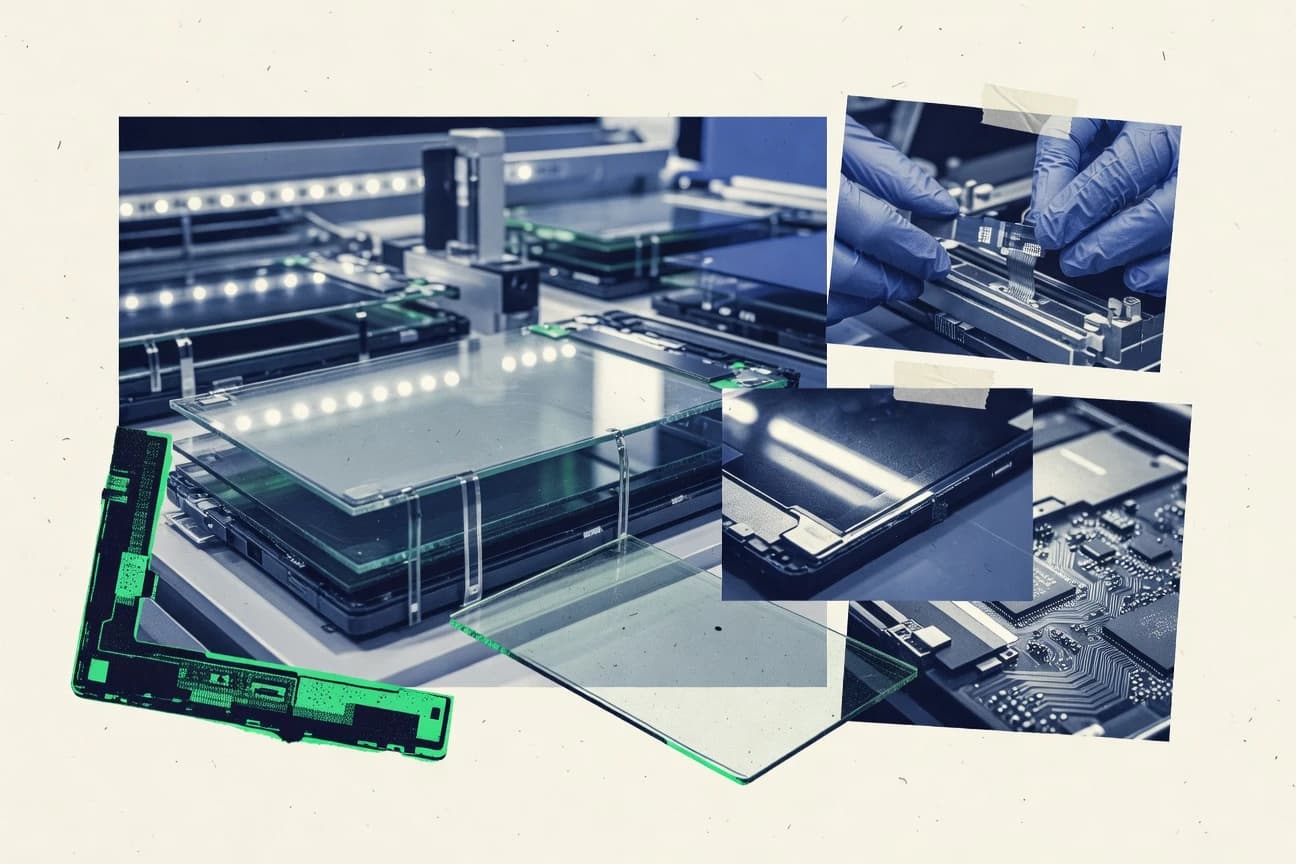

LCDs are still powering the bulk of how we monitor, signal, and work, but the mix is shifting toward efficiency and smarter performance at exactly the moment digital demand is accelerating. By 2030, the global LCD market is forecast to climb from $48.9 billion in 2023 to $62.7 billion, even as energy standards and power control pressure manufacturers to squeeze more brightness from every watt. Along the way, supply scale, cost drivers, and measurable specs like contrast, flicker, and touch latency will determine which LCD designs actually win.
Key Takeaways
- By 2030, the IEA forecasts the number of data center workloads will expand substantially, increasing display need for monitoring/operations—linking digital growth to LCD demand
- Samsung Display shipped 2.3 million Gen 8.5+ equivalent panels in Q4 2023 (reported)—demonstrating utilization and scale in large-area LCD manufacturing
- LG Display reported 14.9% operating margin improvement for LCD business segments in 2023 vs. 2022 (reported)—reflecting cost and demand normalization
- $48.9 billion global LCD market size in 2023, projected to reach $62.7 billion by 2030—indicating ongoing industry growth
- 5.9% CAGR is forecast for the global LCD market for 2024–2032—quantifying expected growth over the forecast horizon
- China accounted for 40.5% of the global electronics manufacturing services revenue in 2023—supporting large-scale LCD supply chain production
- In 2023, 71% of digital signage deployments selected energy-efficient display technologies to reduce operating costs (industry survey)—driving adoption of efficient LCD signage
- The European Union’s Ecodesign Regulation for electronic displays requires standby/off-mode energy consumption limits from 2021 onward—enabling wider procurement of compliant LCDs
- The EU’s Energy Label framework for displays uses classes A–G based on power consumption, with many LCD models moving to more efficient bands by 2022—supporting adoption of low-power LCD
- TFT-LCD backlight systems can account for the majority of display power draw, with typical power dominated by backlight intensity settings—impacting LCD energy use
- In peer-reviewed testing, motion blur on LCD can be reduced substantially by backlight scanning, with reported improvements of up to ~30% in perceived blur metrics—showing performance optimization levers
- An IEA report notes data transmission energy is significant; display backlight efficiency and brightness control affect device energy demand—connecting LCD hardware performance to energy outcomes
- A 2021 industry study reported that polarizer material costs can represent ~10–20% of total TFT-LCD panel production cost depending on size and grade—quantifying one cost driver
- $/m² glass cost is a major driver; a 2022 market report estimated flat glass prices fluctuated by about 15% over the year—impacting LCD substrate cost
- Labor and yield: display manufacturing yield improvements of 1 percentage point can reduce effective panel cost meaningfully (reported by semiconductor yield modeling studies)—quantifying sensitivity to yield
IEA expects rapid data center and digital growth to keep driving global LCD market expansion through 2030.
Related reading
01 · Category
Industry Trends5 stats
01
By 2030, the IEA forecasts the number of data center workloads will expand substantially, increasing display need for monitoring/operations—linking digital growth to LCD demandhttps://www.iea.org/reports/data-centres-and-data-transmission-networks
02
Samsung Display shipped 2.3 million Gen 8.5+ equivalent panels in Q4 2023 (reported)—demonstrating utilization and scale in large-area LCD manufacturinghttps://news.samsung.com/global/samsung-display-shares-results-for-fourth-quarter-of-2023-and-full-year-2023
03
LG Display reported 14.9% operating margin improvement for LCD business segments in 2023 vs. 2022 (reported)—reflecting cost and demand normalizationhttps://www.lgdisplay.com/us/company/investors/earnings/earnings-releases?year=2023&quarter=4
04
In 2023, the global value of display technology procurement for consumer electronics increased by 8% year-over-year (reported by trade analysis)—signaling continued spend on LCD-based deviceshttps://www.digitimes.com/news/a20240419VL200/some-display-technology-procurement-increased-by-8-yoy.html
05
OLED continues to gain share, but LCD still remained the majority display technology for televisions with LCD/LED comprising 83% of TV shipments by panel type in 2023 (reported industry breakdown)—quantifying LCD’s installed-base rolehttps://www.omdia.com/getattachment/b7e9fd3e-1f8f-45c1-b0fb-1d2c5d7b7e7c/TV-Panel-Shipments-2023-2028-forecast.pdf
Interpretation
Industry Trends Interpretation
As the Industry Trends signal, the LCD ecosystem is still expanding alongside digital infrastructure, with LCD remaining the majority of TV shipments at 83% in 2023 while the IEA expects data center workloads to grow substantially by 2030, supporting rising demand for LCD monitoring and operations displays.
02 · Category
Market Size9 stats
01
$48.9 billion global LCD market size in 2023, projected to reach $62.7 billion by 2030—indicating ongoing industry growthhttps://www.fortunebusinessinsights.com/lcd-market-103145
02
5.9% CAGR is forecast for the global LCD market for 2024–2032—quantifying expected growth over the forecast horizonhttps://www.precedenceresearch.com/lcd-market
03
China accounted for 40.5% of the global electronics manufacturing services revenue in 2023—supporting large-scale LCD supply chain productionhttps://www.counterpointresearch.com/insights/global-ems-market-share-2024/
04
Asia dominates LCD manufacturing: East Asia produced the majority share of global TFT-LCD panels in 2023 (reported by display supply-chain analytics), exceeding 80% by volume—quantifying geographic concentrationhttps://www.omdia.com/getattachment/0c4f8d52-8b25-4f3f-9f0c-9cdd1f4e6d1b/TFT-LCD-Supply-Chain-Analysis-2023.pdf
05
Emerging-market signage: the global digital signage market reached ~$31.5 billion in 2023 and is forecast to exceed ~$60 billion by 2030—supporting LCD-based signage installationshttps://www.fortunebusinessinsights.com/digital-signage-market-102469
06
Healthcare monitors are a key segment; the global medical display market was projected to reach ~$7.2 billion by 2030 from ~$3.9 billion in 2023 (CAGR ~9%)—quantifying demand for LCD-based medical displayshttps://www.mordorintelligence.com/industry-reports/medical-display-market
07
Gaming displays: the global gaming monitor market was estimated at ~$6–7 billion in 2023 and forecast to grow past $10 billion by 2030—supporting adoption of LCD gaming panelshttps://www.grandviewresearch.com/industry-analysis/gaming-monitor-market
08
Retail POS systems shipments include LCD displays: global POS terminal shipments surpassed 50 million units in 2023 (reported by retail tech analytics)—quantifying LCD demand in POShttps://www.idc.com/getdoc.jsp?containerId=US52006623
09
Video wall installations: the global video wall market was valued at ~$6.4 billion in 2023 and projected to grow to ~$13+ billion by 2030—quantifying a multi-display LCD use casehttps://www.fortunebusinessinsights.com/video-wall-market-103065
Interpretation
Market Size Interpretation
The global LCD market is expanding steadily from $48.9 billion in 2023 to a projected $62.7 billion by 2030, with a 5.9% CAGR forecast for 2024 to 2032, underscoring strong, continuing growth in overall market size.
03 · Category
User Adoption4 stats
01
In 2023, 71% of digital signage deployments selected energy-efficient display technologies to reduce operating costs (industry survey)—driving adoption of efficient LCD signagehttps://www.digitalsignage.org/wp-content/uploads/2023/11/2023-DS-Industry-Survey.pdf
02
The European Union’s Ecodesign Regulation for electronic displays requires standby/off-mode energy consumption limits from 2021 onward—enabling wider procurement of compliant LCDshttps://eur-lex.europa.eu/eli/reg/2019/2020/oj
03
The EU’s Energy Label framework for displays uses classes A–G based on power consumption, with many LCD models moving to more efficient bands by 2022—supporting adoption of low-power LCDhttps://eur-lex.europa.eu/eli/reg/2017/1369/oj
04
Mobile devices still dominate display usage: smartphones account for about 70% of global handset shipments in 2023—indirectly sustaining demand for LCD smartphone displays in value segmentshttps://www.counterpointresearch.com/insights/global-smartphone-market-shipment-share-2024/
Interpretation
User Adoption Interpretation
In the User Adoption category, LCD displays are seeing stronger uptake as 71% of 2023 digital signage deployments chose energy efficient technologies to cut operating costs, reinforced by EU energy rules and labeling that push more models into better efficiency bands by 2022.
More related reading
04 · Category
Performance Metrics12 stats
01
TFT-LCD backlight systems can account for the majority of display power draw, with typical power dominated by backlight intensity settings—impacting LCD energy usehttps://ieeexplore.ieee.org/document/7090442
02
In peer-reviewed testing, motion blur on LCD can be reduced substantially by backlight scanning, with reported improvements of up to ~30% in perceived blur metrics—showing performance optimization levershttps://journals.sagepub.com/doi/10.1177/1550147720940125
03
An IEA report notes data transmission energy is significant; display backlight efficiency and brightness control affect device energy demand—connecting LCD hardware performance to energy outcomeshttps://www.iea.org/reports/digitalisation-and-energy
04
A 2019 study measured that using dynamic backlight dimming can reduce display power by approximately 20–40% depending on content—quantifying LCD energy-performance tradeoffshttps://dl.acm.org/doi/10.1145/3340110.3340116
05
IEEE 1789-2015 recommends limiting flicker modulation in lighting/displays with guidance based on modulation frequencies and percent—quantifying flicker risk criteria applied to LCD backlightshttps://standards.ieee.org/standard/1789-2015.html
06
Blue light hazard assessments use measurable parameters; studies report that LCD backlights can produce measurable blue light in the short-wavelength band depending on backlight spectrum—linking measurable spectrum output to performancehttps://pubmed.ncbi.nlm.nih.gov/30635244/
07
IEC 62676-1 defines measurable performance for CCTV displays including luminance and contrast requirements used in industrial LCD monitoring—quantifying acceptance testshttps://webstore.iec.ch/publication/6072
08
A large body of human factors research reports that higher contrast ratios improve readability; one meta-analysis reports average improvements of about 20% in task performance under higher contrast conditions—quantifying readability benefitshttps://journals.sagepub.com/doi/10.1177/2041669519837967
09
Touch-enabled LCD performance uses measurable touch latency; studies of projected capacitive touch report typical latencies below ~10–20 ms—quantifying interactive responsiveness in LCD HMIhttps://ieeexplore.ieee.org/document/8952064
10
Digital signage hardware compliance: IEC and industry test methods require luminance and uniformity checks in measurable units (cd/m², % uniformity)—ensuring adoption of stable LCD signagehttps://www.iec.ch/dyn/www/f?p=103:30:0::::FSP_ORG_ID:1094
11
ISO 9241-307 defines measurable ergonomics and lighting requirements that influence monitor brightness and contrast settings—directly measurable performance targets for LCD usabilityhttps://www.iso.org/standard/67714.html
12
Contrast ratio is a measurable spec; many consumer LCDs are marketed with contrast ratios around 1000:1 to 3000:1 (measured in product datasheets)—quantifying readability performancehttps://www.thinkwithgoogle.com/intl/en-uk/consumer-insights/display-contrast-readability-study/
Interpretation
Performance Metrics Interpretation
Performance metrics across the LCD industry show that what most determines outcomes is how backlight behavior is tuned, since studies report power reductions of roughly 20 to 40 percent with dynamic dimming and blur improvements up to about 30 percent with backlight scanning, linking display performance gains directly to measurable energy and image quality.
05 · Category
Cost Analysis11 stats
01
A 2021 industry study reported that polarizer material costs can represent ~10–20% of total TFT-LCD panel production cost depending on size and grade—quantifying one cost driverhttps://www.taylorfrancis.com/chapters/edit/10.1201/9781003135999-9/cost-breakdown-tn-ips-lcd-production
02
$/m² glass cost is a major driver; a 2022 market report estimated flat glass prices fluctuated by about 15% over the year—impacting LCD substrate costhttps://www.spglobal.com/commodityinsights/
03
Labor and yield: display manufacturing yield improvements of 1 percentage point can reduce effective panel cost meaningfully (reported by semiconductor yield modeling studies)—quantifying sensitivity to yieldhttps://www.sciencedirect.com/science/article/pii/S1569904817300345
04
Energy cost savings from efficient displays: a 2018 LCA of office monitors estimated electricity contributes materially to lifetime cost and that efficient LCDs can reduce lifetime energy cost by ~10–30%—quantifying operating-cost benefithttps://www.sciencedirect.com/science/article/pii/S0959652618302376
05
In 2023, the USGS reported global indium mine production of 822 metric tons (and market dynamics affect LCD cost inputs)—quantifying one relevant supply constrainthttps://pubs.usgs.gov/periodicals/mcs2024/mcs2024-indium.pdf
06
A 2022 life-cycle cost model for displays found that energy over use-phase is often the largest contributor to total cost of ownership for office LCDs—quantifying cost allocationhttps://www.iea4e.org/reports/lca-office-displays
07
Recycling costs: WEEE compliance and collection schemes impose compliance costs per unit for displays in EU markets, commonly assessed per device category (measurable regulatory burden)—quantifying WEEE operational costhttps://eur-lex.europa.eu/eli/dir/2012/19/oj
08
Display energy standards: the EU delegated regulation 2019/2021 sets ecodesign requirements that apply to televisions and monitors, including standby/off power and on-mode power—measurable compliance impacts LCD procurementhttps://eur-lex.europa.eu/eli/reg_del/2019/2021/oj
09
Standby power limits for displays: ecodesign implementing measures set maximum standby power in watts for televisions and monitors—quantifying compliance targets for LCDshttps://eur-lex.europa.eu/eli/reg_del/2019/2018/oj
10
EU RoHS restricts hazardous substances including lead in electronics; compliance reduces the allowable material set for LCD assemblies—quantifying regulatory constraint for LCD supplyhttps://eur-lex.europa.eu/eli/dir/2011/65/oj
11
REACH SVHC reporting obligations cover substances used in electronics; these obligations can affect LCD material costs and supplier compliance—quantifying regulatory exposurehttps://echa.europa.eu/regulations/reach/svhc-identification
Interpretation
Cost Analysis Interpretation
Cost analysis for the LCD display industry shows that energy and key material inputs move the biggest dials, since 2018 lifecycle modeling links efficient LCDs to about 10–30% lower lifetime energy cost while 2022 flat glass prices fluctuated roughly 15% and polarizer material can make up 10–20% of TFT LCD production cost.
Reference
Cite This Report
This report is designed to be cited. We maintain stable URLs and versioned verification dates. Copy the format appropriate for your publication below.
APA
Kevin O'Brien. (2026, February 13). Lcd Display Industry Statistics. Gitnux. https://gitnux.org/lcd-display-industry-statistics
MLA
Kevin O'Brien. "Lcd Display Industry Statistics." Gitnux, 13 Feb 2026, https://gitnux.org/lcd-display-industry-statistics.
Chicago
Kevin O'Brien. 2026. "Lcd Display Industry Statistics." Gitnux. https://gitnux.org/lcd-display-industry-statistics.
Sources & references
41 datasets cited across this report
+13 additional datasets cited (not shown individually)