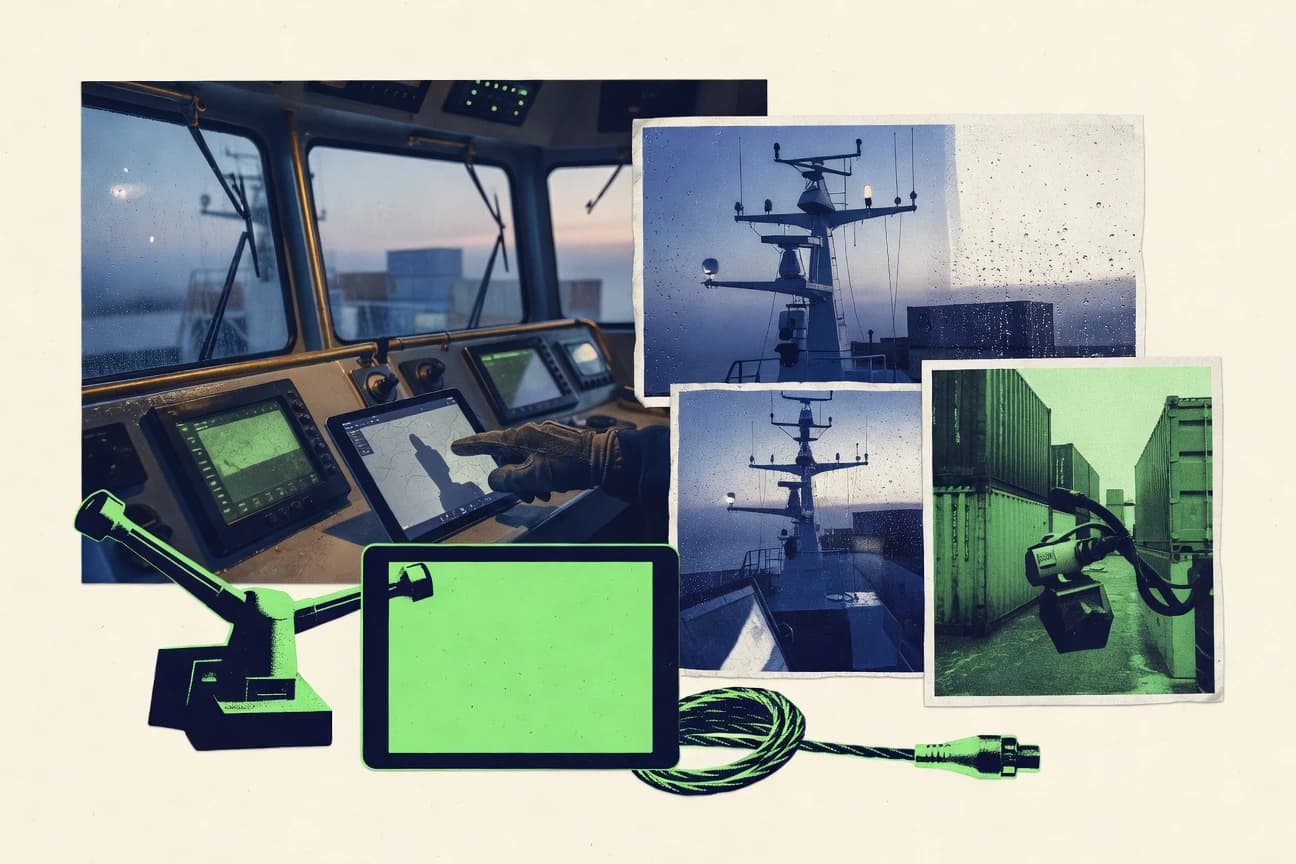

From 2024 to 2030, the maritime cybersecurity market is expected to grow at a 2.8% CAGR as digitization spreads across shipping operations, and that shift has a cost and a clock. At the same time, 72% of shipping companies reported using some form of digital technology in 2022, yet cybersecurity is still flagged as a top operational risk by 31% of maritime executives in 2023. This post connects those tensions to the practical payoff, from connected vessel analytics to port AI and procurement digitization, using the latest figures across the marine ecosystem.
Key Takeaways
- $15.7 billion global market size for marine equipment in 2023 (IMPACTS include digital maintenance and connectivity opportunities)
- 2.8% CAGR expected for the maritime cybersecurity market from 2024 to 2030 (driven in part by digitization of shipping operations)
- Global shipping trade volume measured by ton-miles is forecast to grow by 2% per year from 2024 to 2028 (supports continued digital tooling adoption)
- 72% of shipping companies reported using some form of digital technology in operations in 2022 (survey indicator for digital transformation)
- 31% of maritime executives identified cybersecurity as a top operational risk in 2023
- 47% of maritime organizations reported increased efficiency from data/analytics initiatives in the last 12 months (digital analytics benefit)
- 20–30% energy-efficiency improvement potential from digital optimization tools for ship operations (e.g., voyage, routing, engine control)
- Up to 80% reduction in downtime is possible with IIoT-based monitoring in manufacturing contexts (relevant benchmark for port and ship equipment digitization)
- 1.2% average revenue loss due to fraud and cybercrime in 2024 for surveyed organizations (digital security cost)
- 30% average reduction in procurement cycle time with e-procurement digitization (port and shipping procurement efficiency)
- 1.8 million malware samples detected daily by cybersecurity telemetry (threat volume affecting maritime OT/IT)
- 58% of organizations report using AI in production or planned within 12 months (analytics adoption relevant to maritime decision support)
- 22% of organizations report using IoT platforms in production (connected sensors adoption benchmark)
- 34% of organizations have adopted digital twin technology in some form (simulation and asset performance relevance)
- 24% of breaches in Verizon DBIR 2024 involved malware, reflecting ongoing malware threat likelihood for connected maritime IT/OT endpoints
Maritime digitization is boosting efficiency and sustainability, while cybersecurity and connectivity risks are rising fast.
Related reading
- Digital Transformation In IndustryDigital Transformation In The Maritime Industry Statistics
- Digital Transformation In IndustryDigital Transformation In The Material Handling Industry Statistics
- Digital Transformation In IndustryDigital Transformation In The Merchant Industry Statistics
- Digital Transformation In IndustryDigital Transformation In The Oil Industry Statistics
01 · Category
Market Size2 stats
01
$15.7 billion global market size for marine equipment in 2023 (IMPACTS include digital maintenance and connectivity opportunities)https://www.imarcgroup.com/marine-equipment-market
02
2.8% CAGR expected for the maritime cybersecurity market from 2024 to 2030 (driven in part by digitization of shipping operations)https://www.grandviewresearch.com/industry-analysis/maritime-cybersecurity-market
Interpretation
Market Size Interpretation
In the market size outlook, the marine equipment market is projected to reach $15.7 billion in 2023 while maritime cybersecurity is expected to grow at a 2.8% CAGR from 2024 to 2030, signaling that digitization is expanding demand for connected, digitally enabled solutions.
02 · Category
Industry Trends6 stats
01
Global shipping trade volume measured by ton-miles is forecast to grow by 2% per year from 2024 to 2028 (supports continued digital tooling adoption)https://unctad.org/publication/review-maritime-transport-2023
02
72% of shipping companies reported using some form of digital technology in operations in 2022 (survey indicator for digital transformation)https://www.drewry.co.uk/news/2023/ship-data-and-digital-2023-report
03
31% of maritime executives identified cybersecurity as a top operational risk in 2023https://www.maritimeexecutive.com/article/poll-cybersecurity-concerns-continue-to-grow-among-maritime-executives
04
90% of ocean-going vessels are connected to AIS data sources at some level, enabling digital analytics and voyage optimization (data availability indicator)https://www.imo.org/en/MediaCentre/PressBriefings/Pages/AIS.aspx
05
16.6% of seafarers work on vessels with integrated digital systems for documentation and planning, per an IMO-related readiness survey indicatorhttps://www.imo.org/en/KnowledgeCentre/Pages/Document-Details.aspx?docid=499
06
44% of port cargo flows are handled through automated or semi-automated systems where digitization improves gate and yard operations (automation indicator)https://www.worldbank.org/en/topic/transport/brief/port-automation
Interpretation
Industry Trends Interpretation
Under industry trends for marine digital transformation, the widespread momentum is clear as 72% of shipping companies already use digital technology and 44% of port cargo flows run through automated or semi-automated systems, while even cybersecurity remains a growing focus with 31% of executives naming it a top operational risk in 2023.
03 · Category
Performance Metrics7 stats
01
47% of maritime organizations reported increased efficiency from data/analytics initiatives in the last 12 months (digital analytics benefit)https://www.gartner.com/en/newsroom/press-releases/2024-analytics
02
20–30% energy-efficiency improvement potential from digital optimization tools for ship operations (e.g., voyage, routing, engine control)https://www.imo.org/en/MediaCentre/HotTopics/pages/energy-efficiency.aspx
03
Up to 80% reduction in downtime is possible with IIoT-based monitoring in manufacturing contexts (relevant benchmark for port and ship equipment digitization)https://www.ibm.com/topics/industrial-iot
04
40% reduction in fuel consumption achievable through advanced route optimization and speed management in specific shipping studies (digital voyage optimization)https://www.sciencedirect.com/science/article/pii/S1361920919301866
05
17% average reduction in CO2 emissions from optimized hull and operational performance enabled by digital monitoring (maritime decarbonization via digitization)https://www.sciencedirect.com/science/article/pii/S1361920920310452
06
1.5x faster incident reporting achieved via mobile/connected systems in port operations pilots (digital incident workflows)https://www.unece.org/info/events/digitalization-of-port-operations/
07
10–20% reduction in average time to discharge due to digital yard planning and slotting (port scheduling digitization)https://www.worldbank.org/en/topic/transport/brief/port-digitalization
Interpretation
Performance Metrics Interpretation
Performance metrics show that recent digital transformation is delivering measurable gains, with 47% of maritime organizations reporting improved efficiency in the past year and studies indicating potential fuel and emissions improvements like up to a 40% reduction in fuel use and a 17% average cut in CO2.
04 · Category
Cost Analysis3 stats
01
1.2% average revenue loss due to fraud and cybercrime in 2024 for surveyed organizations (digital security cost)https://www.acfe.com/report-to-the-nations/2024
02
30% average reduction in procurement cycle time with e-procurement digitization (port and shipping procurement efficiency)https://www.unctad.org/publication/digital-government-procurement-study
03
1.8 million malware samples detected daily by cybersecurity telemetry (threat volume affecting maritime OT/IT)https://www.av-test.org/en/statistics/malware/
Interpretation
Cost Analysis Interpretation
For cost analysis in maritime digital transformation, the data shows that while e-procurement digitization can cut procurement cycle time by 30%, cybersecurity pressures remain high with 1.2% average revenue loss from fraud and cybercrime and 1.8 million malware samples detected daily, making security and process efficiency together key levers for reducing total cost.
More related reading
05 · Category
User Adoption7 stats
01
58% of organizations report using AI in production or planned within 12 months (analytics adoption relevant to maritime decision support)https://www.gartner.com/en/documents/3996734
02
22% of organizations report using IoT platforms in production (connected sensors adoption benchmark)https://www.idc.com/getdoc.jsp?containerId=US51547824
03
34% of organizations have adopted digital twin technology in some form (simulation and asset performance relevance)https://www.gartner.com/en/newsroom/press-releases/2023-10-02-gartner-press-release-digital-twins
04
48% of organizations use predictive maintenance today or in pilot programs (maintenance digitization adoption)https://www.ibm.com/services/predictive-maintenance/what-is-predictive-maintenance
05
41% of port authorities have implemented port community systems (PCS) in at least one operational area (port digitization adoption)https://unctad.org/publication/port-community-systems
06
21% of manufacturing firms in a 2023 survey reported piloting AI/ML for maintenance (transferable to maritime maintenance)https://www.oecd.org/en/publications/2023/06/oecd-digital-economy-outlook-2023_0dfc0f9f.html
07
47% of maritime decision-makers use real-time dashboards for operational monitoring (operational visibility adoption)https://www.dnv.com/news/dnv-study-shipping-digitalization-2024
Interpretation
User Adoption Interpretation
For the user adoption side of digital transformation, the clearest trend is that real operational tools are already taking hold, with 58% of organizations using or planning AI within 12 months and 47% of maritime decision-makers relying on real time dashboards for monitoring.
06 · Category
Risk And Security1 stats
01
24% of breaches in Verizon DBIR 2024 involved malware, reflecting ongoing malware threat likelihood for connected maritime IT/OT endpointshttps://www.verizon.com/business/resources/reports/dbir/
Interpretation
Risk And Security Interpretation
In the Risk And Security context, Verizon DBIR 2024 shows that 24% of breaches involved malware, signaling that malware remains a significant and persistent threat to connected maritime IT and OT endpoints.
07 · Category
Adoption Drivers3 stats
01
In 2023, cyberattacks on ports and shipping-related organizations were part of 15% of maritime sector incidents reported to ENISA’s threat landscape work (sector-relevant context published in ENISA’s 2024 report)https://www.enisa.europa.eu/publications/enisa-threat-landscape-2024
02
57% of IT and security decision-makers surveyed by SailPoint in 2024 said they have experienced identity-related security incidents within the last year (drives IAM and access digitization controls in connected maritime environments)https://www.sailpoint.com/resources/state-of-identity-security-2024/
03
In 2023, global trade in container shipping generated 179 million TEU handled through major ports in the UNCTADstat dataset (container port throughput context for digitization ROI, 2023 latest value in the public database)https://unctadstat.unctad.org/datacenter/dataviewer/US/PortCalls
Interpretation
Adoption Drivers Interpretation
Adoption drivers in maritime digital transformation are being pulled forward by security urgency, with 15% of reported maritime incidents involving port and shipping cyberattacks in 2023 and 57% of IT and security decision makers reporting identity related incidents in the last year, while massive 179 million TEU container volumes in 2023 reinforce the ROI case for digitized IAM and access controls.
Reference
Cite This Report
This report is designed to be cited. We maintain stable URLs and versioned verification dates. Copy the format appropriate for your publication below.
APA
Priya Chandrasekaran. (2026, February 13). Digital Transformation In The Marine Industry Statistics. Gitnux. https://gitnux.org/digital-transformation-in-the-marine-industry-statistics
MLA
Priya Chandrasekaran. "Digital Transformation In The Marine Industry Statistics." Gitnux, 13 Feb 2026, https://gitnux.org/digital-transformation-in-the-marine-industry-statistics.
Chicago
Priya Chandrasekaran. 2026. "Digital Transformation In The Marine Industry Statistics." Gitnux. https://gitnux.org/digital-transformation-in-the-marine-industry-statistics.
Sources & references
29 datasets cited across this report
+9 additional datasets cited (not shown individually)