
GITNUXSOFTWARE ADVICE
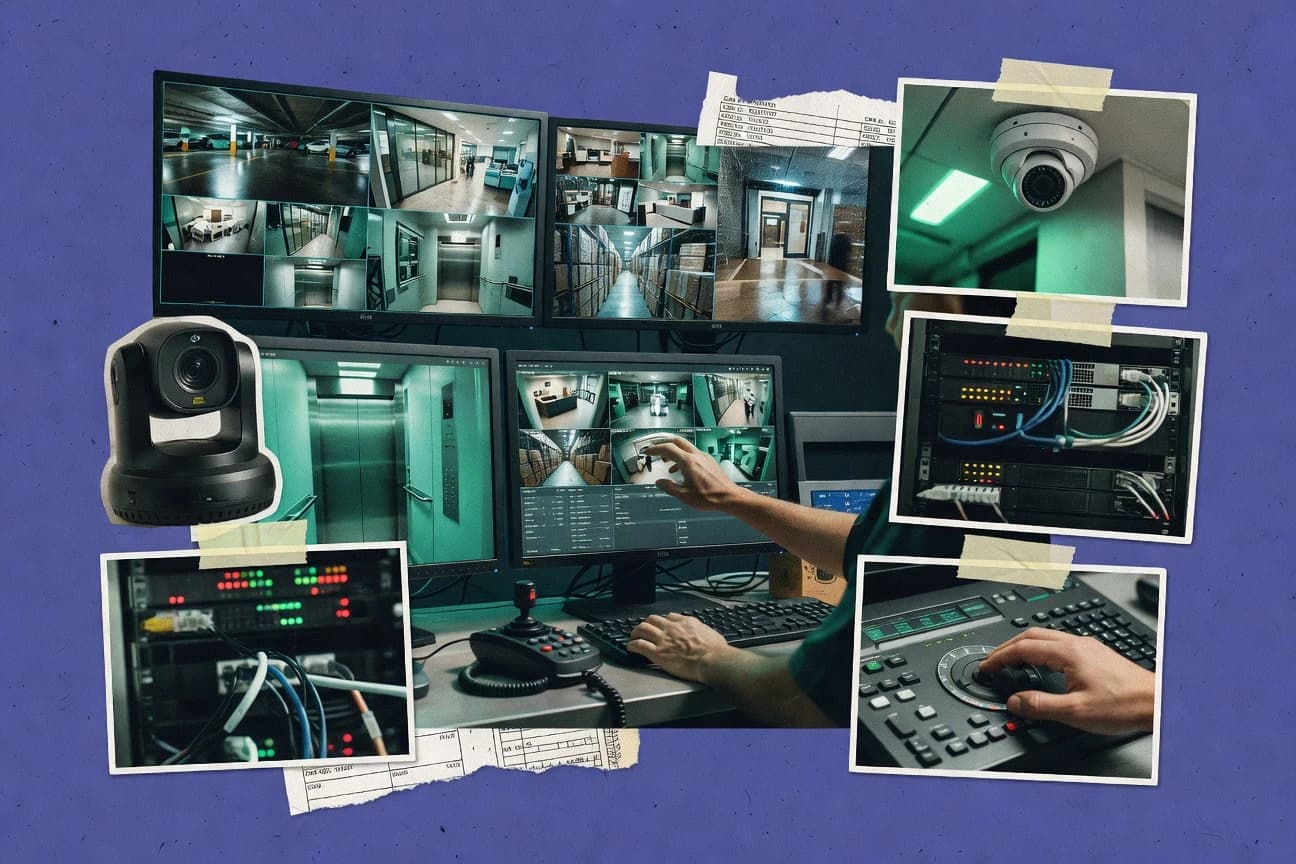
Digital Products And SoftwareTop 10 Best Vms Video Management Software of 2026
Ranking of vms video management software for video security teams with feature-by-feature comparisons of Nx Witness, Axis Camera Station, and others.

How we ranked these tools
Core product claims cross-referenced against official documentation, changelogs, and independent technical reviews.
Analyzed video reviews and hundreds of written evaluations to capture real-world user experiences with each tool.
AI persona simulations modeled how different user types would experience each tool across common use cases and workflows.
Final rankings reviewed and approved by our editorial team with authority to override AI-generated scores based on domain expertise.
Score: Features 40% · Ease 30% · Value 30%
Gitnux may earn a commission through links on this page — this does not influence rankings. Editorial policy
Nx Witness is the best pick if you run multi-site video evidence workflows and need strong admin governance at scale, whereas Axis Camera Station fits mid-size teams standardizing Axis fleets for fast incident review.
Editor’s top 3 picks
Three quick recommendations before you dive into the full comparison below — each one leads on a different dimension.
Nx Witness
Evidence workflows that connect event timelines to recorded video with operator-first review speed.
Built for fits when multi-site video teams need consistent evidence workflows and admin governance at scale..
Axis Camera Station
Editor pickCamera onboarding and recording configuration run as a single operational workflow inside Axis Camera Station.
Built for fits when mid-size teams run Axis camera fleets and want fast incident review..
Hanwha Vision Wisenet WAVE
Editor pickCentralized configuration workflow for multi-site onboarding and recording rule consistency across channel groups.
Built for fits when mid-size teams standardize Wisenet camera fleets and need centralized event search plus evidence exports..
Comparison Table
Nx Witness
API-firstFlexible video management platform used by security technology providers and integrators.
Evidence workflows that connect event timelines to recorded video with operator-first review speed.
Nx Witness provides centralized recording management and evidence workflows with configurable retention behavior and event-based review screens. Camera onboarding can be automated through discovery and registration workflows, and the system supports standards-based IP camera streaming so records and live views stay consistent. Operational governance is handled through role-based access controls and audit logging for administrative actions across sites.
A key tradeoff is that the system is most effective when deployment design and server sizing are planned, because high throughput depends on recording and search workload placement. Nx Witness fits teams running distributed sites where staff need consistent video evidence workflows without copying footage between locations.
- +Event-focused operator views for quick evidence review
- +Role-based access with audit trails for administrative actions
- +Automation and integrations for large-scale camera onboarding
- +Centralized recording management for consistent retention policies
- –Performance depends on upfront server and workflow sizing
- –Complex environments require disciplined configuration governance
- –Custom integrations can need engineering time for edge cases
- –Interface tuning can take multiple iterations for best operator speed
Security operations teams
Rapid incident review from event timelines
Reduced time to evidence
Network video integrators
Onboarding many camera sites
Lower onboarding effort
Show 2 more scenarios
Platform admins
Govern access and audit changes
Tighter operational governance
Admins control permissions and track configuration actions across distributed deployments.
Enterprise IT
Integrate video events into systems
Better cross-system incident handling
IT connects Nx Witness workflows with external platforms using available API and automation hooks.
Best for: Fits when multi-site video teams need consistent evidence workflows and admin governance at scale.
Axis Camera Station
SMBVideo management software designed for Axis cameras, devices, and security solutions.
Camera onboarding and recording configuration run as a single operational workflow inside Axis Camera Station.
Axis Camera Station targets centralized video management for small to mid-sized deployments where Axis cameras are the main video sources. The interface groups device discovery and onboarding steps with recording configuration, so operators can set schedules and event actions without jumping across multiple consoles. Search and review tools emphasize quick retrieval of clips for incident review and export workflows.
A tradeoff appears in integrations and governance depth, because the automation surface is narrower than broader enterprise VMS stacks. Axis Camera Station fits well when teams need day-to-day operations on a single recording server or small server cluster, and they can standardize on Axis camera models for consistent features.
- +Axis-focused camera management reduces friction during discovery and onboarding
- +Recording rules support both scheduled and event-driven workflows
- +Operator workflow centers on incident review with export-ready clip handling
- +Clear status views for camera connectivity and recording health
- –Integration depth is thinner than enterprise VMS ecosystems
- –Automation and extensibility options are limited for custom workflows
- –Multi-site governance and rollouts need more manual coordination
- –Scalability planning requires careful tuning of recording and storage
Security operations managers
Faster evidence review from Axis cameras
Quicker incident turnaround
On-site IT administrators
Deploy cameras with consistent recording rules
Fewer configuration errors
Show 2 more scenarios
Facilities security leads
Handle mixed continuous and event capture
Lower evidence gaps
Schedules and event actions keep footage available for routine monitoring and alerts.
Integrators
Support installs centered on Axis hardware
Shorter commissioning cycles
The platform workflow matches Axis device feature expectations for predictable rollout.
Best for: Fits when mid-size teams run Axis camera fleets and want fast incident review.
Hanwha Vision Wisenet WAVE
SMBVideo management software supporting Hanwha cameras and third-party ONVIF devices.
Centralized configuration workflow for multi-site onboarding and recording rule consistency across channel groups.
Wisenet WAVE supports centralized video management for deploying and maintaining surveillance workflows across multiple locations, including camera connection management and recording rules tied to events. Operational tooling focuses on consistent channel configuration so large fleets can be standardized instead of hand-tuned per site. Evidence workflows include exporting clips with traceability features so investigators can correlate results with system activity.
A key tradeoff is that full leverage depends on consistent camera compatibility and disciplined configuration of device groups and recording settings. The best fit appears when teams manage a camera fleet already aligned to Wisenet hardware and need repeatable onboarding plus evidence workflows across sites.
- +Repeatable centralized provisioning for multi-site camera onboarding
- +Event-oriented search workflows aligned to investigation tasks
- +Evidence exports include traceability elements for handoffs
- +Configuration patterns reduce drift across locations
- –Camera compatibility dependency can limit mixed-vendor fleets
- –Advanced workflows require careful configuration discipline
- –Integration paths can feel Wisenet-centric versus generic NVR setups
Security operations managers
Investigating motion events across sites
Faster case assembly
Network and systems admins
Standardizing camera onboarding
Lower configuration variance
Show 1 more scenario
Loss prevention teams
Producing export-ready evidence packets
Cleaner evidence handoffs
Teams compile clips from incident timelines and export with traceability for internal review chains.
Best for: Fits when mid-size teams standardize Wisenet camera fleets and need centralized event search plus evidence exports.
Avigilon Unity Video
enterpriseEnterprise VMS with video management, analytics, and Avigilon camera integration.
Analytics-triggered recording tied to Avigilon detection events for reducing manual rule tuning.
Avigilon Unity Video is an on-premises focused VMS that centralizes IP camera management and recording workflows for video security teams. It differentiates with tight integration to Avigilon analytics, including event-driven recording that can be triggered by detection outputs.
The system also supports evidence oriented export workflows with watermarking and organized retrieval for fast incident review. Administration can be governed through role-based access controls and audit logging to support multi-operator environments.
- +Event-driven recording that keys off Avigilon analytics detections
- +Evidence export supports watermarking for later chain-of-custody review
- +Role-based access control for operator separation within the same system
- +Audit logging captures administrative actions for governance reviews
- –Camera onboarding and profile matching can require careful compatibility testing
- –Advanced workflows can depend on analytics licensing and configuration time
Best for: Fits when security teams need evidence-ready exports and analytics-triggered recordings on an on-premises deployment.
DW Spectrum IPVMS
SMBIP video management software for surveillance systems ranging from small sites to enterprises.
DW Spectrum’s distributed architecture lets video capture and recording responsibilities be deployed per site for scaling.
DW Spectrum IPVMS runs centralized IP camera management with recording, live viewing, and timeline-based video playback from a single operator workspace. Digital Watchdog’s build emphasizes distributed system scaling through camera-site video capture and server-side recording roles, which supports larger deployments without forcing a single choke point.
The product also supports evidence workflows such as video export and watermarking so teams can package clip material with traceability. For operator administration, DW Spectrum includes role-based access controls, configurable views, and logging that supports governance around who accessed which video.
- +Distributed recording roles support scalable multi-site layouts
- +Role-based access controls limit who can view and manage systems
- +Timeline search and export workflows fit day-to-day evidence handling
- +ONVIF interoperability supports broad camera onboarding options
- –Complex multi-server deployments require careful configuration planning
- –Some advanced analytics workflows depend on additional components
- –Large rule sets can make event configuration harder to audit
- –Integrations beyond ONVIF may require custom system design
Best for: Fits when security teams need centralized control with distributed recording for multi-site IP camera estates.
ExacqVision
SMBVideo management software supporting network video recording and mixed camera environments.
Server-based event and recording management that keeps workflows consistent across distributed camera sites.
ExacqVision is an on-premises VMS for teams that need centralized video management with recording servers and remote monitoring under one administrative domain. Core capabilities cover camera management for IP cameras, event-driven recording workflows, video search for investigation, and video export for evidence sharing. The system also includes user administration controls, incident-focused dashboards, and integrations that connect video events to external systems through documented interfaces.
- +Centralized management for large on-premises camera fleets
- +Video export workflows support evidence handling for investigations
- +Event-driven recording reduces storage spent on low-signal periods
- +Admin controls support multi-user operations and incident review
- –Architecture requires deliberate deployment planning for scaling
- –Advanced onboarding workflows take more configuration discipline
Best for: Fits when security teams run on-prem video and need controlled investigation workflows without cloud dependency.
Salient CompleteView
enterpriseVideo management software for enterprise surveillance, monitoring, and investigations.
Evidence-oriented export and operator workflows that align video retrieval to governed investigation steps.
Salient CompleteView centers on on-premises VMS management from Salient with a focus on enterprise administration workflows. It supports centralized IP camera management, recording control, and evidence-oriented export for investigation workflows.
The product design emphasizes governed configuration, operator role separation, and traceable activity around video retrieval. Its integration story is strongest when teams standardize camera onboarding and recording policies across many sites.
- +Centralized configuration management for consistent camera and recording policies
- +Role-based access controls tied to user operations and video access
- +Evidence-style export designed for investigation handoffs
- +Multi-site workflows that reduce per-location manual setup
- –Automation depth depends on admin workflow discipline and standardized templates
- –Advanced search and analytics coverage can lag VMS peers focused on AI features
- –Camera onboarding effort rises for heterogeneous fleets without consistent device profiles
- –Integration surface requires planning to align with existing security tooling
Best for: Fits when enterprises need centralized administration and governed video exports across multiple sites with consistent camera standards.
Genetec Security Center
enterpriseUnified security platform combining video surveillance, access control, and related systems.
Security Center incident-based workflows that connect video events to access control and alarm context.
Genetec Security Center centralizes video management for on-premises deployments and ties it to access control and intrusion workflows through a shared security data model. It manages large camera fleets with role-based permissions, configurable recording policies, and operator-focused incident views.
It also supports enterprise administration via system components that separate recording, storage, and client access, which helps teams scale without turning every workstation into a management console. For integrations, it offers an automation and API surface that connects camera events, device status, and search results to other security systems.
- +Strong role-based governance across operators, sites, and recording responsibilities
- +Tight workflow integration with access control and alarms inside the same incident view
- +Configurable recording and retention policies per site and device group
- +Event-driven video search that reduces time spent hunting for evidence
- –Initial deployment needs careful planning for roles, permissions, and device mapping
- –Client workflows can feel heavy when operators need rapid, single-camera review
Best for: Fits when enterprise teams need centralized incident workflows and camera management with access-control integration.
Rhombus
cloud-nativeCloud-managed security platform combining video, sensors, access, and workplace safety functions.
Workflow-driven camera onboarding that connects discovery, provisioning, and recording configuration into a single admin path.
Rhombus handles centralized management of IP cameras for distributed video sites, with onboarding, recording configuration, and live viewing tied to a single admin experience. The product emphasizes automation through camera discovery and workflow-based provisioning so new devices can be brought under management faster than manual, camera-by-camera setup.
Rhombus also supports event-driven recording workflows and retention controls for evidence collection. Admin governance centers on role-based access, audit visibility for key actions, and configuration controls that reduce cross-site misconfiguration risk.
- +Camera onboarding and provisioning workflows reduce per-site setup time
- +Centralized configuration keeps recording settings consistent across multiple locations
- +Event-driven recording supports targeted storage instead of only continuous capture
- +Role-based access and action visibility support accountable administration
- –ONVIF compatibility can be limited by device capabilities and profiles
- –Advanced evidence workflows depend on exports after events are identified
Best for: Fits when multi-site teams need managed camera onboarding and consistent recording rules without custom integrations.
Shinobi
API-firstSelf-hosted video surveillance platform supporting IP cameras and customizable deployments.
Plugin-driven event processing lets custom scripts handle recordings and metadata per camera workflow.
Shinobi is a VMS built around a lightweight video server that runs close to the camera network. It supports RTSP ingest, recording workflows, and a web UI for live viewing and searching events without routing every frame through a separate desktop tool.
Shinobi also emphasizes extensibility through plugins and automation hooks for onboarding, retention controls, and downstream handling of recorded clips. The platform fits teams that want direct control over capture, storage, and integration code instead of a tightly managed appliance.
- +RTSP-first ingest with flexible recording and event workflows
- +Plugin and automation hooks for custom integrations and processing
- +Web interface supports live viewing, playback, and event navigation
- +Works well in environments that prefer self-hosted control
- –Camera onboarding and tuning often require manual configuration
- –RBAC, audit trails, and governance controls are limited versus enterprise VMS
- –Large deployments can become operationally heavy without standardization
- –Evidence-grade export workflows need careful setup for watermarking
Best for: Fits when video security teams need a self-hosted VMS with code-based extensibility and direct storage control.
Conclusion
After evaluating 10 digital products and software, Nx Witness stands out as our overall top pick — it scored highest across our combined criteria of features, ease of use, and value, which is why it sits at #1 in the rankings above.
Use the comparison table and detailed reviews above to validate the fit against your own requirements before committing to a tool.
How to Choose the Right vms video management software
Video security teams evaluate vms video management software by how quickly recorded evidence can be reviewed and governed from first event to finalized export. This buyer’s guide covers Nx Witness, Axis Camera Station, Hanwha Vision Wisenet WAVE, Avigilon Unity Video, DW Spectrum IPVMS, ExacqVision, Salient CompleteView, Genetec Security Center, Rhombus, and Shinobi.
The tools are compared through operational workflows for onboarding and recording configuration, plus control depth for access and administrative actions. Nx Witness anchors evidence workflows with operator-first review speed and role-based access with audit trails, while Axis Camera Station concentrates onboarding and recording setup into one runbook inside the same interface.
VMS video management software for centralized video control and evidence-ready incident workflows
VMS video management software centralizes IP camera management, recording rules, and video retrieval so video teams can search, review, and export evidence tied to real events. The strongest platforms connect operator workflows to recorded timelines so incident handling stays consistent across multi-site operations, as shown in Nx Witness evidence workflows.
Some deployments emphasize configuration and onboarding flow quality, and Axis Camera Station builds camera onboarding and recording rule setup into a single operational workflow. Other platforms shift emphasis to distributed recording roles for scaling across sites, while Shinobi focuses on RTSP-first ingest plus plugin-driven automation for custom recording and metadata processing.
VMS control depth for evidence workflows and centralized governance
Video security teams need evidence workflows that connect operator review to recorded timelines and exports with governed handling steps. These capabilities determine whether investigations move from event identification to export with consistent access rules across sites.
Evidence-first operator review tied to recorded timelines
Nx Witness builds evidence workflows that connect event timelines to recorded video for faster operator review, which matches multi-site investigation speed needs. Salient CompleteView also aligns video retrieval to governed investigation steps with operator-focused export workflows.
Admin governance with role-based access controls and audit trail coverage
Nx Witness provides role-based access with audit trails for administrative actions so governance can be enforced during evidence handling. Genetec Security Center adds strong role-based governance across operators, sites, and recording responsibilities inside incident workflows.
Runbook-style camera onboarding plus recording rules in one workflow
Axis Camera Station runs camera onboarding and recording configuration as a single operational workflow so teams can standardize incident review paths during setup. Rhombus similarly connects discovery, provisioning, and recording configuration into one admin path for consistent recording rules.
Centralized multi-site configuration for onboarding and recording rule consistency
Hanwha Vision Wisenet WAVE supports centralized configuration for multi-site onboarding and consistent channel-group recording rules. ExacqVision keeps server-based event and recording management consistent across distributed camera sites.
Distributed recording roles for scalable multi-site deployments
DW Spectrum IPVMS uses distributed architecture that assigns video capture and recording responsibilities per site while keeping centralized control. DW Spectrum’s distributed role approach changes scaling planning compared with server-centered approaches like ExacqVision.
Analytics-triggered recording and evidence exports for detection-driven investigations
Avigilon Unity Video triggers event-driven recording from Avigilon detection signals to reduce manual rule tuning. ExacqVision and Salient CompleteView support investigation exports, but Avigilon’s analytics-triggered recordings are the differentiator for detection-linked evidence creation.
Automation and extensibility surface for custom event processing
Shinobi provides plugin-driven event processing so custom scripts can handle recordings and metadata per camera workflow. Nx Witness focuses on operator-first evidence workflows, while Shinobi’s extensibility shifts differentiation toward code-based processing and custom metadata handling.
Pick the right VMS architecture by evidence workflow flow and control responsibility
The decision starts with how the team expects evidence to be created and reviewed. Evidence-first platforms connect operator review speed to governed export steps, while configuration-first platforms reduce onboarding friction through runbook-style workflows.
Map the evidence workflow from event identification to export handling
If investigations depend on operator review speed across multi-site timelines, Nx Witness matches the evidence workflow model that connects event timelines to recorded video. If evidence export needs to follow governed investigation steps with consistent camera and recording policies, Salient CompleteView aligns video retrieval to governed workflows.
Choose the onboarding and recording configuration model the team can run consistently
If camera teams want one operational runbook that merges discovery, onboarding, and recording configuration inside the same interface, Axis Camera Station is the configuration-first option. If multi-site admin paths need discovery, provisioning, and recording configuration stitched together without custom integrations, Rhombus matches the workflow-driven onboarding approach.
Decide whether recording should scale by distributed roles or by centralized server control
If scaling requires per-site capture and recording responsibilities while keeping centralized control, DW Spectrum IPVMS supports distributed recording roles. If workflows must stay consistent across distributed camera sites with server-based event and recording management, ExacqVision fits the centralized control model.
Confirm governance coverage for administrative actions and operator permissions
For admin accountability tied to RBAC and audit trails, Nx Witness is built around role-based access with audit trails for administrative actions. For governance that spans incident context and links video events to alarm and access-control context, Genetec Security Center focuses operators on incident-based workflows with strong role-based governance.
Align detection-driven recordings with the analytics stack the environment already uses
If recording needs to key off Avigilon detection events to reduce manual rule tuning, Avigilon Unity Video is the best match to analytics-triggered recording tied to Avigilon detection signals. If the workflow focus is centralized event and recording management on-prem without analytics-triggered recording, ExacqVision keeps tuning discipline aligned to server-centered workflows.
Select the automation approach based on whether custom code is acceptable
If the team wants plugin-driven event processing with RTSP-first ingest and code-based hooks for recordings and metadata, Shinobi supports custom scripts per camera workflow. If the team needs more controlled admin governance and operator-first evidence review rather than code-driven event processing, Nx Witness stays aligned to evidence workflows with RBAC and audit trail coverage.
Who should buy each VMS based on operations and governance workload
Different VMS buyers assign different responsibilities to operators, administrators, and site teams. Evidence workflows require one set of strengths, while onboarding and configuration runbooks require another set of strengths.
Multi-site video security teams that need evidence review speed with governed access
Nx Witness fits operators who need evidence workflows that connect event timelines to recorded video quickly while admin actions remain covered by role-based access with audit trails.
Mid-size fleets focused on fast onboarding for Axis cameras and standardized recording rules
Axis Camera Station targets teams that want camera onboarding and recording configuration to run as one operational workflow, reducing per-incident setup friction during fast incident review.
Teams standardizing Wisenet camera deployments and centralizing recording rules across sites
Hanwha Vision Wisenet WAVE supports centralized configuration workflows for multi-site onboarding and consistent recording rule behavior across channel groups.
On-prem deployments that require evidence exports with analytics-linked recording from Avigilon detections
Avigilon Unity Video is built for teams that want analytics-triggered recording tied to Avigilon detection events and evidence exports with watermarking for later chain-of-custody review.
Organizations scaling via distributed recording roles across per-site infrastructure
DW Spectrum IPVMS fits teams that want centralized control with distributed recording per site to scale across multi-site IP camera estates.
Common VMS buying mistakes that break evidence workflow consistency
Teams often misjudge which workflow should be optimized for speed and which workflow needs governance. That mismatch leads to evidence review delays, inconsistent exports, and admin actions that lack audit trace expectations.
Choosing a VMS based on camera ingest support without validating evidence review speed for operators
Nx Witness is differentiated by evidence workflows that connect event timelines to recorded video for faster operator review, so evidence review flow should be validated against operator workflows early.
Underestimating governance setup complexity for RBAC and audit trail expectations
Nx Witness provides role-based access with audit trails for administrative actions, and other platforms like Genetec Security Center require careful planning for roles, permissions, and device mapping.
Assuming onboarding and recording configuration will be equally fast across mixed-vendor fleets
Axis Camera Station focuses on Axis camera onboarding runbooks, and Hanwha Vision Wisenet WAVE has camera compatibility dependency, so mixed-vendor compatibility testing should be part of the evaluation workflow.
Selecting analytics-triggered recording without checking analytics licensing and configuration time
Avigilon Unity Video ties event-driven recording to Avigilon analytics detections, and advanced workflows can depend on analytics licensing and configuration time.
Failing to plan architecture when distributed recording is required
DW Spectrum IPVMS uses distributed recording roles that require careful configuration planning across multi-server deployments, which can be ignored when teams focus only on centralized UI.
How We Selected and Ranked These Tools
We evaluated Nx Witness, Axis Camera Station, Hanwha Vision Wisenet WAVE, Avigilon Unity Video, DW Spectrum IPVMS, ExacqVision, Salient CompleteView, Genetec Security Center, Rhombus, and Shinobi using feature depth at 40%, operational ease and deployment fit at 30% combined, and evidence workflow governance control at the remaining portion. We weighted evidence workflow capability higher for teams that must connect event review to export handling, which is why Nx Witness ranked first for evidence workflows that connect event timelines to recorded video with operator-first review speed.
We also scored admin governance by checking how each platform handles role-based access and audit trail coverage for administrative actions, and Nx Witness earned a top position for that governance pairing. We ranked Axis Camera Station and Rhombus higher within onboarding-focused workflows because both concentrate camera onboarding and recording configuration into a single admin path, which reduces configuration handoff friction.
Frequently Asked Questions About vms video management software
How do Nx Witness and Genetec Security Center handle incident-first workflows across many cameras?
Which VMS products support analytics-triggered event recording, and what breaks if analytics output is unavailable?
When teams need camera onboarding that includes discovery and configuration in one admin path, how do Axis Camera Station and Rhombus compare?
How do admin controls and audit visibility differ between ExacqVision and Salient CompleteView for multi-operator environments?
What integration and API surfaces should security teams expect from Genetec Security Center versus ExacqVision?
How does DW Spectrum IPVMS scale recording responsibilities compared with a centralized recordings server model like ExacqVision?
What tradeoff appears when Shinobi is chosen for code-based extensibility compared with plugin-driven extensibility in a server-managed VMS?
When is Evidence export workflow governance a deciding factor, and how do Salient CompleteView and Avigilon Unity Video address it?
What breaks if a data migration plan does not map recording rules and retention policies consistently between VMS platforms?
Tools reviewed
Primary sources checked during evaluation.
Referenced in the comparison table and product reviews above.
- MediaTop 10 Best Video Digital Asset Management Software of 2026
- SecurityTop 10 Best Vms Ip Camera Software of 2026
- Business FinanceTop 10 Best Enterprise Video Management Software of 2026
- Marketing AdvertisingTop 10 Best Video Personalization Software of 2026
- Technology Digital MediaTop 10 Best Music Video Editing Software of 2026
Keep exploring
Comparing two specific tools?
Software Alternatives
See head-to-head software comparisons with feature breakdowns, pricing, and our recommendation for each use case.
Explore software alternatives→In this category
Digital Products And Software alternatives
See side-by-side comparisons of digital products and software tools and pick the right one for your stack.
Compare digital products and software tools→