
GitNux Logo
  • Editorial Process
Contact Us
Gitnux Logo
Contact Us
  • Home
  • Editorial Process
  • Contact Us
Gitnux Logo
  • Home
  • Blog
  • All Statistics
  • Services
  • Company
  • Privacy Policy
  • Contact
  • Partner
  • Careers
  • As Seen In

Our Services

Custom Market Research

Tailored research solutions designed around your specific business questions and strategic objectives.

Learn more →

Buy Industry Reports

Access comprehensive pre-made industry reports with instant download. Professional market intelligence at your fingertips.

Browse reports →

Software Advisory

Stop wasting months evaluating software vendors. Our analysts leverage 1,000+ AI-verified Best Lists to recommend the right tool for your business in 2–4 weeks.

Learn more →

Popular Categories

Ai In IndustryTechnology Digital MediaSafety AccidentsEntertainment EventsMedical Conditions DisordersMental Health PsychologyMarketing AdvertisingEducation LearningFinance Financial ServicesManufacturing EngineeringSocial Issues Societal TrendsPublic Safety CrimeHealthcare MedicineFood NutritionConsumer RetailHealth MedicineConstruction InfrastructureSports RecreationHr In IndustryDiversity Equity And Inclusion In IndustryGlobal Regional IndustriesBusiness FinanceCustomer Experience In IndustrySustainability In Industry

Find us on

Clutch · Sortlist · DesignRush · G2

GoodFirms · Crunchbase · Tracxn

How we make money

Gitnux.org is an independent market research platform. Primarily, we generate revenue on Gitnux through research projects we conduct for clients & external banner advertising. If we receive a commission for products or services, this is indicated with *.

© 2026 Gitnux. Independent market research platform.

Logos provided by Logo.dev

  1. Home
  2. Environment Energy
  3. Battery Recycling Industry Statistics

GITNUXREPORT 2026

Battery Recycling Industry Statistics

The battery recycling industry is growing rapidly due to increasing demand for electric vehicles.

73 statistics7 sections9 min readUpdated yesterday

Key Statistics

Statistic 1

Battery recycling reduces raw material mining needs by 40% for cobalt and 25% for nickel by 2030 globally.

Statistic 2

Recycled battery materials lower EV battery costs by USD 20-30 per kWh compared to virgin materials.

Statistic 3

The US battery recycling sector created 10,000 jobs in 2023, projected to reach 50,000 by 2030.

Statistic 4

Operating costs for hydrometallurgical recycling are USD 1,500-2,500 per ton vs. USD 4,000 for pyrometallurgy.

Statistic 5

Recovered cobalt from recycling sells at 20-30% discount to mined cobalt, averaging USD 25/kg in 2023.

Statistic 6

Battery recycling investments yielded 15-20% IRR for major players like Umicore in 2023.

Statistic 7

EU battery recycling mandates could save EUR 10 billion in raw material imports by 2030.

Statistic 8

Global battery recycling generates USD 5.2 billion in material value recovery annually as of 2023.

Statistic 9

Lead-acid battery recycling margins averaged 25% profit in North America in 2023 due to high demand.

Statistic 10

Recycling lithium-ion batteries cuts production costs by 35% for second-life applications.

Statistic 11

Battery recycling avoids 1.5 million tons of CO2 emissions per year globally, equivalent to removing 300,000 cars from roads.

Statistic 12

Recycling one ton of lithium-ion batteries conserves 4.5 tons of CO2 equivalent compared to virgin production.

Statistic 13

Global battery recycling diverts 95% of lead-acid batteries from landfills, preventing 2.7 million tons of waste in 2023.

Statistic 14

Recycled batteries reduce water usage by 40% and energy by 65% versus primary mining and refining.

Statistic 15

EV battery recycling recovers materials preventing 50 kg CO2/kWh in avoided mining emissions.

Statistic 16

In 2023, battery recycling saved 1.2 million cubic meters of landfill space worldwide.

Statistic 17

Closed-loop recycling achieves 90% circularity for cobalt, reducing geopolitical supply risks.

Statistic 18

Recycling reduces acid mine drainage pollution by 75% for lead and cadmium recovery.

Statistic 19

Battery recycling lowers global warming potential of battery production by 30-50%.

Statistic 20

The global battery recycling market size was valued at USD 14.5 billion in 2022 and is expected to grow to USD 38.2 billion by 2030 at a CAGR of 12.9%.

Statistic 21

Lithium-ion battery recycling capacity worldwide reached 200 GWh in 2022, with projections to exceed 1,500 GWh by 2030.

Statistic 22

The battery recycling market in Europe is forecasted to grow from EUR 2.5 billion in 2023 to EUR 7.8 billion by 2030 at a CAGR of 17.5%.

Statistic 23

Global demand for recycled battery materials is expected to reach 1.2 million tons by 2025, driven by EV battery production.

Statistic 24

The battery recycling industry saw investments totaling USD 2.1 billion in 2023 across startups and expansions worldwide.

Statistic 25

Worldwide, the lithium-ion battery recycling market is projected to hit USD 22.4 billion by 2030, growing at 45.2% CAGR from 2023.

Statistic 26

In 2023, global recycled battery cathode materials production reached 45,000 tons, up 28% from 2022.

Statistic 27

The market for battery recycling equipment globally was valued at USD 1.8 billion in 2022, expected to double by 2028.

Statistic 28

Global battery recycling revenue grew 15.4% YoY in 2023 to USD 16.7 billion.

Statistic 29

Projections indicate the global EV battery recycling market will expand from USD 4.5 billion in 2023 to USD 18.9 billion by 2032.

Statistic 30

The global battery recycling market size was valued at USD 14.5 billion in 2022 and is expected to grow to USD 38.2 billion by 2030 at a CAGR of 12.9%.

Statistic 31

Lithium-ion battery recycling capacity worldwide reached 200 GWh in 2022, with projections to exceed 1,500 GWh by 2030.

Statistic 32

The battery recycling market in Europe is forecasted to grow from EUR 2.5 billion in 2023 to EUR 7.8 billion by 2030 at a CAGR of 17.5%.

Statistic 33

Global demand for recycled battery materials is expected to reach 1.2 million tons by 2025, driven by EV battery production.

Statistic 34

Hydrometallurgical processes recover up to 95% of lithium, 99% of cobalt, and 98% of nickel from black mass.

Statistic 35

Pyrometallurgy recycling of lithium-ion batteries achieves 90% recovery of copper and 95% of nickel but only 50% for lithium.

Statistic 36

Direct recycling technology can retain 90-95% of cathode active material structure, reducing energy use by 80% vs. new production.

Statistic 37

Bioleaching methods using bacteria recover 85% copper, 70% nickel, and 60% cobalt from spent batteries.

Statistic 38

Mechanical pretreatment shredding reduces battery volume by 70% and separates 60% of plastics for reuse.

Statistic 39

Electrodialysis recycling extracts 92% of lithium from leachate solutions in under 10 hours.

Statistic 40

Supercritical water oxidation destroys 99.9% of organic electrolytes in battery waste.

Statistic 41

Laser-induced breakdown spectroscopy sorts battery chemistries with 98% accuracy in real-time.

Statistic 42

Solvent extraction in hydrometallurgy achieves 99.5% purity for cobalt sulfate from recycled black mass.

Statistic 43

Microwave-assisted leaching recovers 97% lithium and 95% manganese from LMO batteries in 30 minutes.

Statistic 44

US lithium-ion battery recycling rate improved to 5% in 2023 from 1% in 2020.

Statistic 45

Europe achieved 53% recycling rate for portable batteries in 2022 per EU Battery Directive.

Statistic 46

Global lead-acid battery recycling rate stands at 99% for automotive sector in 2023.

Statistic 47

92,000 tons of lithium-ion batteries were collected in the EU in 2023, recycled at 65% rate.

Statistic 48

China's LIB recycling volume grew to 500,000 tons in 2023, 18% collection rate.

Statistic 49

US recycled 12 million lead-acid batteries in 2023, 99.6% rate.

Statistic 50

Global lithium-ion battery waste volume hit 1.2 million tons in 2023, 10% recycled.

Statistic 51

Japan reports 91% recycling rate for nickel-metal hydride batteries in 2022.

Statistic 52

India's portable battery recycling rate is 25% in 2023, targeting 70% by 2030.

Statistic 53

Worldwide, 250,000 tons of EV batteries reached end-of-life in 2023, 8% recycled.

Statistic 54

In 2022, North America's battery recycling market was worth USD 3.2 billion, with a projected CAGR of 13.8% through 2030.

Statistic 55

Europe recycled 62,000 tons of lithium-ion batteries in 2023, representing 15% of collected batteries.

Statistic 56

China's battery recycling volume hit 320,000 tons in 2022, accounting for 52% of global total.

Statistic 57

In the US, 245,000 tons of lead-acid batteries were recycled in 2023, achieving a 99% recycling rate.

Statistic 58

India's battery recycling capacity is set to reach 1 GWh by 2025, up from 0.2 GWh in 2023.

Statistic 59

Japan recycled 95% of its automotive lead-acid batteries in 2022, totaling 1.2 million units.

Statistic 60

South Korea's lithium-ion battery recycling rate reached 12% in 2023, with 18,000 tons processed.

Statistic 61

Australia's battery recycling industry processed 25,000 tons of batteries in 2023, a 20% increase YoY.

Statistic 62

In Germany, 45,000 tons of EV batteries were collected for recycling in 2023.

Statistic 63

Brazil recycled 85% of its 150,000 tons of lead-acid batteries in 2022.

Statistic 64

Lithium-ion batteries account for 45% of all recycled battery weight globally in 2023.

Statistic 65

Lead-acid batteries represent 52% of the global battery recycling volume, 15 million tons annually.

Statistic 66

Nickel-metal hydride batteries from hybrids comprised 12% of recycled batteries in 2023.

Statistic 67

Lithium iron phosphate (LFP) batteries recycling grew 40% YoY to 80,000 tons in 2023.

Statistic 68

Alkaline batteries make up 25% of portable battery recycling streams in Europe.

Statistic 69

NMC lithium-ion batteries dominate EV recycling at 60% of processed volume in 2023.

Statistic 70

Sodium-ion batteries recycling pilots processed 5,000 tons in 2023, 3% of emerging types.

Statistic 71

Zinc-carbon batteries account for 18% of household battery recycling in the US.

Statistic 72

Silver-oxide button cells recycling recovered 1.2 tons of silver in 2023 globally.

Statistic 73

Li-S and solid-state batteries entered recycling at 2,000 tons scale in 2023 pilots.

1/73
Sources
Trusted by 500+ publications
Harvard Business ReviewThe GuardianFortuneMicrosoftWorld Economic ForumFast Company
Harvard Business ReviewThe GuardianFortune+497
Timothy Grant

Written by Timothy Grant·Edited by Felix Zimmermann·Fact-checked by Claire Beaumont

Published Feb 13, 2026·Last verified Apr 19, 2026·Next review: Oct 2026
Fact-checked via 4-step process— how we build this report
01Primary Source Collection

Data aggregated from peer-reviewed journals, government agencies, and professional bodies with disclosed methodology and sample sizes.

02Editorial Curation

Human editors review all data points, excluding sources lacking proper methodology, sample size disclosures, or older than 10 years without replication.

03AI-Powered Verification

Each statistic independently verified via reproduction analysis, cross-referencing against independent databases, and synthetic population simulation.

04Human Cross-Check

Final human editorial review of all AI-verified statistics. Statistics failing independent corroboration are excluded regardless of how widely cited they are.

Read our full methodology →

Statistics that fail independent corroboration are excluded.

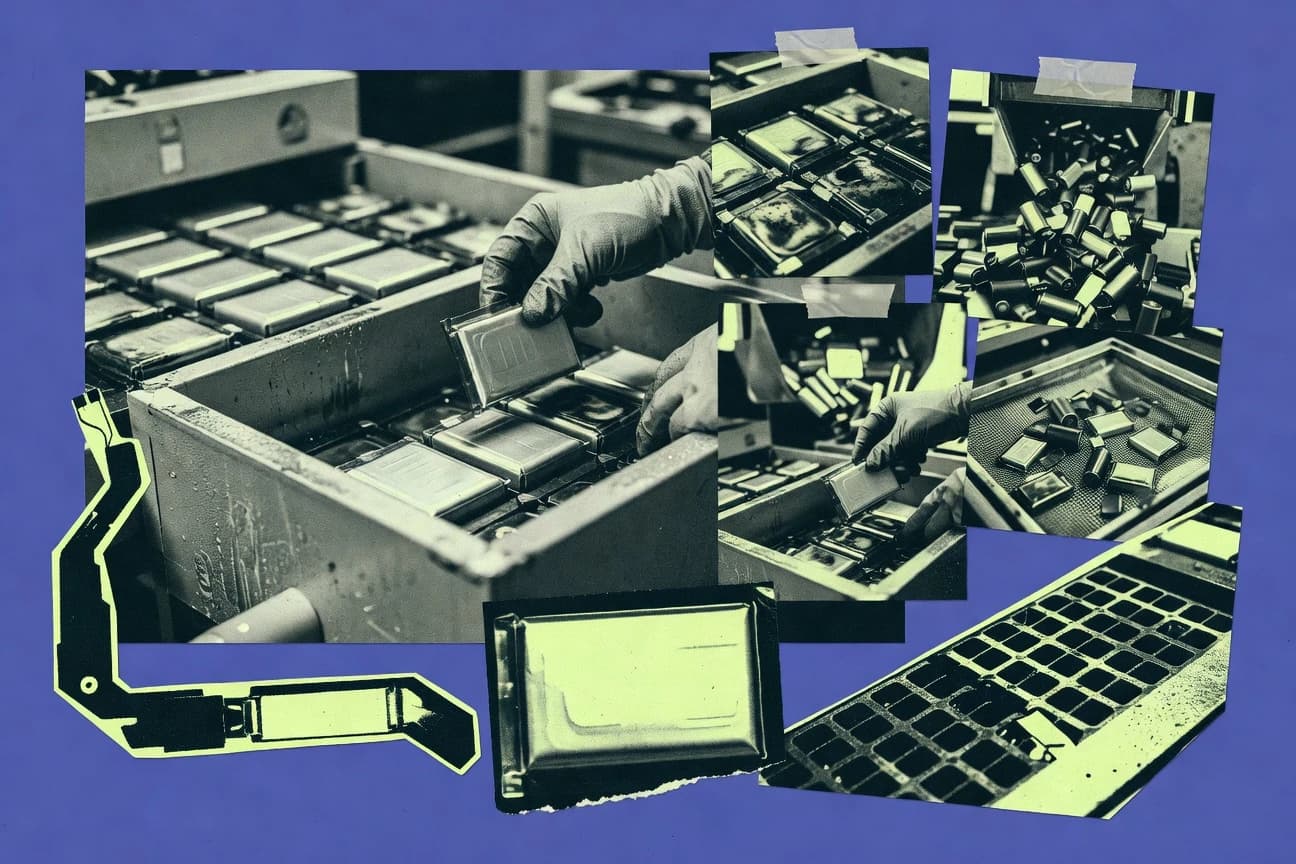
Hidden within our gadgets and cars, a USD 14.5 billion industry is rapidly expanding into a USD 38.2 billion powerhouse by 2030 as the world races to reclaim the valuable metals inside every spent battery.

Key Takeaways

  • 1The global battery recycling market size was valued at USD 14.5 billion in 2022 and is expected to grow to USD 38.2 billion by 2030 at a CAGR of 12.9%.
  • 2Lithium-ion battery recycling capacity worldwide reached 200 GWh in 2022, with projections to exceed 1,500 GWh by 2030.
  • 3The battery recycling market in Europe is forecasted to grow from EUR 2.5 billion in 2023 to EUR 7.8 billion by 2030 at a CAGR of 17.5%.
  • 4In 2022, North America's battery recycling market was worth USD 3.2 billion, with a projected CAGR of 13.8% through 2030.
  • 5Europe recycled 62,000 tons of lithium-ion batteries in 2023, representing 15% of collected batteries.
  • 6China's battery recycling volume hit 320,000 tons in 2022, accounting for 52% of global total.
  • 7Hydrometallurgical processes recover up to 95% of lithium, 99% of cobalt, and 98% of nickel from black mass.
  • 8Pyrometallurgy recycling of lithium-ion batteries achieves 90% recovery of copper and 95% of nickel but only 50% for lithium.
  • 9Direct recycling technology can retain 90-95% of cathode active material structure, reducing energy use by 80% vs. new production.
  • 10Battery recycling reduces raw material mining needs by 40% for cobalt and 25% for nickel by 2030 globally.
  • 11Recycled battery materials lower EV battery costs by USD 20-30 per kWh compared to virgin materials.
  • 12The US battery recycling sector created 10,000 jobs in 2023, projected to reach 50,000 by 2030.
  • 13Battery recycling avoids 1.5 million tons of CO2 emissions per year globally, equivalent to removing 300,000 cars from roads.
  • 14Recycling one ton of lithium-ion batteries conserves 4.5 tons of CO2 equivalent compared to virgin production.
  • 15Global battery recycling diverts 95% of lead-acid batteries from landfills, preventing 2.7 million tons of waste in 2023.

The battery recycling industry is growing rapidly due to increasing demand for electric vehicles.

Economic Impacts

1Battery recycling reduces raw material mining needs by 40% for cobalt and 25% for nickel by 2030 globally.
Verified
2Recycled battery materials lower EV battery costs by USD 20-30 per kWh compared to virgin materials.
Verified
3The US battery recycling sector created 10,000 jobs in 2023, projected to reach 50,000 by 2030.
Verified
4Operating costs for hydrometallurgical recycling are USD 1,500-2,500 per ton vs. USD 4,000 for pyrometallurgy.
Directional
5Recovered cobalt from recycling sells at 20-30% discount to mined cobalt, averaging USD 25/kg in 2023.
Single source
6Battery recycling investments yielded 15-20% IRR for major players like Umicore in 2023.
Verified
7EU battery recycling mandates could save EUR 10 billion in raw material imports by 2030.
Verified
8Global battery recycling generates USD 5.2 billion in material value recovery annually as of 2023.
Verified
9Lead-acid battery recycling margins averaged 25% profit in North America in 2023 due to high demand.
Directional
10Recycling lithium-ion batteries cuts production costs by 35% for second-life applications.
Single source

Economic Impacts Interpretation

Battery recycling is clearly not just an environmental afterthought, as it strategically combines a potent blend of profit, job creation, and supply chain security, proving that what’s good for the planet can also be lucrative and necessary for the future.

Environmental and Sustainability Metrics

1Battery recycling avoids 1.5 million tons of CO2 emissions per year globally, equivalent to removing 300,000 cars from roads.
Verified
2Recycling one ton of lithium-ion batteries conserves 4.5 tons of CO2 equivalent compared to virgin production.
Verified
3Global battery recycling diverts 95% of lead-acid batteries from landfills, preventing 2.7 million tons of waste in 2023.
Verified
4Recycled batteries reduce water usage by 40% and energy by 65% versus primary mining and refining.
Directional
5EV battery recycling recovers materials preventing 50 kg CO2/kWh in avoided mining emissions.
Single source
6In 2023, battery recycling saved 1.2 million cubic meters of landfill space worldwide.
Verified
7Closed-loop recycling achieves 90% circularity for cobalt, reducing geopolitical supply risks.
Verified
8Recycling reduces acid mine drainage pollution by 75% for lead and cadmium recovery.
Verified
9Battery recycling lowers global warming potential of battery production by 30-50%.
Directional

Environmental and Sustainability Metrics Interpretation

Think of battery recycling as society's clever side hustle, quietly dodging millions of tons of emissions, waste, and geopolitical drama while saving enough energy, water, and landfill space to make even the most ardent environmentalist crack a satisfied smile.

Global Market Trends

1The global battery recycling market size was valued at USD 14.5 billion in 2022 and is expected to grow to USD 38.2 billion by 2030 at a CAGR of 12.9%.
Verified
2Lithium-ion battery recycling capacity worldwide reached 200 GWh in 2022, with projections to exceed 1,500 GWh by 2030.
Verified
3The battery recycling market in Europe is forecasted to grow from EUR 2.5 billion in 2023 to EUR 7.8 billion by 2030 at a CAGR of 17.5%.
Verified
4Global demand for recycled battery materials is expected to reach 1.2 million tons by 2025, driven by EV battery production.
Directional
5The battery recycling industry saw investments totaling USD 2.1 billion in 2023 across startups and expansions worldwide.
Single source
6Worldwide, the lithium-ion battery recycling market is projected to hit USD 22.4 billion by 2030, growing at 45.2% CAGR from 2023.
Verified
7In 2023, global recycled battery cathode materials production reached 45,000 tons, up 28% from 2022.
Verified
8The market for battery recycling equipment globally was valued at USD 1.8 billion in 2022, expected to double by 2028.
Verified
9Global battery recycling revenue grew 15.4% YoY in 2023 to USD 16.7 billion.
Directional
10Projections indicate the global EV battery recycling market will expand from USD 4.5 billion in 2023 to USD 18.9 billion by 2032.
Single source
11The global battery recycling market size was valued at USD 14.5 billion in 2022 and is expected to grow to USD 38.2 billion by 2030 at a CAGR of 12.9%.
Verified
12Lithium-ion battery recycling capacity worldwide reached 200 GWh in 2022, with projections to exceed 1,500 GWh by 2030.
Verified
13The battery recycling market in Europe is forecasted to grow from EUR 2.5 billion in 2023 to EUR 7.8 billion by 2030 at a CAGR of 17.5%.
Verified
14Global demand for recycled battery materials is expected to reach 1.2 million tons by 2025, driven by EV battery production.
Directional

Global Market Trends Interpretation

The battery recycling industry is experiencing explosive growth, proving that the future is not only electric but also fiercely determined to dig through its own trash for treasure.

Recycling Processes and Technologies

1Hydrometallurgical processes recover up to 95% of lithium, 99% of cobalt, and 98% of nickel from black mass.
Verified
2Pyrometallurgy recycling of lithium-ion batteries achieves 90% recovery of copper and 95% of nickel but only 50% for lithium.
Verified
3Direct recycling technology can retain 90-95% of cathode active material structure, reducing energy use by 80% vs. new production.
Verified
4Bioleaching methods using bacteria recover 85% copper, 70% nickel, and 60% cobalt from spent batteries.
Directional
5Mechanical pretreatment shredding reduces battery volume by 70% and separates 60% of plastics for reuse.
Single source
6Electrodialysis recycling extracts 92% of lithium from leachate solutions in under 10 hours.
Verified
7Supercritical water oxidation destroys 99.9% of organic electrolytes in battery waste.
Verified
8Laser-induced breakdown spectroscopy sorts battery chemistries with 98% accuracy in real-time.
Verified
9Solvent extraction in hydrometallurgy achieves 99.5% purity for cobalt sulfate from recycled black mass.
Directional
10Microwave-assisted leaching recovers 97% lithium and 95% manganese from LMO batteries in 30 minutes.
Single source

Recycling Processes and Technologies Interpretation

In an impressive yet frantic technological arms race to reclaim battery treasure, hydrometallurgy is the meticulous jeweler extracting near-pure metals, pyromet is the blunt but effective blacksmith who loses half the lithium, and direct recycling is the elegant artisan who fixes the precious vase instead of smashing it for its parts.

Recycling Rates and Volumes

1US lithium-ion battery recycling rate improved to 5% in 2023 from 1% in 2020.
Verified
2Europe achieved 53% recycling rate for portable batteries in 2022 per EU Battery Directive.
Verified
3Global lead-acid battery recycling rate stands at 99% for automotive sector in 2023.
Verified
492,000 tons of lithium-ion batteries were collected in the EU in 2023, recycled at 65% rate.
Directional
5China's LIB recycling volume grew to 500,000 tons in 2023, 18% collection rate.
Single source
6US recycled 12 million lead-acid batteries in 2023, 99.6% rate.
Verified
7Global lithium-ion battery waste volume hit 1.2 million tons in 2023, 10% recycled.
Verified
8Japan reports 91% recycling rate for nickel-metal hydride batteries in 2022.
Verified
9India's portable battery recycling rate is 25% in 2023, targeting 70% by 2030.
Directional
10Worldwide, 250,000 tons of EV batteries reached end-of-life in 2023, 8% recycled.
Single source

Recycling Rates and Volumes Interpretation

While the near-perfect recycling of car batteries shows what's possible, the meager 5% to 10% rates for modern lithium-ion batteries reveal a global race where the future is piling up much faster than we're processing it.

Regional Statistics

1In 2022, North America's battery recycling market was worth USD 3.2 billion, with a projected CAGR of 13.8% through 2030.
Verified
2Europe recycled 62,000 tons of lithium-ion batteries in 2023, representing 15% of collected batteries.
Verified
3China's battery recycling volume hit 320,000 tons in 2022, accounting for 52% of global total.
Verified
4In the US, 245,000 tons of lead-acid batteries were recycled in 2023, achieving a 99% recycling rate.
Directional
5India's battery recycling capacity is set to reach 1 GWh by 2025, up from 0.2 GWh in 2023.
Single source
6Japan recycled 95% of its automotive lead-acid batteries in 2022, totaling 1.2 million units.
Verified
7South Korea's lithium-ion battery recycling rate reached 12% in 2023, with 18,000 tons processed.
Verified
8Australia's battery recycling industry processed 25,000 tons of batteries in 2023, a 20% increase YoY.
Verified
9In Germany, 45,000 tons of EV batteries were collected for recycling in 2023.
Directional
10Brazil recycled 85% of its 150,000 tons of lead-acid batteries in 2022.
Single source

Regional Statistics Interpretation

While China is overwhelmingly the world's battery recycling heavyweight, the frantic global race to catch up is proving that the future of power is, ironically, in our trash.

Types of Batteries Recycled

1Lithium-ion batteries account for 45% of all recycled battery weight globally in 2023.
Verified
2Lead-acid batteries represent 52% of the global battery recycling volume, 15 million tons annually.
Verified
3Nickel-metal hydride batteries from hybrids comprised 12% of recycled batteries in 2023.
Verified
4Lithium iron phosphate (LFP) batteries recycling grew 40% YoY to 80,000 tons in 2023.
Directional
5Alkaline batteries make up 25% of portable battery recycling streams in Europe.
Single source
6NMC lithium-ion batteries dominate EV recycling at 60% of processed volume in 2023.
Verified
7Sodium-ion batteries recycling pilots processed 5,000 tons in 2023, 3% of emerging types.
Verified
8Zinc-carbon batteries account for 18% of household battery recycling in the US.
Verified
9Silver-oxide button cells recycling recovered 1.2 tons of silver in 2023 globally.
Directional
10Li-S and solid-state batteries entered recycling at 2,000 tons scale in 2023 pilots.
Single source

Types of Batteries Recycled Interpretation

The recycling story of 2023 is a tale of two heavyweights, lead-acid and lithium-ion, battling for mass while a feisty pack of newcomers, from LFPs to solid-state, sprint from the lab to the reclaim line, proving that what we power our world with today will be meticulously mined from our waste tomorrow.

Sources & References

  • GRANDVIEWRESEARCH logo
    Reference 1
    GRANDVIEWRESEARCH
    grandviewresearch.com
    Visit source
  • MCKINSEY logo
    Reference 2
    MCKINSEY
    mckinsey.com
    Visit source
  • MARKETSANDMARKETS logo
    Reference 3
    MARKETSANDMARKETS
    marketsandmarkets.com
    Visit source
  • BCG logo
    Reference 4
    BCG
    bcg.com
    Visit source
  • IDTECHEX logo
    Reference 5
    IDTECHEX
    idtechex.com
    Visit source
  • FORTUNEBUSINESSINSIGHTS logo
    Reference 6
    FORTUNEBUSINESSINSIGHTS
    fortunebusinessinsights.com
    Visit source
  • WOODMAC logo
    Reference 7
    WOODMAC
    woodmac.com
    Visit source
  • RESEARCHANDMARKETS logo
    Reference 8
    RESEARCHANDMARKETS
    researchandmarkets.com
    Visit source
  • STATISTA logo
    Reference 9
    STATISTA
    statista.com
    Visit source
  • PRECEDENCERESEARCH logo
    Reference 10
    PRECEDENCERESEARCH
    precedenceresearch.com
    Visit source
  • EUROBAT logo
    Reference 11
    EUROBAT
    eurobat.org
    Visit source
  • IEA logo
    Reference 12
    IEA
    iea.org
    Visit source
  • BATTERYRECYCLING logo
    Reference 13
    BATTERYRECYCLING
    batteryrecycling.com
    Visit source
  • NITI logo
    Reference 14
    NITI
    niti.gov.in
    Visit source
  • JBPA logo
    Reference 15
    JBPA
    jbpa.or.jp
    Visit source
  • KOREAHERALD logo
    Reference 16
    KOREAHERALD
    koreaherald.com
    Visit source
  • RECYCLINGTODAY logo
    Reference 17
    RECYCLINGTODAY
    recyclingtoday.com
    Visit source
  • BUNDESUMWELTMINISTERIUM logo
    Reference 18
    BUNDESUMWELTMINISTERIUM
    bundesumweltministerium.de
    Visit source
  • ABINEE logo
    Reference 19
    ABINEE
    abinee.org.br
    Visit source
  • PUBS logo
    Reference 20
    PUBS
    pubs.acs.org
    Visit source
  • SCIENCEDIRECT logo
    Reference 21
    SCIENCEDIRECT
    sciencedirect.com
    Visit source
  • NATURE logo
    Reference 22
    NATURE
    nature.com
    Visit source
  • MDPI logo
    Reference 23
    MDPI
    mdpi.com
    Visit source
  • RESEARCHGATE logo
    Reference 24
    RESEARCHGATE
    researchgate.net
    Visit source
  • PUBS logo
    Reference 25
    PUBS
    pubs.rsc.org
    Visit source
  • OPTICA-OPN logo
    Reference 26
    OPTICA-OPN
    optica-opn.org
    Visit source
  • METALLURGICAL-RESEARCH logo
    Reference 27
    METALLURGICAL-RESEARCH
    metallurgical-research.org
    Visit source
  • BLOOMBERGNEF logo
    Reference 28
    BLOOMBERGNEF
    bloombergnef.com
    Visit source
  • ENERGY logo
    Reference 29
    ENERGY
    energy.gov
    Visit source
  • FASTMARKETS logo
    Reference 30
    FASTMARKETS
    fastmarkets.com
    Visit source
  • UMICORE logo
    Reference 31
    UMICORE
    umicore.com
    Visit source
  • EUROPARL logo
    Reference 32
    EUROPARL
    europarl.europa.eu
    Visit source
  • ARGUSMEDIA logo
    Reference 33
    ARGUSMEDIA
    argusmedia.com
    Visit source
  • NREL logo
    Reference 34
    NREL
    nrel.gov
    Visit source
  • EPA logo
    Reference 35
    EPA
    epa.gov
    Visit source
  • BASF logo
    Reference 36
    BASF
    basf.com
    Visit source
  • IRENA logo
    Reference 37
    IRENA
    irena.org
    Visit source
  • WORLDBATTERYGIANT logo
    Reference 38
    WORLDBATTERYGIANT
    worldbatterygiant.com
    Visit source
  • CIRCULARITY-GAP logo
    Reference 39
    CIRCULARITY-GAP
    circularity-gap.world
    Visit source
  • UNEP logo
    Reference 40
    UNEP
    unep.org
    Visit source
  • IOPSCIENCE logo
    Reference 41
    IOPSCIENCE
    iopscience.iop.org
    Visit source
  • EC logo
    Reference 42
    EC
    ec.europa.eu
    Visit source
  • ILZSG logo
    Reference 43
    ILZSG
    ilzsg.org
    Visit source
  • EUCBATTERYALLIANCE logo
    Reference 44
    EUCBATTERYALLIANCE
    eucbatteryalliance.eu
    Visit source
  • CNESA logo
    Reference 45
    CNESA
    cnesa.org
    Visit source
  • ENV logo
    Reference 46
    ENV
    env.go.jp
    Visit source
  • CPCB logo
    Reference 47
    CPCB
    cpcb.nic.in
    Visit source
  • BNEF logo
    Reference 48
    BNEF
    bnef.com
    Visit source
  • JEMA-NET logo
    Reference 49
    JEMA-NET
    jema-net.or.jp
    Visit source
  • COREVE logo
    Reference 50
    COREVE
    coreve.org
    Visit source
  • : HTTPS: logo
    Reference 51
    : HTTPS:
    : https:
    Visit source
  • CALL2RECYCLE logo
    Reference 52
    CALL2RECYCLE
    call2recycle.org
    Visit source
  • INTERSTATEBATTERIES logo
    Reference 53
    INTERSTATEBATTERIES
    interstatebatteries.com
    Visit source

Logos provided by Logo.dev

On this page

  1. 01Key Takeaways
  2. 02Economic Impacts
  3. 03Environmental and Sustainability Metrics
  4. 04Global Market Trends
  5. 05Recycling Processes and Technologies
  6. 06Recycling Rates and Volumes
  7. 07Regional Statistics
  8. 08Types of Batteries Recycled
Timothy Grant

Timothy Grant

Author

Felix Zimmermann
Editor
Claire Beaumont
Fact Checker

Our Commitment to Accuracy

  • Rigorous fact-checking process
  • Data from reputable sources
  • Regular updates to ensure relevance
Learn more

Explore More In This Category

  • Utility Statistics
  • France Energy Prices Industry Statistics
  • Hazardous Waste Industry Statistics
  • Natural Gas Production Statistics
  • Nuclear Energy Industry Statistics
  • Global Water Consumption Statistics