
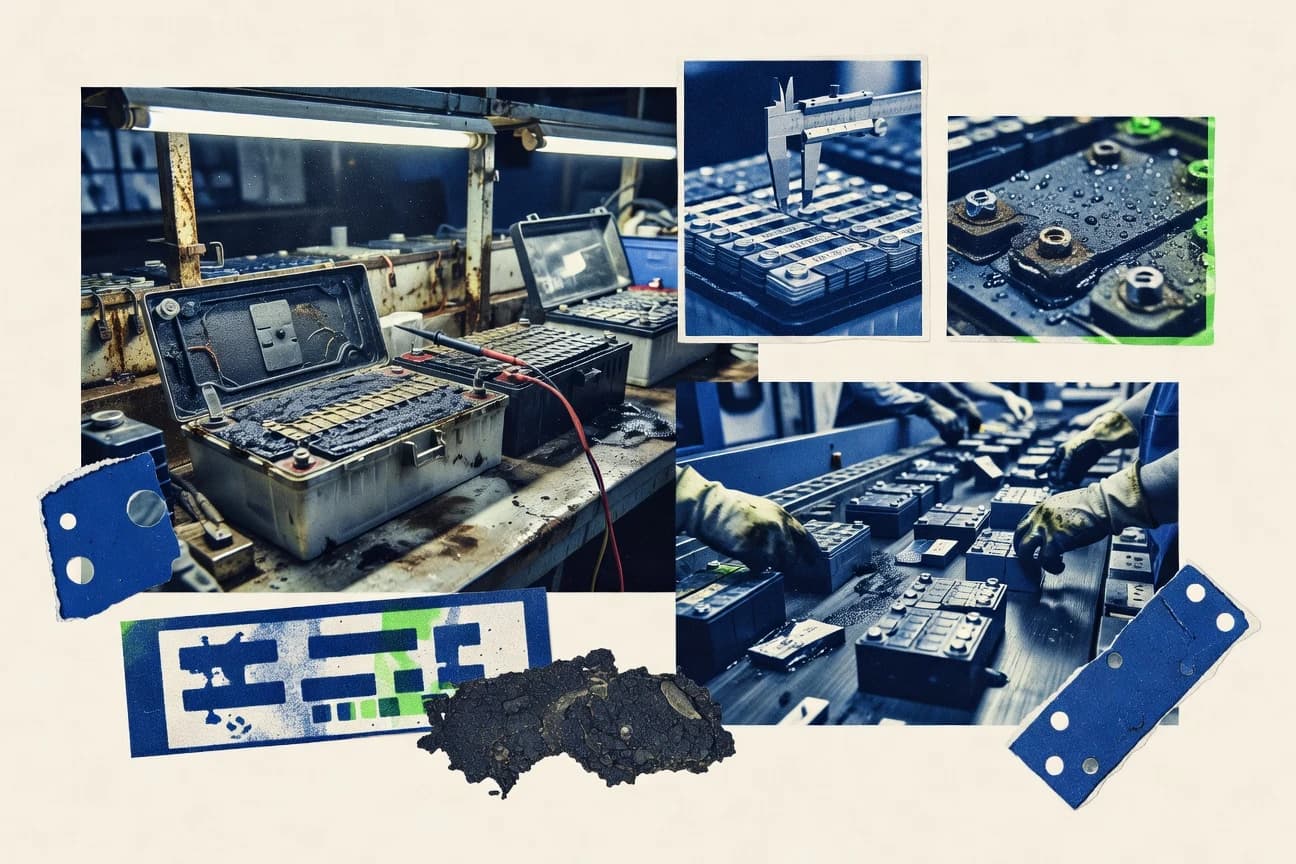

Global lead-acid battery market values exceed 40 billion dollars with multiple projections showing continued expansion. Forecasts indicate faster growth in the stationary segment than in automotive applications as renewable energy storage and data center backup demand increase. Around 907 kilograms of battery material are required to recover each metric ton of lead.
Key Takeaways
- Some market forecasts project the stationary lead-acid battery segment to grow at a higher CAGR than the automotive segment through 2030
- The shift toward renewable energy drives higher demand for stationary lead-acid batteries for grid storage and off-grid systems; stationary segment expansion rate is highlighted as faster than automotive in many market forecasts (industry reports)
- Demand for lead-acid batteries for UPS backup continues due to data center power reliability requirements; UPS backup market growth supports lead-acid volumes (reputable trade analyst reports)
- US$41.0 billion global lead-acid battery market size in 2022, projected to reach US$56.0 billion by 2032
- US$33.8 billion global lead-acid battery market size in 2023, forecast to reach US$47.0 billion by 2032
- US$41.5 billion global lead-acid battery market size in 2023, forecast to reach US$62.7 billion by 2032
- Approx. 2,000 lb (≈907 kg) of lead-acid battery material input per metric ton lead recovered (stoichiometric basis for recycling yields discussed in recycling literature)
- Global production of lead (primary and secondary combined) reached about 12.1 million tonnes in 2023 (world mine output + secondary lead context used by trade bodies)
- USGS reported U.S. mine production of lead at 0.36 million metric tons in 2023
- Lead-acid batteries can achieve cycle life of roughly 300–800 cycles at 50% depth of discharge for many cycling configurations (peer-reviewed performance ranges)
- Float-service life of lead-acid batteries commonly ranges from 10 to 15 years in telecom/UPS use cases when operated within manufacturer temperature and voltage recommendations (industry practice)
- Charging lead-acid batteries at higher rates increases gassing and reduces cycle life; typical recommended charge current limits are expressed as C/10 to C/20 for many maintenance/charging regimes (technical charging guidance)
- Batteries in the EU must be collected separately and treated; Directive 2006/66/EC required collection schemes for waste batteries
- EU Battery Regulation (2023/1542) sets new requirements including collection targets and recycled content targets for batteries placed on the EU market (entered into force 2023)
- OSHA lead action level is 30 micrograms per cubic meter of air (as defined in 29 CFR 1910.1025)
Stationary lead-acid batteries are set to grow faster than automotive through 2030, as market demand rises.
Related reading
01 · Category
Industry Trends5 stats
01
Some market forecasts project the stationary lead-acid battery segment to grow at a higher CAGR than the automotive segment through 2030
02
The shift toward renewable energy drives higher demand for stationary lead-acid batteries for grid storage and off-grid systems; stationary segment expansion rate is highlighted as faster than automotive in many market forecasts (industry reports)
03
Demand for lead-acid batteries for UPS backup continues due to data center power reliability requirements; UPS backup market growth supports lead-acid volumes (reputable trade analyst reports)
04
Fast-charging capability improvements for lead-acid in electric vehicles are discussed as enabling higher acceptance for start-stop systems (peer-reviewed EV energy studies)
05
Regenerative braking and start-stop adoption increases automotive battery cycling frequency, influencing design for higher cycle life (automotive powertrain research)
Interpretation
Industry Trends Interpretation
Industry trends show stationary lead-acid batteries are poised to outpace automotive growth through 2030 as renewable energy storage and data center UPS backup demand keep expanding, while faster charging and more frequent cycling from start stop and regenerative braking are pushing upgrades across the value chain.
02 · Category
Market Size5 stats
01
US$41.0 billion global lead-acid battery market size in 2022, projected to reach US$56.0 billion by 2032
02
US$33.8 billion global lead-acid battery market size in 2023, forecast to reach US$47.0 billion by 2032
03
US$41.5 billion global lead-acid battery market size in 2023, forecast to reach US$62.7 billion by 2032
04
US$30.1 billion global lead-acid battery market size in 2022, forecast to reach US$56.1 billion by 2031
05
US$6.4 billion global battery recycling market size in 2023, relevant for lead-acid recycling feedstock demand
Interpretation
Market Size Interpretation
Across sources, the global lead-acid battery market is consistently forecast to grow from about US$30.1 billion in 2022 to between roughly US$56.0 billion and US$62.7 billion by 2031 to 2032, signaling sustained expansion of overall market size while also implying growing recycling feedstock demand, with the battery recycling market alone estimated at US$6.4 billion in 2023.
03 · Category
Production & Supply5 stats
01
Approx. 2,000 lb (≈907 kg) of lead-acid battery material input per metric ton lead recovered (stoichiometric basis for recycling yields discussed in recycling literature)
02
Global production of lead (primary and secondary combined) reached about 12.1 million tonnes in 2023 (world mine output + secondary lead context used by trade bodies)
03
USGS reported U.S. mine production of lead at 0.36 million metric tons in 2023
04
Battery manufacturing energy intensity for lead-acid (lead processing and plate formation) typically falls in the tens of MJ/kg range depending on process route (life-cycle assessment ranges reported in peer-reviewed studies)
05
Stationary lead-acid battery capacity deployments are typically specified in kW/kWh and backup hours; typical telecom back-up sizing is often 1–8 hours (industry design practice reported by telecom engineering guides)
Interpretation
Production & Supply Interpretation
From a Production and Supply perspective, the industry’s 2023 scale and inputs stand out, with global lead production reaching about 12.1 million tonnes while recycling requires roughly 907 kg of lead-acid battery material per metric ton of lead recovered and battery manufacturing energy use typically sitting in the tens of MJ per kg.
More related reading
04 · Category
Performance & Lifespan5 stats
01
Lead-acid batteries can achieve cycle life of roughly 300–800 cycles at 50% depth of discharge for many cycling configurations (peer-reviewed performance ranges)
02
Float-service life of lead-acid batteries commonly ranges from 10 to 15 years in telecom/UPS use cases when operated within manufacturer temperature and voltage recommendations (industry practice)
03
Charging lead-acid batteries at higher rates increases gassing and reduces cycle life; typical recommended charge current limits are expressed as C/10 to C/20 for many maintenance/charging regimes (technical charging guidance)
04
Capacity fade of lead-acid batteries accelerated by sulfation is often measurable within the first year under poor storage (ageing kinetics reported in peer-reviewed studies)
05
Under standard test conditions, lead-acid batteries have specific energy typically around 30–50 Wh/kg (materials/engineering reviews)
Interpretation
Performance & Lifespan Interpretation
For the Performance & Lifespan category, lead acid batteries typically deliver about 300 to 800 cycles at 50 percent depth of discharge and around 10 to 15 years in float service, but they can lose capacity much faster when pushed with aggressive charging or poor storage that accelerates sulfation.
05 · Category
Regulation & Compliance7 stats
01
Batteries in the EU must be collected separately and treated; Directive 2006/66/EC required collection schemes for waste batteries
02
EU Battery Regulation (2023/1542) sets new requirements including collection targets and recycled content targets for batteries placed on the EU market (entered into force 2023)
03
OSHA lead action level is 30 micrograms per cubic meter of air (as defined in 29 CFR 1910.1025)
04
EU REACH restricts lead compounds; for example, lead(II) carbonate is subject to authorization/limitations depending on use categories (REACH restriction inventory)
05
California’s Proposition 65 lists lead as a chemical known to cause cancer and reproductive harm, affecting consumer product warnings and lead use compliance
06
The Basel Convention controls transboundary movements of hazardous waste; used lead-acid batteries fall under hazardous waste Y-series in many cases, requiring shipment documentation
07
The OECD Decision on the control of transboundary movements of wastes destined for recovery (C(2001)107/FINAL) includes hazardous waste notification procedures relevant to battery recycling shipments
Interpretation
Regulation & Compliance Interpretation
Regulation & Compliance is tightening rapidly for lead-acid batteries as EU rules move from the 2006/66/EC collection mandate to the EU Battery Regulation (2023/1542) with new collection and recycled-content targets, while US and other frameworks keep driving stricter controls such as OSHA’s 30 micrograms per cubic meter lead air action level.
report visual · Key figures
Global lead-acid battery market growth to 2032
Multiple market reports project steady expansion of the global lead-acid battery market through 2032.
$41.0 billion
US$41.0 billion global lead-acid battery market size in 2022, projected to reach US$56.0 billion by 2032
$33.8 billion
US$33.8 billion global lead-acid battery market size in 2023, forecast to reach US$47.0 billion by 2032
$41.5 billion
US$41.5 billion global lead-acid battery market size in 2023, forecast to reach US$62.7 billion by 2032
source-verifiedprecedenceresearch.com · globenewswire.com · imarcgroup.com2023
Reference
Cite This Report
This report is designed to be cited. We maintain stable URLs and versioned verification dates. Copy the format appropriate for your publication below.
APA
David Sutherland. (2026, February 13). Lead-Acid Battery Industry Statistics. Gitnux. https://gitnux.org/lead-acid-battery-industry-statistics
MLA
David Sutherland. "Lead-Acid Battery Industry Statistics." Gitnux, 13 Feb 2026, https://gitnux.org/lead-acid-battery-industry-statistics.
Chicago
David Sutherland. 2026. "Lead-Acid Battery Industry Statistics." Gitnux. https://gitnux.org/lead-acid-battery-industry-statistics.
Sources & references
27 datasets cited across this report · attribution is report-level
+7 additional datasets cited (not shown individually)