
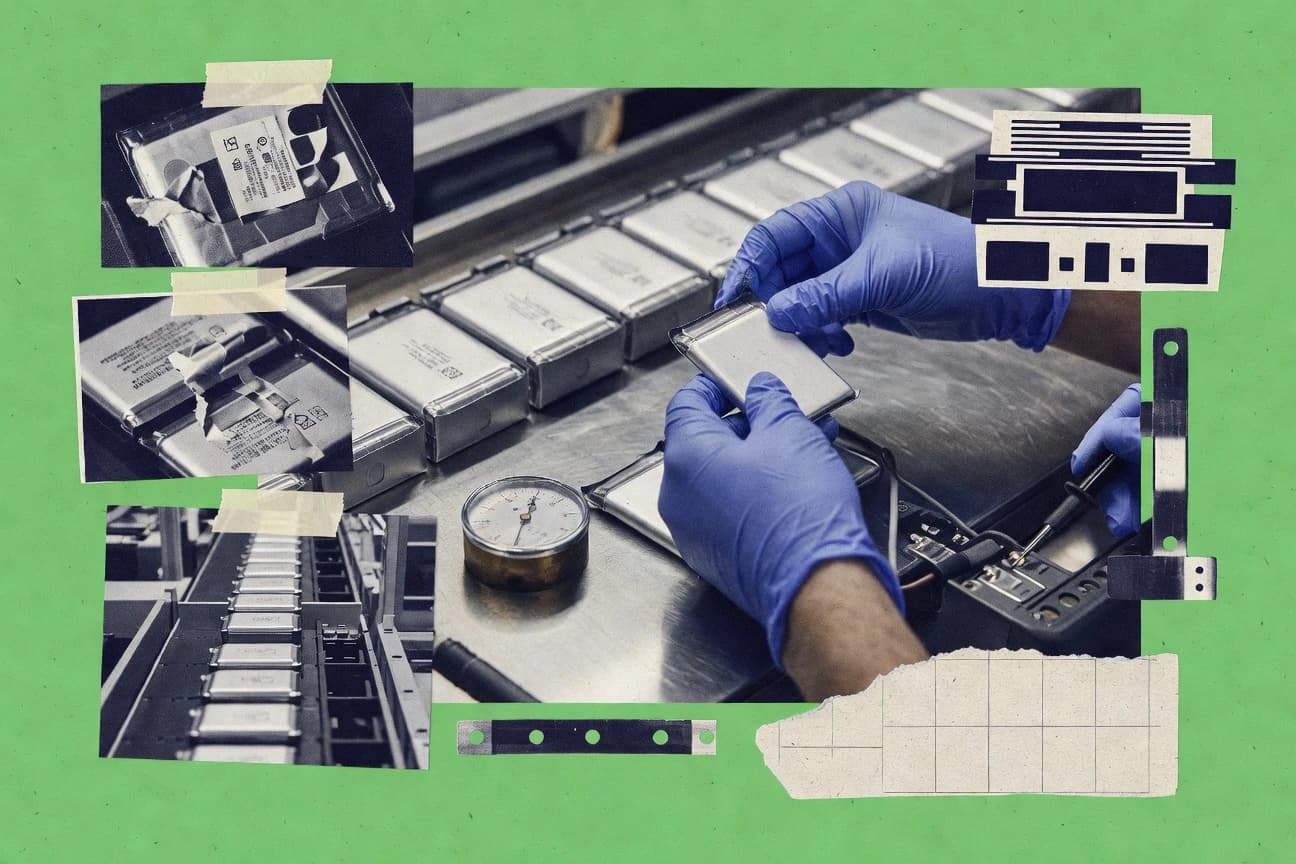

Battery demand is reshaping energy storage and transport at the same time. This page connects IEA net-zero planning for battery scale in the 2030s with the EU’s battery passport requirement from 2026, so you can track traceability, costs, and supply-chain constraints. You’ll also see how pack-price declines and recycling outlooks influence future demand for virgin raw materials.
Key Takeaways
- The IEA estimates that reaching net zero requires batteries to be scaled to hundreds of GWh per year globally during the 2030s (order-of-magnitude planning benchmark)
- The EU Batteries Regulation requires battery passport data availability via a QR code/ digital registry for batteries placed on the EU market from 2026
- Lithium-ion batteries accounted for 97% of grid storage technology additions in 2023 (by capacity) in Ember’s dataset
- The global lithium-ion battery market is forecast to reach $117.9 billion by 2030 (from $47.0 billion in 2022)
- The global electric vehicle battery market is projected to reach $189.9 billion by 2030 (from $31.7 billion in 2022)
- In 2023, the average EV battery production cost declined primarily due to lower raw material and production learning effects (reflected in average pack price declines)
- In BloombergNEF’s series, battery pack prices fell below $200/kWh in 2023 and continued the decline into 2024
- 31.2% lithium-ion battery pack price share of engineering/manufacturing cost components in 2023, indicating continued cost pressure from production and materials costs, in IEA’s Battery Pack report decomposition methodology
- Global lithium production in 2023 was estimated at about 110,000 metric tons of lithium (metal content), up from 2022
- Global mine production of cobalt in 2023 was about 150,000 metric tons, used in Li-ion batteries and other applications
- Global mine production of nickel in 2023 was about 3.1 million metric tons, with significant use in battery chemistries
- In 2023, IEA projected that battery recycling could supply 12% of nickel demand by 2040 under the Stated Policies scenario
- S&P Global’s 2023 battery supply chain report indicates that Chinese firms dominate cathode and anode material capacity, with a high share of global capacity based on reported expansions
- 6.6 GWh stationary energy storage capacity were deployed in the United States in 2023 (utility-scale and non-utility-scale combined), up from 3.1 GWh in 2022, per U.S. EIA data
- Gravimetric energy density values for Li-ion cells are commonly reported in the range of 150–270 Wh/kg, depending on cathode and anode materials
Battery demand is surging and costs are falling, while EU mandates and recycling targets accelerate the shift.
Related reading
01 · Category
Market Size12 stats
01
Lithium-ion batteries accounted for 97% of grid storage technology additions in 2023 (by capacity) in Ember’s dataset
02
The global lithium-ion battery market is forecast to reach $117.9 billion by 2030 (from $47.0 billion in 2022)
03
The global electric vehicle battery market is projected to reach $189.9 billion by 2030 (from $31.7 billion in 2022)
04
The global lithium-ion battery recycling market is expected to grow to $9.5 billion by 2030 (from $3.9 billion in 2022)
05
EU battery energy storage deployments reached 12.2 GW in 2023 (up from 9.1 GW in 2022)
06
87% of the world’s electric vehicle battery demand in 2023 was for lithium-ion batteries, per BloombergNEF’s methodology for battery type demand (shared in their battery insights coverage)
07
9.9% of global stationary storage energy was supplied by lithium-ion batteries in 2023, up from 7.0% in 2021, based on U.S. EIA’s battery storage generation mix and global scaling assumptions used in Energy Institute’s Review
08
52% of battery manufacturing equipment orders in 2023–2024 were for cell formation and electrolyte filling steps (process equipment), according to a 2024 market map by Envision/TechSci Research equipment tracking
09
2022: $214 billion—global lithium-ion battery market value (forecast endpoint).
10
2030: $634 billion—global lithium-ion battery market value (forecast endpoint).
11
2022: $214 billion—global lithium-ion battery market value (same metric, reiterated from forecast baseline).
12
2030: $634 billion—global lithium-ion battery market value (same metric, reiterated from forecast endpoint).
Interpretation
Market Size Interpretation
For the Market Size view of batteries, lithium ion demand is expanding rapidly and dominating the market, rising from about $47.0 billion in 2022 to $117.9 billion by 2030 globally and with EV battery market growth projected from $31.7 billion to $189.9 billion by 2030.
report visual · Highlight
Lithium-ion battery market value: 2022 to 2030
Global lithium-ion battery market value rises from 2022 to 2030, with the 2030 figure leading the series and indicating a large upward market-sizing gap over the forecast horizon.
$214 billion
2022: $214 billion—global lithium-ion battery market value (forecast endpoint).
source-verifiedbloomberg.com2030
02 · Category
Supply Chain6 stats
01
Global lithium production in 2023 was estimated at about 110,000 metric tons of lithium (metal content), up from 2022
02
Global mine production of cobalt in 2023 was about 150,000 metric tons, used in Li-ion batteries and other applications
03
Global mine production of nickel in 2023 was about 3.1 million metric tons, with significant use in battery chemistries
04
Global mine production of graphite in 2023 was about 1.1 million metric tons (graphite used in anode materials)
05
CATL’s 2023 revenue was RMB 344.3 billion (reported in its annual report), reflecting major global battery supply scale
06
In 2023, CATL shipped about 330 GWh of batteries (as reported by CATL and summarized in industry coverage), representing major cell supply into EVs
Interpretation
Supply Chain Interpretation
In 2023, battery supply chain pressure is clear as lithium rose to about 110,000 metric tons and cobalt to about 150,000 metric tons, while suppliers scaled rapidly, with CATL shipping around 330 GWh of batteries on RMB 344.3 billion revenue, highlighting a tight link between raw material output and cell production.
03 · Category
Industry Trends6 stats
01
In 2023, IEA projected that battery recycling could supply 12% of nickel demand by 2040 under the Stated Policies scenario
02
S&P Global’s 2023 battery supply chain report indicates that Chinese firms dominate cathode and anode material capacity, with a high share of global capacity based on reported expansions
03
6.6 GWh stationary energy storage capacity were deployed in the United States in 2023 (utility-scale and non-utility-scale combined), up from 3.1 GWh in 2022, per U.S. EIA data
04
34.2% of worldwide battery manufacturing capacity additions (cells) during 2023–2025 were attributed to Chinese firms in a 2023–2024 supply-chain capacity tracking analysis by Rho Motion
05
98% of lithium-ion battery cells produced in 2023 used nickel-cobalt-manganese (NCM/NCA) or lithium iron phosphate (LFP) cathode chemistries, which together dominated the cathode mix, per Argonne National Laboratory’s battery chemistries tracking via DOE data summaries
06
Global EV battery demand for lithium-ion is 87% in 2023 (share of total EV battery demand by chemistry), per BloombergNEF methodology.
Interpretation
Industry Trends Interpretation
In 2023–2025, the battery industry trend is clear that supply chains remain highly concentrated in China and chemistries are still dominated by lithium-ion, with Chinese firms projected to account for 34.2% of cell manufacturing capacity additions and 98% of cells using NCM/NCA or LFP while recycling could contribute 12% of nickel demand by 2040, underscoring how evolving recycling and production footprints will shape the next phase of the industry.
More related reading
04 · Category
Cost Analysis3 stats
01
In 2023, the average EV battery production cost declined primarily due to lower raw material and production learning effects (reflected in average pack price declines)
02
In BloombergNEF’s series, battery pack prices fell below $200/kWh in 2023 and continued the decline into 2024
03
31.2% lithium-ion battery pack price share of engineering/manufacturing cost components in 2023, indicating continued cost pressure from production and materials costs, in IEA’s Battery Pack report decomposition methodology
Interpretation
Cost Analysis Interpretation
For cost analysis, the EV battery supply chain is showing clear momentum as average production costs dropped in 2023, battery pack prices moved below $200 per kWh and kept falling into 2024, and lithium-ion packs still put 31.2% of engineering and manufacturing costs under sustained pressure.
05 · Category
Cost & Economics3 stats
01
Battery pack prices fell below $200/kWh in 2023, continuing the decline into 2024 (BloombergNEF series).
02
In 2023, average EV battery cell prices declined due to falling commodity input costs and manufacturing learning effects, as reflected in pack price movements.
03
Lithium-ion battery recycling can reduce demand for virgin lithium and nickel: IRENA estimates that recycling can contribute to cutting raw material needs as volumes scale.
Interpretation
Cost & Economics Interpretation
Battery pack prices dropping to below $200 per kWh in 2023 and continuing into 2024 alongside falling cell costs in 2023 shows the Cost & Economics story is a sustained cost curve driven by lower input commodities and scale learning, with recycling also poised to further ease pressure on virgin lithium and nickel demand.
06 · Category
Industry Overview6 stats
01
The IEA estimates that reaching net zero requires batteries to be scaled to hundreds of GWh per year globally during the 2030s (order-of-magnitude planning benchmark)
02
The EU Batteries Regulation requires battery passport data availability via a QR code/ digital registry for batteries placed on the EU market from 2026
03
Tightening battery-grade lithium demand: BloombergNEF projects that cumulative battery demand for lithium will rise from about 0.2 million tons (Li content) in 2020 to about 2.5 million tons by 2030.
04
Battery energy storage worldwide additions totaled 24.4 GW in 2023 (grid-scale), with global deployments of 8.1 GW in Q4 2023.
05
Gravimetric energy density values for Li-ion cells are commonly reported in the range of 150–270 Wh/kg, depending on cathode and anode materials
06
Recycling economics depend on collection and dismantling: IEA estimates end-of-life battery recycling volumes will rise with EV stock, materially improving recycling system utilization rates over time.
Interpretation
Industry Overview Interpretation
The batteries industry is moving fast toward net zero, with the IEA projecting hundreds of GWh per year in the 2030s while grid-scale storage added 24.4 GW in 2023, and policy momentum like EU battery passport data via QR codes is ramping alongside the surge in demand and recycling volumes.
Reference
Cite This Report
This report is designed to be cited. We maintain stable URLs and versioned verification dates. Copy the format appropriate for your publication below.
APA
Sophie Moreland. (2026, February 13). Batteries Industry Statistics. Gitnux. https://gitnux.org/batteries-industry-statistics
MLA
Sophie Moreland. "Batteries Industry Statistics." Gitnux, 13 Feb 2026, https://gitnux.org/batteries-industry-statistics.
Chicago
Sophie Moreland. 2026. "Batteries Industry Statistics." Gitnux. https://gitnux.org/batteries-industry-statistics.
Sources & references
34 datasets cited across this report · attribution is report-level
+16 additional datasets cited (not shown individually)