
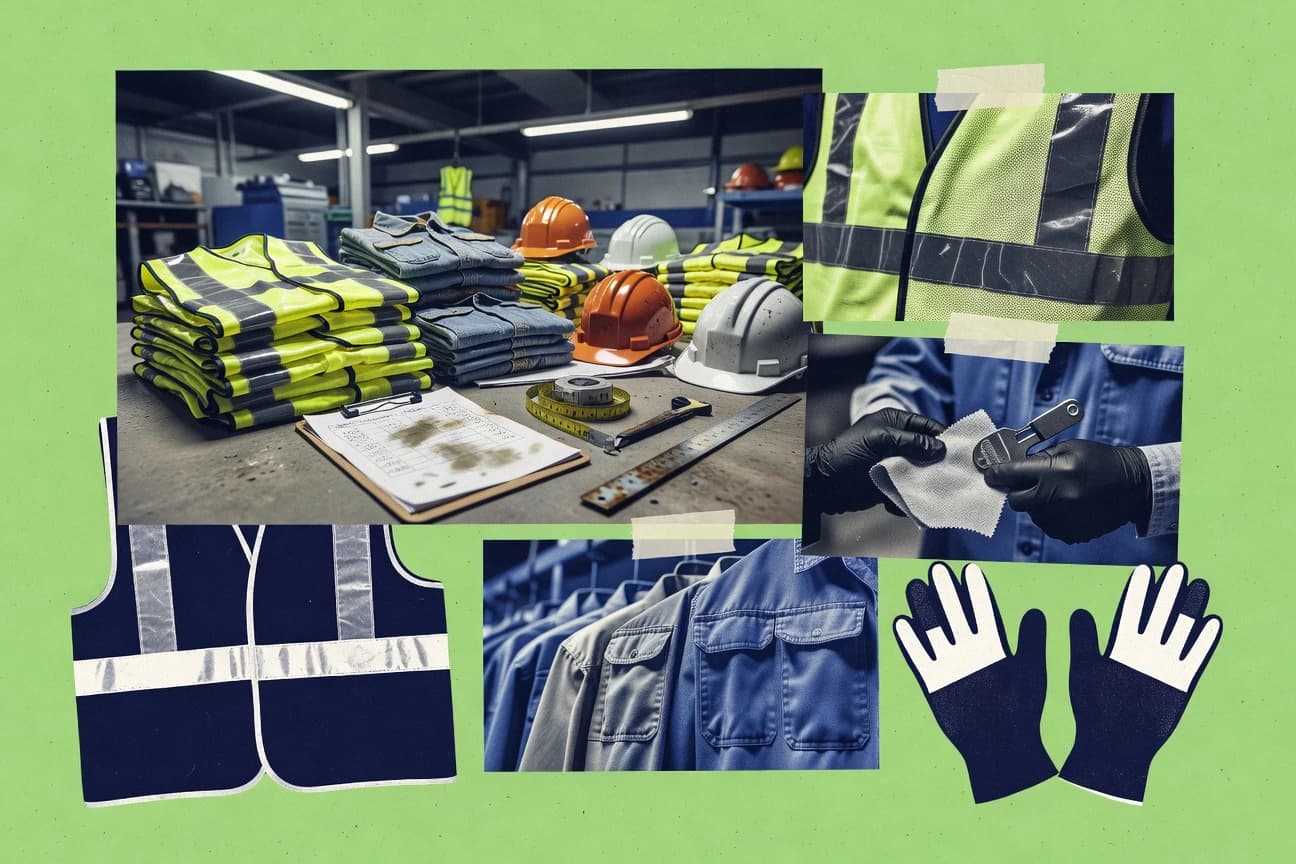

In 2023, the global workwear market hit USD 19.2 billion and is projected to climb to USD 28.5 billion by 2030 at a 5.8% CAGR. Even more telling, construction already accounts for 32% of end-users while protective clothing holds a 52% share, yet specialized buyers like healthcare professionals still drive 15% of annual demand for workwear built for the job. The split between what workers buy and what fabrics and features dominate is where the industry’s real shift becomes clear.
Key Takeaways
- Construction workers represent 32% of global workwear end-users in 2023.
- Manufacturing sector purchases 28% of all workwear by volume 2023.
- Healthcare professionals buy 15% of specialized workwear annually.
- The global workwear market size was valued at USD 19.2 billion in 2023 and is projected to reach USD 28.5 billion by 2030, growing at a CAGR of 5.8% from 2024 to 2030.
- In 2022, the workwear market in North America accounted for over 35% of the global revenue share.
- Europe's workwear industry generated €12.4 billion in sales in 2023.
- Protective clothing segment dominates with 52% global share in 2023.
- Hi-visibility apparel accounted for 22% of workwear sales in 2023.
- Flame retardant fabrics in 28% of industrial workwear in 2023.
- North America holds 38% of global workwear market share in 2023.
- Europe workwear market penetration rate at 45% among industrial workers in 2023.
- Asia-Pacific region saw 12% YoY growth in workwear demand in 2023.
- 70% of global workwear incorporates recycled materials by 2023 leading brands.
- Workwear brands reduced water usage by 30% in dyeing processes 2023.
- Bio-based FR treatments replace chemicals in 25% new workwear lines 2023.
Construction remains the biggest buyer as protective and eco focused workwear grows toward USD 28.5 billion by 2030.
Related reading
01 · Category
Consumer And End User Analysis25 stats
01
Construction workers represent 32% of global workwear end-users in 2023.
02
Manufacturing sector purchases 28% of all workwear by volume 2023.
03
Healthcare professionals buy 15% of specialized workwear annually.
04
Oil & gas workers average 4 workwear sets per person yearly 2023.
05
62% of U.S. construction firms provide branded workwear to employees.
06
Women comprise 25% of workwear buyers in industrial sectors 2023.
07
78% of corporate clients prefer rental over purchase for workwear.
08
Logistics & transportation end-users 18% market share in APAC 2023.
09
45% of SMEs outsource workwear procurement vs 30% large corps.
10
Average spend per construction worker on workwear $450annually 2023.
11
55% of hospitality workers prioritize comfort in workwear selection.
12
Electricians demand 92% compliance with NFPA 70E standards in workwear.
13
68% of manufacturers integrate RFID for workwear tracking 2023.
14
Agriculture end-users prefer durable denim workwear 40% usage rate.
15
72% of firefighters require custom-fit FR workwear per survey.
16
Retail sector workwear adoption 35% for staff uniforms 2023.
17
Utility workers 85% usage of multi-hazard workwear in 2023.
18
52% of end-users aged 25-44 prefer sustainable workwear brands.
19
Welding shops buy 2.5 million protective jackets yearly globally.
20
Food processing plants mandate 100% anti-microbial workwear compliance.
21
40% growth in female-specific workwear demand in mining 2023.
22
Aviation ground crew workwear standardized 95% across airlines.
23
65% of lab technicians renew workwear every 6 months.
24
Emergency services allocate 12% of budget to workwear procurement.
25
75% of surveyed end-users want stretch fabrics in workwear.
Interpretation
Consumer And End User Analysis Interpretation
In the consumer and end user landscape, construction dominates demand with 32% of global workwear end-users in 2023 while manufacturing adds 28% by volume, and the mix is further shaped by sectors like healthcare at 15% buying specialized workwear and by the growing share of women as 25% of industrial workwear buyers.
02 · Category
Market Size And Growth30 stats
01
The global workwear market size was valued at USD 19.2 billion in 2023 and is projected to reach USD 28.5 billion by 2030, growing at a CAGR of 5.8% from 2024 to 2030.
02
In 2022, the workwear market in North America accounted for over 35% of the global revenue share.
03
Europe's workwear industry generated €12.4 billion in sales in 2023.
04
The Asia-Pacific workwear market is expected to grow at the highest CAGR of 6.7% during 2023-2030 due to industrialization.
05
U.S. workwear market revenue reached $7.8 billion in 2023.
06
Global corporate workwear segment held 42% market share in 2023.
07
Protective workwear sub-market valued at $9.5 billion globally in 2022.
08
Workwear e-commerce sales grew by 15% YoY in 2023 to $4.2 billion worldwide.
09
Latin America workwear market to expand from $1.8 billion in 2023 to $2.9 billion by 2028 at 10% CAGR.
10
Middle East & Africa workwear sector valued at $1.1 billion in 2023 with 4.5% projected CAGR.
11
U.K. workwear market size was £2.3 billion in 2023.
12
China's workwear industry output reached 5.2 billion pieces in 2022.
13
India workwear market projected to hit $1.5 billion by 2027 from $0.9 billion in 2022.
14
Australia workwear sales totaled AUD 1.2 billion in FY2023.
15
Canada workwear market grew 4.2% to CAD 2.1 billion in 2023.
16
Germany workwear revenue was €3.1 billion in 2023.
17
France workwear market valued at €2.8 billion with 5% growth in 2023.
18
Japan workwear industry size $2.4 billion USD equivalent in 2023.
19
Brazil workwear market at BRL 4.5 billion in 2023.
20
South Korea workwear sales $1.1 billion in 2023.
21
Mexico workwear market grew to $0.8 billion in 2023 at 7% CAGR.
22
South Africa workwear revenue R15 billion in 2023.
23
Global workwear market CAGR forecasted at 5.2% from 2023-2028.
24
Uniforms segment to grow from $8.1 billion in 2023 to $12.4 billion by 2030.
25
Hi-vis workwear market size $3.2 billion in 2023.
26
Flame-resistant workwear valued at $4.8 billion globally in 2023.
27
Workwear rental services market $10.5 billion in 2023.
28
Digital printing in workwear segment $1.2 billion in 2023.
29
Women's workwear market grew 8% to $2.9 billion in 2023.
30
Smart workwear market emerging at $0.5 billion in 2023, projected 25% CAGR.
Interpretation
Market Size And Growth Interpretation
The market size and growth data show that global workwear is set to expand from USD 19.2 billion in 2023 to USD 28.5 billion by 2030, with Asia Pacific leading at a projected 6.7% CAGR, reflecting strong regional momentum in the workwear industry.
03 · Category
Product Segmentation24 stats
01
Protective clothing segment dominates with 52% global share in 2023.
02
Hi-visibility apparel accounted for 22% of workwear sales in 2023.
03
Flame retardant fabrics in 28% of industrial workwear in 2023.
04
Cotton-based workwear holds 40% material preference in 2023 survey.
05
Chemical resistant suits market $2.1 billion within workwear in 2023.
06
Arc-rated workwear for electricians grew 10% in units sold 2023.
07
Waterproof workwear segment $1.8 billion in outdoor sectors 2023.
08
Embroidery customized workwear 35% of corporate orders in 2023.
09
Modular workwear systems 15% adoption in manufacturing 2023.
10
Leather workwear aprons 8% niche market in food processing 2023.
11
Smart textiles in workwear 5% penetration with 1.2 million units 2023.
12
Eco-friendly workwear fabrics 18% market share in Europe 2023.
13
Healthcare scrubs $3.5 billion segment of workwear in 2023.
14
Chef uniforms $1.1 billion globally in hospitality workwear 2023.
15
Welding protective gear 12% of safety workwear in 2023.
16
Cold weather workwear $900 million in arctic regions 2023.
17
Anti-microbial treated workwear 25% in healthcare 2023.
18
High dexterity gloves as accessory 30% bundled with workwear 2023.
19
Reflective strips coverage avg 20 sq cm per hi-vis jacket 2023 std.
20
Recycled polyester in workwear 12% by weight globally 2023.
21
Construction coveralls 40 million units produced worldwide 2023.
22
Lab coats market $800 million in scientific workwear 2023.
23
Oil & gas coveralls with FR properties $650 million 2023.
24
Service industry polos 55% preference over shirts in 2023 poll.
Interpretation
Product Segmentation Interpretation
Within product segmentation, protective clothing is leading the workwear market with 52% global share in 2023, showing that specialized needs like hi visibility, flame resistance, and chemical or arc protection are driving most subcategory growth.
More related reading
04 · Category
Regional Insights24 stats
01
North America holds 38% of global workwear market share in 2023.
02
Europe workwear market penetration rate at 45% among industrial workers in 2023.
03
Asia-Pacific region saw 12% YoY growth in workwear demand in 2023.
04
U.S. construction sector accounts for 28% of workwear consumption in North America.
05
Germany leads EU workwear market with 22% share in 2023.
06
China's workwear exports reached $15 billion in 2023.
07
India manufacturing boom drives 18% workwear market growth in 2023.
08
U.K. oil & gas sector workwear spend £450 million in 2023.
09
Brazil automotive industry uses 15 million workwear pieces annually as of 2023.
10
Australia mining workwear market $450 million AUD in 2023.
11
Canada forestry sector workwear demand up 9% to CAD 150 million in 2023.
12
France hospitality workwear sales €650 million in 2023.
13
Japan automotive workwear market ¥300 billion in 2023.
14
South Africa construction workwear 25% market share in 2023.
15
Mexico manufacturing workwear imports $500 million USD in 2023.
16
Middle East oilfield workwear market $800 million in 2023.
17
Southeast Asia workwear market CAGR 7.5% projected 2023-2030.
18
Russia workwear market $1.2 billion despite sanctions in 2023.
19
Scandinavia workwear sustainability adoption 65% in 2023.
20
Turkey textile workwear exports €2.1 billion in 2023.
21
Vietnam workwear production 1.2 billion garments in 2023.
22
UAE hospitality workwear $250 million market in 2023.
23
Argentina agriculture workwear sales ARS 50 billion in 2023.
24
New Zealand healthcare workwear NZD 120 million in 2023.
Interpretation
Regional Insights Interpretation
From a regional insights perspective, North America’s 38% share in 2023 and Europe’s 45% penetration among industrial workers show strong maturity in developed markets, while Asia Pacific’s 12% YoY growth in demand and China’s $15 billion in 2023 exports highlight where momentum and supply are increasingly concentrating.
05 · Category
Sustainability And Innovation26 stats
01
70% of global workwear incorporates recycled materials by 2023 leading brands.
02
Workwear brands reduced water usage by 30% in dyeing processes 2023.
03
Bio-based FR treatments replace chemicals in 25% new workwear lines 2023.
04
Carbon footprint of workwear production down 18% industry avg 2023.
05
45% of workwear now certified OEKO-TEX standard globally 2023.
06
Closed-loop recycling recovers 60% of polyester workwear fibers 2023.
07
Solar-powered smart tags in 10% of innovative workwear for tracking.
08
Hemp-blend workwear reduces pesticide use by 50% vs cotton 2023.
09
3D knitting tech cuts workwear waste by 40% in production 2023.
10
Phase-change materials in workwear regulate temp for 20% energy save.
11
Blockchain traceability adopted by 35% premium workwear suppliers 2023.
12
Organic cotton workwear sales up 22% YoY to $1.2 billion 2023.
13
Antimicrobial silver-ion tech uses 70% less energy in application.
14
Workwear composting programs recycle 15 million garments yearly.
15
AI-optimized cutting patterns reduce fabric waste 25% avg 2023.
16
Bamboo viscose workwear grows 15% market with hypoallergenic props.
17
Low-impact dyes cut water pollution 55% in workwear finishing.
18
Modular design workwear extends lifespan 50% via replaceable parts.
19
NFC chips in 8% workwear enable digital care instructions reducing damage.
20
Regenerative agriculture sourcing for 20% cotton workwear fibers 2023.
21
Biodegradable FR coatings tested on 5% prototype workwear 2023.
22
Wind-powered factories produce 12% of European workwear 2023.
23
Microplastic filters in workwear washing reduce shedding 80%.
24
VR fitting tech adopted by 15% online workwear retailers 2023.
25
Tencel lyocell workwear moisture mgmt 50% better than polyester.
26
Zero-waste pattern making software in 28% workwear factories 2023.
Interpretation
Sustainability And Innovation Interpretation
In sustainability and innovation, the workwear sector is accelerating with recycled content reaching 70% of global designs by 2023 and closed loop recycling recovering 60% of polyester fibers, showing a clear shift toward circular materials and lower impact production.
report visual · Key figures
Workwear industry: key share & adoption signals (2023)
Across major end-user segments, purchasing shares vary while adoption of branded/rental and tech features is high in several industries.
32%
Construction workers represent 32% of global workwear end-users in 2023.
28%
Manufacturing sector purchases 28% of all workwear by volume 2023.
15%
Healthcare professionals buy 15% of specialized workwear annually.
62%
62% of U.S. construction firms provide branded workwear to employees.
78%
78% of corporate clients prefer rental over purchase for workwear.
68%
68% of manufacturers integrate RFID for workwear tracking 2023.
Reference
Cite This Report
This report is designed to be cited. We maintain stable URLs and versioned verification dates. Copy the format appropriate for your publication below.
APA
James Okoro. (2026, February 13). Workwear Industry Statistics. Gitnux. https://gitnux.org/workwear-industry-statistics
MLA
James Okoro. "Workwear Industry Statistics." Gitnux, 13 Feb 2026, https://gitnux.org/workwear-industry-statistics.
Chicago
James Okoro. 2026. "Workwear Industry Statistics." Gitnux. https://gitnux.org/workwear-industry-statistics.
Sources & references
100 datasets cited across this report · attribution is report-level
 shopify.com