
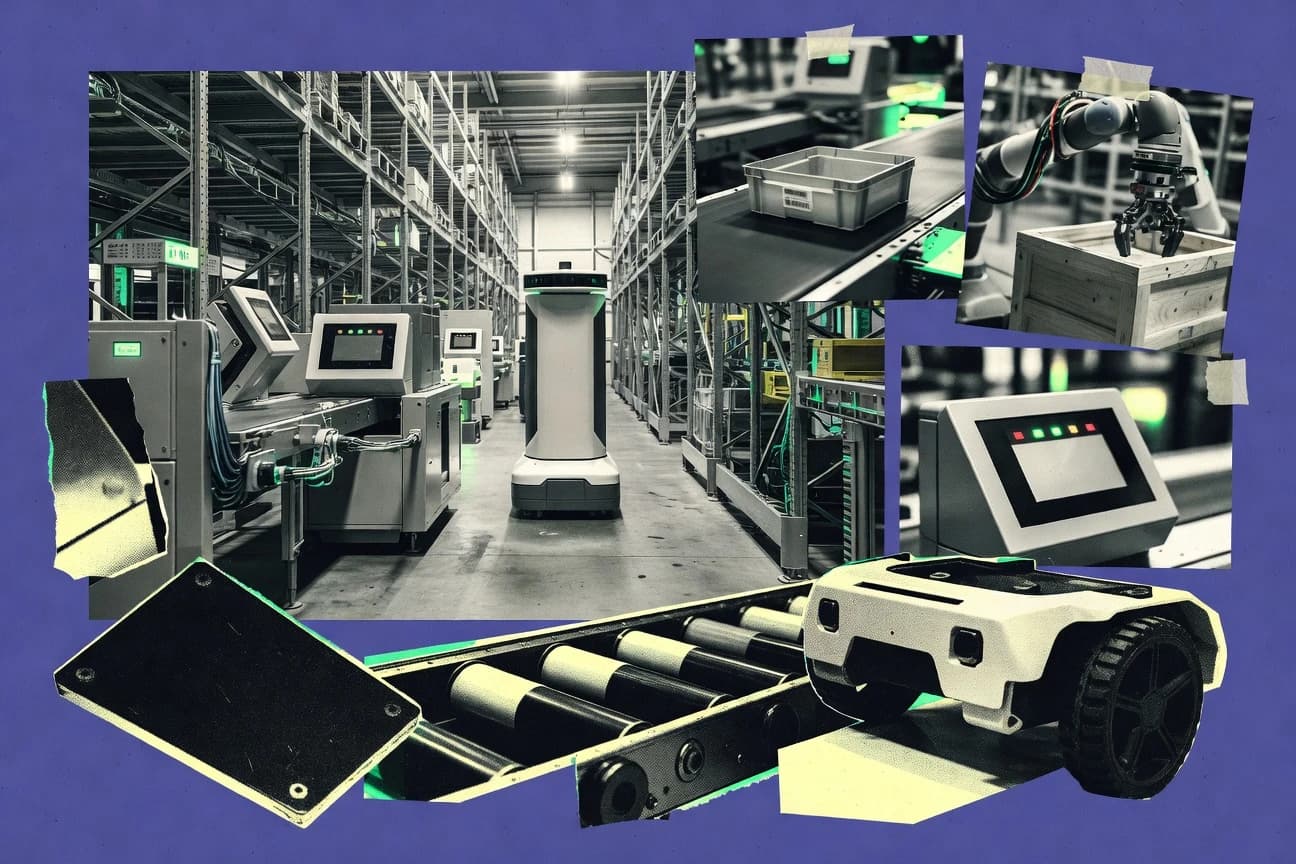

65 percent of large US warehouses have adopted automation. Automated facilities cut order picking times by 73 percent on average and reach 99.9 percent inventory accuracy. The statistics below cover adoption rates, costs, and efficiency gains by region and technology type.
Key Takeaways
- 65% of large warehouses (over 500,000 sq ft) in the US implemented automation by end of 2023.
- Automated warehouses cut overall operational costs by 25-40% within first year.
- Cobot deployments achieved 18-month payback in labor-intensive picking., category: Cost and ROI
- Warehouse automation reduced order picking time by 73% on average in implemented sites.
- The global warehouse automation market was valued at USD 18.37 billion in 2023 and is expected to grow at a CAGR of 15.4% from 2024 to 2030, reaching approximately USD 48.43 billion by 2030.
- AGVs deployment in US warehouses increased by 250% from 2019 to 2023.
Warehouse automation boosts efficiency and throughput, helping businesses meet rising demand with less downtime.
Related reading
01 · Category
Adoption Rates22 stats
01
65% of large warehouses (over 500,000 sq ft) in the US implemented automation by end of 2023.
02
Adoption rate of AGVs in European warehouses increased from 22% in 2020 to 41% in 2023.
03
52% of Asian e-commerce warehouses adopted robotic picking systems by 2023.
04
In 2023, 37% of US manufacturers integrated AI-driven warehouse automation.
05
Small and medium enterprises (SMEs) warehouse automation adoption rose 15% YoY to 24% in 2023 globally.
06
71% of top 100 global retailers had automated at least one warehouse by 2023.
07
UK warehouses saw 28% adoption of autonomous mobile robots (AMRs) in 2023, up from 12% in 2021.
08
Indian logistics firms adopted warehouse automation at 19% rate in 2023, driven by FDI in e-commerce.
09
44% of Canadian warehouses over 100,000 sq ft were automated in 2023.
10
Brazilian 3PL providers reached 35% automation adoption in fulfillment centers by 2023.
11
Australian warehouses adopted conveyor systems in 51% of facilities by end-2023.
12
29% of German automotive suppliers implemented AS/RS systems in 2023.
13
French retail warehouses hit 40% automation rate with sortation tech in 2023.
14
Japanese electronics manufacturers adopted 55% warehouse robotics by 2023.
15
South Korean e-commerce giants like Coupang automated 68% of warehouses in 2023.
16
Mexican maquiladoras saw 26% adoption of pallet shuttles in 2023.
17
Saudi Arabian logistics hubs reached 33% automation penetration in 2023.
18
48% of Singapore fulfillment centers used AI inventory management in 2023.
19
Dutch warehouses led Europe with 62% adoption of WMS software in 2023.
20
Swedish cold storage facilities automated 39% operations in 2023.
21
Italian fashion warehouses adopted 31% robotic depalletizing in 2023.
22
Spanish grocery distributors hit 45% conveyor adoption in 2023.
Interpretation
Adoption Rates Interpretation
The global warehouse is undergoing a quiet but relentless revolution, where the race for efficiency has robots stacking in America, algorithms counting in Singapore, and conveyors humming in Australia, proving that the future of logistics is not just automated but strategically and unevenly distributed.
02 · Category
Cost and ROI19 stats
01
Automated warehouses cut overall operational costs by 25-40% within first year.
02
Payback period for AGV implementations averaged 18-24 months in 2023 case studies.
03
ROI on robotic picking systems reached 300% over 3 years for e-commerce.
04
Labor cost savings from automation averaged 50-70% in high-volume warehouses.
05
AS/RS investments yielded 20% annual return through density gains.
06
Total cost of ownership for AMRs dropped 30% YoY due to battery tech in 2023.
07
Sortation system ROI achieved in 12 months for retailers processing >1M parcels/day.
08
WMS upgrades with AI delivered 250% ROI in inventory cost reductions.
09
Energy savings from automated lighting and HVAC: 35% annual reduction.
10
Maintenance costs fell 60% with IoT predictive analytics in automated sites.
11
E-commerce fulfillment ROI hit 400% from automation during 2023 peak sales.
12
3PL providers saw 28% margin improvement post-automation investment.
13
Cold chain automation ROI averaged 22% due to reduced spoilage losses.
14
Real estate savings from vertical automation: 40% reduction in footprint costs.
15
Returns handling automation saved $15per return processed.
16
AI forecasting integration cut stockout costs by $2.5M annually per site.
17
Drone inventory ROI: 150% in first year for cycle counts.
18
Digital twin simulations reduced implementation costs by 25%.
19
Blockchain traceability ROI: 35% via compliance and recall reductions.
Interpretation
Cost and ROI Interpretation
Automation is proving to be a wildly profitable math problem, with the cold calculus of robots and AI showing warehouses that the initial sting of investment is quickly soothed by a cascade of savings, from halved labor costs to quartered operational expenses, all while delivering returns so high they'd make a venture capitalist blush.
03 · Category
Cost and ROI, source url: https://www.universal-robots.com/cobot-warehouse-roi/1 stats
01
Cobot deployments achieved 18-month payback in labor-intensive picking., category: Cost and ROI
Interpretation
Cost and ROI, source url: https://www.universal-robots.com/cobot-warehouse-roi/ Interpretation
Cobots in labor-intensive picking prove that sometimes, the fastest way to make your money back is to hand the repetitive tasks to a machine that won't ask for a raise.
More related reading
04 · Category
Efficiency Gains20 stats
01
Warehouse automation reduced order picking time by 73% on average in implemented sites.
02
Automated warehouses achieved 99.9% inventory accuracy compared to 80% in manual ones.
03
Labor productivity in automated picking zones increased by 4x, handling 400 lines/hour per worker.
04
Throughput rates in AS/RS systems reached 150 pallets/hour per crane in optimized setups.
05
AGV fleets reduced transport time between zones by 85%, averaging 2 minutes per move.
06
Robotic depalletizing achieved 1,200 cases/hour with 99% uptime in 2023 benchmarks.
07
Sortation systems diverted 10,000 items/hour with 99.5% accuracy in high-volume ops.
08
WMS-integrated automation cut order fulfillment time from 60 to 15 minutes on average.
09
Space utilization in automated warehouses improved to 85% from 45% in manual layouts.
10
Cycle counting frequency increased 10x with RFID automation, reducing errors by 92%.
11
Peak season throughput surged 200% in automated vs. manual warehouses during 2023 holidays.
12
Error rates in shipping dropped to 0.01% with automated verification systems.
13
Energy efficiency of LED-integrated automation systems saved 40% on lighting costs.
14
Cross-docking efficiency improved 65% with automated trailer loading tech.
15
Returns processing speeded up 5x to 300 units/hour in automated reverse logistics.
16
Multi-SKU picking accuracy hit 99.8% with AI vision robots.
17
Slotting optimization via AI reduced travel distance by 35% in warehouses.
18
Uptime of automated systems averaged 99.7% with predictive maintenance.
19
Wave picking efficiency boosted to 250 orders/hour per operator.
20
Zone picking throughput reached 50 picks/minute in automated zones.
Interpretation
Efficiency Gains Interpretation
The robots haven't just shown up to work; they've essentially turned the warehouse from a chaotic game of human-sized hide-and-seek with inventory into a flawlessly choreographed ballet of speed and precision, where errors are a scandalous rarity and productivity is measured in previously unimaginable leaps.
05 · Category
Market Size and Growth20 stats
01
The global warehouse automation market was valued at USD 18.37 billion in 2023 and is expected to grow at a CAGR of 15.4% from 2024 to 2030, reaching approximately USD 48.43 billion by 2030.
02
Warehouse automation market in North America accounted for over 35% revenue share in 2023 due to high adoption of AGVs and AMRs.
03
Asia Pacific warehouse automation market is projected to grow at the fastest CAGR of 16.8% from 2024 to 2032, driven by e-commerce boom in China and India.
04
The automated storage and retrieval system (AS/RS) segment dominated the warehouse automation market with 28.4% share in 2023.
05
Global warehouse robotics market size was USD 6.1 billion in 2022 and is anticipated to expand at a CAGR of 14.1% through 2030.
06
European warehouse automation market reached EUR 4.2 billion in 2023, with Germany holding 22% of the regional share.
07
U.S. warehouse automation market grew by 12.7% YoY in 2023, fueled by supply chain disruptions post-COVID.
08
The sortation systems segment in warehouse automation is expected to grow from USD 3.8 billion in 2023 to USD 7.2 billion by 2028 at CAGR 13.6%.
09
China's warehouse automation market was valued at CNY 45 billion in 2023, projected to reach CNY 120 billion by 2028.
10
Middle East & Africa warehouse automation market is forecasted to grow at 18.2% CAGR from 2024-2030 due to logistics hub development.
11
Latin America warehouse automation sector expanded by 11.5% in 2023, with Brazil leading at 40% regional share.
12
Software segment in warehouse automation market held 25% revenue share in 2023, driven by WMS integration.
13
Hardware components accounted for 62% of global warehouse automation market revenue in 2023.
14
E-commerce drove 45% of warehouse automation market growth in 2023 globally.
15
Food & beverage industry contributed 18% to warehouse automation market in 2023.
16
Pharmaceutical sector warehouse automation market grew 20.3% YoY in 2023 due to cold chain needs.
17
Retail sector held 32% share of warehouse automation market in North America in 2023.
18
Automotive industry warehouse automation investments reached USD 2.1 billion globally in 2023.
19
Third-party logistics (3PL) providers adopted 28% of new warehouse automation systems in 2023.
20
Cloud-based warehouse automation solutions market to grow at 17.5% CAGR from 2024-2030.
Interpretation
Market Size and Growth Interpretation
The relentless march of the robots is a global phenomenon, with North America currently leading the charge and Asia-Pacific eagerly sprinting to catch up, as nearly every box on the planet demands a faster, smarter, and increasingly automated journey from shelf to shipping dock.
06 · Category
Technology Deployment19 stats
01
AGVs deployment in US warehouses increased by 250% from 2019 to 2023.
02
AMRs outnumbered traditional AGVs by 3:1 in new installations in 2023 globally.
03
AI-powered vision systems were integrated in 42% of robotic picking solutions deployed in 2023.
04
5G-enabled warehouse automation devices grew 180% YoY in deployments during 2023.
05
Pallet shuttle systems installations rose 35% in high-density warehouses in 2023.
06
Voice-directed picking technology was deployed in 38% of large US warehouses in 2023.
07
RFID tracking systems covered 67% of automated warehouse inventory in Europe by 2023.
08
Cobots (collaborative robots) made up 22% of new robotic deployments in warehouses in 2023.
09
Drone-based inventory scanning pilots reached 15% of mega-warehouses in 2023.
10
Edge computing nodes in warehouse automation surged 120% in 2023 installations.
11
Machine learning algorithms optimized 55% of sortation systems deployed in 2023.
12
IoT sensors per automated warehouse averaged 2,500 units in 2023 deployments.
13
Blockchain for supply chain traceability integrated in 12% of automated warehouses in 2023.
14
AR glasses for order picking deployed in 29% of high-tech warehouses in 2023.
15
Laser-guided vehicles still held 18% of guided vehicle deployments despite AMR rise in 2023.
16
Digital twins modeled 34% of new automated warehouse layouts in 2023.
17
Natural language processing for voice picking advanced in 21% deployments in 2023.
18
Swarm robotics tested in 8% of experimental warehouse setups in 2023.
19
Conveyor throughput speeds averaged 180 meters/min in 2023 deployments.
Interpretation
Technology Deployment Interpretation
While robot armies are advancing faster than a worker chasing a runaway box, with AGVs multiplying like rabbits and AI eyes now overseeing nearly half of all picking operations, the modern warehouse is becoming a high-tech symphony of 5G, edge computing, and learning machines, where every pallet, item, and even the warehouse itself is digitally twinned and relentlessly tracked, proving that in the race for efficiency, the only thing growing faster than the technology is our ambition to control it.
Reference
Cite This Report
This report is designed to be cited. We maintain stable URLs and versioned verification dates. Copy the format appropriate for your publication below.
APA
Min-ji Park. (2026, February 13). Warehouse Automation Statistics. Gitnux. https://gitnux.org/warehouse-automation-statistics
MLA
Min-ji Park. "Warehouse Automation Statistics." Gitnux, 13 Feb 2026, https://gitnux.org/warehouse-automation-statistics.
Chicago
Min-ji Park. 2026. "Warehouse Automation Statistics." Gitnux. https://gitnux.org/warehouse-automation-statistics.
Sources & references
83 datasets cited across this report · attribution is report-level
 amazonrobotics.com