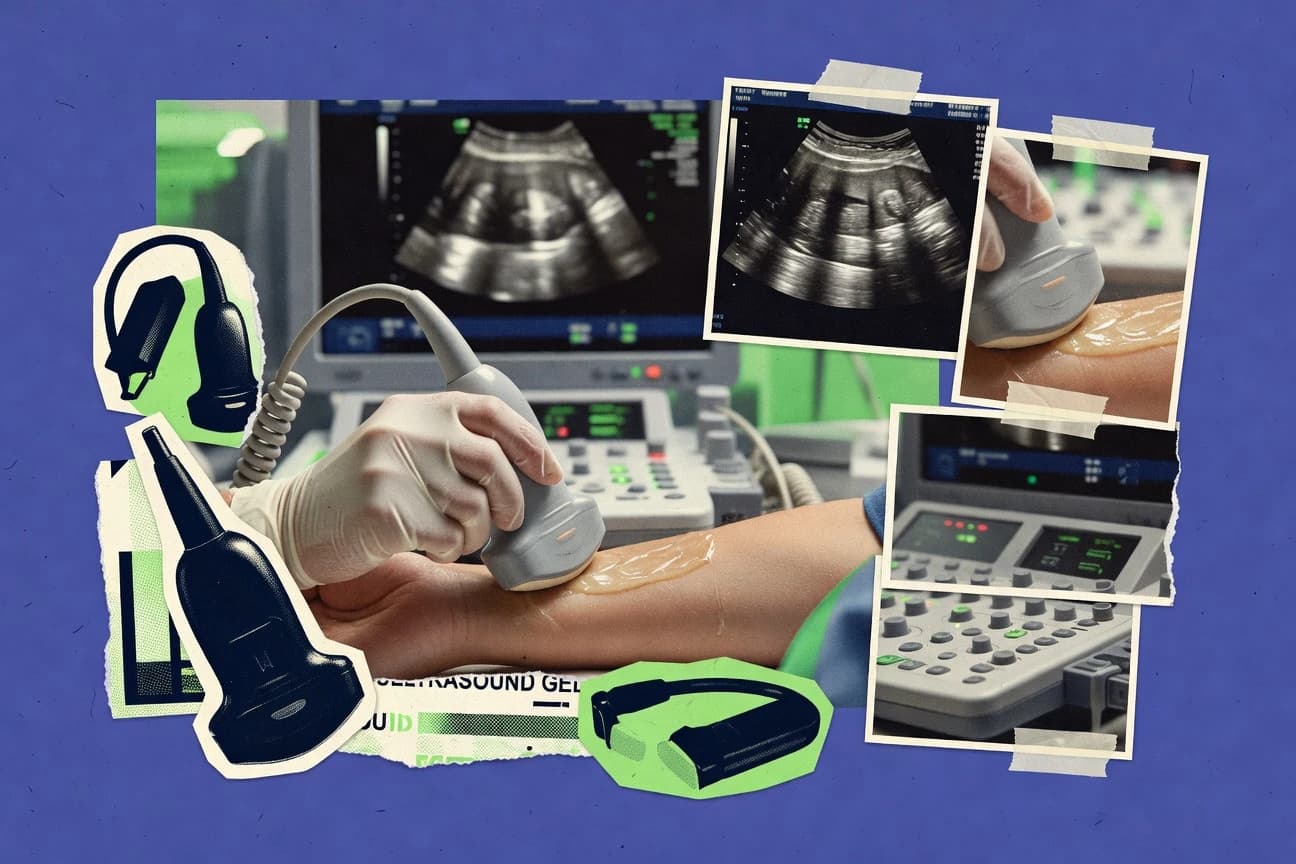

The global ultrasound imaging market is projected to reach 13.5 billion dollars in revenue. Point of care ultrasound expands at a 7.5 percent compound annual growth rate. Ultrasound guidance lowers complication rates and episode costs relative to landmark techniques across multiple procedures.
Key Takeaways
- US$13.5 billion projected global ultrasound imaging market size by 2030, measured as forecast revenue for ultrasound imaging devices and related products
- 7.5% CAGR projected for the point-of-care ultrasound market from 2024 to 2032, indicating growth in adoption of bedside ultrasound
- 6.5% CAGR projected for the ultrasound probes market from 2023 to 2032, indicating expanding use of ultrasound imaging across applications
- 58% of POCUS users reported that they had received formal training in a 2020 survey, highlighting how adoption is tied to competency-building
- In the US, the average annual growth in ultrasound imaging volume reported by AHRQ claims charts is 3.0% from 2018 to 2021, reflecting increased utilization adoption
- 78% of physicians indicated they would recommend ultrasound training to colleagues in a survey of ultrasound users (2019-2020), reflecting diffusion behaviors
- Systematic review evidence found ultrasound guidance for central venous catheterization reduced length of hospital stay by 0.3 days on average versus landmark guidance, a cost driver
- In a US hospital study, ultrasound-guided central line placement reduced total costs by US$1,112 per patient encounter versus landmark guidance, measured as cost per episode
- Ultrasound-guided procedures reduced complication-related costs; one economic evaluation reported a US$3,000 reduction in expected costs per central line placement when ultrasound is used, measured as incremental cost
- Ultrasound guidance reduced arterial puncture by 41% compared with landmark in a meta-analysis for central venous access, measured as complication incidence
- Diagnostic accuracy for FATE/focused assessment with sonography in trauma reported sensitivity of 0.76 and specificity of 0.89 in a systematic review meta-analysis, measured as test performance
- Sensitivity of 0.84 and specificity of 0.98 for ultrasound-guided detection of deep vein thrombosis in a systematic review (meta-analytic estimate), reflecting high diagnostic performance
- 30% reduction in failure rate for epidural needle placement when ultrasound guidance is used compared with landmark techniques in a meta-analysis, reflecting improved procedural performance
- 3-fold increased likelihood of successful first-attempt peripheral nerve block when ultrasound guidance is used compared with nerve stimulation alone in a meta-analysis, demonstrating adoption of ultrasound for anesthesia
- 50% of surveyed institutions cited reimbursement/financial factors as a barrier to broader ultrasound adoption, highlighting economic constraints
Ultrasound adoption is accelerating through faster growth, better outcomes, and expanding training, despite reimbursement barriers.
Related reading
01 · Category
Market Size5 stats
01
US$13.5 billion projected global ultrasound imaging market size by 2030, measured as forecast revenue for ultrasound imaging devices and related productshttps://www.alliedmarketresearch.com/ultrasound-imaging-market-A11735
02
7.5% CAGR projected for the point-of-care ultrasound market from 2024 to 2032, indicating growth in adoption of bedside ultrasoundhttps://www.alliedmarketresearch.com/point-of-care-ultrasound-market-A31712
03
6.5% CAGR projected for the ultrasound probes market from 2023 to 2032, indicating expanding use of ultrasound imaging across applicationshttps://www.fortunebusinessinsights.com/ultrasound-probes-market-102248
04
7.1% CAGR projected for the ultrasound elastography market from 2024 to 2032, indicating growth driven by adoption in diagnosticshttps://www.fortunebusinessinsights.com/ultrasound-elastography-market-103172
05
6.9% CAGR projected for the medical ultrasound market from 2023 to 2028, indicating continued market expansion for ultrasound modalitieshttps://www.marketsandmarkets.com/Market-Reports/medical-ultrasound-market-149979280.html
Interpretation
Market Size Interpretation
The market size for ultrasound is set to keep expanding strongly, with projections showing a US$13.5 billion global ultrasound imaging market by 2030 and multiple high single digit growth rates such as 6.9% for medical ultrasound from 2023 to 2028, alongside faster growth in segments like point of care ultrasound at 7.5% from 2024 to 2032 and ultrasound elastography at 7.1% from 2024 to 2032.
02 · Category
User Adoption11 stats
01
58% of POCUS users reported that they had received formal training in a 2020 survey, highlighting how adoption is tied to competency-buildinghttps://www.ncbi.nlm.nih.gov/pmc/articles/PMC7425711/
02
In the US, the average annual growth in ultrasound imaging volume reported by AHRQ claims charts is 3.0% from 2018 to 2021, reflecting increased utilization adoptionhttps://www.ahrq.gov/charts/health-care-costs/ims-ultrasound.html
03
78% of physicians indicated they would recommend ultrasound training to colleagues in a survey of ultrasound users (2019-2020), reflecting diffusion behaviorshttps://www.ncbi.nlm.nih.gov/pmc/articles/PMC8024932/
04
In a national survey of medical trainees, 62% reported exposure to ultrasound education during training in 2021, indicating growing onboarding of ultrasound skillshttps://www.ncbi.nlm.nih.gov/pmc/articles/PMC8893913/
05
In a survey of emergency medicine residency programs, 84% reported having ultrasound curricula by 2022, indicating institutionalization of ultrasound traininghttps://pubmed.ncbi.nlm.nih.gov/35281512/
06
In a UK survey, 71% of ultrasound departments reported using elastography at least occasionally, indicating adoption of advanced ultrasound modalitieshttps://pubmed.ncbi.nlm.nih.gov/31302494/
07
In breast imaging practice surveys, 55% of radiologists reported using elastography as part of breast lesion evaluation in 2018, indicating clinical adoption of elastographyhttps://pubmed.ncbi.nlm.nih.gov/29288861/
08
In a survey of cardiology clinics, 67% reported implementing point-of-care cardiac ultrasound in outpatient settings, indicating uptake beyond emergency usehttps://pubmed.ncbi.nlm.nih.gov/31960204/
09
In a 2019 global survey of ultrasound use, 48% of respondents reported using handheld devices in daily practice, showing penetration of portable ultrasoundhttps://www.sciencedirect.com/science/article/pii/S2405692519300199
10
In a systematic review, ultrasound-based screening pathways increased detection of early pregnancy complications by 21% compared with non-ultrasound pathways in pooled observational evidence, reflecting adoption impactshttps://pubmed.ncbi.nlm.nih.gov/22130755/
11
A 2021 systematic review found that ultrasound education programs increased learners’ competence scores by a mean standardized effect size of 0.7 versus controls, a measurable adoption effect from traininghttps://pubmed.ncbi.nlm.nih.gov/34263207/
Interpretation
User Adoption Interpretation
User adoption of ultrasound is accelerating alongside expanding competency and institutional support, with 84% of emergency medicine residency programs reporting ultrasound curricula by 2022, 62% of medical trainees exposed to ultrasound education in 2021, and ultrasound imaging volume growing about 3.0% annually in the US from 2018 to 2021.
03 · Category
Cost Analysis7 stats
01
Systematic review evidence found ultrasound guidance for central venous catheterization reduced length of hospital stay by 0.3 days on average versus landmark guidance, a cost driverhttps://pubmed.ncbi.nlm.nih.gov/21606297/
02
In a US hospital study, ultrasound-guided central line placement reduced total costs by US$1,112per patient encounter versus landmark guidance, measured as cost per episodehttps://pubmed.ncbi.nlm.nih.gov/17636294/
03
Ultrasound-guided procedures reduced complication-related costs; one economic evaluation reported a US$3,000reduction in expected costs per central line placement when ultrasound is used, measured as incremental costhttps://pubmed.ncbi.nlm.nih.gov/17351040/
04
A cost-effectiveness analysis estimated ultrasound-guided peripheral nerve blocks reduced total episode costs by 15% compared with nerve stimulation in a modeled evaluation, measured as percentage cost differencehttps://pubmed.ncbi.nlm.nih.gov/27102160/
05
In a modeled economic evaluation, point-of-care ultrasound for undifferentiated shock reduced downstream imaging utilization costs by 20% compared with standard care pathways, measured as relative costhttps://pubmed.ncbi.nlm.nih.gov/30103799/
06
FDA classifies ultrasound imaging devices as medical devices regulated under 21 CFR; most diagnostic ultrasound imaging devices are Class II with general controls and special controls rather than premarket approval, affecting regulatory cost burdenhttps://www.accessdata.fda.gov/scripts/cdrh/cfdocs/cfcfr/CFRSearch.cfm?fr=892.1560
07
A 2017 peer-reviewed study reported that handheld ultrasound devices cost roughly US$5,000–US$20,000 per unit depending on model class (capital cost range), measured as device acquisition prices in the study’s cost analysis contexthttps://pubmed.ncbi.nlm.nih.gov/28888573/
Interpretation
Cost Analysis Interpretation
From a cost analysis perspective, ultrasound guidance consistently lowers healthcare expenses with measurable savings such as a 0.3 day reduction in hospital stay, US$1,112 less in total costs per central line encounter, and up to a 20% drop in downstream imaging costs in modeled evaluations.
More related reading
04 · Category
Performance Metrics9 stats
01
Ultrasound guidance reduced arterial puncture by 41% compared with landmark in a meta-analysis for central venous access, measured as complication incidencehttps://pubmed.ncbi.nlm.nih.gov/18378573/
02
Diagnostic accuracy for FATE/focused assessment with sonography in trauma reported sensitivity of 0.76 and specificity of 0.89 in a systematic review meta-analysis, measured as test performancehttps://pubmed.ncbi.nlm.nih.gov/24419371/
03
Sensitivity of 0.84 and specificity of 0.98 for ultrasound-guided detection of deep vein thrombosis in a systematic review (meta-analytic estimate), reflecting high diagnostic performancehttps://pubmed.ncbi.nlm.nih.gov/15869887/
04
Ultrasound plus clinical exam improved diagnostic performance for appendicitis with an estimated sensitivity of 0.82 and specificity of 0.86 in a meta-analysis, a measured diagnostic metrichttps://pubmed.ncbi.nlm.nih.gov/19325471/
05
Doppler ultrasound achieved a pooled sensitivity of 0.86 and specificity of 0.74 for detecting endoleaks after endovascular aneurysm repair in a systematic review meta-analysis, measured diagnostic performancehttps://pubmed.ncbi.nlm.nih.gov/26101995/
06
Elastography for breast lesions showed pooled sensitivity of 0.83 and specificity of 0.85 in a meta-analysis, measured as diagnostic test performancehttps://pubmed.ncbi.nlm.nih.gov/24065234/
07
Point-of-care ultrasound protocols for lung imaging showed pooled sensitivity of 0.90 and specificity of 0.93 for diagnosing pneumonia in systematic review evidence, measured as test performancehttps://pubmed.ncbi.nlm.nih.gov/31490248/
08
In central line placement teaching studies, ultrasound guidance reduced mean number of attempts from 2.0 to 1.3 attempts per procedure in comparative cohorts summarized in evidence reviews, a measured performance metrichttps://pubmed.ncbi.nlm.nih.gov/17031566/
09
Ultrasound-guided reduction in needle pass count during regional anesthesia reduced needle passes by 46% compared with landmark techniques in meta-analytic pooled estimates, a procedural performance metrichttps://pubmed.ncbi.nlm.nih.gov/20592667/
Interpretation
Performance Metrics Interpretation
Across performance metrics, ultrasound consistently delivers strong diagnostic results with pooled sensitivity and specificity frequently above 0.80 and 0.80 respectively, including a 41% reduction in arterial puncture and high accuracy in areas like deep vein thrombosis (sensitivity 0.84, specificity 0.98) and breast elastography (sensitivity 0.83, specificity 0.85).
05 · Category
Industry Trends4 stats
01
30% reduction in failure rate for epidural needle placement when ultrasound guidance is used compared with landmark techniques in a meta-analysis, reflecting improved procedural performancehttps://pubmed.ncbi.nlm.nih.gov/25859199/
02
3-fold increased likelihood of successful first-attempt peripheral nerve block when ultrasound guidance is used compared with nerve stimulation alone in a meta-analysis, demonstrating adoption of ultrasound for anesthesiahttps://pubmed.ncbi.nlm.nih.gov/24661267/
03
50% of surveyed institutions cited reimbursement/financial factors as a barrier to broader ultrasound adoption, highlighting economic constraintshttps://www.ncbi.nlm.nih.gov/pmc/articles/PMC7997001/
04
7,000+ ultrasound-related devices and parts were listed in FDA’s GUDID database (global unique device identification database) as of 2024 counts used in GUDID analytics, indicating breadth of the ultrasound device ecosystemhttps://open.fda.gov/apis/openfda/guidance/
Interpretation
Industry Trends Interpretation
The Industry Trends data suggest that ultrasound guidance is delivering measurable clinical improvements, like a 30% reduction in epidural needle placement failure and a 3-fold boost in first-attempt peripheral nerve blocks, but broader adoption is being held back by reimbursement concerns where 50% of institutions cite financial barriers, alongside rapid growth reflected in 7,000+ ultrasound devices and parts tracked in the FDA’s GUDID database as of 2024.
report visual · Key figures
Ultrasound adoption is accelerating
Forecast growth and rising adoption metrics point to strong momentum across imaging, probes, elastography, and point-of-care use—supported by expanding training and clinical implementation.
$13.5 billion
US$13.5 billion projected global ultrasound imaging market size by 2030, measured as forecast revenue for ultrasound ima
7.5%
7.5% CAGR projected for the point-of-care ultrasound market from 2024 to 2032, indicating growth in adoption of bedside
6.5%
6.5% CAGR projected for the ultrasound probes market from 2023 to 2032, indicating expanding use of ultrasound imaging a
7.1%
7.1% CAGR projected for the ultrasound elastography market from 2024 to 2032, indicating growth driven by adoption in di
6.9%
6.9% CAGR projected for the medical ultrasound market from 2023 to 2028, indicating continued market expansion for ultra
58%
58% of POCUS users reported that they had received formal training in a 2020 survey, highlighting how adoption is tied t
source-verifiedalliedmarketresearch.com · fortunebusinessinsights.com · marketsandmarkets.com · ncbi.nlm.nih.gov2030
Reference
Cite This Report
This report is designed to be cited. We maintain stable URLs and versioned verification dates. Copy the format appropriate for your publication below.
APA
Megan Gallagher. (2026, February 13). Ultrasound Industry Statistics. Gitnux. https://gitnux.org/ultrasound-industry-statistics
MLA
Megan Gallagher. "Ultrasound Industry Statistics." Gitnux, 13 Feb 2026, https://gitnux.org/ultrasound-industry-statistics.
Chicago
Megan Gallagher. 2026. "Ultrasound Industry Statistics." Gitnux. https://gitnux.org/ultrasound-industry-statistics.
Sources & references
36 datasets cited across this report
+27 additional datasets cited (not shown individually)