
Market data
Violence Abuse
Explore verified violence abuse statistics and market research reports with sourced data and trend analysis.
Latest update:
 Elif Demirci

Intimate Partner Violence Gender Statistics
Nearly 7.0% of women worldwide reported experiencing intimate partner violence in the past 12 months, yet the impacts spread far beyond physical harm, including housing insecurity for 1 in 3 survivors and stalking reported by about 1 in 3 women experiencing IPV. You will also see how coercive control and COVID era surveillance shaped risk, and how costs and workplace and healthcare gaps add up to billions in economic burden.

Trans Violence Statistics
When the year’s most recent numbers show how often trans people face violence in everyday spaces, the pattern is harder to dismiss as rare or isolated. Read the statistics behind the shifts that stand out most, including the 2025 count that makes clear this harm is not fading on its own.

Home Violence Statistics
Home violence statistics in 2025 reveal a stark gap between what people assume happens at home and what victims actually experience, with high impact outcomes that rarely get discussed out loud. Read the page to see the latest figures, including the most recent 2026 updates where available, and how the risk patterns shift when you look closely at the data.

Sexual Violence In India Statistics
Recent India statistics reveal how sexual violence remains stubbornly underreported even as public conversation grows, with 31.4% of cases involving minors and a notable share committed within familiar settings like homes. Get a clear, up to date look at where harm concentrates and where systems fail, so you can understand what the data demands next in 2025 and beyond.

Sexual Assult Statistics
In 2025, only 1 in 7 sexual assault victims report to police, yet the impact ripples far beyond the moment it happens. Get the latest figures on reporting, conviction outcomes, and where assaults are most often reported so you can see exactly what gets counted and what still gets missed.

Femicide Statistics
One in five women reported lifetime sexual violence, yet the UNODC reports only a subset of countries regularly publish gender-disaggregated homicide investigation data, leaving femicide trends harder to verify than they should be. Track what prevention and accountability can change, from Brazil’s 1,385 women killed through feminicide in 2022 to intervention and policy findings that point to measurable reductions when protection orders, safety planning, and coordinated community responses are actually put in place.
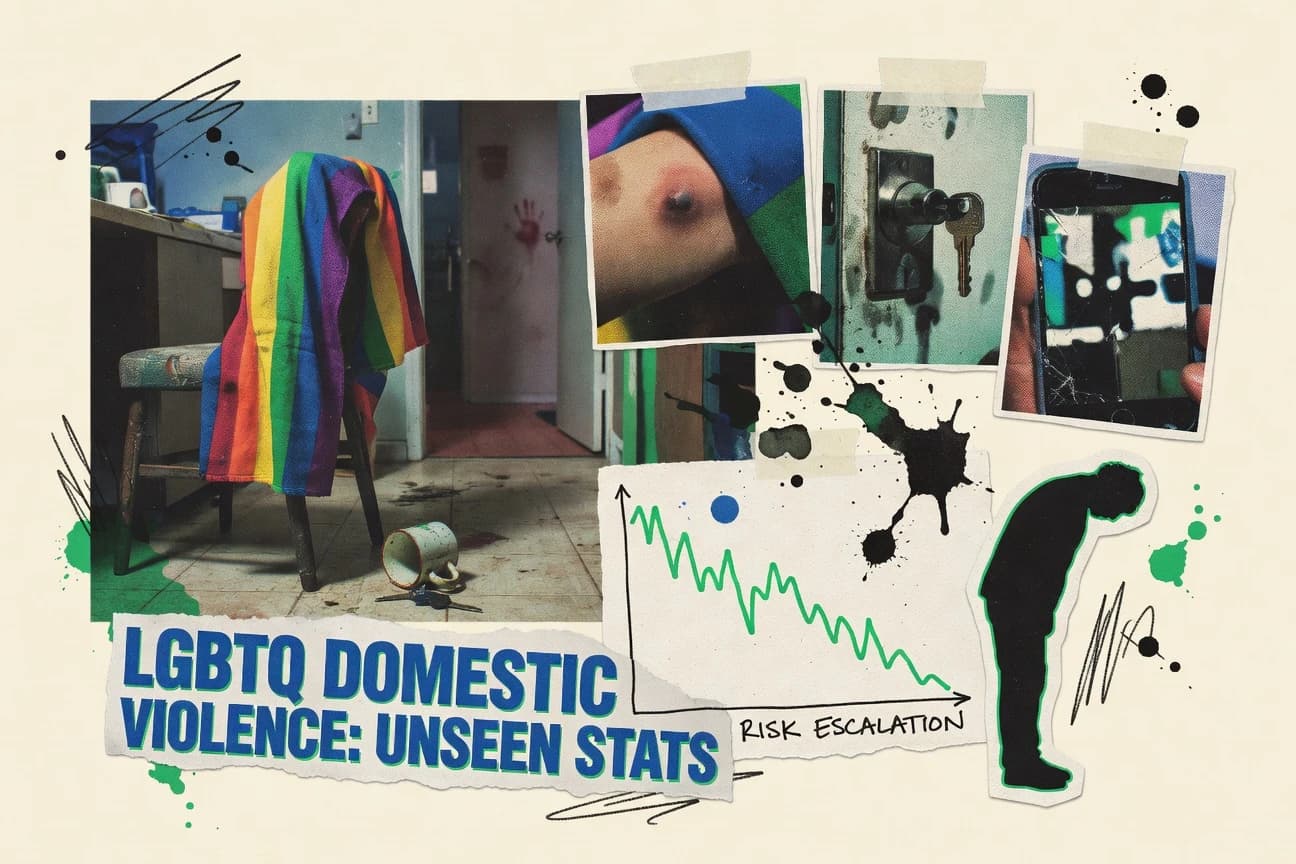
Lgbtq Domestic Violence Statistics
Over 1 in 4 LGB adults report psychological aggression since age 18, while LGBTQ people also face disability related barriers that block access to domestic violence services and stalking that shows up in 20% of incidents. The page pulls together 2025 onward relevance, including 2023 findings on health care mistreatment and major mental health fallout, with a clear bottom line on why LGBTQ domestic violence cannot be treated as one-size-fits-all.

Elder Sexual Abuse Statistics
Recent figures show elder sexual abuse is not a rare tragedy but a persistent, underreported reality, with 2025 data pointing to how often coercion and exploitation are missed until harm has already occurred. Read these statistics to see the size of the gap between what is reported and what elders and caregivers actually face.

Intimate Partner Abuse Statistics
Even with growing support systems, intimate partner abuse still reaches millions and exacts a heavy toll on health, from a 31% lifetime exposure for women worldwide to partners driving up risks of depression, suicide attempts, and HIV by 1.5 times in some settings. You will also find what policy and practice can change, including Germany’s and Australia’s billion-dollar health costs, UK domestic abuse measures like mandatory reporting, and the latest UK policing risk checks that shape how quickly help is triggered.

Femicide In Mexico Statistics
Mexico’s latest femicide risk picture is as urgent as it is complicated, with women who experienced intimate partner violence facing a 2.5x higher risk of severe violence, while just 31% say they are confident authorities would respond. Jalisco accounts for 5.4% of cases in the source dataset, yet 27.0% of records lack location detail beyond the state level, revealing how data gaps and underreporting can blunt prevention and protection.

Female Domestic Violence Statistics
Even as 8% of women report intimate partner violence in the past 12 months, 76% never tell anyone what is happening and consequences ripple far beyond bruises. From 47,646 intimate partner violence-related homicide victims in the U.S. in 2022 to 2.4 million women treated for injuries in emergency departments in 2021, this page connects the most overlooked domestic violence harm to the health and economic costs that follow.

Global Rape Statistics
Global Rape statistics show that reported sexual violence is not just a public safety issue but a global pattern with real scale, backed by 2026 figures that make the problem impossible to ignore. Compare what is being reported with where gaps in disclosure and protection still persist, and you will see how the data changes when you look beyond the headline.

Transgender Domestic Violence Statistics
In 2026, transgender people face a domestic violence reality shaped by both intimate partner abuse and heightened barriers to safety, access, and justice. This page puts the statistics side by side so you can see where risk spikes and where support gaps persist for trans survivors seeking protection.
Sexual Harrasment Statistics
Sexual harassment data shows how dramatically workplace behavior can shift from what people expect to what they actually experience, with 2025 figures that reveal both how common reports are and where failures in prevention most often show up. Read these statistics to understand who is most affected and what patterns are keeping cases from being addressed early.
Interpersonal Violence Statistics
Interpersonal Violence touches more lives than most people realize, with 2025 statistics showing a sharp scale-up compared to prior years. Read the page to see where the risk concentrates, how reporting patterns shift, and which categories changed most in the most recent data.

Domestic Violence In The Uk Statistics
In 2026, nearly 3 in 4 domestic abuse crimes in the UK were recorded as violence against the person, yet many victims still do not report to police. See the sharp gap between what the system logs and what many people experience, and find the key figures behind the headlines.

Intimate Partner Homicide Statistics
Intimate partner homicide is shaped by patterns that stay stubbornly consistent across countries, from alcohol use in 29% of cases to prior intimate partner violence appearing in 48% of intimate partner homicides, and WHO data now pin women’s intimate partner killings at 1 in 10 across the European Region. This page connects what happens before a homicide to what interventions and policy can change, including perpetrator programs that reduce repeat violence and the real-world economic toll of domestic violence.

Domestic Violence Death Statistics
Domestic Violence Death statistics expose how many lives are lost and how sharply the risk can concentrate in the most overlooked moments. With the newest 2026 figures alongside recent trends, this page connects the headlines to the numbers that demand attention now.

Woman Sexual Assault Statistics
Nearly 1 in 7 women worldwide have experienced sexual violence in their lifetime, yet only about 13% is ever reported to police in the US, leaving most survivors invisible to the systems meant to respond. This page brings the newest global and country figures together with what they mean for health, from PTSD symptoms affecting about 24% of survivors to higher risks of depression, substance use disorders, and rising healthcare costs.

Sexual Abuse In Church Statistics
Recent figures published by Sexual Abuse In Church show how often abuse is reported in church contexts and how frequently the harm continues to be mishandled. Read the page to see the sharp gap between what investigations find and what protection, reporting, and accountability look like on the ground.