
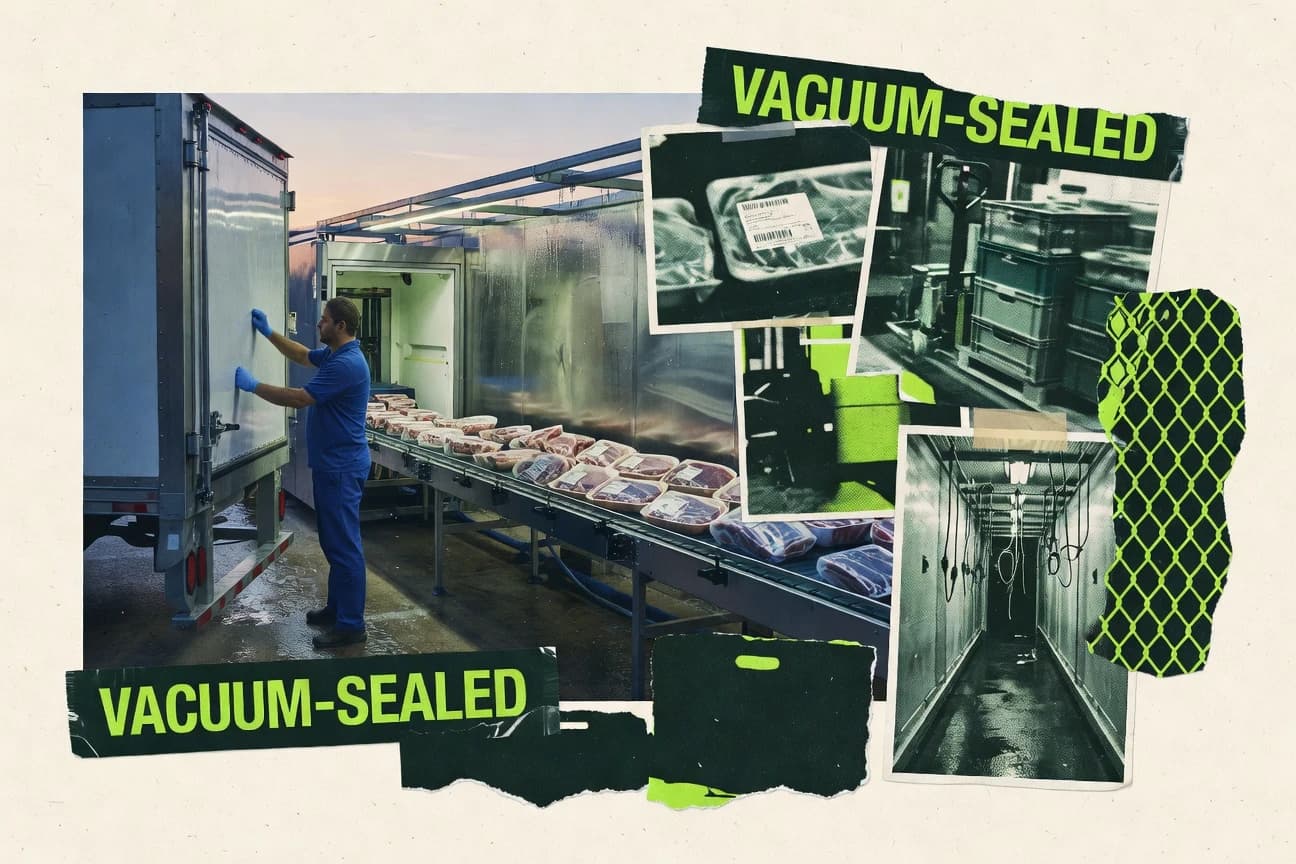

The global cold chain logistics market is projected to grow 2.6% annually, but temperature failures still cause significant losses. An industry consensus holds that 98% of food cold-chain compliance depends on last-mile delivery.
Key Takeaways
- 2.6% projected annual growth (CAGR, 2024–2034) for the global cold chain logistics market
- $9.31 billion global cold storage market size in 2024
- 3.0% share of global food loss and waste attributed to the cooling sector (refrigeration and cooling)
- 47% of food and beverage companies reported using IoT devices in 2023
- 64% of supply chain leaders say visibility is one of their top supply chain priorities
- 78% of shippers and carriers reported that digital real-time visibility reduces supply chain costs (survey, 2022)
- 5%–15% of the value of food is lost at the retail and consumer stages in high-income countries (global estimate range)
- $3.2 billion retail shrink and waste costs for meat and poultry in the U.S. (estimated industry total)
- 3.9%–6.2% profit margin impact from supply chain inefficiencies (meat and food sector modeling study)
- 3,000 deaths annually in the U.S. from foodborne illnesses (CDC estimate)
- 20.0% reduction in outbreak size when traceback time is reduced by 50% (modeling study)
- 11.9% of U.S. foodborne outbreaks are linked to beef products (percentage distribution, 2009–2015 analysis)
- 98% of food cold-chain compliance depends on maintaining temperature during last-mile delivery (industry consensus figure)
- 25% reduction in order lead time with advanced planning and scheduling adoption (meta-analysis-style industry benchmark, 2020–2022)
- 15% improvement in fill rates with real-time inventory visibility (peer-reviewed study, 2018–2020)
Cold chain temperature control and digital visibility are key to cutting meat spoilage, shrink and foodborne risks.
Related reading
01 · Category
Market Size4 stats
01
2.6% projected annual growth (CAGR, 2024–2034) for the global cold chain logistics market
02
$9.31 billion global cold storage market size in 2024
03
3.0% share of global food loss and waste attributed to the cooling sector (refrigeration and cooling)
04
17.0% of global food loss occurs in the post-harvest stage for meat and livestock products
Interpretation
Market Size Interpretation
For the market size angle, the global cold chain logistics market is projected to grow at a 2.6% CAGR from 2024 to 2034 while cold storage reaches $9.31 billion in 2024, and the meat supply chain’s scale is reinforced by FAO estimates that 17.0% of food loss happens in post harvest for meat and livestock products and 3.0% is linked to the cooling sector.
02 · Category
Technology Adoption5 stats
01
47% of food and beverage companies reported using IoT devices in 2023
02
64% of supply chain leaders say visibility is one of their top supply chain priorities
03
78% of shippers and carriers reported that digital real-time visibility reduces supply chain costs (survey, 2022)
04
86% of retailers use some form of RFID or other electronic tagging for inventory tracking (survey, 2023)
05
10.2% of manufacturing logistics costs relate to inventory and warehousing in OECD countries (2019 estimate)
Interpretation
Technology Adoption Interpretation
In meat supply chains, technology adoption is accelerating with real-time visibility at the center, as 64% of leaders prioritize it and 78% of shippers and carriers say digital visibility lowers costs, while 86% of retailers already use RFID or electronic tagging and 47% of food and beverage firms report IoT use in 2023.
03 · Category
Cost Analysis4 stats
01
5%–15% of the value of food is lost at the retail and consumer stages in high-income countries (global estimate range)
02
$3.2 billion retail shrink and waste costs for meat and poultry in the U.S. (estimated industry total)
03
3.9%–6.2% profit margin impact from supply chain inefficiencies (meat and food sector modeling study)
04
19% of U.S. supply chain leaders cite regulatory compliance as a top driver of supply chain change (food safety and cold-chain compliance for meat)
Interpretation
Cost Analysis Interpretation
Cost pressures in the meat supply chain are clearly material, with retail and consumer losses of 5%–15% in high-income countries and an estimated $3.2 billion in U.S. meat and poultry retail shrink and waste, while supply chain inefficiencies can cut profit margins by 3.9%–6.2% and regulatory compliance is cited by 19% of leaders as a key driver of cost-related change.
04 · Category
Risk & Resilience6 stats
01
3,000 deaths annually in the U.S. from foodborne illnesses (CDC estimate)
02
20.0% reduction in outbreak size when traceback time is reduced by 50% (modeling study)
03
11.9% of U.S. foodborne outbreaks are linked to beef products (percentage distribution, 2009–2015 analysis)
04
8,000+ Salmonella outbreaks annually worldwide (global estimate; WHO)
05
3,600 E. coli O157:H7 cases reported in the U.S. in 2019 (CDC surveillance)
06
3% of refrigerated transport loads exceed safe temperature thresholds (risk modeling for cold-chain transport)
Interpretation
Risk & Resilience Interpretation
For the Risk and Resilience view, cutting traceback time by 50% can shrink outbreak size by 20%, which is especially urgent given the scale of risk, including 3,000 annual U.S. foodborne illness deaths and 8,000 plus Salmonella outbreaks worldwide.
More related reading
05 · Category
Logistics Performance5 stats
01
98% of food cold-chain compliance depends on maintaining temperature during last-mile delivery (industry consensus figure)
02
25% reduction in order lead time with advanced planning and scheduling adoption (meta-analysis-style industry benchmark, 2020–2022)
03
15% improvement in fill rates with real-time inventory visibility (peer-reviewed study, 2018–2020)
04
7% average decrease in spoilage waste for perishable supply chains using route optimization (operational study, 2019–2021)
05
0.5°C temperature excursion increases microbial growth risk for chilled meat products (review finding)
Interpretation
Logistics Performance Interpretation
In meat supply chains, logistics performance hinges on temperature control, since maintaining last mile cold chain compliance supports 98% of outcomes and even a 0.5°C temperature excursion can raise microbial growth risk while advances like real time inventory visibility can improve fill rates by 15%.
06 · Category
Industry Trends2 stats
01
8.6% of global food value is estimated to be lost in the supply chain before retail (iceberg losses include upstream stages such as processing and distribution for meat)
02
0.7% of global food is lost during handling and storage (relevance to chilled warehouse and transport segments for meat)
Interpretation
Industry Trends Interpretation
Industry trends in the meat supply chain show that about 8.6% of global food value is lost before retail and roughly 0.7% is lost during handling and storage, underscoring how early-stage inefficiencies and chilled logistics pressure are both key targets for improvement.
07 · Category
User Adoption1 stats
01
58% of survey respondents say they have increased their use of temperature monitoring technologies over the past 2 years for cold-chain shipments (adoption trend for meat tracking)
Interpretation
User Adoption Interpretation
User adoption is clearly rising, with 58% of survey respondents reporting they have increased their use of temperature monitoring technologies over the past two years for cold-chain shipping.
report visual · Comparison
Rising temperature monitoring and improving visibility in cold-chain operations
Adoption of cold-chain temperature monitoring is increasing, while leaders increasingly prioritize visibility—key enablers for reducing losses and inefficiencies in meat supply chains.
64% of supply chain leaders say visibility is one of their top supply chain priorities64%
58% of survey respondents say they have increased their use of temperature monitoring technologies over the past 2 years
58%
15% improvement in fill rates with real-time inventory visibility (peer-reviewed study, 2018–2020)
15%
source-verifiedpackworld.com · gartner.com · sciencedirect.com2018
Reference
Cite This Report
This report is designed to be cited. We maintain stable URLs and versioned verification dates. Copy the format appropriate for your publication below.
APA
David Sutherland. (2026, February 13). Supply Chain In The Meat Industry Statistics. Gitnux. https://gitnux.org/supply-chain-in-the-meat-industry-statistics
MLA
David Sutherland. "Supply Chain In The Meat Industry Statistics." Gitnux, 13 Feb 2026, https://gitnux.org/supply-chain-in-the-meat-industry-statistics.
Chicago
David Sutherland. 2026. "Supply Chain In The Meat Industry Statistics." Gitnux. https://gitnux.org/supply-chain-in-the-meat-industry-statistics.
Sources & references
27 datasets cited across this report · attribution is report-level
+10 additional datasets cited (not shown individually)