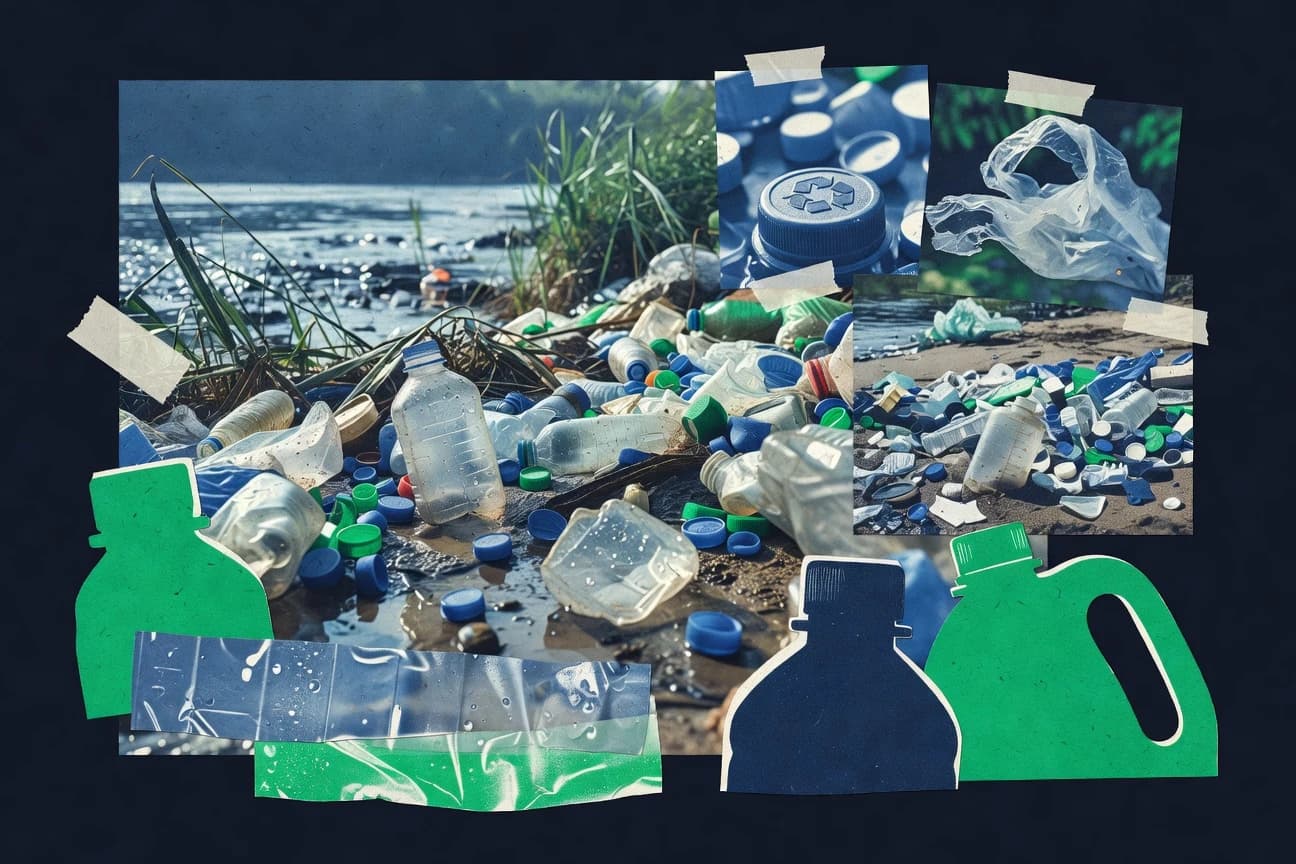

In 2019, the world produced 460 million metric tons of plastic, and only 9% of that plastic waste was actually recycled. Meanwhile, about 11 million metric tons of plastic slip into the ocean every year, and microplastics have been found in 83% of global tap water samples. By looking closely at where plastic comes from and where it ends up, the gaps between production, packaging, and cleanup become impossible to ignore.
Key Takeaways
- Global plastic production reached 460 million metric tons in 2019, marking a 33% increase from 2015 levels
- Packaging accounts for 36% of all plastics produced globally, totaling approximately 146 million tonnes annually as of 2019
- Polyethylene (PE) constitutes 29% of global plastic production at around 133 million tonnes per year in 2019
- Humans ingest 5 grams of plastic weekly via food chain from ocean pollution
- Microplastics found in 83% of global tap water samples
- Annual economic cost of marine plastic pollution is $13 billion to fisheries
- Approximately 11 million metric tons of plastic waste enters the ocean each year
- Eight million tonnes of plastic enter the ocean annually, equivalent to a truckload every minute
- By 2025, plastic in oceans could reach 250 million tonnes, weighing more than all fish
- Global recycling rate for plastics is only 9%, with 12% incinerated
- EU recycles 42% of its plastic waste, leader in developed regions
- US plastic bottle recycling rate is 29% as of 2020
- The world generated 353 million tonnes of plastic waste in 2019 from 460 million tonnes produced
- Only 9% of plastic waste is successfully recycled globally, with 49% incinerated and 22% mismanaged
- High-income countries generate 13% of global plastic waste but 34% of it is recycled
Only 9% of plastic waste gets recycled globally, while millions of tonnes keep leaking into the ocean each year.
Related reading
01 · Category
Global Production30 stats
01
Global plastic production reached 460 million metric tons in 2019, marking a 33% increase from 2015 levels
02
Packaging accounts for 36% of all plastics produced globally, totaling approximately 146 million tonnes annually as of 2019
03
Polyethylene (PE) constitutes 29% of global plastic production at around 133 million tonnes per year in 2019
04
Polypropylene (PP) makes up 20% of plastic production, equating to 92 million tonnes in 2019 worldwide
05
In 1950, global plastic production was just 2 million tonnes, surging to 348 million tonnes by 2017
06
Asia produced 51% of the world's plastics in 2019, totaling about 235 million tonnes
07
The United States produced 38 million tonnes of plastics in 2019, second only to China
08
Europe (EU28+2) produced 55 million tonnes of plastics in 2019, representing 12% globally
09
China alone produced 32% of global plastics in 2019 at 148 million tonnes
10
PET production for bottles reached 23 million tonnes globally in 2019
11
PVC production stood at 44 million tonnes worldwide in 2019
12
Polystyrene (PS) production was 19 million tonnes in 2019 globally
13
Plastic production is projected to double by 2040 to 1 billion tonnes annually if trends continue
14
In 2021, global plastic production hit 390 million tonnes, excluding fibers
15
Single-use plastics comprise 40% of annual plastic production at 184 million tonnes
16
Building and construction sector uses 16% of plastics, about 74 million tonnes yearly
17
Transportation sector consumes 9% of plastics production, roughly 41 million tonnes
18
Electrical/electronic devices use 6% of plastics, equating to 28 million tonnes
19
Consumer products account for 4% of plastic production at 18 million tonnes annually
20
Plastic fibers for textiles reached 65 million tonnes in 2019, 14% of total production
21
Middle East plastic production grew 4.5% annually to 25 million tonnes by 2019
22
Africa's plastic production was 5.6 million tonnes in 2019, growing at 5% yearly
23
Latin America produced 12 million tonnes of plastics in 2019
24
India's plastic production reached 9.5 million tonnes in 2019-20
25
Japan's plastic production was 13 million tonnes in 2019
26
Germany's plastic production stood at 14.5 million tonnes in 2019
27
South Korea produced 9 million tonnes of plastics in 2019
28
Saudi Arabia's plastic production was 6.5 million tonnes in 2019
29
Brazil produced 7.4 million tonnes of plastics in 2019
30
Annual global plastic production growth rate averaged 8.4% from 2000-2015
Interpretation
Global Production Interpretation
Under the Global Production category, plastic output surged to 460 million metric tons in 2019, a 33% jump from 2015, showing how rapidly growth is scaling worldwide and especially in Asia, which accounts for 51% of the total at about 235 million tonnes.
02 · Category
Human Health And Economic Costs29 stats
01
Humans ingest 5 grams of plastic weekly via food chain from ocean pollution
02
Microplastics found in 83% of global tap water samples
03
Annual economic cost of marine plastic pollution is $13 billion to fisheries
04
Plastic pollution costs global tourism $1.2 billion yearly
05
Cleanup costs for plastic pollution exceed $2.5 billion annually worldwide
06
Microplastics in human placentas detected in 2020 study of 6 samples
07
Bottled water contains 325 microplastic particles per liter on average
08
Humans consume 39,000-52,000 microplastic particles yearly via food
09
Air pollution from plastic incineration causes 800,000 premature deaths yearly
10
Plastic additives like phthalates linked to reproductive disorders
11
Global plastic industry worth $600 billion, but externalities cost $1-2 trillion yearly
12
Plastic waste management costs EU €6.6 billion annually
13
US spends $11 billion yearly on plastic waste management
14
India’s plastic pollution health costs estimated at $3 billion per year
15
Microplastics in seafood: mussels have 0.36 particles per gram
16
Plastic leaching chemicals cost global health $250 billion yearly in endocrine disruption
17
Dioxins from plastic burning cause cancer, costing $100 billion globally
18
Lost revenue to fisheries from plastic: $1.4 billion in Asia-Pacific
19
Plastic pollution reduces GDP by 1% in small island states
20
Treatment of plastic-related respiratory diseases costs $20 billion yearly
21
Microplastics in lungs found in 13 of 20 surgical patients
22
Blood samples show microplastics in 80% of people tested in 2022 study
23
Plastic chemicals in 93% of Americans' urine (BPA/phthalates)
24
Economic damage from ocean plastics projected $700 billion by 2040
25
Cleanup in Indonesia costs $560 million yearly for Jakarta alone
26
Vietnam plastic pollution economic loss $760 million annually to fisheries
27
Philippines loses $890 million yearly to marine plastic impacts
28
Thailand plastic debris costs fisheries $840 million per year
29
Malaysia economic cost from plastics $430 million annually
Interpretation
Human Health And Economic Costs Interpretation
With microplastics appearing in 83% of global tap water and even detected in human placentas, the human health impacts align with major financial burdens, since marine plastic pollution costs fisheries $13 billion annually and cleanup alone tops $2.5 billion worldwide.
03 · Category
Ocean Plastic Pollution23 stats
01
Approximately 11 million metric tons of plastic waste enters the ocean each year
02
Eight million tonnes of plastic enter the ocean annually, equivalent to a truckload every minute
03
By 2025, plastic in oceans could reach 250 million tonnes, weighing more than all fish
04
80% of marine plastic debris originates from land-based sources
05
The Great Pacific Garbage Patch contains 1.8 trillion plastic pieces weighing 80,000 tonnes
06
Microplastics make up 94% of an estimated 5.25 trillion plastic pieces floating in the ocean
07
Over 800 marine species are affected by plastic pollution
08
Seabirds have 90% ingested plastic by 2050 projection if trends continue
09
Currently, 50% of seabirds have plastic in their stomachs
10
100,000 marine mammals die yearly from plastic entanglement or ingestion
11
Turtles mistake plastic bags for jellyfish, with 52% having eaten plastic
12
Fishing gear accounts for 46% of Great Pacific Garbage Patch macroplastics
13
Rivers transport 1-2 million tonnes of plastic to oceans annually
14
Yangtze River carries 1.5 million tonnes of plastic waste to sea yearly
15
Top 10 rivers contribute 88-95% of riverine plastic emissions to oceans
16
Indo-Pacific region emits 80% of ocean plastic from rivers
17
Plastic covers 0.4% of ocean surface but holds 90% of floating debris mass
18
Seafloor contains 14 million tonnes of microplastic
19
Arctic sea ice traps 3-14 million tonnes of microplastics per year
20
Mediterranean Sea has plastic concentrations up to 1.9 million pieces per km²
21
Gulf of Mexico plastic density is 4,960 particles per km²
22
Coral reefs suffer from plastic smothering 11.6 billion pieces annually
23
Lost fishing gear causes 700,000 tonnes of ocean plastic yearly
Interpretation
Ocean Plastic Pollution Interpretation
Ocean plastic pollution is accelerating fast, with about 11 million metric tons entering the sea each year and projections suggesting that by 2025 the total could reach 250 million tonnes, meaning microplastics alone account for 94% of the roughly 5.25 trillion floating pieces.
More related reading
04 · Category
Recycling And Recovery28 stats
01
Global recycling rate for plastics is only 9%, with 12% incinerated
02
EU recycles 42% of its plastic waste, leader in developed regions
03
US plastic bottle recycling rate is 29% as of 2020
04
Germany recycles 58% of plastic packaging waste
05
Japan achieves 84% plastic waste collection for recycling or incineration
06
Global plastic packaging recycling rate is 14%
07
PET bottle global recycling rate is 18%
08
HDPE recycling rate worldwide is 20%
09
In 2019, 56 million tonnes of plastic waste was recycled globally
10
Mechanical recycling processes only 8-10% of plastics effectively
11
Chemical recycling capacity is projected to reach 6.1 million tonnes by 2025
12
Europe recycled 9.5 million tonnes of post-consumer plastic waste in 2019
13
China's plastic recycling rate dropped to 10% after 2018 import ban
14
India's plastic recycling rate is 60% informal sector driven
15
Brazil recycles 1.2% of plastic waste formally
16
UK plastic packaging recycling rate is 44%
17
Australia recycles 13% of plastics, exports much of the rest
18
South Korea recycles 64% of plastic waste
19
Canada PET recycling rate is 28%
20
France recycles 25% of plastic waste
21
Italy leads EU with 47% plastic recycling rate
22
Sweden recycles 50% of plastics, high incineration for energy
23
Global recycled plastic market value $45 billion in 2020
24
Only 1% of plastic bottles are recycled into new bottles
25
Mechanical recycling degrades PET after 10 cycles max
26
Pyrolysis chemical recycling yields 80% oil from plastics
27
Europe invests €800 million in advanced recycling by 2025
28
93% of US plastic waste not recycled ends in landfill or incineration
Interpretation
Recycling And Recovery Interpretation
With only 9% of plastics globally being recycled even though rates are higher in places like the EU at 42% and Germany at 58%, the recycling and recovery picture shows that most plastic still ends up diverted rather than truly recycled.
05 · Category
Waste Generation And Disposal29 stats
01
The world generated 353 million tonnes of plastic waste in 2019 from 460 million tonnes produced
02
Only 9% of plastic waste is successfully recycled globally, with 49% incinerated and 22% mismanaged
03
High-income countries generate 13% of global plastic waste but 34% of it is recycled
04
Low-income countries produce 9% of plastic waste but have 90% mismanagement rate
05
Europe discards 29.5 million tonnes of plastic waste annually
06
US generates 42 million tonnes of plastic waste yearly, with 13% recycled
07
China mismanages 17% of its 60 million tonnes annual plastic waste
08
Packaging generates 141 million tonnes of waste globally per year, 40% of total
09
Household plastic waste in the EU averages 84 kg per capita annually
10
Global plastic waste leakage into oceans is estimated at 11 million tonnes yearly
11
Landfills hold 79 billion tonnes of plastic waste accumulated since 1950
12
Mismanaged waste totals 109 kg per capita in middle-income countries
13
India generates 3.5 million tonnes of plastic waste annually from 26,000 tonnes daily urban waste
14
Brazil discards 11.3 million tonnes of plastic waste per year
15
Indonesia produces 7.8 million tonnes of plastic waste annually, 60% mismanaged
16
Philippines generates 2.7 million tonnes yearly, high mismanagement rate
17
UK plastic waste generation is 2.9 million tonnes packaging alone yearly
18
Japan generates 8.5 million tonnes of plastic waste annually, 85% incinerated
19
Australia's plastic waste totals 2.5 million tonnes per year
20
South Africa discards 1.8 million tonnes of plastic waste yearly
21
Egypt generates 1.5 million tonnes annually
22
Nigeria produces 2.5 million tonnes of plastic waste per year
23
Per capita plastic waste in the US is 130 kg annually
24
EU per capita plastic waste generation is 29 kg from packaging yearly
25
Global plastic waste per capita averages 50 kg yearly
26
Oceans receive 8-10 million tonnes of plastic waste annually from rivers
27
19-23 million tonnes of plastic waste leaks into aquatic ecosystems yearly
28
Mismanaged plastic waste globally is 76 million tonnes per year
29
Annually, 2.5 million tonnes of plastic waste enter European seas from rivers
Interpretation
Waste Generation And Disposal Interpretation
Although the world produced 460 million tonnes of plastic in 2019 and generated 353 million tonnes of plastic waste, only 9% was recycled while 49% was incinerated and 22% was mismanaged, showing that current waste generation and disposal systems are not keeping pace with how much plastic ends up as waste.
report visual · Key figures
Plastic production is rising fast
Global plastic production has increased dramatically over time, with a steep climb since the mid-20th century.
1950
In 1950, global plastic production was just 2 million tonnes, surging to 348 million tonnes by 2017
8.4%
Annual global plastic production growth rate averaged 8.4% from 2000-2015
33%
Global plastic production reached 460 million metric tons in 2019, marking a 33% increase from 2015 levels
2040
Plastic production is projected to double by 2040 to 1 billion tonnes annually if trends continue
Reference
Cite This Report
This report is designed to be cited. We maintain stable URLs and versioned verification dates. Copy the format appropriate for your publication below.
APA
Lars Eriksen. (2026, February 13). Plastic Waste Statistics. Gitnux. https://gitnux.org/plastic-waste-statistics
MLA
Lars Eriksen. "Plastic Waste Statistics." Gitnux, 13 Feb 2026, https://gitnux.org/plastic-waste-statistics.
Chicago
Lars Eriksen. 2026. "Plastic Waste Statistics." Gitnux. https://gitnux.org/plastic-waste-statistics.
Sources & references
59 datasets cited across this report