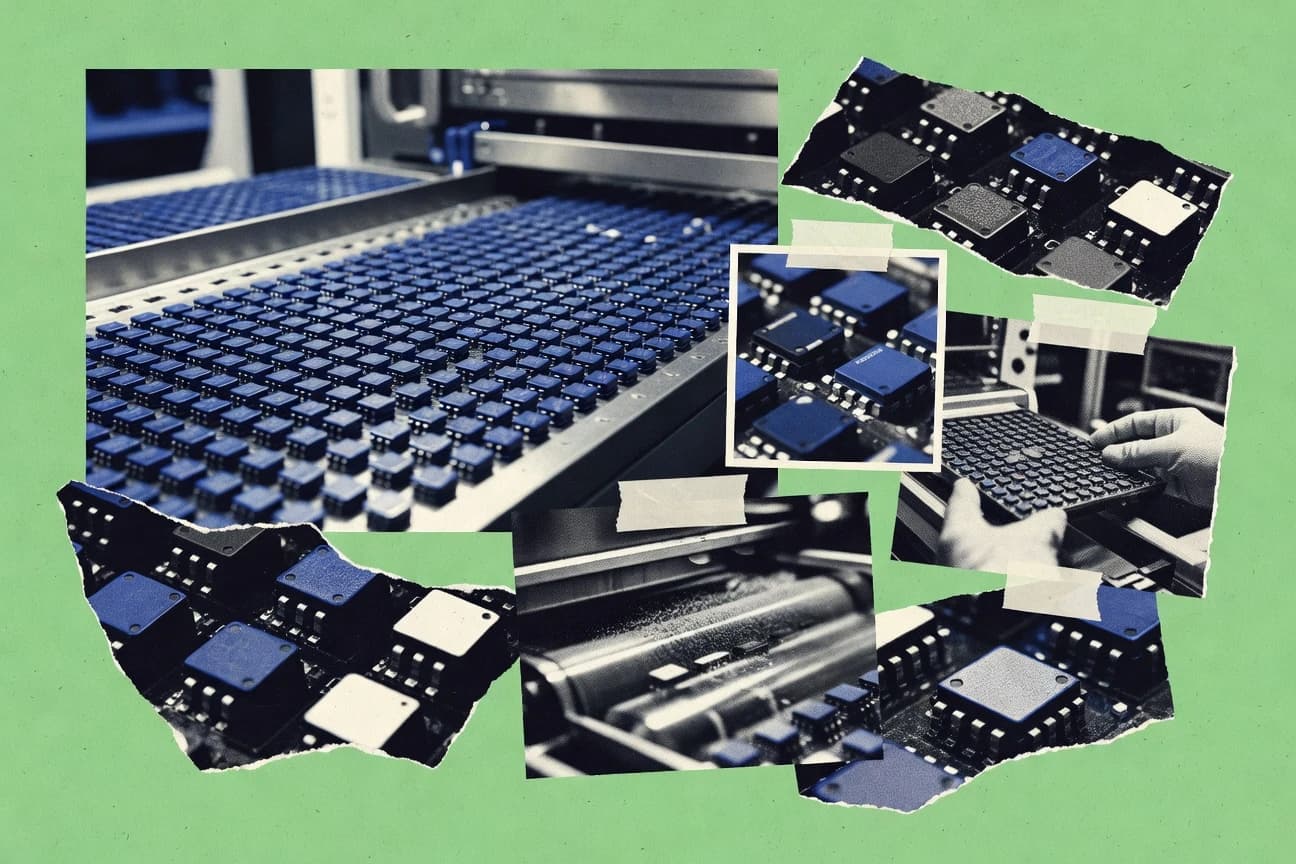

MLCC demand is driven by end-market needs—from dense smartphone designs to high-reliability automotive electronics. Smartphone usage alone takes 35% of total MLCC demand, and automotive is expected to grow fastest with an 8.2% CAGR through 2028 as EV adoption rises. Globally, Asia-Pacific accounts for 72% of revenue, while China leads production (55%). Next, the page maps these demand, regional, and supply factors—and the growth outlook to 2030.
Key Takeaways
- Smartphones consume 35% of total MLCC demand, with average 1200 units per device in 2023.
- Automotive sector used 25% of MLCCs, averaging 5000-10000 per EV in 2023.
- PCs and servers required 15% of MLCC volume, up 10% due to AI data centers.
- Murata Manufacturing holds approximately 40% global MLCC market share in 2023.
- Samsung Electro-Mechanics captured 15% of MLCC market revenue in 2023.
- TDK Corporation's MLCC sales reached $2.1 billion, 16% market share in 2023.
- The global MLCC market size reached $13.4 billion in 2023, driven by demand in consumer electronics and automotive sectors.
- MLCC market is projected to grow at a CAGR of 6.8% from 2024 to 2030, reaching $22.1 billion by 2030.
- In 2022, the Asia-Pacific region accounted for 72% of the global MLCC market revenue.
- Global MLCC production capacity exceeded 3 trillion units annually by end-2023.
- Murata expanded MLCC production by 30% in 2023 with new plants in Japan and Vietnam.
- China accounted for 55% of global MLCC production volume in 2023.
- Development of 0201 size MLCCs enabled 20% higher density in smartphones.
- Base metal electrode (BME) MLCCs now comprise 70% of production due to nickel use.
- Capacitance density improved 50% in last 5 years to 47uF in 0402 size.
In 2023 the MLCC market hit $13.4 billion, led by phones and automotive, and is set to grow 6.8% CAGR through 2030.
Related reading
01 · Category
End User Applications27 stats
01
Smartphones consume 35% of total MLCC demand, with average 1200 units per device in 2023.
02
Automotive sector used 25% of MLCCs, averaging 5000-10000 per EV in 2023.
03
PCs and servers required 15% of MLCC volume, up 10% due to AI data centers.
04
Consumer appliances like TVs used 10% of MLCCs, with 800 units per smart TV.
05
5G base stations demand high-frequency MLCCs, consuming 5% of market.
06
IoT devices incorporate average 300 MLCCs per unit, driving 8% demand.
07
Wearables like smartwatches use 200-400 MLCCs each, 3% total share.
08
Industrial automation robots require 2000+ MLCCs per unit.
09
Medical devices such as MRI machines use specialized MLCCs, 2% market.
10
Base stations for telecom grew MLCC use by 50% with 5G rollout.
11
Tablets used average 900 MLCCs per unit, 5% demand share.
12
EVs require 10,000-15,000 MLCCs per vehicle for powertrains.
13
Gaming consoles like PS5 incorporate 1500 MLCCs each.
14
Solar inverters demand high-voltage MLCCs, 4% market share.
15
Drones average 500 MLCCs per unit for flight control.
16
Smart home devices like thermostats use 250 MLCCs avg.
17
Wind turbine converters require 5000+ MLCCs per MW.
18
Hearing aids pack 100 tiny MLCCs in compact design.
19
AR/VR headsets demand 2000 MLCCs for high-res displays.
20
Smartphones 5G models up MLCC count to 1400/unit.
21
Data centers for cloud used 12% MLCC volume in 2023.
22
Washing machines average 600 MLCCs for inverter motors.
23
Railway signaling systems require 3000 MLCCs per loco.
24
Fitness trackers pack 150 MLCCs in slim profiles.
25
Air conditioners use 1000 MLCCs for smart controls.
26
Satellites demand rad-hard MLCCs, 1% premium market.
27
E-cigarettes/vapes incorporate 80 MLCCs per device.
Interpretation
End User Applications Interpretation
In end user applications, smartphones are still the biggest driver at 35% of total MLCC demand in 2023 and, alongside fast-growing AI data centers that lifted PC and server volume by 10%, the sector’s demand is being pulled by increasingly device-heavy computing rather than only traditional use cases.
03 · Category
Market Size And Growth21 stats
01
The global MLCC market size reached $13.4 billion in 2023, driven by demand in consumer electronics and automotive sectors.
02
MLCC market is projected to grow at a CAGR of 6.8% from 2024 to 2030, reaching $22.1 billion by 2030.
03
In 2022, the Asia-Pacific region accounted for 72% of the global MLCC market revenue.
04
Automotive MLCC segment is expected to grow fastest at CAGR 8.2% through 2028 due to EV adoption.
05
Global MLCC shipments reached 2.5 trillion units in 2023, up 15% YoY.
06
The high-end MLCC market (1uF+ in 0402 size or smaller) was valued at $2.8 billion in 2023.
07
MLCC average selling price (ASP) dropped 10% in 2023 to around $0.005 per unit.
08
Consumer electronics held 45% share of MLCC demand in 2023.
09
MLCC market recovery post-shortage led to 20% revenue growth for top suppliers in 2023.
10
Projected MLCC market for 5G infrastructure to reach $1.2 billion by 2027.
11
The global MLCC market revenue hit $14.2 billion in Q4 2023 alone.
12
MLCC demand for AI servers projected to double by 2025.
13
Europe MLCC market grew 12% in 2023 due to industrial recovery.
14
Wireless charging modules boosted MLCC use by 18% in mobiles.
15
Mid-range MLCC ASP stabilized at $0.0042in 2023.
16
Global MLCC market for 2024 forecast at $15.8 billion growth.
17
High-margin MLCC segment (>10uF) grew 25% in 2023.
18
North America MLCC imports up 18% to $2.1B in 2023.
19
Capacitor MLCC subcategory expected CAGR 7.1% to 2030.
20
0402 size MLCCs dominated with 40% volume share in 2023.
21
MLCC oversupply led to inventory 120 days in Q4 2023.
Interpretation
Market Size And Growth Interpretation
The global MLCC market is expanding steadily from $13.4 billion in 2023 to an expected $22.1 billion by 2030 at a 6.8% CAGR, with Asia-Pacific holding 72% of revenue and automotive poised to lead growth at 8.2% as EV adoption accelerates.
More related reading
04 · Category
Production Capacity And Supply26 stats
01
Global MLCC production capacity exceeded 3 trillion units annually by end-2023.
02
Murata expanded MLCC production by 30% in 2023 with new plants in Japan and Vietnam.
03
China accounted for 55% of global MLCC production volume in 2023.
04
Samsung Electro-Mechanics added 20 billion units/year MLCC capacity in 2023.
05
TDK Corporation invested $500 million in MLCC fabs in 2022-2023.
06
Global MLCC raw material barium titanate supply increased 25% in 2023 to meet demand.
07
Yageo announced 15% capacity hike for automotive MLCC in Malaysia plant.
08
Kyocera's MLCC production reached 500 billion units in FY2023.
09
Taiwan MLCC makers like Yageo and Walsin held 25% global capacity share in 2023.
10
New MLCC sintering furnaces installed globally added 10% to capacity in 2023.
11
Total MLCC layers in production averaged 500-800 per chip in 2023.
12
Vietnam emerged as hub with 15% capacity addition for MLCC in 2023.
13
Japan MLCC exports rose 22% to $5.6 billion in FY2023.
14
Walsin Technology ramped MLCC output to 300 billion units/year.
15
Rare earth supply chains stabilized, cutting MLCC lead times to 8 weeks.
16
India plans 10% capacity growth via local MLCC manufacturing incentives.
17
Global MLCC yield rates improved to 95% with AI process control.
18
Sunlord Electronics doubled capacity to 100 billion units in China.
19
Japan firms repatriated 5% MLCC production from China.
20
New fabs in Malaysia added 500B units MLCC capacity.
21
Ceramic powder production hit 1.2M tons globally for MLCC.
22
TAIYO YUDEN's Philippine plant at full 200B units capacity.
23
Supply chain diversification reduced China dependency to 50%.
24
Recycling of MLCC scrap recovered 15% rare materials.
25
Automation in stacking lines boosted throughput 35%.
26
Three-Circle added 100B units capacity in Guangdong.
Interpretation
Production Capacity And Supply Interpretation
By end-2023 global MLCC production capacity had surpassed 3 trillion units annually and supply ramped up further in 2023, with China driving 55% of volume while major makers such as Murata (+30%) and Samsung Electro-Mechanics (adding 20 billion units per year) expanded capacity to keep up with rising demand supported by a 25% increase in barium titanate supply.
05 · Category
Technology And Materials24 stats
01
Development of 0201 size MLCCs enabled 20% higher density in smartphones.
02
Base metal electrode (BME) MLCCs now comprise 70% of production due to nickel use.
03
Capacitance density improved 50% in last 5 years to 47uF in 0402 size.
04
Automotive-grade MLCCs with AEC-Q200 certification reached 90% market penetration.
05
Copper inner electrode MLCCs reduced ESR by 30% for high-frequency apps.
06
Nano-grain ceramic materials increased voltage ratings to 1kV in small sizes.
07
Soft-termination MLCCs mitigated cracking in 80% of automotive solder joints.
08
High-temperature MLCCs for EVs withstand 200°C, up from 150°C.
09
Thin-film MLCC tech for RF applications reduced losses by 40%.
10
008004 size MLCCs (0.25x0.125mm) commercialized for wearables.
11
Sn/Pb-free plating on MLCC terminals achieved 99.9% reliability.
12
Magnetic permeable MLCCs for noise suppression improved 25%.
13
Flexi-crack resistant MLCCs adopted in 60% automotive boards.
14
100nF/4V in 01005 size MLCCs mass-produced for mobiles.
15
Low ESL MLCC arrays for DDR5 memory reduced inductance 40%.
16
Glass ceramic MLCCs for high-temp apps up to 250°C developed.
17
AI-optimized dielectric formulations boosted capacitance 30%.
18
Safety-certified X7R MLCCs for EV chargers passed 10k cycles.
19
Reverse conducting MLCCs for SiC power modules debuted.
20
Dielectric thickness reduced to 0.3um for ultra-high CV.
21
Anti-sulfur MLCCs for harsh environments gained 10% adoption.
22
Multi-terminal MLCCs lowered inductance 50% for GPUs.
23
Eco-friendly lead-free dielectrics certified RoHS 100%.
24
3D printed MLCC prototypes cut dev time 40%.
Interpretation
Technology And Materials Interpretation
Rapid technology and materials advances are pushing MLCC performance forward, from a 50% rise in capacitance density to 47 uF in 0402 size and 20% higher smartphone packing density with 0201 parts, while BME and nickel-backed designs now make up 70% of production.
Reference
Cite This Report
This report is designed to be cited. We maintain stable URLs and versioned verification dates. Copy the format appropriate for your publication below.
APA
Nathan Caldwell. (2026, February 13). Mlcc Industry Statistics. Gitnux. https://gitnux.org/mlcc-industry-statistics
MLA
Nathan Caldwell. "Mlcc Industry Statistics." Gitnux, 13 Feb 2026, https://gitnux.org/mlcc-industry-statistics.
Chicago
Nathan Caldwell. 2026. "Mlcc Industry Statistics." Gitnux. https://gitnux.org/mlcc-industry-statistics.
Sources & references
77 datasets cited across this report