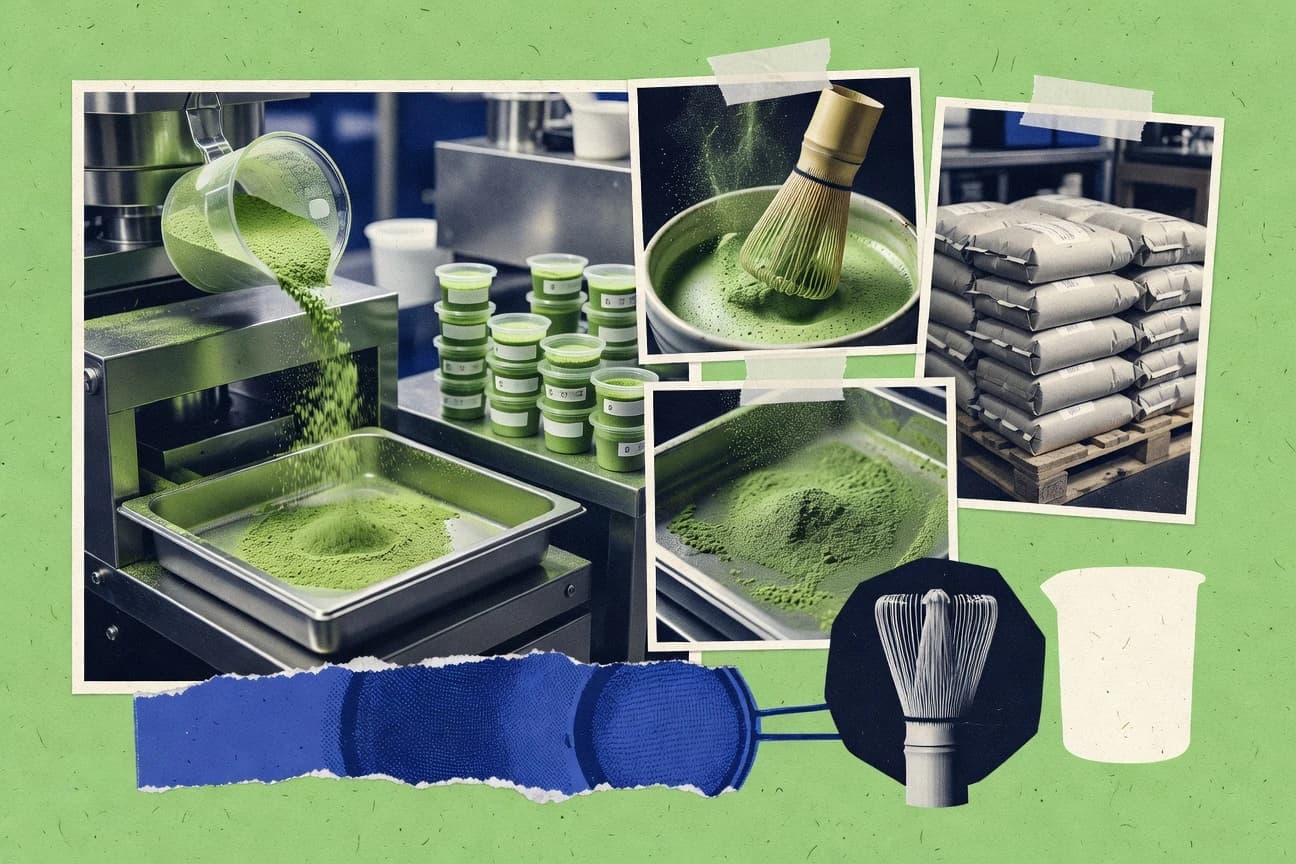

The global matcha tea market reached $4.3 billion in 2023, while Japan’s tea production climbed to 53,000 tonnes, signaling both scale and a supply rebound. In the United States, retail tea sales were about $15 billion in 2023 and specialty tea accounted for roughly 13% of purchases. Product performance and claims now hinge on measurable constraints like caffeine and pesticide residue limits, plus processing factors such as powder particle size and storage conditions.
Key Takeaways
- $4.3 billion global matcha tea market size in 2023, reflecting the market’s revenue scale at that time
- Japan’s tea production rose to 53,000 tonnes in 2023 from the prior year, indicating a year-over-year recovery trend
- Uji (Kyoto) produces the largest share of Japan’s gyokuro and is also a major source of high-grade tea used for matcha, implying a strong production base for matcha inputs
- FAOSTAT reports global tea production at 6+ million tonnes in recent years, providing macro context for where matcha sits within total tea output
- U.S. retail sales of tea (including specialty tea categories) reached about $15 billion in 2023, showing the broader retail market size that matcha competes within
- The Specialty Tea Institute reported that specialty tea accounted for about 13% of total tea sold in the U.S. in 2023, indicating room for matcha’s premium segment
- A 2021 peer-reviewed study reported that green tea catechins (including EGCG) can contribute to increased energy expenditure through effects on thermogenesis, relevant to why matcha is marketed for metabolic support
- EGCG (a principal catechin) has been reported to show measurable bioactivity in humans at specific dosing ranges in clinical research, supporting the mechanistic rationale for matcha’s health positioning
- A meta-analysis found that green tea/tea consumption is associated with a statistically significant reduction in systolic blood pressure, relevant to matcha’s potential cardiovascular marketing claims
- The European Food Safety Authority (EFSA) sets an allowable caffeine limit for certain foods and beverages; EU regulation constrains caffeine content and drives compliant matcha beverage formulations
- Japan’s Food Sanitation Act and related standards govern allowable contaminants (including pesticide residues) in agricultural foods like tea, setting compliance constraints for matcha powder
- EU pesticide maximum residue levels (MRLs) for tea-based products are set under Regulation (EC) No 396/2005, governing residue compliance for matcha ingredients
- In Japan, tea quality is commonly graded by measurable parameters including color and fineness for processed teas, which can translate into matcha quality control benchmarks in commercial specs
- A peer-reviewed study reported that particle size in green tea powders can significantly affect rehydration and mouthfeel, which is directly relevant to matcha powder performance
- Water temperature is shown in tea studies to affect extraction yields of catechins and polyphenols, which impacts matcha’s flavor and functional compound intensity
With Japan’s gyokuro base and strong health science, matcha is growing fast in a $4.3B global market.
Related reading
01 · Category
Market Size1 stats
01
$4.3 billion global matcha tea market size in 2023, reflecting the market’s revenue scale at that timehttps://www.fortunebusinessinsights.com/matcha-tea-market-103629
Interpretation
Market Size Interpretation
In 2023, the global matcha tea market reached $4.3 billion, underscoring that the industry has achieved a sizable revenue scale within the Market Size category.
02 · Category
Supply & Production3 stats
01
Japan’s tea production rose to 53,000 tonnes in 2023 from the prior year, indicating a year-over-year recovery trendhttps://www.maff.go.jp/e/data/statistics/tea/index.html
02
Uji (Kyoto) produces the largest share of Japan’s gyokuro and is also a major source of high-grade tea used for matcha, implying a strong production base for matcha inputshttps://www.maff.go.jp/j/keiei/kouhyou/zyutou/attach/pdf/you-2.pdf
03
FAOSTAT reports global tea production at 6+ million tonnes in recent years, providing macro context for where matcha sits within total tea outputhttps://www.fao.org/faostat/en/
Interpretation
Supply & Production Interpretation
Japan’s tea production climbed to 53,000 tonnes in 2023 after the prior year, and with major high grade matcha inputs coming from Uji plus global tea output topping 6 million tonnes, supply for the matcha segment is showing a clear, recoverable momentum within the wider tea production base.
03 · Category
Demand & Consumption2 stats
01
U.S. retail sales of tea (including specialty tea categories) reached about $15 billion in 2023, showing the broader retail market size that matcha competes withinhttps://www.teaassociation.org/wp-content/uploads/2024/03/Tea-Industry-Report-2024.pdf
02
The Specialty Tea Institute reported that specialty tea accounted for about 13% of total tea sold in the U.S. in 2023, indicating room for matcha’s premium segmenthttps://www.specialtytea.org/specialty-tea-industry-report
Interpretation
Demand & Consumption Interpretation
With U.S. tea retail sales totaling about $15 billion in 2023 and specialty tea making up roughly 13% of that amount, demand for higher-end matcha and other specialty offerings appears to be a meaningful and still-growing slice within overall consumption.
04 · Category
Health & Efficacy11 stats
01
A 2021 peer-reviewed study reported that green tea catechins (including EGCG) can contribute to increased energy expenditure through effects on thermogenesis, relevant to why matcha is marketed for metabolic supporthttps://www.ncbi.nlm.nih.gov/pmc/articles/PMC7827012/
02
EGCG (a principal catechin) has been reported to show measurable bioactivity in humans at specific dosing ranges in clinical research, supporting the mechanistic rationale for matcha’s health positioninghttps://www.ncbi.nlm.nih.gov/pmc/articles/PMC6074815/
03
A meta-analysis found that green tea/tea consumption is associated with a statistically significant reduction in systolic blood pressure, relevant to matcha’s potential cardiovascular marketing claimshttps://www.ncbi.nlm.nih.gov/pmc/articles/PMC6282709/
04
A randomized controlled trial reported that green tea extract consumption increased fat oxidation measures during exercise, indicating a plausible metabolic pathway relevant to matchahttps://pubmed.ncbi.nlm.nih.gov/18463334/
05
A clinical review reported that tea polyphenols have demonstrated antioxidant effects via measurable reductions in oxidative stress markers in several studies, supporting antioxidant claims for matchahttps://www.ncbi.nlm.nih.gov/pmc/articles/PMC5643482/
06
Matcha contains caffeine; a peer-reviewed analysis reported caffeine concentrations in matcha powder commonly in the range of ~1–2% by weight depending on grade and extraction assumptionshttps://www.ncbi.nlm.nih.gov/pmc/articles/PMC7150183/
07
Laboratory analyses show matcha can have high total polyphenol content compared with some brewed green teas, with specific quantitative ranges reported in analytical studieshttps://www.ncbi.nlm.nih.gov/pmc/articles/PMC8483074/
08
A study reported that consumption of green tea catechins increased insulin sensitivity indicators in participants over an intervention period, supporting matcha-related metabolic positioninghttps://www.ncbi.nlm.nih.gov/pmc/articles/PMC5558211/
09
Matcha’s primary compositional marketing includes high L-theanine content; tea studies report L-theanine as a major amino acid in green tea with measurable concentrations that vary by cultivarhttps://pubmed.ncbi.nlm.nih.gov/19808780/
10
A randomized trial reported improved attention/relaxed focus measures with L-theanine in human participants, aligning with matcha’s ‘calm focus’ use casehttps://pubmed.ncbi.nlm.nih.gov/21349219/
11
A meta-analysis reported that green tea catechins can reduce body weight or BMI modestly across trials, relevant to functional beverage claims for matchahttps://pubmed.ncbi.nlm.nih.gov/22469283/
Interpretation
Health & Efficacy Interpretation
Health and efficacy research suggests matcha can deliver measurable benefits such as increased energy expenditure and fat oxidation, and meta analytic evidence shows green tea intake is linked to a statistically significant reduction in systolic blood pressure, while clinical studies report EGCG bioactivity at defined dosing ranges and matcha’s caffeine commonly sits around 1 to 2 percent by weight.
05 · Category
Regulation & Standards8 stats
01
The European Food Safety Authority (EFSA) sets an allowable caffeine limit for certain foods and beverages; EU regulation constrains caffeine content and drives compliant matcha beverage formulationshttps://eur-lex.europa.eu/eli/reg/2002/1924/oj
02
Japan’s Food Sanitation Act and related standards govern allowable contaminants (including pesticide residues) in agricultural foods like tea, setting compliance constraints for matcha powderhttps://www.mhlw.go.jp/english/topics/foodsafety/index.html
03
EU pesticide maximum residue levels (MRLs) for tea-based products are set under Regulation (EC) No 396/2005, governing residue compliance for matcha ingredientshttps://eur-lex.europa.eu/eli/reg/2005/396/oj
04
The Codex Alimentarius sets maximum limits for contaminants and food additives affecting tea products globally, influencing matcha quality and manufacturing specificationshttps://www.fao.org/fao-who-codexalimentarius/en/
05
ISO 22000 provides a standardized food safety management system framework that many tea/matcha producers implement for process control and compliancehttps://www.iso.org/standard/65464.html
06
Food additive use (including emulsifiers used in matcha beverages) is governed by EU additives regulation, constraining formulation choices for ready-to-drink matchahttps://eur-lex.europa.eu/eli/reg/2008/1333/oj
07
Ready-to-drink foods including beverages must comply with EU nutrition and health claims rules under Regulation (EC) No 1924/2006, affecting how matcha product claims can be madehttps://eur-lex.europa.eu/eli/reg/2006/1924/oj
08
Japan’s labeling rules for food additives and ingredients affect how matcha powder and beverages must disclose allergens, additives, and origin-type informationhttps://www.caa.go.jp/en/policies/foodsafety/food_labeling/
Interpretation
Regulation & Standards Interpretation
Across Regulation & Standards, matcha producers face tightening, clearly defined compliance rules such as the EU’s caffeine limits set by EFSA and pesticide MRLs under Regulation (EC) No 396/2005 alongside Japan’s Food Sanitation Act and Codex global contaminant ceilings, meaning product formulas and processing controls must align with multiple regulators’ quantified thresholds.
More related reading
06 · Category
Quality & Processing9 stats
01
In Japan, tea quality is commonly graded by measurable parameters including color and fineness for processed teas, which can translate into matcha quality control benchmarks in commercial specshttps://www.maff.go.jp/j/seisan/ryutu/engei/pdf/0603.pdf
02
A peer-reviewed study reported that particle size in green tea powders can significantly affect rehydration and mouthfeel, which is directly relevant to matcha powder performancehttps://www.sciencedirect.com/science/article/pii/S0924224416301738
03
Water temperature is shown in tea studies to affect extraction yields of catechins and polyphenols, which impacts matcha’s flavor and functional compound intensityhttps://www.sciencedirect.com/science/article/pii/S0308814610000947
04
Stirring method affects rehydration uniformity; food science research on tea powders reports measurable differences in dispersion quality depending on mixing techniquehttps://www.tandfonline.com/doi/abs/10.1080/19476337.2014.962834
05
Matcha is produced from tencha that is shade-grown and then stone-milled; milling intensity is used to target very fine particle size distributions for improved suspensionhttps://www.ncbi.nlm.nih.gov/pmc/articles/PMC5659964/
06
A study on tea powder storage stability reported measurable changes in volatile aroma compounds over time under different packaging conditions, informing matcha shelf-life practiceshttps://www.sciencedirect.com/science/article/pii/S0308814621010733
07
Vacuum or barrier packaging reduces oxidation rates in powdered foods; research on tea powder indicates lower oxidation under oxygen barrier conditionshttps://www.sciencedirect.com/science/article/pii/S0963996920300189
08
A study measured that tea powder particle sizes below ~100 µm improve suspension and perceived smoothness in beverages, relevant to matcha grading specificationshttps://www.tandfonline.com/doi/abs/10.1080/19476337.2017.1375927
09
A shelf-life study reported that nitrogen flushing in tea powder packaging can extend oxidation stability compared with air packaging over multi-month intervals, informing matcha distribution practiceshttps://www.sciencedirect.com/science/article/pii/S0260877422000865
Interpretation
Quality & Processing Interpretation
Quality in the matcha industry is increasingly driven by measurable processing choices, since studies and industry grading systems link factors like milling for very fine particle size, water temperature and stirring method to quantifiable differences in rehydration, mouthfeel, and extraction or aroma stability over time.
07 · Category
Trade & Tariffs3 stats
01
In the U.S., matcha is commonly classified under Harmonized System codes for tea; HS 0902 covers green tea and can be used to track import/export volumes that include matcha-related tradehttps://hts.usitc.gov/?query=0902
02
Japan’s customs tariff schedule specifies duties for tea under relevant HS headings, influencing importer costs for matcha powder shipmentshttps://www.customs.go.jp/english/tariff/
03
EU Common Customs Tariff provides duty rates for tea products under HS 0902, affecting matcha powder import pricing into EU member stateshttps://ec.europa.eu/taxation_customs/dds2/taric/
Interpretation
Trade & Tariffs Interpretation
Under Trade and Tariffs, matcha import costs are shaped by how it is classified and taxed across major markets, since the U.S. uses HS 0902 to track green tea, while Japan’s and the EU’s duty schedules under the same HS heading directly influence the price of matcha powder shipments.
08 · Category
Industry Trends1 stats
01
Ready-to-drink beverages accounted for a majority share of convenience-focused beverage formats in recent industry analyses; matcha is marketed heavily within this format categoryhttps://www.statista.com/topics/1440/ready-to-drink-beverages/
Interpretation
Industry Trends Interpretation
For industry trends, the fact that ready-to-drink formats took a majority share among convenience-focused beverages shows that matcha is increasingly being packaged for on-the-go consumption.
09 · Category
Sustainability & Cost4 stats
01
A 2021 life-cycle assessment study on tea products found that agricultural and processing energy use can dominate footprint, implying that shade cultivation and milling energy impact matcha sustainabilityhttps://www.sciencedirect.com/science/article/pii/S0959652621008350
02
Packaging material choice affects matcha cost; barrier films with low oxygen transmission rates typically cost more per unit than standard packaging (costed in packaging industry studies)https://www.packworld.com/packaging-innovation/transparent-flexible-packaging/article/21344249/packaging-costs-what-affects-them
03
Carbon footprint hot spots in tea manufacturing include electricity use in drying/processing and transportation emissions, quantified in LCA studies of tea supply chainshttps://www.sciencedirect.com/science/article/pii/S0959652620325856
04
Global retail sales of organic food and beverages exceeded $125 billion in 2022 (reported by industry research), indicating premium willingness to pay that can extend to organic matchahttps://www.organic-world.net/yearbook/yearbook-2024.html
Interpretation
Sustainability & Cost Interpretation
A 2021 life-cycle assessment shows agricultural and processing energy can dominate the footprint, so for the Sustainability and Cost category the biggest leverage point is reducing those energy intensive steps, especially since packaging choices and related barrier film costs can push matcha prices higher and organic retail sales topping $125 billion in 2022 suggests consumers may pay a premium for lower impact options.
report visual · Comparison
Matcha in context: market size, production, and premium share
Matcha is growing within a larger tea market—supported by strong global revenue scale, recovering tea production in Japan, and a meaningful specialty/premium segment in the U.S.
U.S. retail sales of tea (including specialty tea categories) reached about $15 billion in 2023, showing the broader ret$15 billion
$4.3 billion global matcha tea market size in 2023, reflecting the market’s revenue scale at that time
$4.3 billion
Japan’s tea production rose to 53,000 tonnes in 2023 from the prior year, indicating a year-over-year recovery trend
53,000
The Specialty Tea Institute reported that specialty tea accounted for about 13% of total tea sold in the U.S. in 2023, i
13%
source-verifiedfortunebusinessinsights.com · maff.go.jp · teaassociation.org · specialtytea.org2023
Reference
Cite This Report
This report is designed to be cited. We maintain stable URLs and versioned verification dates. Copy the format appropriate for your publication below.
APA
Nathan Caldwell. (2026, February 13). Matcha Tea Industry Statistics. Gitnux. https://gitnux.org/matcha-tea-industry-statistics
MLA
Nathan Caldwell. "Matcha Tea Industry Statistics." Gitnux, 13 Feb 2026, https://gitnux.org/matcha-tea-industry-statistics.
Chicago
Nathan Caldwell. 2026. "Matcha Tea Industry Statistics." Gitnux. https://gitnux.org/matcha-tea-industry-statistics.
Sources & references
42 datasets cited across this report
+23 additional datasets cited (not shown individually)