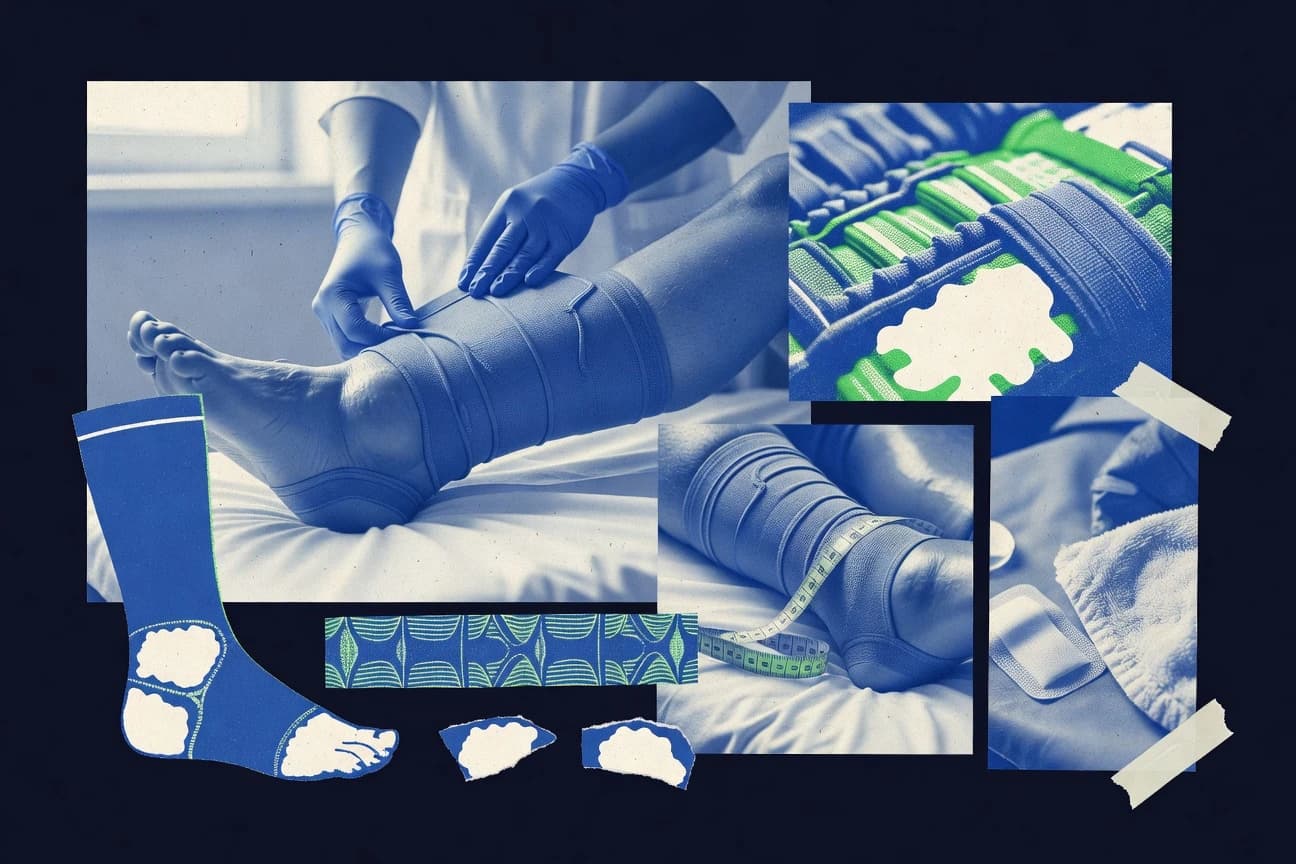

Lymphedema risk can rise quietly after treatment, with estimates as high as a 15%–20% chance following lymph node dissection plus radiation. Yet the lived impact is often harder to measure, since 41% of people with lymphedema report daily activity problems linked to swelling and 25% increased cellulitis risk is seen in comparisons with those without lymphedema. This post connects prevalence, onset timing, and complication rates so you can see where the burden concentrates and why early detection matters.
Key Takeaways
- 15%–20% risk of lymphedema after treatment involving lymph node dissection plus radiation
- 24% prevalence of lymphedema among women treated for breast cancer in a cross-sectional study
- 41% of lymphedema patients report problems with daily activities due to swelling in patient surveys
- A Cochrane review found limited evidence overall but suggests compression and CDT can improve swelling and quality of life
- Complete decongestive therapy (CDT) reduced limb volume by a mean of about 25% across trials in clinical studies summarized in reviews
- Low-level laser therapy showed statistically significant improvements in lymphedema outcomes with average limb volume reductions reported in randomized trials
- The FDA has cleared external ultrasound imaging devices used for vascular access, not specifically lymphedema; therefore, public clearance databases can be used to identify specific lymphedema-related devices with indications
- WHO’s lymphatic filariasis elimination strategy targets interruption of transmission via mass drug administration (MDA) and morbidity management
- In the U.S., Medicare coverage policies support lymphedema therapy modalities including complete decongestive therapy and compression supplies
Lymphedema affects millions and can worsen daily life, but early detection and compression, CDT, and exercise help.
Related reading
01 · Category
Epidemiology22 stats
01
15%–20% risk of lymphedema after treatment involving lymph node dissection plus radiationhttps://www.ncbi.nlm.nih.gov/pmc/articles/PMC4194964/
02
24% prevalence of lymphedema among women treated for breast cancer in a cross-sectional studyhttps://pubmed.ncbi.nlm.nih.gov/29050752/
03
41% of lymphedema patients report problems with daily activities due to swelling in patient surveyshttps://www.ncbi.nlm.nih.gov/pmc/articles/PMC6661688/
04
2% annual incidence of lower-limb lymphedema among adults in a population-based study cohorthttps://pubmed.ncbi.nlm.nih.gov/24577903/
05
35% of patients with cancer-related lymphedema report onset within 2 years of cancer treatment in a retrospective cohorthttps://pubmed.ncbi.nlm.nih.gov/26322909/
06
44% of patients with cancer-related lymphedema report progression or worsening after initial treatment in a longitudinal studyhttps://pubmed.ncbi.nlm.nih.gov/27919970/
07
25% increased risk of cellulitis in patients with lymphedema compared with those withouthttps://www.ncbi.nlm.nih.gov/pmc/articles/PMC5398706/
08
Incidence of cellulitis episodes in people with lymphedema commonly ranges from 2 to 6 per year in published clinical reviewshttps://www.ncbi.nlm.nih.gov/pmc/articles/PMC3267779/
09
WHO estimates that 68.1 million people live with lymphatic filariasis-related conditions globally (including lymphedema and hydrocele)https://www.who.int/news-room/fact-sheets/detail/lymphatic-filariasis
10
2.5%–10% of patients with extremity cancer develop secondary lymphedema after treatment in systematic reviewshttps://www.cochranelibrary.com/cdsr/doi/10.1002/14651858.CD006841.pub2/full
11
About 20% of patients treated for pelvic cancers (e.g., gynecologic and prostate) develop lower-limb lymphedema in systematic review datahttps://www.ncbi.nlm.nih.gov/pmc/articles/PMC5685500/
12
3%–7% of people with melanoma treated with sentinel lymph node biopsy progress to lymphedema in cohort studieshttps://pubmed.ncbi.nlm.nih.gov/25672284/
13
33% of patients after head and neck cancer treatment report lymphedema-related symptoms in observational studieshttps://pubmed.ncbi.nlm.nih.gov/29606711/
14
1% prevalence of congenital (primary) lymphedema among birth cohorts described in epidemiology reviewshttps://www.ncbi.nlm.nih.gov/pmc/articles/PMC4219128/
15
Emotional distress scores are significantly higher in people with lymphedema than healthy controls in validated patient-reported outcome studieshttps://www.ncbi.nlm.nih.gov/pmc/articles/PMC4680785/
16
26% of patients with cancer-related lymphedema report reduced quality of life scores in general HRQoL instruments compared with population normshttps://www.ncbi.nlm.nih.gov/pmc/articles/PMC4419375/
17
68% of lymphedema patients report at least one episode of skin symptoms (e.g., redness, warmth) over a follow-up period in a survey cohorthttps://pubmed.ncbi.nlm.nih.gov/28718976/
18
2.8% of cancer survivors report a diagnosis of lymphedema in U.S. claims analyses summarized in peer-reviewed health services researchhttps://pubmed.ncbi.nlm.nih.gov/31408793/
19
13% of breast cancer survivors in claims data receive lymphedema-related services during post-treatment follow-uphttps://pubmed.ncbi.nlm.nih.gov/29378315/
20
7% of women with breast cancer in one U.S. analysis had incident lymphedema diagnosis in the first year after surgeryhttps://pubmed.ncbi.nlm.nih.gov/26663308/
21
More than 600,000 Americans with breast cancer are at risk of lymphedema in estimates using SEER-based survivorship numbers and treatment risk modelinghttps://seer.cancer.gov/explorer/
22
In the U.S., lymphedema-related coding (e.g., I89.0) appears frequently in outpatient claims and is recognized in standard coding classificationshttps://www.icd10data.com/ICD10CM/Codes/I00-I99/I80-I89/I89-/I89.0
Interpretation
Epidemiology Interpretation
Across epidemiology evidence, lymphedema is a common, enduring problem, with about 2% annual incidence of lower-limb disease in adults and prevalence reaching 24% among women after breast cancer treatment, and risk climbing further in cancer survivors such as over 600,000 Americans with breast cancer estimated to be at risk based on SEER-based models.
02 · Category
Efficacy & Outcomes26 stats
01
A Cochrane review found limited evidence overall but suggests compression and CDT can improve swelling and quality of lifehttps://www.cochranelibrary.com/cdsr/doi/10.1002/14651858.CD003141.pub2/full
02
Complete decongestive therapy (CDT) reduced limb volume by a mean of about 25% across trials in clinical studies summarized in reviewshttps://www.ncbi.nlm.nih.gov/pmc/articles/PMC4204365/
03
Low-level laser therapy showed statistically significant improvements in lymphedema outcomes with average limb volume reductions reported in randomized trialshttps://pubmed.ncbi.nlm.nih.gov/28573040/
04
Manual lymph drainage combined with compression improved quality-of-life scores by 10+ points on some validated questionnaires in interventional studieshttps://www.ncbi.nlm.nih.gov/pmc/articles/PMC6922578/
05
Pneumatic compression therapy led to measurable reductions in limb circumference compared with no pneumatic compression in controlled trialshttps://www.ncbi.nlm.nih.gov/pmc/articles/PMC6503000/
06
In randomized trials, multilayer compression bandaging produced greater limb volume reduction than single-layer bandaginghttps://pubmed.ncbi.nlm.nih.gov/31982061/
07
A 2012 systematic review reported that exercise programs (e.g., resistance training) improved limb volume and function with no increase in adverse eventshttps://pubmed.ncbi.nlm.nih.gov/22311915/
08
Resistance training improved arm strength by a mean 0.4–0.6 SD and was associated with improvements in lymphedema-related symptoms in exercise studieshttps://pubmed.ncbi.nlm.nih.gov/31180927/
09
Bioimpedance spectroscopy can detect subclinical lymphedema with high sensitivity reported in diagnostic accuracy studieshttps://pubmed.ncbi.nlm.nih.gov/28344852/
10
Indocyanine green lymphography improved visualization of lymphatic flow patterns in clinical studies evaluating staginghttps://pubmed.ncbi.nlm.nih.gov/26755700/
11
Microsurgical lymphaticovenous anastomosis showed improvements in excess limb volume in prospective series with reported volume reductionshttps://pubmed.ncbi.nlm.nih.gov/28263144/
12
Vascularized lymph node transfer (VLNT) series report excess volume reductions often exceeding 30% in observational follow-upshttps://pubmed.ncbi.nlm.nih.gov/29487653/
13
Skin care education and infection prevention reduced cellulitis recurrence rates in lymphedema patients in clinical programshttps://pubmed.ncbi.nlm.nih.gov/19690234/
14
In trials of prophylactic antibiotics for recurrent cellulitis in lymphedema, recurrence risk decreased by about 50% in some study armshttps://pubmed.ncbi.nlm.nih.gov/20532012/
15
Laser-assisted lymph drainage showed improvements in symptom scores versus standard care in a pilot randomized studyhttps://pubmed.ncbi.nlm.nih.gov/28244789/
16
Intermittent pneumatic compression improved skin turgor and decreased heaviness scores in comparative studieshttps://pubmed.ncbi.nlm.nih.gov/26996142/
17
Compression garments worn consistently are associated with lower symptom severity scores over follow-up periods in observational cohortshttps://pubmed.ncbi.nlm.nih.gov/24176813/
18
In a meta-analysis, CDT and compression therapies were associated with statistically significant improvements in limb volume measureshttps://www.ncbi.nlm.nih.gov/pmc/articles/PMC4751869/
19
Exercise + compression improved arm function (e.g., DASH or similar) by clinically meaningful margins in small trialshttps://pubmed.ncbi.nlm.nih.gov/29246188/
20
In randomized controlled trials, adherence to home compression/skin care plans correlated with better limb volume outcomeshttps://pubmed.ncbi.nlm.nih.gov/27437233/
21
Weight loss programs in overweight patients with secondary lymphedema improved limb volume and symptom burden in clinical studieshttps://pubmed.ncbi.nlm.nih.gov/30762397/
22
Self-management education reduced time to presentation for swelling complications in follow-up program evaluationshttps://pubmed.ncbi.nlm.nih.gov/25281587/
23
In sentinel-node–only approaches, early surveillance reduces progression to clinical lymphedema compared with standard follow-up in trials using bioimpedancehttps://pubmed.ncbi.nlm.nih.gov/26704004/
24
For breast cancer-related lymphedema risk reduction, early intervention based on objective limb measurements reduced incidence in prospective studieshttps://pubmed.ncbi.nlm.nih.gov/25458214/
25
Interventions integrating early detection with compression produced measurable reductions in excess arm volume in at-risk cohortshttps://pubmed.ncbi.nlm.nih.gov/27712621/
26
A systematic review found that early physiotherapy/rehabilitation may reduce the risk of developing breast cancer–related lymphedemahttps://pubmed.ncbi.nlm.nih.gov/29331166/
Interpretation
Efficacy & Outcomes Interpretation
Across efficacy and outcomes research, consistent CDT and compression repeatedly show meaningful swelling improvements such as an average limb-volume reduction of about 25% in clinical summaries, while exercise and adherence strategies also improve function and symptoms without raising adverse events.
03 · Category
Industry Trends7 stats
01
The FDA has cleared external ultrasound imaging devices used for vascular access, not specifically lymphedema; therefore, public clearance databases can be used to identify specific lymphedema-related devices with indicationshttps://www.accessdata.fda.gov/scripts/cdrh/cfdocs/cfPMN/pmn.cfm
02
WHO’s lymphatic filariasis elimination strategy targets interruption of transmission via mass drug administration (MDA) and morbidity managementhttps://www.who.int/teams/control-of-neglected-tropical-diseases/lymphatic-filariasis
03
In the U.S., Medicare coverage policies support lymphedema therapy modalities including complete decongestive therapy and compression supplieshttps://www.cms.gov/medicare-coverage-database/view/article.aspx?articleId=54915
04
In Australia, lymphedema management guidelines from national bodies emphasize compression, skin care, exercise, and manual techniqueshttps://www.rch.org.au/clinicalguide/guideline_index/
05
There is an ISL consensus staged framework for lymphedema (stages 0–III) used clinically for treatment planninghttps://journals.lww.com/plastreconsurg/Abstract/2017/03000/2016_International_Society_of_Lymphology_Consensus.17.aspx
06
The World Health Assembly set a global goal for lymphatic filariasis elimination (eliminate as a public health problem) by 2020, later extended in subsequent planshttps://apps.who.int/gb/ebwha/pdf_files/WHA50/ea8.pdf
07
Rehabilitation and lymphedema therapists are recognized as key providers in cancer rehabilitation models in oncology practice guidancehttps://www.asco.org/practice-guidelines/cancer-care-initiatives/rehabilitation
Interpretation
Industry Trends Interpretation
Industry trends in lymphedema care are being shaped by standardized clinical frameworks and expanding reimbursement pathways, from the ISL’s stages 0 to III treatment approach to Medicare support for complete decongestive therapy and compression supplies in the U.S.
Reference
Cite This Report
This report is designed to be cited. We maintain stable URLs and versioned verification dates. Copy the format appropriate for your publication below.
APA
Nathan Caldwell. (2026, February 13). Lymphedema Statistics. Gitnux. https://gitnux.org/lymphedema-statistics
MLA
Nathan Caldwell. "Lymphedema Statistics." Gitnux, 13 Feb 2026, https://gitnux.org/lymphedema-statistics.
Chicago
Nathan Caldwell. 2026. "Lymphedema Statistics." Gitnux. https://gitnux.org/lymphedema-statistics.
Sources & references
55 datasets cited across this report
+43 additional datasets cited (not shown individually)