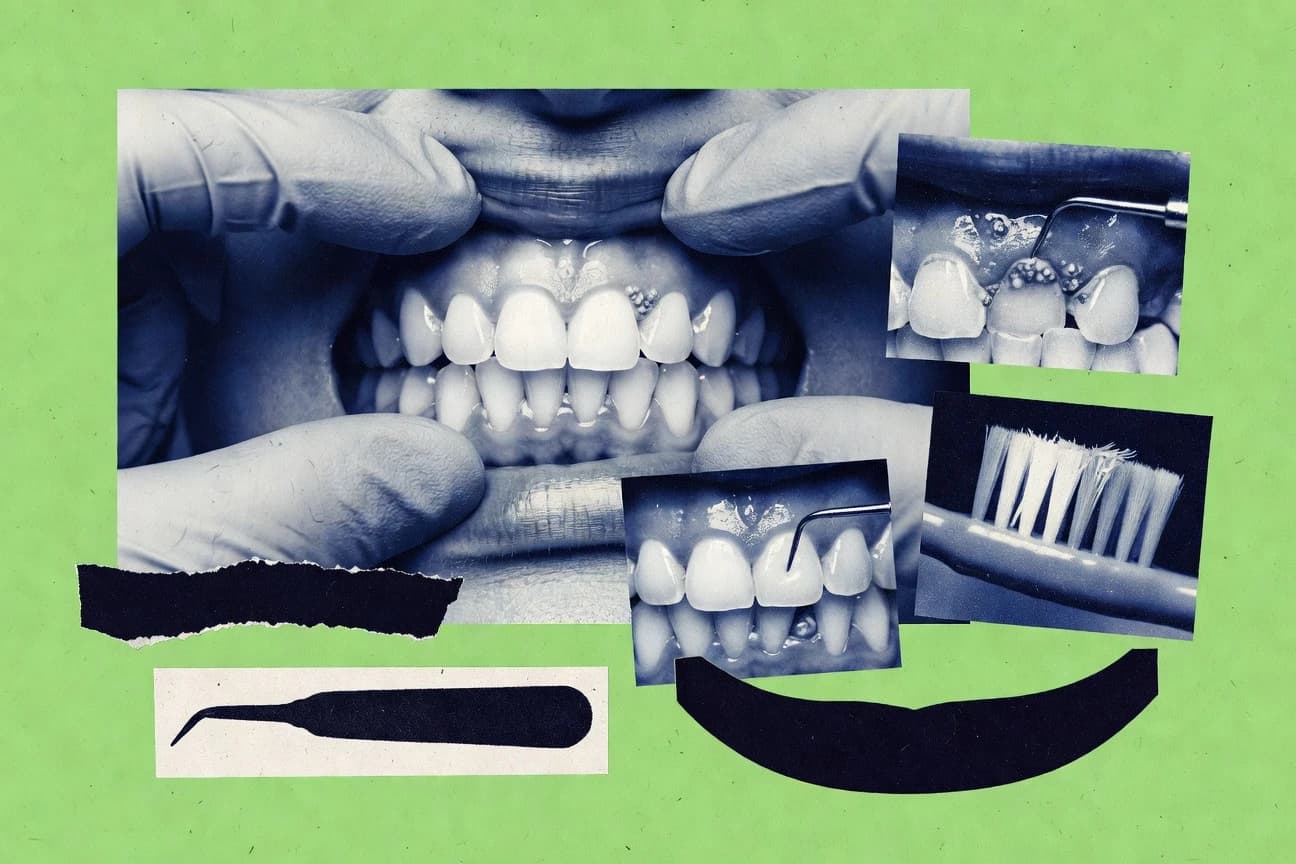

Severe periodontitis affects 8.7% of U.S. adults aged 30 and older, yet 83% of people with periodontitis report no symptoms, making this condition easy to miss until it has already advanced. At the same time, estimates suggest about 50% of the world’s population experiences gingivitis at some point and roughly 30% of adults 35 and older live with periodontitis, creating a stark gap between everyday gum inflammation and the subset that develops deeper damage. This post connects those contrasts to real risk factors and health costs, from smoking and diabetes links to the worldwide disability burden tied to gum disease.
Key Takeaways
- 8.7% of U.S. adults aged ≥30 years have severe periodontitis
- ~30% of adults aged ≥35 years worldwide have periodontitis (estimate commonly summarized from global epidemiology literature)
- 50% of the world's population is estimated to have gingivitis (milder gum inflammation) at some point across the life course
- In a global analysis, the prevalence of severe periodontitis is higher in males than females (reported sex-stratified differences in the Lancet Global Health paper)
- Relative risk of periodontitis is higher in current smokers; one meta-analysis reports odds ratio of 2.5 for periodontitis in current smokers
- A meta-analysis reported diabetes is associated with an approximately 1.5–2.0× higher odds of periodontitis (summary effect estimate range)
- A global analysis estimated 5.0 million years lived with disability (YLDs) attributable to periodontitis (burden component estimate in GBD materials)
- U.S. total economic impact of periodontal disease is estimated at $150 billion per year when including indirect costs (work loss and other indirect impacts)
- $0.19–$0.22 per-person per-year health spending increase is associated with periodontal disease interventions in cost-effectiveness modeling (budget impact range reported in modeling study)
- A 2018 systematic review found that periodontal treatment reduces HbA1c in people with diabetes by an average of about 0.4% (metabolic outcome from periodontal therapy)
- A meta-analysis reported periodontal treatment reduces inflammatory markers such as CRP by a mean decrease of about 0.5 mg/L (pooled lab outcome)
- Scaling and root planing (non-surgical periodontal therapy) typically reduces probing pocket depth by about 1.0–2.0 mm on average at follow-up (clinical outcome range from systematic reviews)
- In the U.S., the number of dental hygienists employed is 225,000 (which supports periodontal preventive and maintenance services)
- In the UK, there were about 33.3 million NHS dentistry patient contacts in 2023–2024 (captures routine dental care where periodontal disease can be detected)
- The dental lasers market is projected to grow at a CAGR around 7–9% (trend supporting adoption of adjunctive laser periodontal therapies)
About 1 in 10 US adults has periodontitis, often without symptoms, driving major health and economic burdens.
Related reading
01 · Category
Disease Prevalence6 stats
01
8.7% of U.S. adults aged ≥30 years have severe periodontitishttps://www.cdc.gov/mmwr/volumes/71/wr/mm7102a1.htm
02
~30% of adults aged ≥35 years worldwide have periodontitis (estimate commonly summarized from global epidemiology literature)https://pubmed.ncbi.nlm.nih.gov/26890810/
03
50% of the world's population is estimated to have gingivitis (milder gum inflammation) at some point across the life coursehttps://www.ncbi.nlm.nih.gov/pmc/articles/PMC4872901/
04
70% of adults have gingival inflammation (gingivitis) as reported in a systematic review of periodontal disease epidemiologyhttps://pubmed.ncbi.nlm.nih.gov/30702931/
05
9.5% of adults in the U.S. have periodontitis (estimates based on NHANES 2009–2014 stratified by age group in CDC-supported analyses)https://www.cdc.gov/nchs/products/databriefs/db368.htm
06
83% of people with periodontitis show no symptoms, based on a review summarizing clinical detection rates and symptom awarenesshttps://pubmed.ncbi.nlm.nih.gov/23413522/
Interpretation
Disease Prevalence Interpretation
Disease prevalence is high and often hidden, with around 70% of adults experiencing gingival inflammation and about 30% worldwide having periodontitis, yet 83% of people with periodontitis report no symptoms.
02 · Category
Risk Factors6 stats
01
In a global analysis, the prevalence of severe periodontitis is higher in males than females (reported sex-stratified differences in the Lancet Global Health paper)https://www.thelancet.com/journals/lanplh/article/PIIS0140-6736(18)31942-9/fulltext
02
Relative risk of periodontitis is higher in current smokers; one meta-analysis reports odds ratio of 2.5 for periodontitis in current smokershttps://pubmed.ncbi.nlm.nih.gov/16020756/
03
A meta-analysis reported diabetes is associated with an approximately 1.5–2.0× higher odds of periodontitis (summary effect estimate range)https://pubmed.ncbi.nlm.nih.gov/18682578/
04
A systematic review found that poor oral hygiene was associated with an increased risk of gingivitis by about 2-foldhttps://pubmed.ncbi.nlm.nih.gov/26025001/
05
A longitudinal cohort study found that individuals with fewer than 2 dental visits per year had higher odds of developing periodontal disease (protective effect of regular dental care)https://jamanetwork.com/journals/jama/article-abstract/2683369
06
In a meta-analysis, obesity was associated with higher odds of periodontitis (reported pooled odds ratio)https://pubmed.ncbi.nlm.nih.gov/21794417/
Interpretation
Risk Factors Interpretation
Across key risk factors for gum disease, the strongest pattern is that common health and lifestyle factors substantially raise periodontal disease likelihood, including about 2.5 times higher odds in current smokers and roughly 1.5 to 2.0 times higher odds with diabetes.
03 · Category
Economic Impact13 stats
01
A global analysis estimated 5.0 million years lived with disability (YLDs) attributable to periodontitis (burden component estimate in GBD materials)https://vizhub.healthdata.org/gbd-results/
02
U.S. total economic impact of periodontal disease is estimated at $150 billion per year when including indirect costs (work loss and other indirect impacts)https://www.ncbi.nlm.nih.gov/pmc/articles/PMC3563620/
03
$0.19–$0.22 per-person per-year health spending increase is associated with periodontal disease interventions in cost-effectiveness modeling (budget impact range reported in modeling study)https://pubmed.ncbi.nlm.nih.gov/29239135/
04
In the UK, the cost burden of periodontal disease treatment and complications is in the billions of pounds annually (economic modeling and cost summaries in health economic literature)https://www.ncbi.nlm.nih.gov/pmc/articles/PMC5486048/
05
In employer-focused analyses, oral health problems including periodontal disease contribute to productivity losses; one report estimates $20 billion annually in U.S. productivity impacts from oral health conditionshttps://www.adha.org/resources-docs/insurance-and-economics/adha-adps-productivity-losses.pdf
06
$1,500median annual household out-of-pocket spending on dental care in the U.S. (periodontal treatment often contributes to dental out-of-pocket expenditures)https://www.bls.gov/cex/tables.htm
07
In a U.S. claims study, periodontal-related procedures account for a measurable share of dental service costs (claims-based expenditure share)https://www.ncbi.nlm.nih.gov/books/NBK558924/
08
Severe periodontitis increases healthcare utilization; one study reported 1.3× higher dental visits among affected individuals (utilization differential)https://pubmed.ncbi.nlm.nih.gov/23786343/
09
Tooth loss costs add to periodontal disease burden; one review estimated cost increases associated with tooth loss at hundreds to thousands of dollars per person over time (economic impact from tooth loss literature)https://www.ncbi.nlm.nih.gov/pmc/articles/PMC6180787/
10
In a cost-effectiveness analysis, periodontal therapy is estimated to be cost-effective with incremental cost-effectiveness ratios below typical willingness-to-pay thresholds (reported ICER values in the study)https://pubmed.ncbi.nlm.nih.gov/30706173/
11
For U.S. Medicare beneficiaries, dental service use varies substantially; fewer dental visits are associated with more severe periodontal outcomes and higher downstream costs (claims-based utilization gradient)https://www.ncbi.nlm.nih.gov/pmc/articles/PMC6517782/
12
A U.S. systematic review estimated that treating periodontal disease can reduce total healthcare expenditures by preventing complications, with savings depending on baseline risk (range reported in review)https://pubmed.ncbi.nlm.nih.gov/26530384/
13
In U.S. surveillance, adults with periodontal disease are more likely to have other chronic conditions; comorbidity correlates with higher healthcare spending (co-occurrence burden quantified in NHANES-based study)https://pubmed.ncbi.nlm.nih.gov/27035294/
Interpretation
Economic Impact Interpretation
Economic analyses show that periodontal disease creates a large and measurable financial burden, with the U.S. total cost estimated at $150 billion per year including indirect work losses and claims-based patterns indicating higher severity drives higher downstream healthcare use, making the economic impact a substantial driver rather than a background concern.
More related reading
04 · Category
Treatment Outcomes16 stats
01
A 2018 systematic review found that periodontal treatment reduces HbA1c in people with diabetes by an average of about 0.4% (metabolic outcome from periodontal therapy)https://pubmed.ncbi.nlm.nih.gov/30165287/
02
A meta-analysis reported periodontal treatment reduces inflammatory markers such as CRP by a mean decrease of about 0.5 mg/L (pooled lab outcome)https://pubmed.ncbi.nlm.nih.gov/22645741/
03
Scaling and root planing (non-surgical periodontal therapy) typically reduces probing pocket depth by about 1.0–2.0 mm on average at follow-up (clinical outcome range from systematic reviews)https://pubmed.ncbi.nlm.nih.gov/21870729/
04
In randomized trials, adjunctive systemic antibiotics to non-surgical therapy produce additional probing pocket depth reductions of roughly 0.5 mm compared with scaling/root planing alone (pooled effect)https://pubmed.ncbi.nlm.nih.gov/20099842/
05
In a Cochrane review, periodontal surgery reduced probing pocket depth by about 1 mm more than non-surgical therapy in advanced periodontitis (comparative clinical outcome)https://pubmed.ncbi.nlm.nih.gov/19588395/
06
In a network meta-analysis, guided tissue regeneration achieved the largest average gain in clinical attachment level among regenerative procedures, with mean gains reported in the meta-analysishttps://pubmed.ncbi.nlm.nih.gov/30111269/
07
In maintenance therapy, adherence to professional periodontal maintenance visits is associated with lower tooth loss risk; one cohort study quantified reduced tooth loss with regular maintenance (hazard ratio reported)https://pubmed.ncbi.nlm.nih.gov/31740485/
08
In a systematic review, periodontal treatment reduced bleeding on probing by an average of about 20–30% from baseline (clinical index outcome)https://pubmed.ncbi.nlm.nih.gov/24332672/
09
In a trial, full-mouth disinfection protocols achieved reductions in plaque and inflammation indexes of around 30% at follow-up (clinical index change)https://pubmed.ncbi.nlm.nih.gov/26991167/
10
In a meta-analysis, antiseptic mouthrinses (e.g., chlorhexidine) reduce gingivitis, with average reductions in gingival inflammation scores of about 0.3–0.5 (standardized index units) compared with controlhttps://pubmed.ncbi.nlm.nih.gov/25139938/
11
In adults, periodontal therapy combined with smoking cessation yields better clinical outcomes; one study reported ~2× greater improvement in probing depths among quitters vs continued smokers (relative improvement quantified)https://pubmed.ncbi.nlm.nih.gov/24971537/
12
In a systematic review of low-level laser therapy adjuncts, average probing depth reductions were about 0.3–0.6 mm greater than scaling/root planing alone (pooled effect size)https://pubmed.ncbi.nlm.nih.gov/27469383/
13
In a Cochrane review, adjunctive probiotics to conventional periodontal treatment improved clinical attachment level by a small but statistically significant amount (reported mean difference)https://pubmed.ncbi.nlm.nih.gov/31000762/
14
In randomized trials, localized antimicrobials (e.g., doxycycline gel) reduced probing pocket depth by about 0.5 mm additional benefit versus placebo/standard care (pooled effect)https://pubmed.ncbi.nlm.nih.gov/23543967/
15
In a longitudinal analysis, tooth retention improved with periodontal maintenance programs; one study reported that participants had 1.6× higher tooth retention compared with those without maintenance (relative retention ratio)https://pubmed.ncbi.nlm.nih.gov/20166206/
16
In a large clinical trial, early periodontal intervention reduced progression of attachment loss by about 0.3–0.6 mm over follow-up compared with delayed care (progression metric from trial follow-up)https://pubmed.ncbi.nlm.nih.gov/15919987/
Interpretation
Treatment Outcomes Interpretation
Across treatment outcomes for gum disease, the evidence shows clinically meaningful improvements, with non surgical therapy typically reducing probing pocket depth by about 1.0 to 2.0 mm and common adjuncts like antibiotics adding roughly 0.5 mm more, while systemic benefits such as lowering HbA1c by around 0.4% in people with diabetes highlight that these therapies can affect both oral and overall health.
05 · Category
Industry Trends5 stats
01
In the U.S., the number of dental hygienists employed is 225,000 (which supports periodontal preventive and maintenance services)https://www.bls.gov/ooh/healthcare/dental-hygienists.htm
02
In the UK, there were about 33.3 million NHS dentistry patient contacts in 2023–2024 (captures routine dental care where periodontal disease can be detected)https://digital.nhs.uk/data-and-information/publications/statistical-work-on-nhs-dental-services
03
The dental lasers market is projected to grow at a CAGR around 7–9% (trend supporting adoption of adjunctive laser periodontal therapies)https://www.alliedmarketresearch.com/dental-lasers-market-A02075
04
Periodontitis is included in major oral disease prevention programs; one WHO oral health strategy outlines prevention and early diagnosis targets for periodontal disease (policy trend)https://www.who.int/publications/i/item/9789241513500
05
Local delivery antimicrobials represent a measurable share of periodontal therapeutics; one market review reported >10% share by product category (localized drug delivery market share estimate)https://www.reportlinker.com/p06399911/Periodontal-therapeutics-market.html
Interpretation
Industry Trends Interpretation
The industry trend is clear as the U.S. employs 225,000 dental hygienists to drive periodontal prevention and care, while the UK records 33.3 million NHS dental contacts in 2023–2024 and the dental lasers market is set to grow 7–9% CAGR, signaling broad adoption of detection and adjunctive periodontal therapies alongside local delivery antimicrobials that account for over 10% of the therapeutics category.
Reference
Cite This Report
This report is designed to be cited. We maintain stable URLs and versioned verification dates. Copy the format appropriate for your publication below.
APA
Margot Villeneuve. (2026, February 13). Gum Disease Statistics. Gitnux. https://gitnux.org/gum-disease-statistics
MLA
Margot Villeneuve. "Gum Disease Statistics." Gitnux, 13 Feb 2026, https://gitnux.org/gum-disease-statistics.
Chicago
Margot Villeneuve. 2026. "Gum Disease Statistics." Gitnux. https://gitnux.org/gum-disease-statistics.
Sources & references
46 datasets cited across this report
+34 additional datasets cited (not shown individually)