
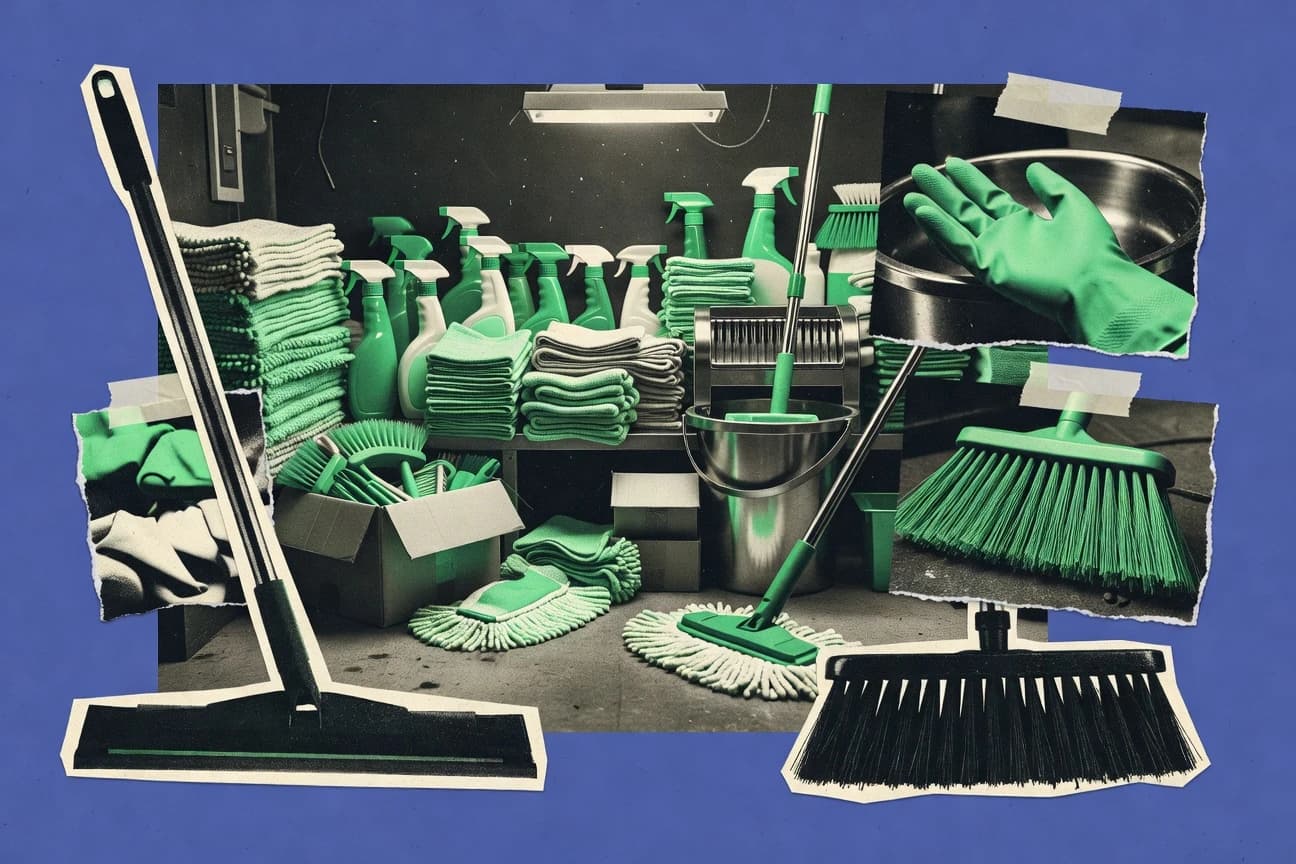

The global cleaning services market stands at 108.3 billion dollars. U.S. janitorial paper prices rose 18 percent while labor costs increased 8.2 percent. Cleaning robot market projections reach 8.6 billion dollars.
Key Takeaways
- $108.3 billion global cleaning services market size in 2022
- The global floor care market was $16.8 billion in 2022 and is projected to reach $25.4 billion by 2030.
- The global paper products (including paper towels, tissue and related categories used in cleaning) market was $377.2 billion in 2023.
- 36% of global office managers report increasing hygiene requirements since 2020
- 74% of cleaning managers reported that they use color-coding to reduce cross-contamination between different cleaning zones in a 2023 industry survey.
- Global chemicals production increased by 4.1% in 2021 (baseline for cleaning chemical demand)
- U.S. janitorial paper supply price index increased 18% from 2020 to 2022
- Sodium hypochlorite prices in the U.S. rose sharply in 2021–2022 due to input costs (indexed increase reported by ICIS)
- 2.1% of U.S. custodial service expenditures are for disinfectant/cleaning agents that are EPA-registered (2022)
- Facility management software adoption by organizations increased to 65% by 2023 (subset including maintenance & cleaning workflows)
- 10% of U.S. commercial cleaning buyers procure under cooperative purchasing programs (2019)
- ASTM E1153 “Standard Quantitative Disk Carrier Test Method” is used to evaluate disinfectant efficacy on carriers
- A 2020 systematic review found that microfiber cleaning systems can improve soil removal efficiency versus standard cloths
- A 2018 peer-reviewed study reported improved cleaning performance with microfiber mops versus cotton in hospital settings
Rising hygiene demands, higher U.S. labor and supply costs, and expanding microfiber, robots, and wipes markets are reshaping janitorial purchasing.
Related reading
01 · Category
Market Size6 stats
01
$108.3 billion global cleaning services market size in 2022
02
The global floor care market was $16.8 billion in 2022 and is projected to reach $25.4 billion by 2030.
03
The global paper products (including paper towels, tissue and related categories used in cleaning) market was $377.2 billion in 2023.
04
The global disinfection and sanitization services market was $28.7 billion in 2023 and is forecast to reach $54.4 billion by 2032.
05
The global wipes market is forecast to grow from $14.0 billion in 2024 to $19.4 billion by 2029.
06
The global cleaning robots market is projected to reach $8.6 billion by 2030 (up from $2.8 billion in 2023).
Interpretation
Market Size Interpretation
In 2022 the cleaning services market was worth $108.3 billion and the broader janitorial supplies demand is expanding across multiple categories, from floor care growing from $16.8 billion in 2022 to a projected $25.4 billion by 2030 and disinfection and sanitization services rising from $28.7 billion in 2023 to $54.4 billion by 2032, showing sustained market growth rather than a single niche.
02 · Category
Industry Trends2 stats
01
36% of global office managers report increasing hygiene requirements since 2020
02
74% of cleaning managers reported that they use color-coding to reduce cross-contamination between different cleaning zones in a 2023 industry survey.
Interpretation
Industry Trends Interpretation
Under industry trends, rising hygiene expectations are clear with 36% of global office managers saying requirements have increased since 2020 and 74% of cleaning managers using color coding to reduce cross contamination between zones.
03 · Category
Cost Analysis12 stats
01
Global chemicals production increased by 4.1% in 2021 (baseline for cleaning chemical demand)
02
U.S. janitorial paper supply price index increased 18% from 2020 to 2022
03
Sodium hypochlorite prices in the U.S. rose sharply in 2021–2022 due to input costs (indexed increase reported by ICIS)
04
Global packaging transportation costs averaged $3.68per kilogram in 2021 for industrial markets (baseline for wipes/chemicals logistics)
05
3.9% of global shipping costs came from fuel surcharge in 2021 (logistics cost pressure)
06
U.S. labor costs for janitorial services rose 8.2% from 2021 to 2022
07
U.S. janitors and cleaners median hourly wage was $15.24in May 2023
08
U.S. cleaning and maintenance worker employment was 1,976,000 in 2023
09
2,205 hazardous chemical supply chain incidents were reported globally in 2023 across chemical logistics tracking (industry dataset).
10
Electricity prices in the U.S. increased by 4.3% in 2023 (CPI-U series for electricity), affecting utilities used in facilities’ cleaning and laundering.
11
U.S. natural gas prices fell by 0.8% in 2023 (EIA Henry Hub), reducing facility energy input costs for some cleaning operations.
12
Global ocean freight rates decreased by 22% year-over-year in 2023 for key container routes, reducing inbound cost pressures for binned/packed supplies.
Interpretation
Cost Analysis Interpretation
Cost pressures in the janitorial supplies industry clearly intensified between 2021 and 2022 as cleaning chemical output rose 4.1% in 2021 while U.S. janitorial paper prices jumped 18% from 2020 to 2022, sodium hypochlorite surged due to input costs, logistics costs averaged $3.68 per kilogram in 2021 with 3.9% of shipping driven by fuel surcharges, and labor for janitorial services increased 8.2%.
More related reading
04 · Category
User Adoption3 stats
01
2.1% of U.S. custodial service expenditures are for disinfectant/cleaning agents that are EPA-registered (2022)
02
Facility management software adoption by organizations increased to 65% by 2023 (subset including maintenance & cleaning workflows)
03
10% of U.S. commercial cleaning buyers procure under cooperative purchasing programs (2019)
Interpretation
User Adoption Interpretation
User adoption is steadily rising as about 65% of organizations use facility management software that includes maintenance and cleaning workflows and while only 2.1% of custodial spending goes to EPA registered disinfectant cleaning agents, 10% of commercial cleaning buyers rely on cooperative purchasing programs.
05 · Category
Performance Metrics9 stats
01
ASTM E1153 “Standard Quantitative Disk Carrier Test Method” is used to evaluate disinfectant efficacy on carriers
02
A 2020 systematic review found that microfiber cleaning systems can improve soil removal efficiency versus standard cloths
03
A 2018 peer-reviewed study reported improved cleaning performance with microfiber mops versus cotton in hospital settings
04
A 2023 meta-analysis found that microfiber cleaning reduces removal of bacteria and contamination compared with conventional cloths, with pooled effect favoring microfiber across evaluated studies.
05
In a controlled study, microfiber mops achieved a reduction in bacterial load of 99% compared with baseline measurements after cleaning.
06
A study reported that ATP bioluminescence readings dropped by 60% after standardized cleaning verification procedures in hospital environments.
07
In disinfectant efficacy testing, achieving a ≥3-log (99.9%) reduction against test organisms is a common performance benchmark in standardized surface disinfection evaluations.
08
A 2022 systematic review found that pre-impregnated microfiber and wipes can reduce the number of cleaning steps/time versus bucket-and-cloth workflows in several settings.
09
Microfiber laundering and re-use programs can retain cleaning performance through multiple laundering cycles; one evaluation reported usable performance maintained after 100 laundering cycles when followed according to manufacturer guidance.
Interpretation
Performance Metrics Interpretation
Across performance metrics, microfiber cleaning stands out for measurable gains, including up to a 99% reduction in bacterial load after cleaning and about a 60% drop in ATP bioluminescence, reinforcing that modern verification and efficacy tests consistently favor microfiber over conventional cloths.
report visual · Projection
Janitorial market demand is expanding across services and key product categories
Global cleaning-related markets and adjacent segments are projected to grow over the next decade, supporting sustained demand for janitorial supplies.
108,300,000,000 Market size (USD, billions) + forecast
Start
-27.14%
CAGR · 8y
8,600,858,284 Market size (USD, billions) + forecast
Projected
20222030
source-verifiedstatista.com · precedenceresearch.com · imarcgroup.com2030
Reference
Cite This Report
This report is designed to be cited. We maintain stable URLs and versioned verification dates. Copy the format appropriate for your publication below.
APA
Catherine Wu. (2026, February 13). Janitorial Supplies Industry Statistics. Gitnux. https://gitnux.org/janitorial-supplies-industry-statistics
MLA
Catherine Wu. "Janitorial Supplies Industry Statistics." Gitnux, 13 Feb 2026, https://gitnux.org/janitorial-supplies-industry-statistics.
Chicago
Catherine Wu. 2026. "Janitorial Supplies Industry Statistics." Gitnux. https://gitnux.org/janitorial-supplies-industry-statistics.
Sources & references
32 datasets cited across this report · attribution is report-level
+12 additional datasets cited (not shown individually)