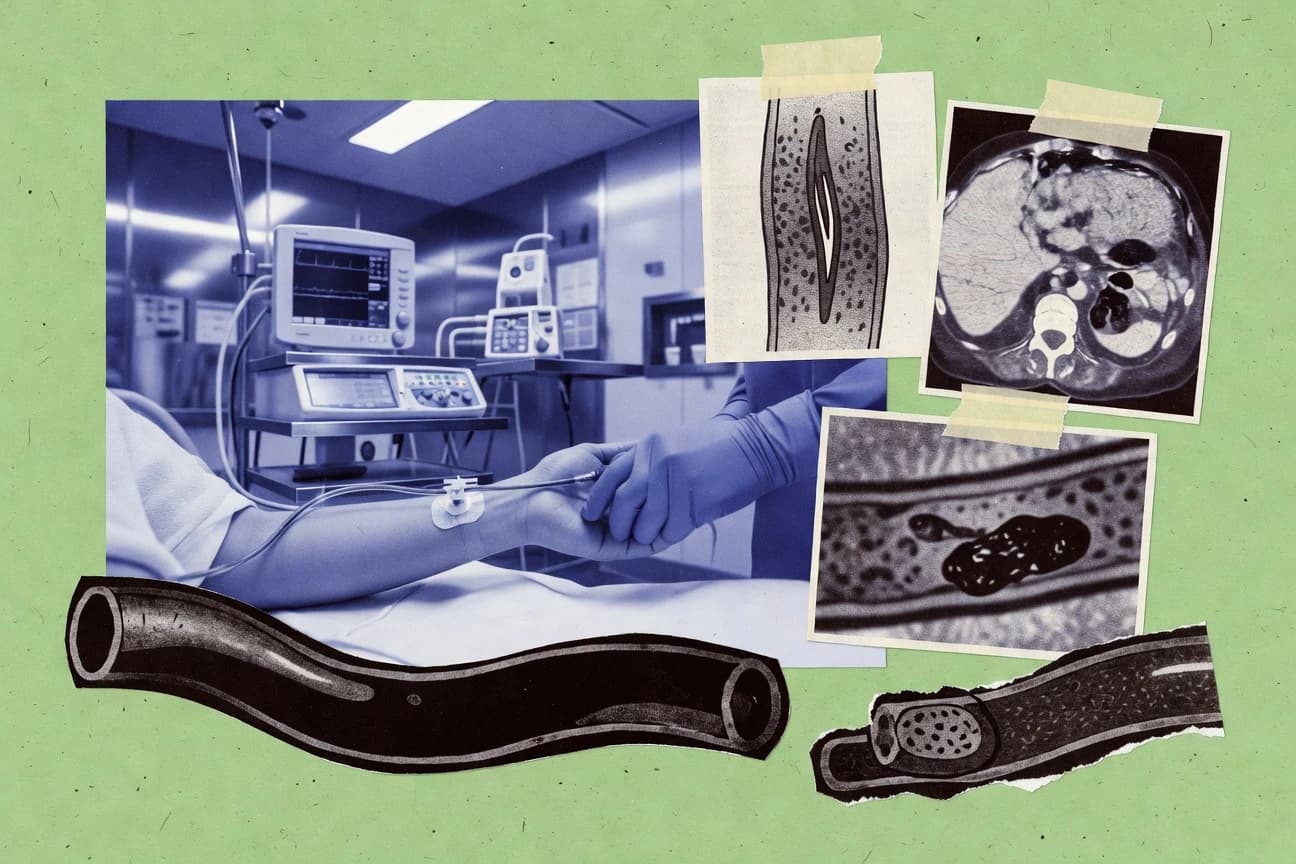

Ischemic strokes caused 4.39 million deaths worldwide in a single year. The condition's impact is driven by widespread risk factors, such as hypertension which affects six in ten Americans.
Key Takeaways
- 4.39 million ischemic stroke deaths occurred in 2019 worldwide (GBD 2019)
- 5.31 million disability-adjusted life-years (DALYs) were attributable to ischemic stroke in 2019 worldwide (GBD 2019, reported in GBD results for ischemic stroke)
- 85% of ischemic strokes are caused by a blocked artery (atherothrombotic, cardioembolic, or small-vessel disease) in major clinical descriptions summarized by AHA/ASA
- High blood pressure is the leading cause of stroke in the U.S. (including ischemic stroke) — 6 in 10 Americans have hypertension (AHA/ASA)
- Atrial fibrillation increases ischemic stroke risk about 5-fold on average (range depends on patient factors; cited in major clinical reviews and guidelines)
- Symptomatic intracerebral hemorrhage occurs in about 2–7% of eligible patients receiving IV alteplase (as reported across trials and reflected in guidelines)
- Functional independence (mRS 0–2) at 90 days after thrombectomy ranged from about 40–50% in trials that met eligibility criteria
- In RCTs, procedure-related complications with mechanical thrombectomy were relatively uncommon; serious adverse event rates were generally a few percent (pooled safety reporting)
- Mechanical thrombectomy improves functional outcomes compared with medical therapy for eligible patients with large-vessel occlusion ischemic stroke (5 major RCTs meta-analysis reported OR for favorable outcome ~2.5)
- Time-to-treatment is critical: each 30-minute delay in endovascular therapy was associated with lower likelihood of functional independence (observational evidence reported in multicenter datasets)
- Aspirin started within 48 hours of ischemic stroke reduces early recurrent events and improves outcomes compared with no antiplatelet in historical trials; early antiplatelet therapy benefits are reflected in guideline evidence synthesis
- Global market size for stroke care imaging (CT/MRI and related) is driven by ischemic stroke diagnostics; radiology/medical imaging market was estimated at about $39 billion in 2022 (context for stroke imaging demand)
- The U.S. direct and indirect costs of stroke were estimated at $53 billion in 2010 (with ischemic stroke majority in case mix)
- Total annual economic burden of stroke in the U.S. was estimated at $34 billion in 2009 (direct medical costs plus productivity losses; ischemic stroke majority)
- Mechanical thrombectomy rates increased; in a U.S. national claims study, endovascular thrombectomy use rose from 1.6% (2012) to 3.6% (2016) of ischemic stroke admissions meeting criteria
In 2019, ischemic stroke caused 4.39 million deaths worldwide, driven mainly by blocked arteries.
Related reading
01 · Category
Global Burden2 stats
01
4.39 million ischemic stroke deaths occurred in 2019 worldwide (GBD 2019)https://www.thelancet.com/journals/lancet/article/PIIS0140-6736(20)30900-0/fulltext
02
5.31 million disability-adjusted life-years (DALYs) were attributable to ischemic stroke in 2019 worldwide (GBD 2019, reported in GBD results for ischemic stroke)https://ghdx.healthdata.org/gbd-results-tool
Interpretation
Global Burden Interpretation
Under the Global Burden framing, ischemic stroke caused 4.39 million deaths in 2019 worldwide and burdened populations with 5.31 million DALYs, underscoring that its impact extends well beyond mortality.
02 · Category
Risk Factors11 stats
01
85% of ischemic strokes are caused by a blocked artery (atherothrombotic, cardioembolic, or small-vessel disease) in major clinical descriptions summarized by AHA/ASAhttps://www.heart.org/en/health-topics/stroke/stroke/what-is-stroke
02
High blood pressure is the leading cause of stroke in the U.S. (including ischemic stroke) — 6 in 10 Americans have hypertension (AHA/ASA)https://www.heart.org/en/health-topics/high-blood-pressure/why-high-blood-pressure-matters
03
Atrial fibrillation increases ischemic stroke risk about 5-fold on average (range depends on patient factors; cited in major clinical reviews and guidelines)https://www.ahajournals.org/doi/10.1161/CIR.0000000000001049
04
Smoking increases the risk of ischemic stroke by about 50% (meta-analytic estimates)https://www.thelancet.com/journals/lancet/article/PIIS0140-6736(10)60677-7/fulltext
05
Diabetes increases the risk of stroke by about 2-fold (meta-analysis estimates)https://www.ahajournals.org/doi/10.1161/01.STR.0000090051.46924.1
06
Physical inactivity increases stroke risk by about 1.3-fold (prospective cohort meta-analyses)https://www.bmj.com/content/351/bmj.h4240
07
High LDL cholesterol is associated with increased ischemic stroke risk; each 1 mmol/L increase in LDL is associated with ~1.3x higher risk (Mendelian randomization/prospective evidence summarized in clinical literature)https://www.ahajournals.org/doi/10.1161/JAHA.119.011547
08
Heavy alcohol use increases ischemic stroke risk by about 2-fold compared with non-drinkers (dose-response meta-analysis)https://www.thelancet.com/journals/lanpub/article/PIIS1474-760X(18)30314-5/fulltext
09
Low fruit intake is associated with higher risk of cardiovascular disease including ischemic stroke; meta-analysis estimates show ~10% relative risk increase per 1 serving/day reduction (evidence synthesis)https://www.sciencedirect.com/science/article/pii/S0002916520300186
10
Chronic kidney disease increases ischemic stroke risk by about 2-fold (meta-analysis of observational studies)https://jasn.asnjournals.org/content/26/4/904
11
Hyperhomocysteinemia increases stroke risk by about 1.5-fold (meta-analysis evidence)https://www.ncbi.nlm.nih.gov/pmc/articles/PMC2674738/
Interpretation
Risk Factors Interpretation
Risk factors drive ischemic stroke strongly, with hypertension affecting 6 in 10 Americans and key risks like atrial fibrillation raising stroke risk about 5-fold, smoking increasing it by about 50%, diabetes by about 2-fold, and physical inactivity by about 1.3-fold.
03 · Category
Outcomes & Prognosis11 stats
01
Symptomatic intracerebral hemorrhage occurs in about 2–7% of eligible patients receiving IV alteplase (as reported across trials and reflected in guidelines)https://www.ahajournals.org/doi/10.1161/STR.0000000000000379
02
Functional independence (mRS 0–2) at 90 days after thrombectomy ranged from about 40–50% in trials that met eligibility criteriahttps://www.nejm.org/doi/full/10.1056/NEJMoa1411587
03
In RCTs, procedure-related complications with mechanical thrombectomy were relatively uncommon; serious adverse event rates were generally a few percent (pooled safety reporting)https://www.thelancet.com/journals/lancet/article/PIIS0140-6736(17)31046-4/fulltext
04
The risk of recurrent ischemic stroke within 1 year after a first ischemic stroke is about 10–15% (cohort meta-analytic estimates)https://www.nejm.org/doi/full/10.1056/NEJMra070140
05
Approximately 30% of stroke patients experience poor functional outcome at 90 days after ischemic stroke (mRS 4–6 reported in pooled RCT/registry evidence)https://www.thelancet.com/journals/lancet/article/PIIS0140-6736(16)31741-2/fulltext
06
In untreated ischemic stroke, 90-day mortality is commonly around 10–20% depending on severity and population (observational datasets summarized in clinical reviews)https://www.ncbi.nlm.nih.gov/pmc/articles/PMC4456300/
07
Post-stroke dementia risk is increased; incidence of post-stroke cognitive impairment reported at ~20–30% within years after ischemic stroke in longitudinal studieshttps://www.ncbi.nlm.nih.gov/pmc/articles/PMC6767645/
08
Stroke survivors have a higher risk of recurrent stroke: annual recurrence rates are roughly 2–4% per year after ischemic stroke (population studies)https://www.ncbi.nlm.nih.gov/pmc/articles/PMC4543330/
09
In the GWTG-Stroke registry analyses, 30-day mortality after ischemic stroke is reported around 10–15% depending on age and comorbidity (registry-derived mortality)https://www.ahajournals.org/doi/10.1161/STR.0000000000000159
10
In acute ischemic stroke, early neurological deterioration occurs in about 10–20% of patients (cohort studies)https://www.ncbi.nlm.nih.gov/pmc/articles/PMC3837007/
11
In early ischemic stroke cohorts treated with IV alteplase, odds of favorable functional outcome at 90 days approximately doubled vs control in pooled trial datahttps://www.ahajournals.org/doi/10.1161/STR.0b013e3181e09d2e
Interpretation
Outcomes & Prognosis Interpretation
Across outcomes and prognosis for ischemic stroke, functional recovery is often incomplete and the burden of recurrence remains notable, with only about 40 to 50 percent achieving mRS 0 to 2 at 90 days after thrombectomy and roughly 10 to 15 percent developing another ischemic stroke within a year, while 90 day poor outcomes occur in about 30 percent and untreated 90 day mortality typically falls around 10 to 20 percent.
More related reading
04 · Category
Treatment Efficacy6 stats
01
Mechanical thrombectomy improves functional outcomes compared with medical therapy for eligible patients with large-vessel occlusion ischemic stroke (5 major RCTs meta-analysis reported OR for favorable outcome ~2.5)https://www.thelancet.com/journals/lancet/article/PIIS0140-6736(18)32197-5/fulltext
02
Time-to-treatment is critical: each 30-minute delay in endovascular therapy was associated with lower likelihood of functional independence (observational evidence reported in multicenter datasets)https://www.ahajournals.org/doi/10.1161/STROKEAHA.116.013037
03
Aspirin started within 48 hours of ischemic stroke reduces early recurrent events and improves outcomes compared with no antiplatelet in historical trials; early antiplatelet therapy benefits are reflected in guideline evidence synthesishttps://www.ahajournals.org/doi/10.1161/STR.0000000000000133
04
Dual antiplatelet therapy for minor ischemic stroke or high-risk TIA reduces recurrent stroke risk vs aspirin alone; CHANCE showed 30-day stroke recurrence 8.2% vs 11.7% (absolute reduction 3.5%)https://www.nejm.org/doi/full/10.1056/NEJMoa1410856
05
In POINT, 90-day major ischemic events were lower with dual antiplatelet (aspirin + clopidogrel) vs aspirin alone (5.0% vs 6.5% for primary endpoint; absolute reduction 1.5%)https://www.nejm.org/doi/full/10.1056/NEJMoa1800414
06
High-intensity statin therapy reduces ischemic stroke risk; in SPARCL trial, 1.8% of participants on atorvastatin had stroke events vs 2.5% with placebo over ~5 years (relative risk reduction reported in trial)https://www.nejm.org/doi/full/10.1056/NEJMoa031783
Interpretation
Treatment Efficacy Interpretation
Across major ischemic stroke therapies, faster treatment and aggressive secondary prevention clearly improve efficacy, with each 30-minute delay in endovascular therapy lowering the odds of functional independence and dual antiplatelet strategies reducing 90 day major ischemic events from 6.5% with aspirin alone to 5.0% in POINT.
05 · Category
Healthcare Economics6 stats
01
Global market size for stroke care imaging (CT/MRI and related) is driven by ischemic stroke diagnostics; radiology/medical imaging market was estimated at about $39 billion in 2022 (context for stroke imaging demand)https://www.grandviewresearch.com/industry-analysis/medical-imaging-market
02
The U.S. direct and indirect costs of stroke were estimated at $53 billion in 2010 (with ischemic stroke majority in case mix)https://www.ahajournals.org/doi/10.1161/STR.0b013e3181cd60f2
03
Total annual economic burden of stroke in the U.S. was estimated at $34 billion in 2009 (direct medical costs plus productivity losses; ischemic stroke majority)https://pubmed.ncbi.nlm.nih.gov/20308614/
04
AHA estimate: stroke care costs in the U.S. increased to $55.6 billion in 2016 (direct + indirect; ischemic stroke dominant)https://www.heart.org/-/media/files/about-us/statistics/stroke-statistics/update/2018-stroke-statistical-update.pdf
05
The incremental cost-effectiveness of thrombectomy vs medical therapy was reported as cost per QALY gained in economic evaluations (typically within accepted willingness-to-pay thresholds); a UK analysis reported ~£20,000–£30,000 per QALY for thrombectomy in certain scenarioshttps://www.ncbi.nlm.nih.gov/books/NBK525642/
06
In a randomized economic evaluation with IV thrombolysis, costs were higher but quality-adjusted life years (QALYs) improved vs control in model-based trial analysis (reported incremental cost-effectiveness ratios in the evidence synthesis used by guidelines)https://www.ncbi.nlm.nih.gov/pmc/articles/PMC6481105/
Interpretation
Healthcare Economics Interpretation
Healthcare economics shows that the U.S. economic burden of ischemic stroke is rising from about $34 billion in 2009 to $55.6 billion by 2016, highlighting strong cost pressures that continue to make cost effectiveness of imaging and interventions like thrombectomy and IV thrombolysis a central decision point for payers and health systems.
06 · Category
Healthcare Utilization6 stats
01
Mechanical thrombectomy rates increased; in a U.S. national claims study, endovascular thrombectomy use rose from 1.6% (2012) to 3.6% (2016) of ischemic stroke admissions meeting criteriahttps://jamanetwork.com/journals/jama/fullarticle/2525857
02
A 2019 BRFSS survey estimate: 2.9% of adults reported ever having had a stroke (CDC)https://www.cdc.gov/nchs/fastats/stroke.htm
03
About 8% of stroke survivors die within 7 days (hospital-based mortality reporting used in AHA updates)https://www.heart.org/-/media/files/about-us/statistics/stroke-statistics/update/2023-stroke-statistical-update.pdf
04
Among suspected stroke patients presenting to emergency departments, door-to-needle times improved over time; median door-to-needle reported around 50–60 minutes in U.S. Get With The Guidelines performance summarieshttps://www.ahajournals.org/doi/10.1161/STR.0000000000000252
05
In a 2018–2020 U.S. registry analysis, IV thrombolysis treatment rate for ischemic stroke was around 10–15% of ischemic stroke admissions (reported in hospital quality studies)https://www.ahajournals.org/doi/10.1161/STROKEAHA.120.030888
06
In the U.S., 15–25% of patients with acute ischemic stroke receive reperfusion therapy (IV tPA or thrombectomy) in real-world datasets (AHA/ASA discussions of treatment gaps)https://www.ahajournals.org/doi/10.1161/STR.0000000000000210
Interpretation
Healthcare Utilization Interpretation
From a healthcare utilization perspective, the use of key stroke interventions is rising, with endovascular thrombectomy increasing from 1.6% in 2012 to 3.6% in 2016 and real world reperfusion therapy reaching about 15 to 25% of acute ischemic stroke patients, even though only around 10 to 15% receive IV thrombolysis.
report visual · Key figures
Ischemic stroke: burden and key outcomes
Global ischemic stroke causes major health burden, with substantial disability and measurable recurrence and mortality risk.
4.39
4.39 million ischemic stroke deaths occurred in 2019 worldwide (GBD 2019)
5.31
5.31 million disability-adjusted life-years (DALYs) were attributable to ischemic stroke in 2019 worldwide (GBD 2019, re
30%
Approximately 30% of stroke patients experience poor functional outcome at 90 days after ischemic stroke (mRS 4–6 report
15%
The risk of recurrent ischemic stroke within 1 year after a first ischemic stroke is about 10–15% (cohort meta-analytic
20%
In untreated ischemic stroke, 90-day mortality is commonly around 10–20% depending on severity and population (observati
4%
Stroke survivors have a higher risk of recurrent stroke: annual recurrence rates are roughly 2–4% per year after ischemi
source-verifiedthelancet.com · ghdx.healthdata.org · nejm.org · ncbi.nlm.nih.gov2019
Reference
Cite This Report
This report is designed to be cited. We maintain stable URLs and versioned verification dates. Copy the format appropriate for your publication below.
APA
David Sutherland. (2026, February 13). Ischemic Stroke Statistics. Gitnux. https://gitnux.org/ischemic-stroke-statistics
MLA
David Sutherland. "Ischemic Stroke Statistics." Gitnux, 13 Feb 2026, https://gitnux.org/ischemic-stroke-statistics.
Chicago
David Sutherland. 2026. "Ischemic Stroke Statistics." Gitnux. https://gitnux.org/ischemic-stroke-statistics.
Sources & references
42 datasets cited across this report
+29 additional datasets cited (not shown individually)