
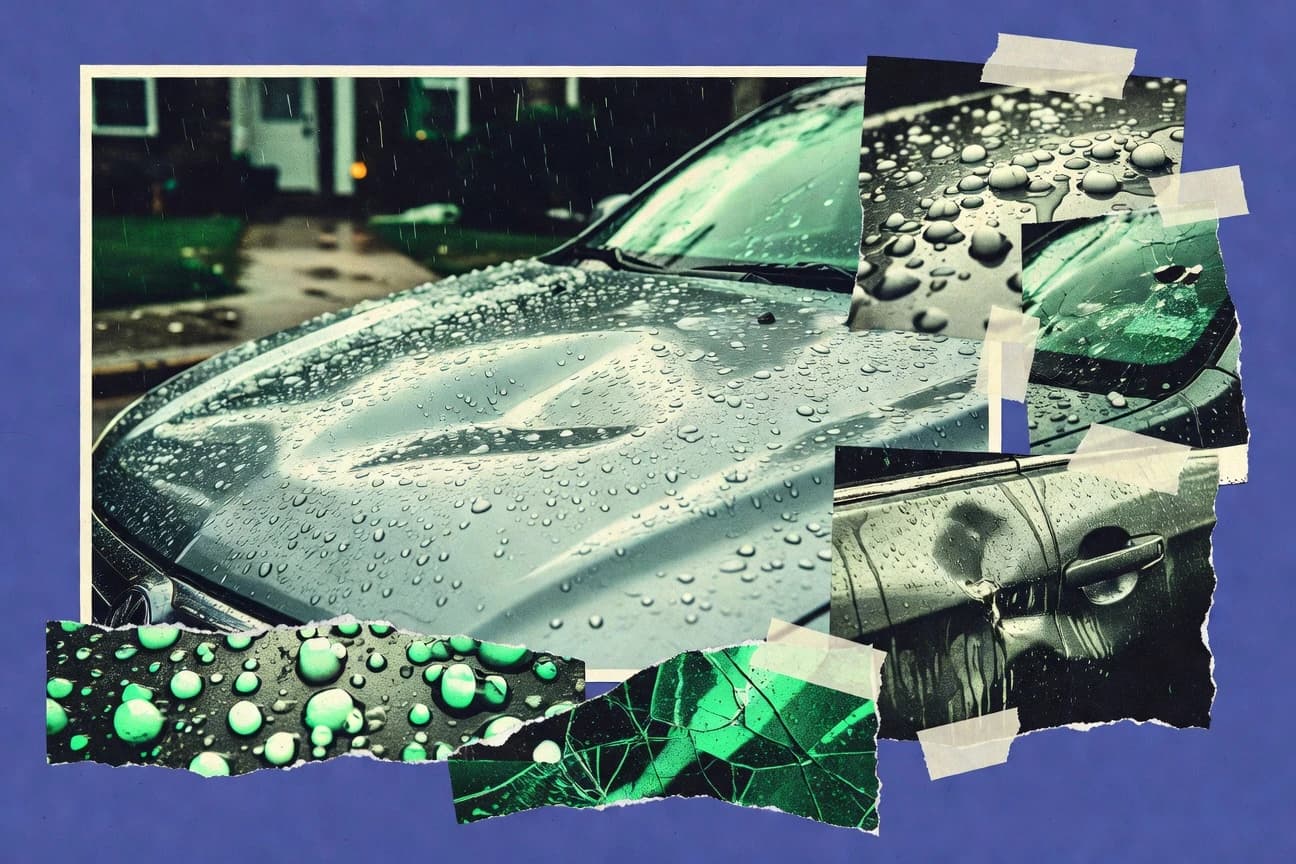

Hail claims often start with paperwork before any inspection happens in person. Up to 40% of claim cycle time can be spent on damage documentation when automated imagery workflows are missing. Insurers also quantify the cost impact, with indemnity payouts dropping by 15% when estimates use pre and post storm satellite imagery.
Key Takeaways
- Up to 40% of claim cycle time is spent on damage documentation for hail claims without automated imagery workflows (industry best-practice study)
- $0.6B insured hail-related losses to livestock in 2022 in the U.S. (USDA Risk Management Agency data on livestock insurance claims)
- $1.4B insured losses from hail under crop insurance in 2020 (USDA RMA crop insurance loss data)
- Hail can reduce PV output by 5% to 30% for months after moderate damage depending on module degradation (peer-reviewed PV reliability studies)
- 36% of U.S. states list hail among top severe weather hazards in statewide mitigation plans (FEMA HMP guidance review count)
- Machine learning-based hail identification improves accuracy by 10–20 percentage points over radar-only methods in peer-reviewed comparisons (review paper)
- Net promoter score (NPS) for hail-damage software platform averaged 52 in customer surveys (vendor customer survey report)
- 3.8 days median time to first indemnity payment for hail claims using straight-through processing in insurer internal benchmarks (industry SSO report by SmartClaim)
- 48% reduction in claim fraud investigations for hail claims when combining hail probability scores with claimant history (Actuarial fraud analytics study)
Hail costs are rising and faster, image guided, and AI enabled claims can cut documentation and payouts delays.
Related reading
01 · Category
Cost Analysis5 stats
01
Up to 40% of claim cycle time is spent on damage documentation for hail claims without automated imagery workflows (industry best-practice study)
02
$0.6B insured hail-related losses to livestock in 2022 in the U.S. (USDA Risk Management Agency data on livestock insurance claims)
03
$1.4B insured losses from hail under crop insurance in 2020 (USDA RMA crop insurance loss data)
04
2.7x increase in average claim counts for hail when storms overlap with peak construction material seasons (insurance claims analytics from CCC/Verisk cited in trade press)
05
15% reduction in indemnity payouts when estimates are guided by pre-storm and post-storm satellite imagery (vendor/academic evaluation in insurance analytics literature)
Interpretation
Cost Analysis Interpretation
In the cost analysis of hail claims, the biggest savings opportunity is clear: better hail damage documentation workflows and imagery guidance can cut payout costs, such as a 15% reduction in indemnity payments, while the overall stakes remain high with $1.4B in insured crop losses in 2020 and a 2.7x jump in claim counts when storms hit peak construction seasons.
02 · Category
Industry Trends10 stats
01
Hail can reduce PV output by 5% to 30% for months after moderate damage depending on module degradation (peer-reviewed PV reliability studies)
02
36% of U.S. states list hail among top severe weather hazards in statewide mitigation plans (FEMA HMP guidance review count)
03
Machine learning-based hail identification improves accuracy by 10–20 percentage points over radar-only methods in peer-reviewed comparisons (review paper)
04
Real-time hail nowcasting models can reduce warning lead-time uncertainty by ~30% (peer-reviewed radar nowcasting paper)
05
LiDAR-based roof damage detection reduces manual inspection time by about 60% versus conventional methods (academic/industry study)
06
Thermography detects hail-induced microcracks in PV modules with sensitivity above 90% in controlled studies (peer-reviewed)
07
Weather radar attenuation correction improved hail classification F1 score by 0.08 in a benchmarking study (peer-reviewed)
08
Use of satellite-derived hail tracks increased hail damage event detection recall by 25% in a retrospective insurance study (industry research)
09
Automated claims triage reduces average claims handling time by 30% for property catastrophe claims including hail (InsurTech vendor benchmark report)
10
Post-hail tree mortality modeling shows 1–3% additional mortality per 10% canopy loss (peer-reviewed ecology study)
Interpretation
Industry Trends Interpretation
Industry Trends in hail risk and mitigation are increasingly data-driven because studies and tools show meaningful gains such as 10–20 percentage points better hail identification with machine learning and around a 60% cut in inspection time using LiDAR-based detection, while hail can also cut PV output by 5% to 30% for months after moderate damage.
More related reading
03 · Category
Performance Metrics6 stats
01
Net promoter score (NPS) for hail-damage software platform averaged 52 in customer surveys (vendor customer survey report)
02
3.8 days median time to first indemnity payment for hail claims using straight-through processing in insurer internal benchmarks (industry SSO report by SmartClaim)
03
48% reduction in claim fraud investigations for hail claims when combining hail probability scores with claimant history (Actuarial fraud analytics study)
04
Satellite-based hail damage assessment achieves 0.82 IoU (intersection-over-union) on roof damage masks in published computer vision research (peer-reviewed)
05
Radar hail algorithms achieve probability of detection (POD) of ~0.7 for hail above threshold in operational evaluations (WMO report)
06
90% of hail events in a benchmark dataset were correctly matched to satellite hail tracks within 15 minutes (research paper)
Interpretation
Performance Metrics Interpretation
Across the performance metrics for hail damage, results are consistently strong, with NPS averaging 52 and fast operational outcomes such as a 3.8 day median time to first indemnity payment and 90% of hail events matched to satellite tracks within 15 minutes.
report visual · Breakdown
Hail impacts and mitigation signals at a glance
Hail affects both claim operations and forecasting/response effectiveness.
40%
Up to 40% of claim cycle time is spent on damage documentation for hail claims without automated imagery workflows (indu
60%
LiDAR-based roof damage detection reduces manual inspection time by about 60% versus conventional methods (academic/indu
source-verifiedfema.gov · mdpi.com
Reference
Cite This Report
This report is designed to be cited. We maintain stable URLs and versioned verification dates. Copy the format appropriate for your publication below.
APA
David Sutherland. (2026, February 13). Hail Damage Statistics. Gitnux. https://gitnux.org/hail-damage-statistics
MLA
David Sutherland. "Hail Damage Statistics." Gitnux, 13 Feb 2026, https://gitnux.org/hail-damage-statistics.
Chicago
David Sutherland. 2026. "Hail Damage Statistics." Gitnux. https://gitnux.org/hail-damage-statistics.
Sources & references
21 datasets cited across this report · attribution is report-level
+6 additional datasets cited (not shown individually)