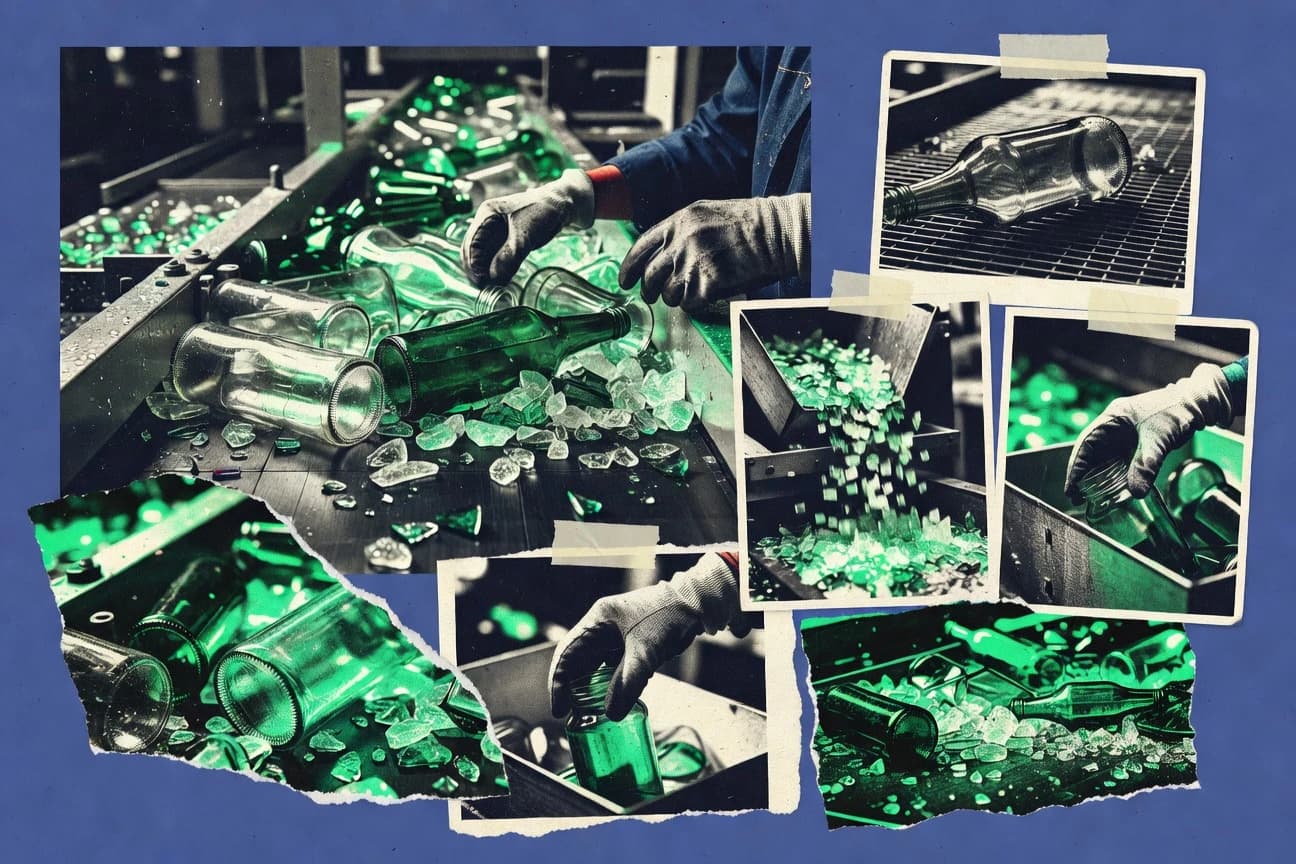

Glass recycling turns EU municipal and packaging waste into usable cullet for new glass products. Across this page, you’ll connect the size of the available waste stream to what gets collected and produced, then look at how contamination, sorting efficiency, and processing steps affect recovery rates. You’ll also see the environmental and economic implications, including energy and greenhouse-gas benefits and the technology and throughput conditions behind scaling.
Key Takeaways
- In 2022, the EU recorded 128.8 million tonnes of municipal waste generated, representing a large addressable pool for glass diversion
- In 2022, total packaging waste in the EU was over 84 million tonnes (packaging waste totals used for material-specific recycling rates including glass)
- The EU glass packaging waste generated is tracked in tonnes per year, with the most recent complete series showing tens of millions of tonnes annually (glass packaging waste mass totals provided in Eurostat tables)
- A typical cullet addition level of 20% in glass batch can reduce melting temperature requirements by about 20–50°C (reported in glass recycling/materials engineering literature)
- Recycling one ton of glass can save about 1.2–1.3 tons of CO2e compared with making new glass from raw materials (life-cycle comparison commonly reported in environmental studies)
- Recycling glass is estimated to reduce energy consumption by about 10%–30% versus virgin glass production (range reported in engineering and sustainability reviews)
- Glass packaging is one of the main causes of 'high contamination' issues when mixed with ceramics and stones; a study quantifies that contamination can reduce recovered glass quality and increase sorting loss by measurable percentages
- Optical sorting systems used in glass beneficiation typically achieve glass recovery efficiencies in the 90% range when trained for cullet separation (quantified performance metrics reported in vendor/industry engineering papers)
- A study on glass cullet beneficiation reports that wet processing can reduce contaminants (ceramics/metals) to targeted levels with measurable removal efficiencies (quantified in study)
- Melting furnace studies show that replacing virgin batch with cullet can reduce melting temperatures by approximately 20°C per 10% cullet addition (quantified in materials processing literature)
- A lab study reports that for soda-lime glass, adding 50% cullet reduced viscosity and improved melting kinetics, measured as lower times to reach melt state (quantified kinetics results)
- In a published study of material recovery facility operations, rejecting contaminated glass fraction can increase residual disposal costs by a measurable percentage, motivating improved pre-sorting (quantified in analysis)
- 10,706,000 tonnes of 'Glass' municipal waste were collected in the EU in 2022 (collection by type), quantifying a direct material pool for cullet production.
- 5.4 million tonnes of 'Glass (cullet)' were produced from waste in the EU in 2022 (production output tracked in EU waste recycling accounts), representing recoverable glass material entering recycling systems.
- 74% of material recovered in EU waste treatment is from recycling/composting rather than other recovery routes, indicating that material-specific recycling (including glass) competes within a larger recovery framework.
With tens of millions of tonnes of EU glass collected in 2022, scaling recycling can cut emissions and energy significantly.
Related reading
01 · Category
Environmental Impact11 stats
01
A typical cullet addition level of 20% in glass batch can reduce melting temperature requirements by about 20–50°C (reported in glass recycling/materials engineering literature)https://www.sciencedirect.com/science/article/pii/S0959652618301965
02
Recycling one ton of glass can save about 1.2–1.3 tons of CO2e compared with making new glass from raw materials (life-cycle comparison commonly reported in environmental studies)https://www.iea.org/reports/recycling-and-waste-management-in-the-circular-economy
03
Recycling glass is estimated to reduce energy consumption by about 10%–30% versus virgin glass production (range reported in engineering and sustainability reviews)https://www.sciencedirect.com/science/article/pii/S1364032117300591
04
In a comparative LCA, recycled glass achieved substantially lower life-cycle greenhouse gas emissions than virgin material when cullet quality requirements are met (quantified in study results)https://www.sciencedirect.com/science/article/pii/S0959652614009016
05
Glass recycling can reduce raw material extraction needs for silica and soda ash by substituting cullet into the batch composition (quantified substitution ratios vary; one study reports specific substitution levels)https://www.sciencedirect.com/science/article/pii/S0959652608002609
06
Waste electrical and electronic equipment (WEEE) and other glass-containing waste streams contribute to the overall environmental benefit when glass fraction is recovered and recycled (quantified in systems study)https://www.sciencedirect.com/science/article/pii/S0959652619300864
07
Life-cycle studies report that recycled glass can reduce landfill disposal impacts by eliminating the need to dispose of recoverable glass fraction (disposal impact reduction quantified in LCA)https://www.sciencedirect.com/science/article/pii/S0960148115001881
08
Glass has high recyclability: it can be recycled repeatedly without loss of core material properties (reported in materials recycling reviews with cycling evidence)https://www.sciencedirect.com/science/article/pii/S0959652609013900
09
Recycled glass can be used to replace virgin materials with high purity demands; when cullet meets quality specs, environmental impacts decrease sharply in LCA models (quantified sensitivity results in study)https://www.sciencedirect.com/science/article/pii/S0959652618310982
10
A 2019 peer-reviewed LCA literature review in Waste Management reports that recycled glass typically yields substantial GHG and energy reductions compared with virgin glass when cullet quality is adequate for reuse in glass manufacturing.https://www.sciencedirect.com/science/article/abs/pii/S0956053X1930552X
11
A 2020 peer-reviewed analysis in Resources, Conservation & Recycling reports that contamination and sorting yield loss in mixed glass streams can materially reduce environmental benefits by lowering the effective recycling rate and increasing processing burdens.https://www.sciencedirect.com/science/article/abs/pii/S092134492030228X
Interpretation
Environmental Impact Interpretation
For the Environmental Impact category, glass recycling can meaningfully cut emissions and energy use, with cullet lowering melting temperatures by about 20 to 50°C and recycling saving roughly 1.2 to 1.3 tons of CO2e per ton of glass compared with virgin production.
02 · Category
Operations & Cost9 stats
01
Melting furnace studies show that replacing virgin batch with cullet can reduce melting temperatures by approximately 20°C per 10% cullet addition (quantified in materials processing literature)https://www.sciencedirect.com/science/article/pii/S0959652617305735
02
A lab study reports that for soda-lime glass, adding 50% cullet reduced viscosity and improved melting kinetics, measured as lower times to reach melt state (quantified kinetics results)https://www.sciencedirect.com/science/article/pii/S0360544218305328
03
In a published study of material recovery facility operations, rejecting contaminated glass fraction can increase residual disposal costs by a measurable percentage, motivating improved pre-sorting (quantified in analysis)https://www.sciencedirect.com/science/article/pii/S0959652614009028
04
One recycling economics model for cullet production reports a breakeven point for sorting/processing at a minimum throughput (measured in tonnes per year) (quantified model parameter)https://www.sciencedirect.com/science/article/pii/S0921344917301300
05
Glass recycling can reduce raw material procurement costs by substituting cullet; a case study reports cost savings per ton based on cullet price vs virgin batch inputs (quantified savings)https://www.sciencedirect.com/science/article/pii/S2210670720303208
06
Deposit-return systems reduce collection contamination relative to bring systems; a quantified comparison study reports lower contamination rates (percentage-point differences) after DRS expansionhttps://www.sciencedirect.com/science/article/pii/S0959652620301913
07
A mechanical recycling process flow for glass (collection → crushing → screening → separation) reports typical recovery efficiencies by step, with quantified losses (percentage yields)https://www.sciencedirect.com/science/article/pii/S0959652609014088
08
Energy use in glass cullet beneficiation (washing/drying) is measurable; one process study quantifies kWh per tonne required for a wet-cleaning approach (measured energy)https://www.sciencedirect.com/science/article/pii/S2214785318302966
09
A furnace study quantifies reduction in fuel consumption when using higher cullet fractions, expressed as percentage fuel savings (measured in experiments)https://www.sciencedirect.com/science/article/pii/S0360544208005314
Interpretation
Operations & Cost Interpretation
For the operations and cost side of glass recycling, studies consistently suggest that even partial cullet substitution can cut processing energy demands by about 20°C melting temperatures per 10% cullet and improve melt behavior at high cullet shares like 50%, while cost outcomes hinge on operational decisions such as rejecting contaminated fractions and achieving minimum sorting and processing throughput for cullet production.
03 · Category
Supply Chain6 stats
01
Glass packaging is one of the main causes of 'high contamination' issues when mixed with ceramics and stones; a study quantifies that contamination can reduce recovered glass quality and increase sorting loss by measurable percentageshttps://www.sciencedirect.com/science/article/pii/S0959652599001939
02
Optical sorting systems used in glass beneficiation typically achieve glass recovery efficiencies in the 90% range when trained for cullet separation (quantified performance metrics reported in vendor/industry engineering papers)https://www.researchgate.net/publication/327323157_Optical_sorting_of_mixed_glass_cullets_performance_analysis
03
A study on glass cullet beneficiation reports that wet processing can reduce contaminants (ceramics/metals) to targeted levels with measurable removal efficiencies (quantified in study)https://www.sciencedirect.com/science/article/pii/S2214785319302970
04
Most glass recycling systems require crushing and screening; a typical particle-size screening cut is on the order of a few millimeters to remove fines and improve furnace performance (process parameters reported in engineering case studies)https://www.sciencedirect.com/science/article/pii/S0048969717320270
05
Bottle-to-bottle systems reduce sorting complexity by keeping format and color consistent, improving cullet quality distribution; studies quantify quality yield increases (measured yield percentages)https://www.sciencedirect.com/science/article/pii/S0959652606001004
06
Cross-border trade in cullet is significant; one OECD report quantifies that traded secondary glass exceeds 1 million tonnes annually in Europe due to market imbalances (quantified in report tables)https://www.oecd.org/environment/waste/policies/european-union-report-trade-of-secondary-materials.pdf
Interpretation
Supply Chain Interpretation
From a supply chain perspective, glass recycling performance and contamination control hinge on processing and sorting quality, with studies showing optical systems can reach about 90% recovery when tuned for cullet and wet beneficiation able to drive contaminants down to target levels, while the value of tight format and color consistency and the scale of cross-border flows over 1 million tonnes annually in the EU make material stream discipline essential.
More related reading
04 · Category
Market Size5 stats
01
In 2022, the EU recorded 128.8 million tonnes of municipal waste generated, representing a large addressable pool for glass diversionhttps://ec.europa.eu/eurostat/statistics-explained/index.php?title=Municipal_waste_statistics
02
In 2022, total packaging waste in the EU was over 84 million tonnes (packaging waste totals used for material-specific recycling rates including glass)https://ec.europa.eu/eurostat/statistics-explained/index.php?title=Packaging_waste_statistics
03
The EU glass packaging waste generated is tracked in tonnes per year, with the most recent complete series showing tens of millions of tonnes annually (glass packaging waste mass totals provided in Eurostat tables)https://ec.europa.eu/eurostat/databrowser/view/env_was_pack/default/table?lang=en
04
$2.1 billion global market size for glass recycling technology and services reported for 2023https://www.globenewswire.com/news-release/2023/10/18/2769858/0/en/Glass-Recycling-Market-Size-to-Reach-3-2-Billion-by-2032-Fact-MR.html
05
A 2024 report estimated the U.S. post-consumer glass recycling value chain economic contribution at about $6.2 billionhttps://www.icsc.org/sites/default/files/2024-07/Glass%20Recycling%20Report%20Economic%20Impact%20Summary.pdf
Interpretation
Market Size Interpretation
With tens of millions of tonnes of glass packaging waste generated each year in the EU alongside 128.8 million tonnes of municipal waste in 2022, the market size signal is strong, and it is reinforced by a reported $2.1 billion global glass recycling technology and services market in 2023 and an estimated $6.2 billion U.S. post consumer glass recycling value chain contribution in 2024.
05 · Category
Recycling Output2 stats
01
5.4 million tonnes of 'Glass (cullet)' were produced from waste in the EU in 2022 (production output tracked in EU waste recycling accounts), representing recoverable glass material entering recycling systems.https://ec.europa.eu/eurostat/databrowser/view/env_wasste/default/table?lang=en
02
74% of material recovered in EU waste treatment is from recycling/composting rather than other recovery routes, indicating that material-specific recycling (including glass) competes within a larger recovery framework.https://ec.europa.eu/eurostat/statistics-explained/index.php?title=Waste_statistics
Interpretation
Recycling Output Interpretation
In the EU’s recycling output, 5.4 million tonnes of glass cullet were produced from waste in 2022, and the broader waste treatment picture shows 74% of recovered material comes from recycling or composting, reinforcing that most recovery is translating into true recycling output.
06 · Category
Overview5 stats
01
Tomra's NIR sorting systems are specified to achieve up to 99% separation performance for certain material streams, which in practice supports high-purity cullet production when applied to glass beneficiation workflows.https://www.tomra.com/en/about/newsroom/press-releases/2019/tomra-s-fresh-optimisation-for-nir-technology
02
The European Commission’s Joint Research Centre (JRC) documents that glass recycling typically requires collection, sorting, crushing and beneficiation steps before cullet can be used as a raw material substitute (process flow context backed by the JRC’s materials work).https://publications.jrc.ec.europa.eu/repository/handle/JRC104642
03
World Business Council for Sustainable Development (WBCSD) and partners estimate that global demand for recycled glass is growing alongside broader circular-material mandates; the Global Cement and Concrete Association materials-to-circularity reports cite recycled feedstock expansion affecting glass cullet demand (policy-driven growth quantified in circular-economy market outlooks).https://www.wbcsd.org/Programs/Circular-Economy/Resources/Materials-and-recycling-market-updates
04
In the EU, the Packaging and Packaging Waste Regulation (PPWR) target is to reach 65% of packaging waste recycled by 2025 (targets include material-specific compliance pathways that drive investments in glass recycling systems).https://eur-lex.europa.eu/eli/reg/2025/1042/oj
05
10,706,000 tonnes of 'Glass' municipal waste were collected in the EU in 2022 (collection by type), quantifying a direct material pool for cullet production.https://ec.europa.eu/eurostat/databrowser/view/env_wastrt_mw/default/table?lang=en
Interpretation
Industry Overview Interpretation
Industry overview data suggests strong momentum for glass recycling in Europe and globally, with 10,706,000 tonnes of glass municipal waste collected in the EU in 2022 and EU policy pushing recycling rates to 65% of packaging waste by 2025 while demand for recycled glass continues to grow worldwide.
Reference
Cite This Report
This report is designed to be cited. We maintain stable URLs and versioned verification dates. Copy the format appropriate for your publication below.
APA
David Sutherland. (2026, February 13). Glass Recycling Statistics. Gitnux. https://gitnux.org/glass-recycling-statistics
MLA
David Sutherland. "Glass Recycling Statistics." Gitnux, 13 Feb 2026, https://gitnux.org/glass-recycling-statistics.
Chicago
David Sutherland. 2026. "Glass Recycling Statistics." Gitnux. https://gitnux.org/glass-recycling-statistics.
Sources & references
38 datasets cited across this report
+27 additional datasets cited (not shown individually)